
By Aminu Umar Turaki Nigerian commercial banks deposited an estimated ₦3.7 trillion into the Central Bank of Nigeria’s (CBN) Standing Deposit Facility (SDF) on December 24, highlighting one of the strongest liquidity buildups in recent months. CBN financial data covering December 22 to 24, 2025 shows a sharp rise in idle funds placed with the apex bank just ahead of the Christmas holiday, despite earlier efforts by the CBN to withdraw excess cash from the system. On December 22, the CBN had conducted an ₦1.7 trillion Open Market Operation (OMO) auction to mop up liquidity. However, the latest figures suggest that banks remained heavily cash-laden. What the data showsCBN records indicate that deposits placed in the SDF rose from ₦2.47 trillion on December 23 to ₦3.67 trillion on December 24, representing an increase of about ₦1.2 trillion in just 24 hours.Banks’ opening balances at the CBN also climbed from ₦163 billion to ₦223 billion, further confirming that the banking system entered the festive period with excess cash. This comes despite the CBN having raised more than ₦11.2 trillion through OMO bills since November, while repaying approximately ₦11.1 trillion, suggesting that liquidity pressures remain elevated. Analysts say the trend reflects a risk-averse lending environment, with banks preferring to earn a relatively safe overnight return of about 22.5% via the SDF rather than expand credit under tight monetary conditions. Inside the liquidity surgeThe data also points to a possible shift in the CBN’s liquidity management strategy. Rather than issuing new short-term debt aggressively, the apex bank appears to be allowing market forces to rebalance after weeks of intense OMO activity.On December 23, the CBN processed an OMO repayment of ₦1.14 trillion, part of a broader issuance-repayment cycle that saw roughly ₦22.3 trillion move through the system within eight weeks. OMO stop rates during the period ranged between 19% and 22%, but the CBN has increasingly relied on the SDF to absorb excess funds—an approach that tightens liquidity without adding to interest costs.Interest payments on OMO auctions for November and December alone reportedly approached ₦2 trillion, making passive liquidity control a more cost-efficient option. Market watchers believe the CBN may return to more aggressive OMO interventions in early 2026, particularly to rein in inflation, support foreign exchange stability, and manage government funding needs. The surge in SDF deposits highlights weak credit expansion, rising caution among banks, and limited investment opportunities in the real economy. For policymakers, it signals the need to balance liquidity control with economic growth. For investors, it suggests a banking sector adopting a wait-and-see stance as macroeconomic uncertainties persist heading into 2026. The Standing Deposit Facility (SDF) allows banks to earn interest on excess overnight funds, currently around 22.5%.The Standing Lending Facility (SLF) serves as the opposite window, offering short-term loans to banks at higher rates. Rising SDF usage indicates high liquidity but weak lending appetite.The CBN raised over ₦11.2 trillion in OMO bills between November and December 2025 and repaid nearly the same amount. Recent trends show a shift toward passive liquidity management by the apex bank.

OpenAI introduces ‘Your Year with ChatGPT’
By Oluwatunmise Omoseyin OpenAI has rolled out a new year in review feature for ChatGPT users, offering a personalised look back at how people used the chatbot throughout the year. The experience, called ‘Your Year with ChatGPT’, is designed to be light, reflective and easy to enjoy. The recap presents users with a summary of their activity on ChatGPT, showing what they asked about most and how they interacted with the tool, just like Spotify Wrapped. It uses simple visuals and playful language to turn everyday chats into a short digital story. One standout part of the feature is its creative touch. ChatGPT generates a poem and a piece of pixel style artwork inspired by the most common topics of the user, whether it is writing, problem-solving, learning or creative projects. The review also assigns users fun titles or “archetypes” based on their chat habits, alongside small awards that reflect how they use the platform. The aim is to make the recap feel personal rather than technical. ‘Your Year with ChatGPT’ is available on both the web and mobile apps for eligible Free, Plus and Pro users. It can be accessed through the ChatGPT sidebar or by simply asking the chatbot for a year-end review. To use the feature, users must have chat history and saved memory options enabled and meet a basic level of activity. The recap does not open automatically and remains optional. OpenAI says the feature respects user privacy, giving people control over their data and what is remembered. Team, Education and Enterprise accounts are not included in the rollout.
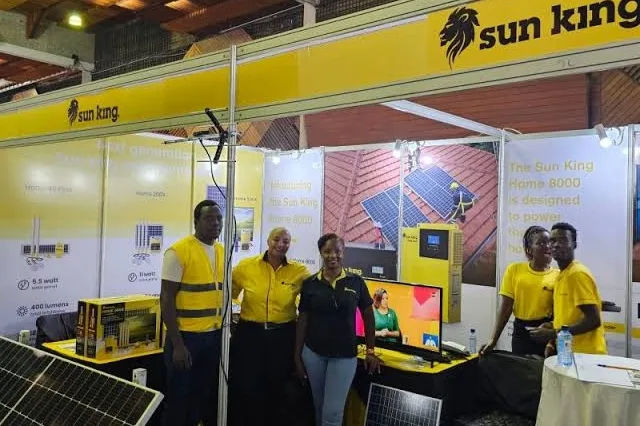
Sun King rolls out installment phones for traders, students nationwide
After nearly two decades of providing off-grid solar solutions, Sun King has officially launched a smartphone financing model in Nigeria. Announced on Tuesday, December 23, the initiative applies the successful “Pay-As-You-Go” (PayGo) solar framework of the company to mobile devices, allowing customers to bypass high upfront costs through small, periodic installments. We are now extending the same approach as solar to smartphones… making it easier for people to stay connected and participate fully in the digital economy – Omoyemi Tuga, VP for PayGo Sales (West & Central Africa), Sun King Sun King, formerly called Greenlight Planet, has been a leader in the off-grid sector since 2007, and has extended over $1.4 billion in solar loans globally. The company aims to reach the informal sector including traders, students, and farmers, who lack access to traditional banking credit, by leveraging its existing network of community-based agents across all 36 Nigerian states.This mirrors models used by competitors like M-KOPA and EasyBuy, where the device is digitally locked if payments are missed and unlocked upon completion of the contract.The financing is available through Sun King’s network of field agents and retail shops in every state and the FCT, in order to ensure grassroots reach.The model covers popular mid-range and entry-level brands, including Samsung (A-series), Tecno (Pop/Spark series), and Infinix (Smart/Hot series).Customers can take a device home the same day after a quick onboarding process and an initial deposit, with no requirement for formal collateral or proof of income.

Google delays full switch from Assistant to Gemini on Android
By Oluwatunmise Omoseyin Google has delayed its plan to fully replace Google Assistant with its Gemini AI on Android devices, pushing the transition into 2026. The company had earlier indicated that Gemini would become the default assistant on most Android phones by the end of 2025. However, Google says it needs more time to ensure a smooth and reliable experience for users before completing the switch. Gemini, designed to handle voice commands, app controls and smart home tasks, has already been set as the default assistant on new devices such as the Pixel 9 series. Still, Google Assistant continues to run alongside Gemini on many Android phones. Google explained that replacing Assistant, which has been part of Android for nearly a decade, is more complex than expected. Gemini requires more processing power and memory, and only devices running Android 10 or later with at least 2GB of RAM will be eligible for the upgrade. This means some older and low-end phones, especially in developing markets, may not support Gemini fully. Google said it wants to avoid performance issues that could affect everyday tasks like setting alarms, navigation and voice dictation. Google aims to improve Gemini’s speed, accuracy and reliability, by extending the timeline, before making it the sole assistant on Android. For now, both services will continue to coexist, with Gemini gradually taking on more responsibilities as updates are released.
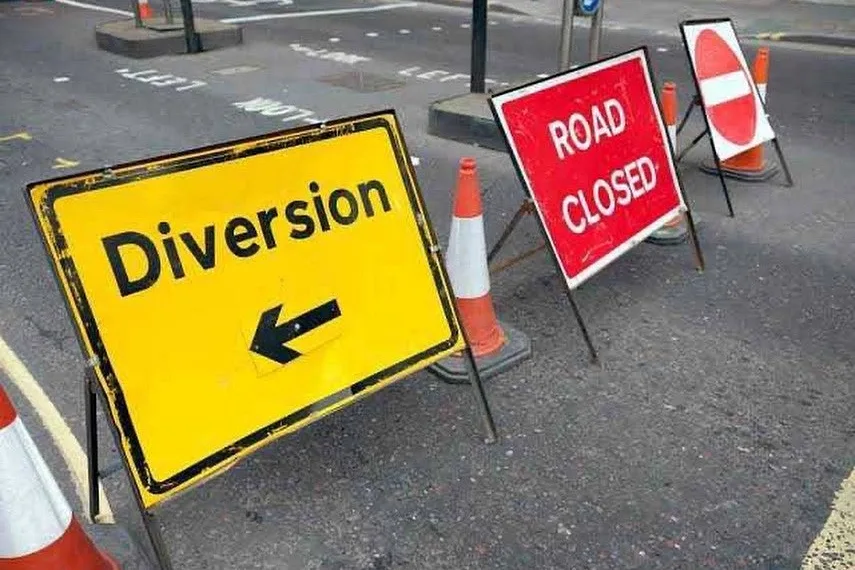
Lagos closes key Island roads for Autofest 2025, issues Advisory
The Lagos State Government has issued a traffic advisory ahead of the 7th Road Edition of the Lagos Autofest 2025, scheduled to hold on Sunday, December 22. To facilitate the high-speed street race, vehicular movement will be strictly restricted around the Inner Marina and surrounding Lagos Island between 12:00 PM and 7:00 PM.Organized by the BMW Club of Nigeria and Work and Play Promotion, the Lagos Autofest has become a staple of the “Detty December” calendar, which blends motorsport with entertainment. The event features supercars, precision drifting, and high-speed racing. Given the nature of street racing, the state government has prioritized a total lockdown during the event hours to prevent accidents involving non-participating motorists and pedestrians.The race route covers Marina Road (UBA) through Kakawa Street, Balabina Street, Broad Street, and Issah Williams Street, before returning to the Inner Marina finish point. All junctions and intersections feeding into this corridor will be physically cordoned off with road barriers. Motorists will not be able to cross or enter the race track under any circumstances during the 7-hour window.The Lagos State Traffic Management Authority (LASTMA), Nigeria Police Force, and FRSC, will be deployed at every entry point to manage diversions and ensure public safety.Officials stated that the Autofest will attract international attention and boost the local hospitality and tourism sectors. They added that the Sunday afternoon timing was chosen to minimize the impact on the business community, which is usually closed during that period.Motorists intending to visit Lagos Island on Sunday are advised to complete their trips before noon or utilize the Onikan-Force Road axis to bypass the restricted Marina zone. All roads are expected to be fully reopened by 8:00 PM on Sunday evening after a post-race safety inspection.
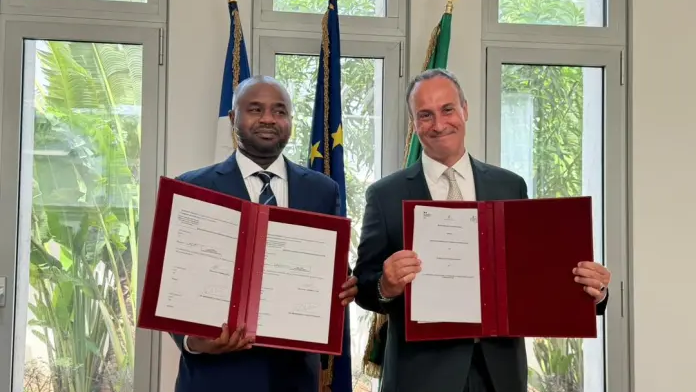
Legal Experts slam FIRS MoU with France over economic data exposure fears
A debate has erupted following the signing of a Memorandum of Understanding (MoU) between the Federal Inland Revenue Service (FIRS) and France’s Direction Générale des Finances Publiques (DGFiP) on December 10. While the FIRS stated that the deal is a critical step toward digital tax administration, legal experts and opposition figures are raising alarms over data sovereignty.The partnership aims to leverage on the decades of experience in AI-powered audits of France and the automated compliance systems as the FIRS plan to adopt this into the Nigeria Revenue Service (NRS) in January 2026.Oladipupo Ige, a legal expert argued that even advisory access can lead to data exposure, potentially giving a foreign power visibility into Nigeria’s economic heartbeat.Dr. Segun Adebayo warned that aggregated data, though anonymized, can reveal vulnerabilities, industry-specific compliance gaps, and revenue dependencies, providing France with leverage in future trade and loan negotiations.Meanwhile, the FIRS maintains that no raw taxpayer data will leave the country.The Nigeria Data Protection Commission (NDPC) is expected to conduct an independent review of the MoU. Meanwhile, opposition parties and the Northern Elders Forum are calling for the suspension of the deal until full public disclosure of the terms is made to the National Assembly.