
In January 2026, a series of reports began circulating in the football community, suggesting that Robert Moreno, the former manager of the Spanish national team, Monaco, and Granada, had been dismissed from his role at Russian club FC Sochi due to an addiction to artificial intelligence.The rumors allege that Moreno outsourced his tactical, logistical, and transfer decisions to the AI chatbot, ChatGPT, leading to a breakdown in team discipline and poor results.Former FC Sochi Director Andrei Orlov in an interview with a Russian media alleged that Moreno used ChatGPT to plan a travel schedule for an away match in Khabarovsk that made players remain awake for 28 consecutive hours. According to Orlov, the coaching staff became unsettled by Moreno’s rigid adherence to AI-generated training routines. “An additional tool, why not? But for Moreno, ChatGPT eventually became one of his primary tools. I checked the plan and was shocked; there was no sleep scheduled. We couldn’t understand why we had to wake up at five in the morning and train at seven” – Orlov Daily Tech also gathered that Moreno used AI to rank potential strikers based on data from Wyscout, leading to the signing of Artur Shushenachev, a decision labeled by the club as a failure.Moreno’s tenure at Sochi ended in September 2025 after the team secured only one point in seven matches, resulting in relegation. What is Moreno saying? Robert Moreno has denied the allegations laid before him by issuing formal statements to news outlets like Marca and La Razón. He argues that the narrative of him being “fired for AI” is an oversimplification of a standard departure following a period of poor on-field performance.Moreno stated that while he utilizes modern analysis software, such as GPS tracking and video scouting platforms, human judgment remains the final authority in his work. “I have never used ChatGPT or any AI to prepare for matches, decide line-ups, or choose players. That is completely false. Technology helps process information faster, but the sporting decisions are always made by the coaching staff” – Moreno The former Spain boss stated that the spread of these stories was due to a personal fallout with Orlov, emphasizing that his career began in data and video analysis long before the current AI boom. He stated that his departure from Sochi was a mutual agreement between him and the club hierarchy.
Innov8Zaria 2.0 Day 2 – If You No Know, You No Go Know Weytin You Need
All through my day at Innov8Zaria, I kept thinking about the people who were not there. The people with certain barriers – barriers that something as simple as knowing and exposure could solve. Those without media reach or a communication ecosystem. Those totally disconnected from growth conversations. And they are not only in the grassroots. They are on the roadside. In offices. In stores. At mechanic workshops. At mai shayi joints. They are the people who do not see value in public speaking events. Sitting in one of the Day 2 sessions, I realised that everything being discussed – skills, positioning, relevance, global opportunities – assumed one thing: that you already knew what to look for. That you already had language for it. The room was full of people being told how to integrate skills, how to upskill, how to stay relevant. But outside that room are thousands who don’t even know what they are supposed to integrate into. If you no know, you no go know weytin you need. We talk a lot about the informal economy powering the majority of our people. Yet, these same people are often excluded – and programmes are intentionally not designed with them in mind. They have nuances: language barriers, limited time, gaps in concept understanding, and mindset limitations that mere motivational talks could begin to shift. As a boy, I used to wonder: if Nigeria is the giant of Africa, why is it so hard to thrive? Now over 230 million strong, with the North alone accounting for more than half of that population, the scale of potential is impossible to ignore. Nearly 70% of young people in the North-East and North-West are under 25 – that’s tens of millions of possible dynamos. But I’ve learned that population only signals potential, not prosperity. According to Nigeria’s National Bureau of Statistics, about 93% of the employed workforce – roughly 66 to 70 million people – operate within the informal sector. In the North and North-East, young people rely heavily on doing informal work in agriculture, petty trade, and services, often due to insecurity, limited access, and skills gaps. The informal economy keeps people alive. But without the exposure, structure, and pathways, it also quietly traps many of us in repeated cycles of low productivity work and limited growth. And that is the gap Day 2 kept reminding me of – not a lack of talent, but a lack of access to knowing what is even possible.

Lagos Judge orders 48 suspects, aged 24-76, to SSS over illegal funds
A Federal High Court in Lagos has ordered 48 individuals to report to the State Security Service (SSS) regarding allegations of fraud and the illegal receipt of funds.The legal action emanated from a 2025 filing (Suit No: FHC/L/MISC/649/2025) involving an investigation into financial irregularities. Daily Tech gathered that the individuals named in the suit are scattered across ten Nigerian states, including major economic hubs such as Lagos, Abuja, Kano, and Rivers. The court presided by Justice Mohammed Umar, established a 60-day window from the date of the public notice for the named individuals to present themselves at the SSS Lagos Command in Shangisha. The list of 48 suspects includes individuals ranging in age from 24 to 76.The court stressed that the order provides an opportunity for the individuals to respond to allegations of illegal money transfers and fraud; “The purpose of this visit is for them to clear their names regarding the fraud allegations. The court warned that this is a formal legal requirement under Suit No: FHC/L/MISC/649/2025. They are hereby directed to make themselves available to the State Security Service (SSS), Lagos Command, within 60 days of this publication” The prosecution argues that the 48 individuals are linked to the illegal receipt of money and that their appearance is necessary to conclude the investigation into financial fraud.
Innov8Zaria 2.0 Day 2 spotlights skills, global work, and question of access
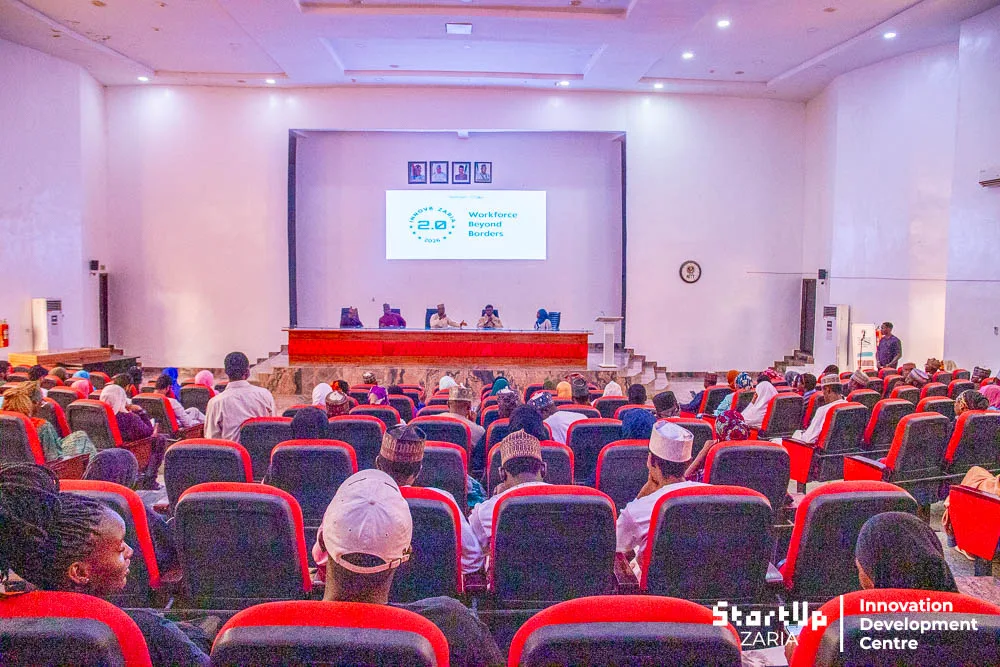
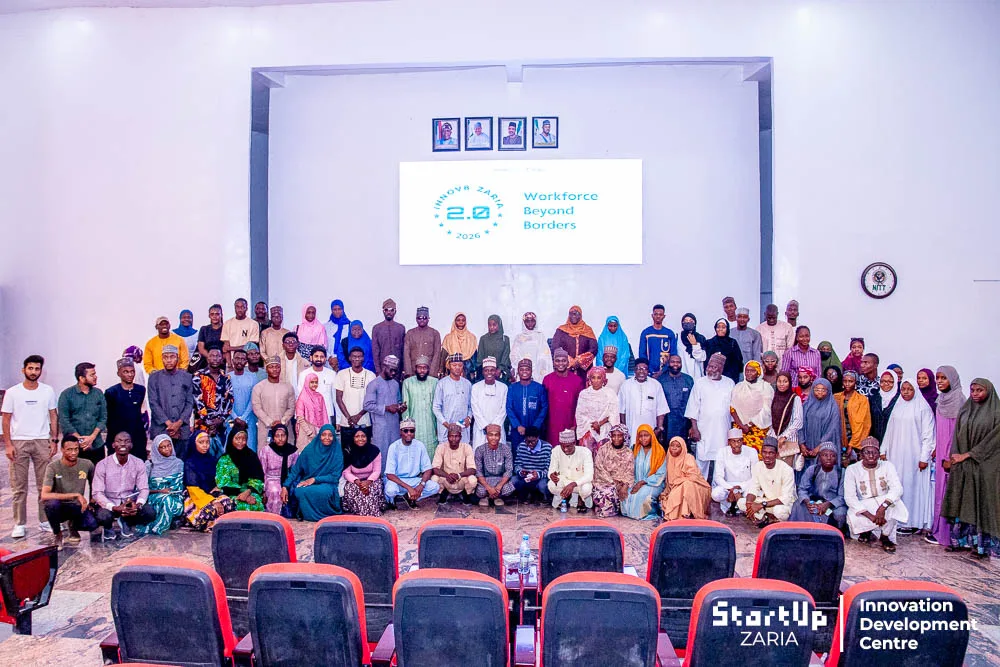
Day 2 of Innov8Zaria 2.0 shifted focus from exhibitions and networking to deeper conversations around skills, global employability, and how young people can position themselves in a fast-changing world of work. Sessions throughout the day brought together students, founders, and professionals to examine how local talent can remain relevant amid rapid technological change, rising competition, and shifting market demands. Unlike the buzz of the Marketplace Day, Day 2 was quieter and more reflective. Attendees listened closely, took notes, and asked careful questions about careers, growth pathways, and long-term relevance. Conversations on Skills and Positioning Across sessions, speakers repeatedly emphasised that employability today goes beyond academic qualifications. Participants were encouraged to think critically about how their fields of study, interests, and experiences connect to real-world problems. During one session, a speaker noted that skills only become valuable when people understand where and how to apply them, cautioning against learning tools in isolation without context. Another panelist added that employers are increasingly less concerned with certificates and more focused on how people think and the value they can contribute. Several attendees nodded in agreement as discussions highlighted adaptability, problem-solving, and relevance as core expectations in today’s workforce. Sufwan’s Session: “Relevance Is Built, Not Found” One of the most resonant sessions of the day was led by Sufwan Idris, whose conversation around skills, relevance, and long-term growth struck a chord with many in the room. From an early age, Sufwan developed a passion for creativity and visual storytelling, which later shaped his career path as a digital creator today. He challenged participants to rethink how they approach learning, warning against chasing skills in isolation. At one point, he explained that many young people often “learn tools without learning context,” stressing that relevance comes from knowing the problem you are solving, for whom, and why it matters. “Tech skills open doors. Strong communication skills create global impact, remote jobs, and opportunities.And growth begins when you learn how to ask the right professional questions.” Sufwan also spoke about consistency, reminding the audience that growth is often gradual and unglamorous. He encouraged participants to stop waiting for clarity to arrive fully formed and instead build it through action, learning, and reflection. As the session progressed, the room grew quieter. Phones went down. People leaned forward. Daily Tech Nigeria spoke with several participants during the event. According to one attendee, the session helped explain why earlier efforts to learn new skills had lacked focus. Another participant said the conversation helped them articulate a feeling they had carried for a long time – the sense of wanting more, without knowing which direction to face. After the session, small groups formed around the hallways, continuing discussions about skills, exposure, and how to access conversations that often feel distant from their everyday realities. Bridging Local Reality and Global Opportunity Across Day 2 sessions, speakers acknowledged a recurring challenge: while global opportunities are expanding, access to the conversations that explain them remains uneven. One speaker explained that local initiatives and community-based work can scale internationally when individuals understand global standards, compliance, and market positioning. The session also encouraged participants from non-technical and creative backgrounds, stressing that integration – combining existing skills with emerging technologies – represents a major pathway into future opportunities. According to the speaker, relevance is built through incremental and consistent growth, urging participants to start where they are, solve real problems, and compound their capacity over time. A Day That Asked Bigger Questions By the end of Day 2, Innov8Zaria 2.0 had moved beyond motivation into more complex territory – raising questions about access, exposure, and inclusion. For some attendees, the sessions provided clarity. For others, they revealed how much remains unknown. Either way, Day 2 left participants thinking – not just about skills and opportunities, but about who gets to learn what they need to know, and when.

Google search trends show Nigerians turning to business, skills, and self-growth in 2026
Google search data from the first two weeks of January 2026 suggests that Nigerians are starting the year with a strong focus on building businesses, improving themselves, and securing better income opportunities. The search patterns reveal the more intentional and practical mindset of many Nigerians actively seeking ways to adapt to economic realities, evolving work patterns, and rising living costs. The data shows growing interest in entrepreneurship, flexible careers, health, and lifelong learning, with a population that is not waiting for conditions to improve, but is instead taking proactive steps to improve its prospects. According to Google’s trend report, entrepreneurship remains one of the strongest areas of interest for Nigerians in early 2026. Searches related to self-improvement and “becoming better” rose by about 40%, while queries around starting a business dominated Google’s “how to start” category. “How to start a business” recorded an 80% jump, making it the most searched phrase in its category. Digital and creator-led ventures, such as blogging, podcasting, and starting a YouTube channel, attracted high search volumes. The search data also reveals that Nigerians are not focused solely on income. Personal development featured strongly across multiple categories. Searches such as “how to be a better person” rose by about 20%, with many Nigerians looking for ways to improve their relationships, emotional intelligence, and communication skills. Well-being also emerged as a major theme in the searches. Interest in nutrition and healthy living surged, with searches for “how to eat healthy” and “healthy diet” rising by roughly 40%. Mental wellness followed a similar pattern, as searches for “how to meditate” increased significantly. Google West Africa’s Communications and Public Affairs Manager, Taiwo Kola Ogunlade, said the trends reflect Nigeria’s collective ambition and desire for growth. He described Google Search as a “cultural mirror”, showing what matters most to Nigerians as they plan their futures.

NELFUND loan repayment has not started for any beneficiary – Presidency
The Presidency has clarified that no beneficiary of the Nigeria Education Loan Fund (NELFUND) has been asked to start repaying their student loan, urging Nigerians to ignore viral claims suggesting otherwise. Dada Olusegun, Special Assistant to President Bola Tinubu on Social Media, made this known in a statement shared on his official X (formerly Twitter) account on Saturday. According to him, the loan scheme includes a two-year moratorium after completion of the National Youth Service Corps (NYSC), meaning repayment is not expected to begin anytime soon. Dada also shared a video of the Managing Director of NELFUND, Mr Akintunde Sawyerr, who described the repayment structure as simple, transparent and fair. “As it stands, the scheme will be two years old in March 2026 from when the first applications were made, and none of the beneficiaries has reached the repayment stage” – Dada Sawyerr explained that under the scheme, repayment responsibility largely rests on employers, not the individual graduates, except in cases where beneficiaries are self-employed. He added that a system is already in place to ensure compliance, especially for employers who may attempt to avoid their obligations. Addressing fears that loan beneficiaries could face travel restrictions, the NELFUND boss dismissed such claims, saying the scheme does not restrict movement or career choices. Sawyerr explained that the two-year window after NYSC was deliberately built into the programme to give young graduates time to stabilise. He added that repayment only begins in the third year, at a rate of 10 per cent of the beneficiary’s income, with deductions handled by employers. “We have a global standing instruction system to recover funds from employers who default. During NYSC, many people are not in a position to look for full-time jobs. The two years after that allow beneficiaries to find work, settle down, rent a house, even start a family. We are not chasing graduates around for repayment. Our engagement is with employers. Unless someone is self-employed, we don’t go after the individual” – Sawyerr Sawyerr stressed that taking a NELFUND loan does not in any way tie beneficiaries to the government and that people are free to travel, work, and build their careers, the only expectation is that when they earn, they contribute back so others can benefit.