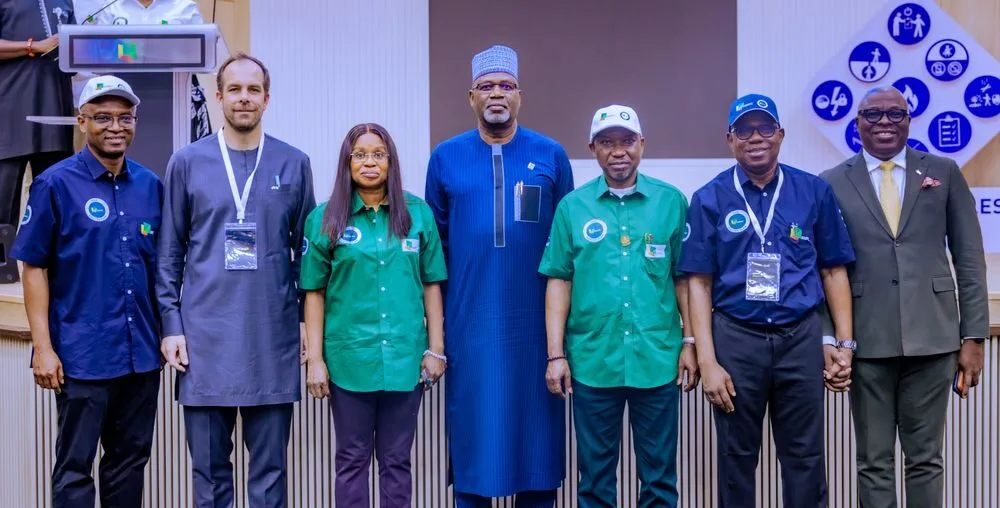
The Nigerian National Petroleum Company Limited has launched its Gas Master Plan 2026, outlining a strategy to raise national gas production to 10 billion cubic feet per day as part of efforts to deepen industrialisation and improve energy security. The plan was unveiled on Friday at the NNPC Towers in Abuja, the company said in a statement. According to NNPC Ltd, the roadmap reflects a renewed focus on execution in Nigeria’s gas sector, following years in which policy frameworks outpaced delivery. The company said the plan is designed to translate the country’s abundant gas resources into measurable economic value through infrastructure development, market expansion and improved commercial coordination. From policy to delivery Speaking at the launch, the Minister of State for Petroleum Resources (Gas), Ekperikpe Ekpo, said the Gas Master Plan 2026 signals a strategic shift from policy formulation to implementation across the gas value chain. Ekpo described Nigeria as a gas-rich country whose key challenge has been the effective monetisation of its reserves rather than resource availability. “Today’s launch represents a move towards a more integrated, commercially driven and execution-focused gas sector that aligns with Nigeria’s development priorities,” he said. Investment and production targets Group Chief Executive Officer of NNPC Ltd, Bashir Ojulari, said the plan is structured to support the Federal Government’s gas production targets while improving investor confidence. Ojulari said the roadmap aims to increase gas output to 10 billion cubic feet per day by 2027 and 12 billion cubic feet per day by 2030, while catalysing more than $60bn in new investments across the oil and gas value chain by the end of the decade. He added that the plan emphasises cost optimisation, operational efficiency and systematic resource development. Industry response Stakeholders at the event welcomed the initiative, describing it as a practical framework for aligning policy objectives with commercial execution. The Chairman of the Independent Petroleum Producers’ Group, Adegbite Falade, said the plan could help narrow the gap between policy intent and on-the-ground delivery, while the Chairman of the Oil Producers Trade Section, Matthieu Bouyer, commended NNPC Ltd for the scale of its ambition. Nigeria holds an estimated 210 trillion cubic feet of proven gas reserves, with upside potential of up to 600 trillion cubic feet, making it one of Africa’s largest gas resource holders.However, progress in domestic gas utilisation and export expansion has been constrained by infrastructure deficits, pricing challenges and regulatory uncertainty. NNPC Ltd said the Gas Master Plan 2026 was developed using a collaborative, investor-focused approach, with alignment across operators, partners and financiers. Key priority areas include gas supply to power generation, compressed natural gas, liquefied petroleum gas, mini-LNG projects and industrial offtakers. Why it matters The launch of the Gas Master Plan 2026 comes amid broader reforms in Nigeria’s energy sector, including the implementation of the Petroleum Industry Act and the Federal Government’s Decade of Gas Initiative. Analysts say a clearer focus on execution and commercial viability will be critical to improving gas market efficiency, attracting long-term investment and supporting Nigeria’s energy transition objectives.
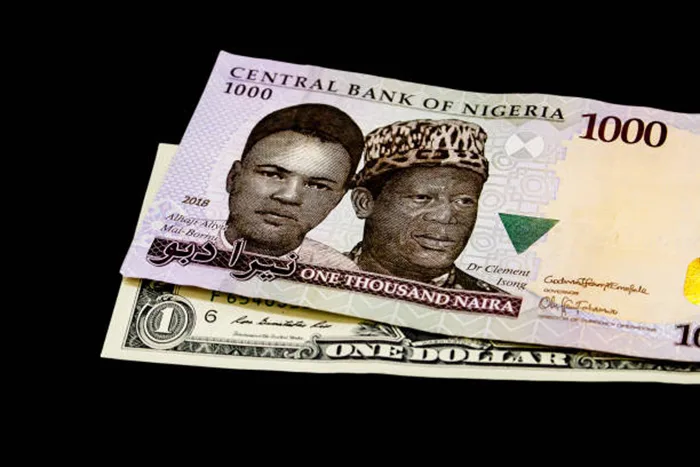
Naira rises to N1,391/$ as external reserves improve
The naira appreciated on a week-on-week basis to close at N1,391 to the dollar in the official foreign exchange market on Friday, supported by improved liquidity and a rise in Nigeria’s external reserves. Data obtained from the Central Bank of Nigeria showed that the local currency recorded a steady recovery during the trading week, reversing losses from the previous period. The naira closed at N1,391/$ on Friday, slightly weaker than N1,385/$ recorded on Thursday, but significantly stronger than earlier levels in the week. During Friday’s session, the currency traded between N1,381/$ and N1,392/$, with an average rate of N1,387.12/$. Earlier in the week, the naira exchanged at N1,416.5/$ on Monday, N1,409.5/$ on Tuesday, and N1,394/$ on Wednesday. On a week-on-week basis, the naira appreciated from N1,421.9/$ recorded at the close of the previous week. The gains were also reflected in the parallel market, where the naira is strengthened to N1,453/$ on Friday from N1,490/$ on Thursday. Findings showed that the gap between the official and parallel market rates narrowed significantly by the end of the week, easing pressure on the local currency. Meanwhile, Nigeria’s external reserves rose to $46.18bn during the week, providing additional support for the naira. The reserves recently crossed the $46bn mark for the first time in nearly eight years, according to data from the apex bank. The Central Bank of Nigeria has projected that the country’s external reserves will continue to rise in 2026, driven by stronger foreign inflows and ongoing reforms in the foreign exchange market. The CBN also said improved transparency and efficiency in the FX market would help narrow the gap between official and parallel market rates.
MultiChoice introduces subscription cost-sharing
MultiChoice Group has launched a new feature on the MyDStv app that allows users to split the cost of their monthly subscriptions. This shared payment option enables a primary account holder to send a payment link to a second user, making the division of the monthly bill between two parties possible. This new feature aims to address affordability concerns and the rising competition in the media market.Recall, MultiChoice reported a loss of nearly 3 million traditional TV subscribers over the last two years, due to high inflation, naira devaluation, and the expansion of global streaming services.In late 2025, French media giant Canal+ finalized a majority takeover of MultiChoice, securing over 94% ownership. The new shared payment feature, as well as hardware price cuts and entry-level content additions, marks one of the first major product updates under this new ownership structure to stabilize its subscriber base. “What matters now is how DStv fits into people’s lives month after month. We want customers to have options that make it easier to stay connected, even when budgets are tight” – Willington Ngwepe, CEO of MultiChoice The company has added channels like WWE, Trace Ngoma, and Trace Gospel to its most affordable “Access” packages to improve value at the bottom of its pricing tier.
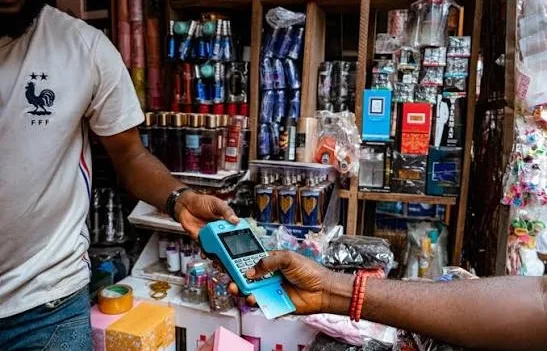
Moniepoint reports ₦412 trillion in 2025 transactions
Moniepoint Inc. has released its official 2025 Year in Review report, marking a decade of operations with massive growth in transaction volume and credit disbursement. According to reports, the fintech company now handles the vast majority of in-person digital payments in Nigeria, processing 14 billion transactions over the past year.The company processed ₦412 trillion (approximately $250+ billion) in total transaction value across 14 billion individual transactions in 2025. The firm disbursed ₦1 trillion in credit to Nigerian businesses,and also reported that recipients saw an average growth rate of 36% after accessing these funds.Moniepoint now facilitates 80% of all in-person Point of Sale (POS) payments across Nigeria.Founded in 2015 as TeamApt by Tosin Eniolorunda and Felix Ike, Moniepoint originally focused on providing infrastructure for banks. It has since evolved into a comprehensive financial services provider for small and medium-sized enterprises (SMEs) and individual consumers. “Our journey has been one of intentional evolution. What started as a passion to solve overlooked problems has evolved into a platform powering the dreams of millions. As 83% of employment in Africa exists in the informal economy, our mission to create financial happiness is an operational mandate” – Tosin Eniolorunda, Group CEO of Moniepoint Inc. In 2025, the company secured a Series C funding round exceeding $200 million, backed by investors including Google’s Africa Investment Fund, Visa, and the International Finance Corporation. This capital has fueled its expansion beyond Nigeria, including the launch of MonieWorld in the United Kingdom to facilitate diaspora remittances.Moniepoint attributes its success to the use of alternative data points, such as payment behaviors and transaction histories, to provide credit to the informal sector where traditional collateral is often unavailable.
SportyBet apologises as UCL glitch locks bettors out of bets, cash-out
SportyBet has issued an explanation over a technical failure on Wednesday night that prevented users from accessing active betting slips during football fixtures. During the outage, SportyBet users could place new bets, but were unable to view or manage existing ones, preventing them from reacting to live match developments.The disruption occurred during the simultaneous broadcast of 18 UEFA Champions League matches, which was a crucial period for live sports betting. Existing users were reported locked out of open tickets and the cash-out function, which allows bettors to settle stakes before a match concludes, while the platform continued to accept new wagers.SportyBet has officially confirmed the incident, attributing the disruption to a technical issue and that the full visibility of open bets has since been restored. “A technical issue temporarily affected the visibility of open bets for some users. The problem has since been resolved, and affected users will be contacted with an apology” – SportyBet Affected users have filed complaints with the FCCPC, alleging unfair business practices due to the inability to access funds during the technical glitch.
Paga unlocks global payments as PayPal returns to Nigeria after 20-year absence
Nigerian fintech pioneer Paga has successfully bridged a two-decade-long divide in the global financial market, serving as the official infrastructure partner for PayPal’s re-entry into Nigeria. The collaboration, announced on January 27, 2026, allows Nigerians to receive international payments directly into local wallets for the first time since 2004. Since 2004, PayPal has limited Nigerian accounts to outbound transactions only, due to alleged digital fraud. PayPal operated in Nigeria with heavy restrictions, allowing users to send money but preventing them from receiving or withdrawing it locally. This limitation forced many Nigerians to rely on unregulated third-party workarounds to access their earnings from international platforms like Upwork and Fiverr. While a 2014 deal with First Bank and a 2021 partnership with Flutterwave attempted to bridge this gap, they remained limited to outbound payments or business-only flows.The relationship between PayPal and the Nigerian market has been strained. As recently as December 2025, reports of PayPal’s return were met with backlash and rejection from the Nigerian public.Many users expressed frustration over the two-decade exclusion, which forced freelancers and small businesses to rely on informal or expensive workarounds.PayPal stressed that the Nigerian digital economy has matured sufficiently to support secure, cross-border commerce at scale.The new partnership utilizes Paga’s established digital infrastructure to bridge this gap by connecting Nigeria’s domestic banking system with PayPal’s network. Users can now receive international payments from over 200 countries directly into their Paga wallets.The integration enables the instant conversion of international funds into Naira, which users can then transfer to local bank accounts, use to pay bills, or spend via Paga cards.The deal provides Paga’s 21 million users with direct access to PayPal’s ecosystem of more than 400 million active accounts.