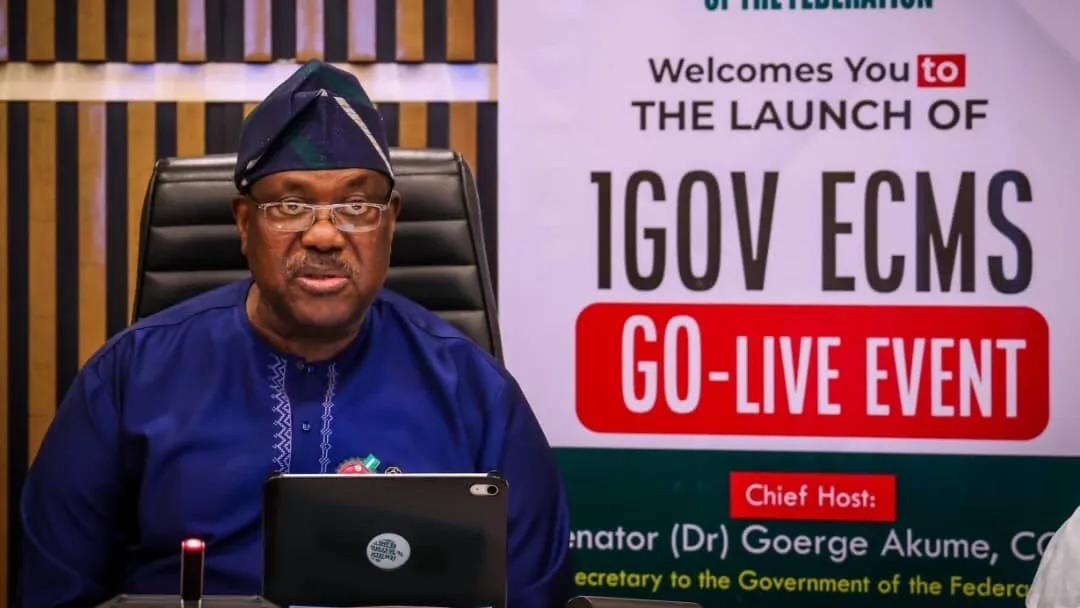
By Oluwatunmise Omoseyin The Federal Ministry of Innovation, Science and Technology (FMIST) has officially gone live on the 1GOV Enterprise Content Management System (ECMS), marking a step towards a fully digital and accountable Public Service nationwide. The Go-Live event took place at the headquarters of the ministry in Abuja, led by the Head of the Civil Service of the Federation (HCSF), Mrs. Didi Esther Walson-Jack, OON, mni, alongside the Honourable Minister of Innovation, Science and Technology, Dr. Kingsley Tochukwu Udeh (SAN). The project was fully backed by the Galaxy Backbone Limited, which is a digital infrastructure provider of the Federal Government. Dr. Kingsley Tochukwu Udeh (SAN), represented by the Permanent Secretary, Mr. Philip Ndiomu, described 1GOV as not merely an ICT solution, but a governance reform instrument. According to him, the platform is aimed towards fostering smarter governance, institutional reform, transparency, and better service delivery for Nigerians. Today, we are not just unveiling technology. We are igniting a new digital culture, one that replaces bureaucracy with efficiency, paper with performance, and delays with decisive action – the Minister stated Dr. Udeh added that the FMIST launch of the 1GOV ECMS aligns with the Renewed Hope Agenda, urging directors and staff of the Ministry to adopt the platform with discipline and purpose. He stressed that technology alone cannot drive transformation without consistent and people driven use. Speaking at the event, Mrs. Walson-Jack, represented by the Permanent Secretary, Service Policies and Strategies Office of the Head of Civil Service of the Federation, D. Isiaku Musa Mohammed, described the ECMS deployment as a strategic and irreversible shift from fragmented, paper based processes to a secure, integrated, and accountable digital work environment. She emphasized that for a Ministry focused on innovation, science, and emerging technologies, effective digital records and workflow management are essential, not optional. The Ministry joins a growing list of Ministries, Departments, and Agencies (MDAs) using the ECMS across the Federal Civil Service. The system, hosted on the 1GOV Cloud platform, supports secure digital records, automated workflows, electronic approvals, interoperability, and controlled access to sensitive information.
Best performing banking stocks in Nigeria in 2025
By Aminu Umar Turaki The banking stocks of Nigeria, in 2025 delivered a mixed but positive performance in 2025, with gains driven by selective investor confidence rather than broad-based sector optimism. Data from the Nigerian Exchange (NGX) revealed that the NGX Banking Index rose by 39.77% during the year. While this represents a solid recovery for banking equities, it lagged behind the 51.19% gain recorded by the NGX All-Share Index (ASI). Out of the 12 banking stocks listed on the Exchange, only five outperformed the overall market, with stronger balance sheets, clearer growth strategies, and more predictable earnings. Institutions perceived to be better positioned to manage foreign exchange volatility, rising funding costs, and regulatory pressures attracted stronger demand by investors. Wema Bank Plc emerged as the top performer of the sector, posting returns of over 100%, while several tier-one and mid-tier banks recorded strong double-digit gains. However, some major lenders notably, Fidelity Bank Plc recorded a modest gain of 8.57%, while Access Holdings Plc ended the year with an 11.95% decline, with concerns around integration risks, capital requirements, and earnings pressure. UBA’s share price rose from ₦34.00 to ₦41.65, due to support by investors in its pan-African operations, steady earnings profile, and growing digital banking footprint. Sterling advanced from ₦5.60 to ₦7.05, driven by improved sentiment around its retail banking strategy and strengthening asset quality. FCMB gained from ₦9.40 to ₦12.05, buoyed by retail-led growth initiatives and investment in digital banking services. Zenith Bank closed the year at ₦61.80, up from ₦45.50, reinforcing its reputation for earnings consistency, strong liquidity, and reliable dividend payouts. Ecobank rose from ₦28.00 to ₦41.90, supported by diversified pan-African revenues and improvements in operational efficiency. Jaiz Bank climbed from ₦3.00 to ₦4.55, due to the growing acceptance of its non-interest banking model and speculative momentum in the second half of the year. GTCO closed 2025 at ₦90.70, benefiting from a strong investor preference for well-capitalised tier-one banks with predictable cash flows. First HoldCo surged from ₦28.05 to ₦47.90, driven by renewed confidence in its restructuring efforts, capital position, and improving earnings outlook. Stanbic IBTC rose from ₦57.60 to ₦100.00, achieved by diversified earnings across banking, asset management, and pensions, as well as strong dividend appeal. The performance of banking stocks in 2025 shows a shift toward selective investing rather than blanket exposure to the sector. Investors usually prioritised earnings resilience, capital strength, and strategic clarity amid a challenging macroeconomic environment.
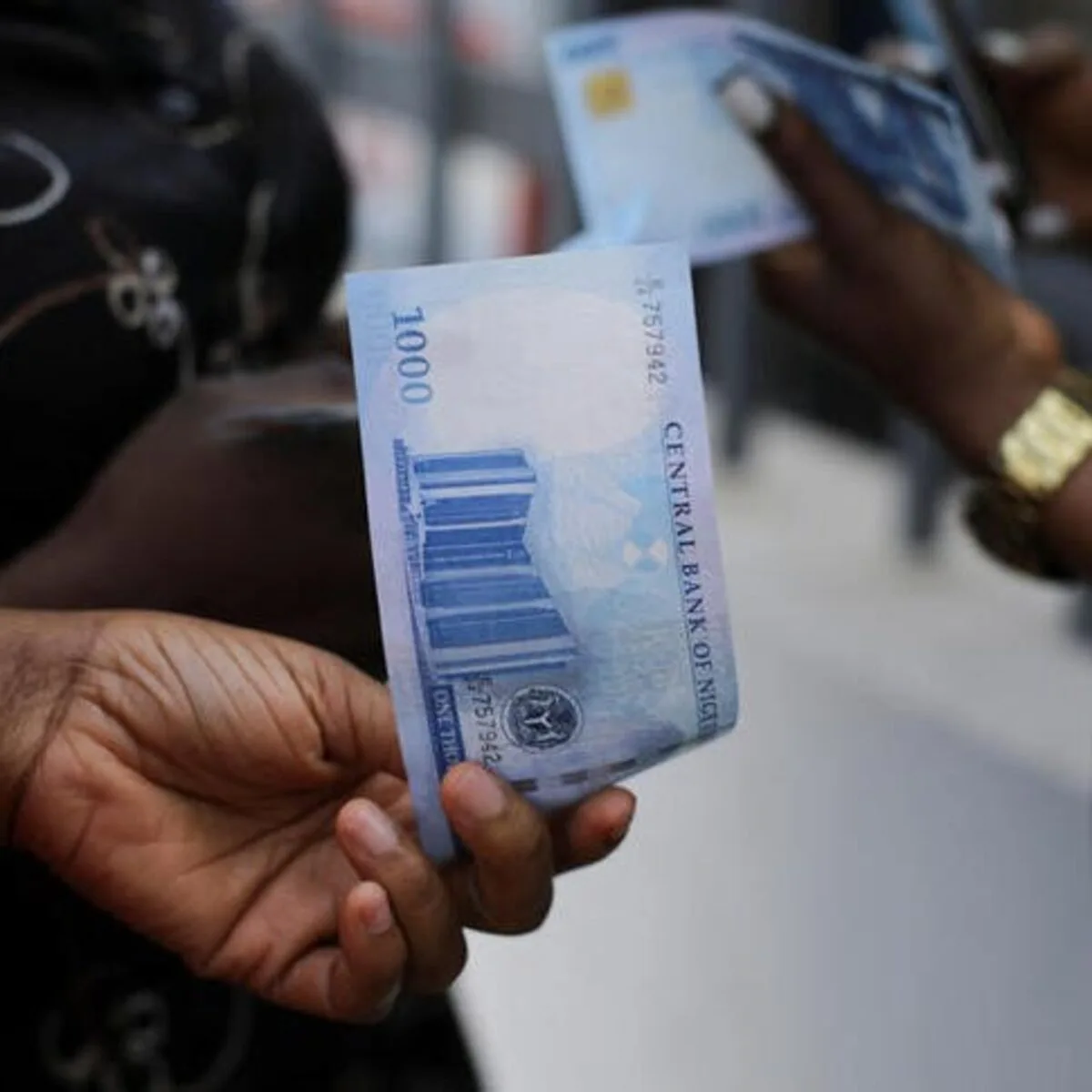
Naira records first annual gain in 13 years, closes 2025 at ₦1,429/$
By Aminu Umar Turaki. The naira, ended 2025 on a stronger note, closing at ₦1,429 to the US dollar on December 31, according to official data from the Central Bank of Nigeria (CBN). This represents a 7.4% appreciation compared to the ₦1,535/$1 recorded at the close of 2024, marking the naira’s first full-year gain since 2012. It also ends 13 consecutive years of annual depreciation, making 2025 a turnaround for the currency. CBN data show that the naira experienced volatility during the year, with its weakest point recorded in April 2025, when it fell to ₦1,602/$1. However, a steady recovery began from May and gathered momentum in the second half of the year.The naira opened the year at ₦1,538.50/$1 in January. It traded relatively flat in February before falling in March and April.From May through June, the currency began to recover. September marked a turning point, with the naira trading below ₦1,500/$1 for most of the month. The rally continued into October, dipped slightly in November, and strengthened again in December to close the year at ₦1,429/$1. Analysts attribute the improved performance of the naira to foreign exchange reforms introduced by the Central Bank of Nigeria in 2024, alongside tighter monetary policies and improved FX inflows. This development has reduced trading and improved price transparency in the FX market.
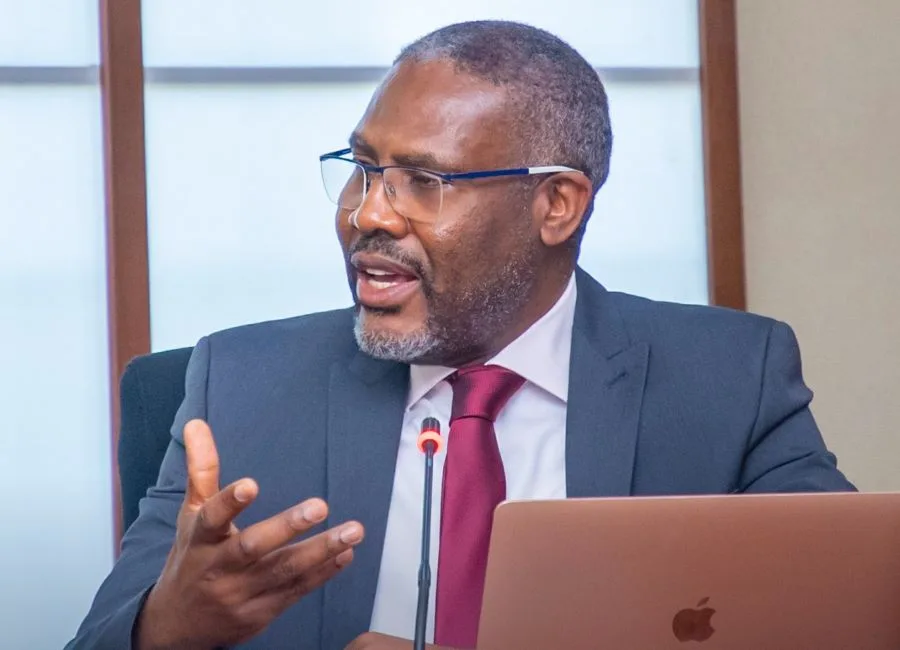
Nigeria’s telecom industry set for expansion in 2026 after stabilisation year – ATCON
By Aminu Umar Turaki Nigeria’s telecommunications sector is to move from a period of consolidation in 2025 into a phase of expansion in 2026, according to projections by the Association of Telecommunication Companies of Nigeria (ATCON). The ATCON President, Mr Tony Emoekpere, disclosed this in an interview with the News Agency of Nigeria (NAN) in Lagos, making reference to renewed investor confidence, growing digital demand, and improved coordination between industry players and government agencies as key growth drivers. Emoekpere said the sector is entering 2026 on stronger footing, following collaborative efforts among telecom operators, regulators, and the Federal Government aimed at deepening digital inclusion across the country. Thee ATCON President described the year as one of stabilisation and disciplined capital management. He stressed that despite significant challenges, including high energy costs, foreign exchange volatility, expensive equipment imports, and persistent Right-of-Way (RoW) issues, industry players remained committed to operations. According to him, telecom operators, tower companies, and internet service providers focused on strengthening networks in high-traffic areas while accelerating the adoption of solar and hybrid energy solutions to reduce dependence on diesel. He added that data from the Nigerian Communications Commission (NCC) shows Nigeria’s broadband penetration surpassed 50% in 2025, driven largely by increased data consumption. Services such as digital payments, streaming platforms, cloud computing, and other online applications have become central to daily life, boosting demand for reliable connectivity. Emoekpere also commended the NCC for sustaining investor confidence through transparent reporting, enforcement of Quality of Service (QoS) standards, and effective spectrum management. He stated that the growing demand from fintech, artificial intelligence, and other data-intensive industries will fuel further expansion. Emoekpere said telecom operators plan to ramp up investments in data centres and last-mile broadband infrastructure. This will include expanded deployment of fibre-to-the-home (FTTH) networks and fixed wireless access (FWA) solutions. He stated that the effective enforcement of telecom infrastructure as critical national assets will be crucial to achieving growth targets in 2026. He called for stronger collaboration to protect fibre routes and telecom towers from vandalism, alongside the harmonisation of Right-of-Way charges across states. The ATCON President also emphasized that the continued burden of multiple taxation on operators, urging authorities to address the issue to support sustainable sector growth. Nigeria recently crossed the 50% broadband penetration threshold for the first time since the implementation of the National Broadband Plan (2020-2025). However, the country is still expected to fall short of the Plan’s 70% target by the end of 2025. NCC data shows that Nigeria recorded 109.6 million broadband subscriptions as of November 2025, translating to a penetration rate of 50.58%, up from 49.89% in October. Despite this progress, broadband penetration has grown by just over 6% so far in 2025, compared to 44.43% at the end of 2024.

AI set to overhaul data centres in 2026, says Schneider Electric
By Oluwatunmise Omoseyin Schneider Electric has predicted that 2026 will be a major turning point for data centres, as artificial intelligence moves from disruption to full scale integration across industries. The Country President of Schneider Electric West Africa, Ajibola Akindele, while speaking about the future of the sector, said the breakthroughs of AI in recent years were only the beginning, stressing that the next phase would focus on AI inferencing and deeper integration into data centre operations. He explained that since ChatGPT brought AI into public awareness in late 2022, the technology has reshaped sectors such as healthcare, education and business. According to him, 2026 will be a defining year as attention shifts from large language models to AI systems that can reason, learn and operate with minimal supervision. Akindele said the data centre industry is already preparing for heavier and denser AI workloads, which will require advanced cooling systems, retrofitting of existing facilities, and the rise of what he described as AI factories. Digital twins, he added, will also become more common as operators seek greater efficiency and resilience. AI is no longer just a tool; it is a transformative force that demands the right infrastructure to unlock its full potential. In 2026, organizations that strategically invest in AI ready data centers, with advanced cooling, modular designs, and energy efficient solutions, will gain the agility, resilience, and competitive edge needed to lead in the AI driven economy – Akindele stated. He stated that manufacturers using AI for demand forecasting have improved accuracy significantly, while hospitals are applying AI to billing, appointment scheduling and identifying high risk patients. Financial institutions are also using AI for fraud detection, payment optimisation and risk management. In data centres, AI driven cooling systems, predictive analytics and energy management tools are helping operators reduce waste and integrate renewable energy more efficiently. Akindele said AI agents will soon become central to business processes, increasing the demand for specialised data centre capacity. He described AI factories as data centres designed to generate intelligence rather than simply store data. These facilities handle model training, fine tuning and inferencing to produce insights that can directly drive revenue and decision making. According to him, AI rack densities are expected to take an upward trajectory, reaching as high as 240 kW per rack in 2026, with research already exploring even higher levels. This growth, he said, will make advanced liquid cooling a standard requirement rather than an option. Akindele added that smaller companies will rely on upgrading existing facilities instead of building new ones, making AI readiness more accessible beyond large global players. He also said the use of diverse energy sources, including renewables and battery storage, will remain critical as data centres prepare for an AI driven future.

Nigerian banks deposits ₦3.7 trillion at CBN as liquidity surges on Christmas Eve
By Aminu Umar Turaki Nigerian commercial banks deposited an estimated ₦3.7 trillion into the Central Bank of Nigeria’s (CBN) Standing Deposit Facility (SDF) on December 24, highlighting one of the strongest liquidity buildups in recent months. CBN financial data covering December 22 to 24, 2025 shows a sharp rise in idle funds placed with the apex bank just ahead of the Christmas holiday, despite earlier efforts by the CBN to withdraw excess cash from the system. On December 22, the CBN had conducted an ₦1.7 trillion Open Market Operation (OMO) auction to mop up liquidity. However, the latest figures suggest that banks remained heavily cash-laden. What the data showsCBN records indicate that deposits placed in the SDF rose from ₦2.47 trillion on December 23 to ₦3.67 trillion on December 24, representing an increase of about ₦1.2 trillion in just 24 hours.Banks’ opening balances at the CBN also climbed from ₦163 billion to ₦223 billion, further confirming that the banking system entered the festive period with excess cash. This comes despite the CBN having raised more than ₦11.2 trillion through OMO bills since November, while repaying approximately ₦11.1 trillion, suggesting that liquidity pressures remain elevated. Analysts say the trend reflects a risk-averse lending environment, with banks preferring to earn a relatively safe overnight return of about 22.5% via the SDF rather than expand credit under tight monetary conditions. Inside the liquidity surgeThe data also points to a possible shift in the CBN’s liquidity management strategy. Rather than issuing new short-term debt aggressively, the apex bank appears to be allowing market forces to rebalance after weeks of intense OMO activity.On December 23, the CBN processed an OMO repayment of ₦1.14 trillion, part of a broader issuance-repayment cycle that saw roughly ₦22.3 trillion move through the system within eight weeks. OMO stop rates during the period ranged between 19% and 22%, but the CBN has increasingly relied on the SDF to absorb excess funds—an approach that tightens liquidity without adding to interest costs.Interest payments on OMO auctions for November and December alone reportedly approached ₦2 trillion, making passive liquidity control a more cost-efficient option. Market watchers believe the CBN may return to more aggressive OMO interventions in early 2026, particularly to rein in inflation, support foreign exchange stability, and manage government funding needs. The surge in SDF deposits highlights weak credit expansion, rising caution among banks, and limited investment opportunities in the real economy. For policymakers, it signals the need to balance liquidity control with economic growth. For investors, it suggests a banking sector adopting a wait-and-see stance as macroeconomic uncertainties persist heading into 2026. The Standing Deposit Facility (SDF) allows banks to earn interest on excess overnight funds, currently around 22.5%.The Standing Lending Facility (SLF) serves as the opposite window, offering short-term loans to banks at higher rates. Rising SDF usage indicates high liquidity but weak lending appetite.The CBN raised over ₦11.2 trillion in OMO bills between November and December 2025 and repaid nearly the same amount. Recent trends show a shift toward passive liquidity management by the apex bank.