
By Aminu Umar Turaki Australia has introduced a new law that bans children under the age of 16 from using social media platforms. Following the implementation of the law, many teenagers discovered that their social media accounts were no longer accessible.The law places responsibility on major social media companies, including Meta, TikTok, and YouTube, to ensure that users under 16 do not have accounts on their platforms. Companies that fail to comply could face heavy financial penalties.Prime Minister Anthony Albanese said the law is designed to protect children from harmful online content. He described it as a necessary step that could encourage other countries to take similar action.Australia is the first country to introduce such a strict nationwide ban. Unlike in some other countries, parents are not allowed to give consent for children under 16 to use social media. The online safety regulator of the country, Julie Inman Grant, said authorities will begin monitoring social media companies to ensure compliance. She stressed that parents and children will not face punishment, as enforcement will focus solely on the companies.Many parents have welcomed the ban, believing it will help reduce cyberbullying and to protect the mental health of their children. However, critics argue the ban may make it harder for teenagers to stay connected with friends, especially those living far away. The Australian government has acknowledged that the law may face challenges in its early stages but stated that it is important to ensure safer online spaces for children.
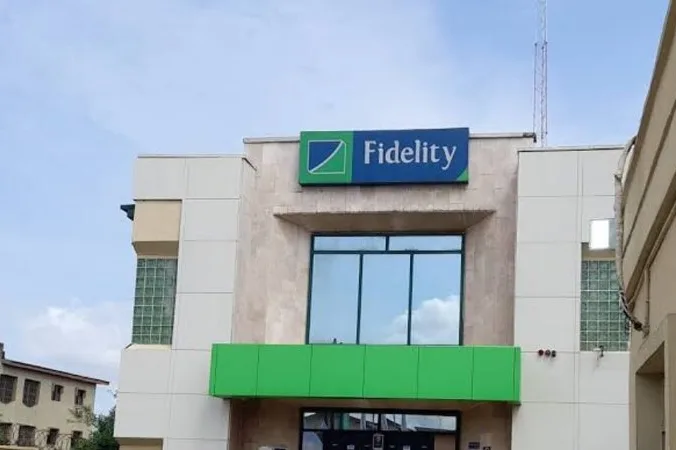
Fidelity Bank to restrict transactions, without TIN or NIN from Jan.
By Oluwatunmise Omoseyin Fidelity Bank has announced that it will begin restricting transactions on accounts that are not linked to a Tax Identification Number (TIN) or a National Identity Number (NIN) from January 1, 2026. The bank confirmed that the move is in line with the Nigerian Tax Administration Act (NTAA) 2025, which requires all bank accounts to be connected to a valid tax identity. Customers without a TIN will be required to use their NIN instead. Fidelity Bank, in a message sent across to all customers, warned that accounts without the required details may face transaction limits if the information is not updated before the deadline; Accounts that do not have a tax ID or NIN will be restricted from transacting starting January 1, 2026 – the bank stated The directive follows the federal government’s push for stronger tax compliance across the financial system. Taiwo Oyedele, Chairman of the Presidential Committee on Fiscal Policy and Tax Reforms, stated that the National Tax Administration Act (NTAA) provides the legal backing for banks to enforce full compliance nationwide. The government aims to improve tax collection, strengthen financial transparency, and reduce unreported income, by making it mandatory for all bank customers to link their bank accounts to their respective TIN or NIN. Fidelity Bank advised individuals and small business owners who have not registered a TIN or linked their NIN to do so as soon as possible, warning that failure to comply could result in limits on transfers, withdrawals, and other banking services.

STMicro ships over 5 billion chips to Starlink, deliveries to rise by 2027
By Oluwatunmise Omoseyin STMicroelectronics has shipped more than 5 billion radio frequency antenna chips to Elon Musk’s SpaceX for use in the Starlink satellite internet network. Remi El Ouazzane, the president of STMicro’s microcontrollers and digital integrated circuits division, in an interview, stated that shipments linked to Starlink could double within the next two years and that Starlink’s technology is likely to be adopted widely across the industry; The past 10 years of user terminals in terms of volume could actually double over the next two years. I expect many lower-orbit satellite players to leverage the technology – El Ouazzane The chips supplied by STMicro are radio frequency front end modules used in Starlink user terminals. They are designed to handle high data speeds and operate reliably in tough space conditions. STMicro has been working with SpaceX since around 2015, supplying components as Starlink expanded into a global satellite internet service. Starlink currently operates in more than 150 markets worldwide and serves around 8 million users, according to information published on its website. The network relies on thousands of low Earth orbit satellites to deliver broadband internet, particularly in areas with limited traditional connectivity. The space sector is moving from government led projects towards commercial networks. Companies such as SpaceX, OneWeb, Eutelsat and Amazon are investing heavily in low Earth orbit satellite systems, thereby increasing the demand for specialised chips that supports high data rates and withstand extreme environments. The company is also working with European partners including Thales and Eutelsat on projects like the Iris 2 satellite constellation by the European Union.
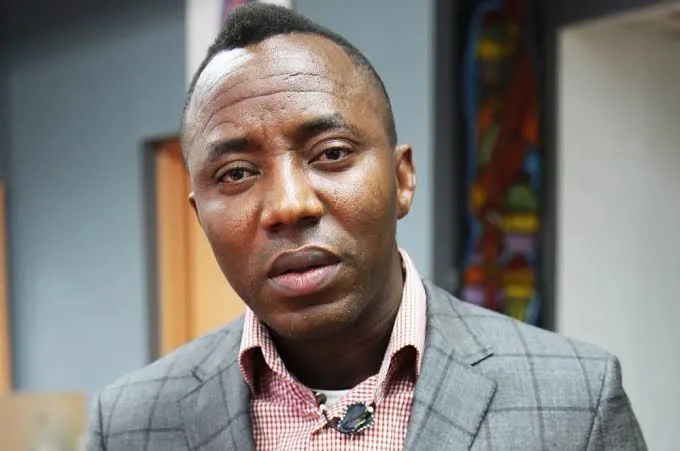
Sowore arraigned on cybercrime charges over tweet against President Tinubu
The Department of State Services (DSS) arraigned political activist and publisher Omoyele Sowore before a Federal High Court in Abuja on Tuesday, charging him with five counts of cybercrime and defamation for calling President Bola Tinubu a “criminal” in a social media post. After two earlier attempts to arraign him, Sowore pleaded not guilty to the charges. Justice Mohammed Umar, the presiding judge, granted him bail on self-recognition, considering his previous status as a presidential candidate. The five-count charge (FHC/ABJ/CR/484/2025) accuses Sowore of violating the Cybercrimes (Prohibition, Prevention, etc) Amendment Act, 2024, and the Criminal Code Act. The charges relate to posts Sowore made on X and Facebook in August 2025, where he allegedly labeled President Tinubu a “criminal.” The DSS also named X Incorp (formerly Twitter) and Meta (Facebook) Incorp as co-defendants, likely due to their refusal to remove the contested posts. Sowore, who ran for president under the African Action Congress (AAC) in 2019 and 2023, denied all five charges. Justice Umar granted bail without requiring a bond or sureties, a privilege given to prominent individuals like Sowore. He noted that Sowore’s international passport was already in court custody from a previous case. The judge also prohibited Sowore from making further statements that could threaten national peace and security, warning that violating this condition would result in bail revocation.

Police bust cult using WhatsApp channel ‘Red Chamber’ to recruit teens in Sokoto
Police in Sokoto, have arrested the leaders of a suspected cult group accused of using a WhatsApp group called the “Red Chamber” to recruit and initiate teenagers into their cult group.The crackdown, announced on Saturday, led to the arrest of three suspects, including the alleged mastermind, Usman Shu’aibu. The operation by the Anti-Kidnapping Unit exposes the new trend of digitalization adopted by criminal networks, to expand their reach and influence over the youth.The group, known locally as “Sai Malam,” operated discreetly across parts of Sokoto State. Investigators discovered that the WhatsApp group was central to their operations, promising secret powers and loyalty to new recruits.The suspects confessed to using the WhatsApp platform to initiate members remotely. Police described the strategy as an attempt to exploit impressionable young people who might be seeking belonging or protection.The breakthrough came Friday night when the Anti-Kidnapping Unit raided the group’s location. The Commissioner of Police, Ahmed Musa, framed the arrests as a response to public outcry regarding youth involvement in harmful secret societies.Police spokesperson Ahmed Rufai emphasized the need for parents to scrutinize their children’s digital footprint, stressing that social media is becoming a frontline for criminal manipulation. The police have launched a manhunt for fleeing members of the “Sai Malam” group, in order to restore law and order across the state.
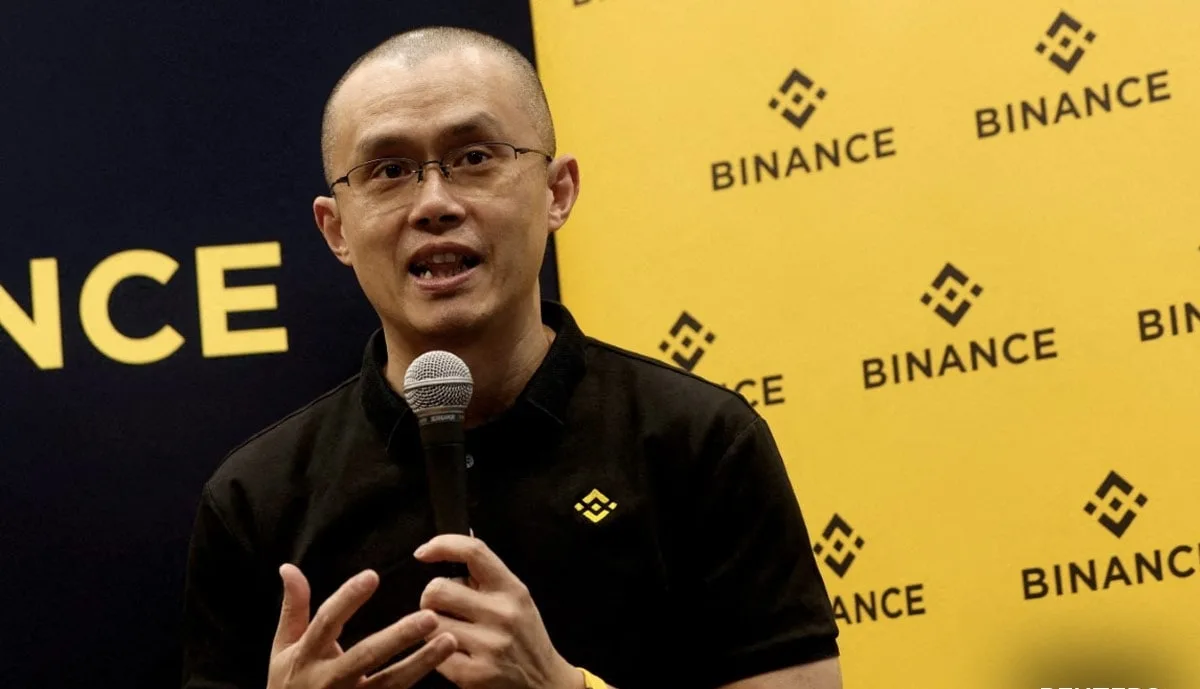
Binance and Founder Changpeng Zhao sued over alleged Hamas financing
Changpeng Zhao (CZ), the former CEO and founder of Binance, is facing a lawsuit in the United States alongside Binance itself, accusing the cryptocurrency exchange of “knowingly facilitated” transactions for Hamas and other U.S.-designated Foreign Terrorist Organizations (FTOs) for years.The lawsuit, filed in a North Dakota federal court by over 300 victims and family members of the October 7, 2023, attack on Israel, alleges that the platform’s failures in compliance directly and materially contributed to the terrorist activities. Binance has stated it cannot comment on ongoing litigation but affirms its compliance with international sanctions laws.The complaint alleges that Binance and CZ systematically assisted Hamas, Hezbollah, Iran’s IRGC, and other FTOs to transfer and conceal hundreds of millions of U.S. dollars through the platform, enabling their terrorist activities.The lawsuit claims Binance intentionally structured its operations using offshore entities and weak customer verification to make it difficult to trace funds and identify FTO accounts. In November 2023, Binance pleaded guilty to anti-money laundering (AML) and sanctions violations, agreeing to pay a $4.3 billion fine. CZ also pleaded guilty and resigned as CEO, serving a four-month prison sentence. This new lawsuit claims illicit transactions continued even after that settlement.CZ was recently granted a presidential pardon in October 2025, an act that itself sparked controversy due to his prior conviction for compliance failures.