
The Nigeria Inter-Bank Settlement System (NIBSS) has revealed that fraudsters stole approximately N400 million in 2024 by exploiting financial accounts opened with stolen identities. According to the latest NIBSS Fraud Report, the perpetrators primarily targeted the identities of senior citizens, using them to open fraudulent accounts where proceeds from illegal activities were funneled and dissipated. The report disclosed that some of these accounts were operated by an individual based in Asia, with verification selfies showing locations in Hong Kong across at least three financial institutions. However, NIBSS did not name the institutions involved. In one notable case, a corporate account for an oil and gas company was opened on July 30, 2024, using falsified documents and a registered company number sourced from the internet. Supporting documentation was fabricated to complete the process. On the same day, the account received N335 million in fraudulent proceeds, which were quickly transferred to unlicensed Bureau De Change (BDC) operators. Fortunately, law enforcement agencies, in collaboration with NIBSS, managed to recover all the stolen funds. Investigations led to the discovery of incriminating documents with an account officer, who has since been apprehended by the Economic and Financial Crimes Commission (EFCC). The report also highlighted alarming cases involving compromised bank staff who registered minors for Bank Verification Numbers (BVNs) to facilitate fraud. Two minors had enterprise accounts opened in their names, with one account receiving N495.3 million and another receiving N507 million. Both sums were subsequently moved out of these accounts. NIBSS confirmed that the bank agent responsible for registering these BVNs has been reported to law enforcement. Additionally, discussions are ongoing with the implicated bank to address its staff’s role in enabling these fraudulent activities. The NIBSS Fraud Report underscores growing concerns about identity theft and systemic vulnerabilities within Nigeria’s financial sector. In total, over one billion naira was funneled through fraudulent accounts tied to compromised BVNs in 2024. As the central system for inter-bank transaction settlements in Nigeria, NIBSS compiles industry-wide fraud reports to track attempted and successful fraud cases. These findings are crucial for identifying trends and strengthening measures against financial crimes. This latest report follows broader revelations that Nigeria’s financial sector suffered a staggering N52.26 billion loss to fraud last year, emphasizing the urgent need for enhanced security protocols across banks and payment platforms.
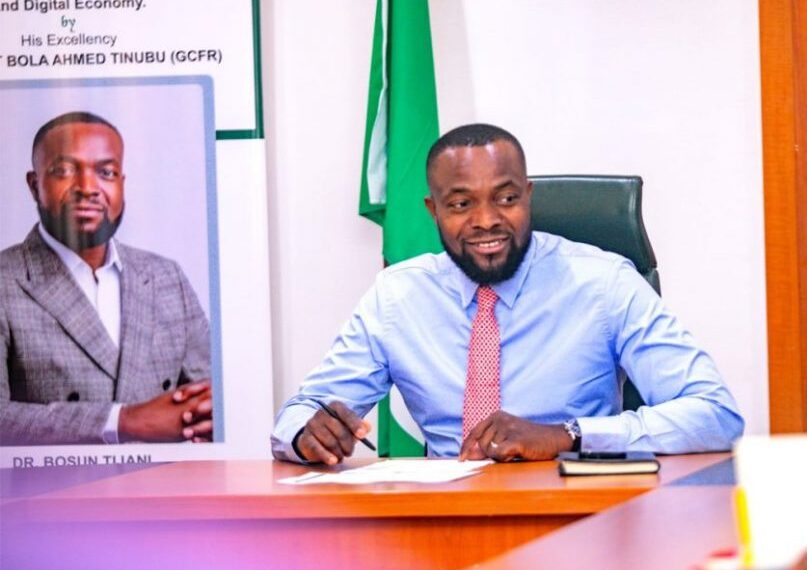
11 States agree to waive right of way fees – Minister Tijani
11 states have agreed to waive Right of Way (RoW) charges for telecom operators. This development was confirmed by the Minister of Communications, Innovation, and Digital Economy, Dr. Bosun Tijani, during a presentation of the Digital Economy report to President Bola Tinubu on Monday. The waiver is part of an ongoing federal government initiative aimed at reducing the cost of deploying telecom infrastructure, such as fibre optic cables, which are critical for reliable internet services. RoW charges are fees paid by telecom operators to state governments for permission to dig roads and lay these cables. However, inconsistencies in these charges across states have hindered investment in broadband infrastructure. Previously, seven states, Zamfara, Katsina, Anambra, Kebbi, Nasarawa, Bauchi, and Adamawa, had waived these fees. With the addition of four more states, the total now stands at 11. Minister Tijani expressed optimism that all states would align with this initiative before the end of President Tinubu’s second year in office. Despite federal efforts to standardize RoW fees at N145 per linear meter, disparities persist. For example, some states charge significantly higher rates, Ebonyi’s fees are reportedly up to 69 times more than Ekiti’s. This inconsistency has slowed network rollout and increased costs for telecom operators. According to the GSMA, a global body for mobile operators, reducing RoW charges nationwide could cut network deployment costs by approximately 15%. The federal government is also making strides in other areas of digital infrastructure. In 2024, it approved a $2 billion investment to deploy 90,000 kilometers of fibre optic cables across Nigeria. This project will create Africa’s third-largest fibre network after South Africa and Egypt. With additional support from the Ministry of Finance and a $500 million World Bank commitment, significant progress has already been made. The Digital Economy report presented to President Tinubu included several recommendations to further drive innovation and connectivity in Nigeria. Among them: Encouraging all government agencies to migrate to the OneGov.ng portal. Promoting youth empowerment through digital skills development. Accelerating the transition from IPv4 to IPv6 internet protocols. Establishing Digital Health Innovation Hubs. Developing preventive maintenance applications for Nigeria’s automotive industry. Minister Tijani noted that Nigeria is on track to become one of the first African nations to fully transition from IPv4 to IPv6. President Tinubu reaffirmed his administration’s commitment to youth empowerment and innovation during his response to the report. He directed Minister Tijani to coordinate with relevant stakeholders and streamline the implementation of the recommendations. “At the core of our administration is youth empowerment,” Tinubu stated. “We cannot relent on that, and we need everyone’s collaboration.” This renewed focus on digital transformation underscores Nigeria’s ambition to position itself as a leader in Africa’s digital economy while addressing long-standing infrastructure challenges. The waiver of RoW charges is expected to lower costs for telecom operators and accelerate broadband expansion across the country. This could lead to faster internet speeds and more reliable connectivity for millions of Nigerians, a critical step toward achieving nationwide digital inclusion.

Keystone Bank faces dual crises: transfer glitch and government takeover
Keystone Bank is currently navigating two major challenges that have placed it in the spotlight of Nigeria’s financial sector. The first involves a transfer glitch that mistakenly credited ₦5.7 billion to various recipients, leading to a court-ordered freeze on multiple bank accounts across several institutions. The erroneous transfers occurred between February 9 and 11, 2025, though the exact cause of the glitch remains unclear. While some financial insiders suggest it may have been a technical processing error, others suspect it could be linked to a coordinated exploitation of system vulnerabilities. Justice D.E. Osiagor of the Federal High Court in Lagos issued an order on February 18, 2025, directing banks to block transactions on the affected accounts until further hearings. The accounts span institutions such as Opay, Providus Bank, Access Bank, Zenith Bank, and others. This incident has raised concerns about the resilience of Nigeria’s banking infrastructure, particularly as transaction volumes continue to grow. Analysts warn that outdated systems and insufficient oversight may leave banks vulnerable to errors and fraud. However, a banking insider downplayed these fears, describing such incidents as “highly unusual” and representing only a small fraction of overall transactions. In a separate but equally significant development, Keystone Bank is now under government ownership following a court ruling. The Lagos State Special Offences Court recently ordered the forfeiture of 6.3 billion shares in the bank to the Federal Government. The ruling stems from allegations that the bank’s controlling shares were fraudulently acquired using public funds. Despite these challenges, the Central Bank of Nigeria (CBN) has assured customers that Keystone Bank remains stable and fully operational. The CBN emphasized its commitment to ensuring the safety and soundness of the banking sector. These dual crises underscore the need for strengthened oversight and modernization within Nigeria’s financial system to prevent similar occurrences and maintain public confidence in the sector.

Nigeria takes bold steps to prevent fibre cuts disrupting telecom services
The Nigerian government has inaugurated a Joint Standing Committee on the Protection of Fiber Optic Cables. This initiative, launched on February 18, 2025, is a collaborative effort between the Federal Ministry of Works (FMoW), the Federal Ministry of Communications, Innovation, and Digital Economy (FMoCIDE), and the Nigerian Communications Commission (NCC). The committee’s primary mission is to tackle the persistent issue of fibre optic cable damage, which has caused widespread disruptions in telecom services across the country. Fibre cuts, often triggered by road construction and maintenance activities, have become a major challenge for telecom operators. In 2024 alone, over 50,000 fibre cuts were recorded nationwide, with nearly 30,000 linked to road construction projects. These incidents have led to significant network outages, including a nationwide MTN service disruption in February 2024 that left millions of Nigerians disconnected for hours. The newly formed committee is tasked with creating strategies to minimize cable damage and establish clear communication protocols between telecom operators and construction firms. Engr. Olufunso Adebiyi, Permanent Secretary at the Federal Ministry of Works, emphasized the importance of standardizing engagement procedures to protect fibre optic infrastructure during road construction projects. This includes ensuring that fibre placement is considered in road designs and fostering real-time communication between telecom companies and road contractors. Engr. Farouk Yusuf, Permanent Secretary at FMoCIDE, highlighted the critical role fibre optics play in Nigeria’s digital economy. Reliable fibre networks are essential for both fixed and mobile broadband services, driving connectivity, economic growth, and innovation. “Protecting this infrastructure is vital for sustaining Nigeria’s technological advancement,” he said. Dr. Aminu Maida, CEO of the NCC, noted that frequent fibre cuts not only disrupt services but also force telecom operators to spend heavily on repairs and redundant routes. “Every time a fibre cut occurs, Nigerians experience service interruptions. If we can prevent these incidents, telecom companies can redirect resources toward expanding network infrastructure,” he explained. To address these challenges, the government has committed to incorporating fibre optic ducting into all new road infrastructure projects. This proactive measure aims to ensure that telecom networks remain resilient as the country continues its development efforts. The committee will meet regularly to evaluate progress, tackle emerging issues, and refine its approach to protecting Nigeria’s telecommunications infrastructure. By fostering collaboration between stakeholders and prioritizing infrastructure resilience, Nigeria is taking decisive steps toward ensuring uninterrupted connectivity for its citizens

Lagos state unveils AI chatbot and evidence portal for domestic violence cases
The Lagos State Domestic and Sexual Violence Agency (DSVA) has launched two innovative digital tools: an AI-powered WhatsApp chatbot named “Ask INU” and a self-reporting evidence portal. The “Ask INU” chatbot, accessible via WhatsApp at 0812 893 7058, provides immediate information and referrals to survivors. This tool ensures that those affected by domestic violence can access timely, confidential, and accurate details about available support services, empowering them with critical knowledge of the resources at their disposal. The self-reporting portal, integrated into the Domestic and Sexual Violence Case Management System (DSVCMS), allows survivors and mandated reporters to securely submit case details and upload crucial evidence, including pictures, audio or video recordings, and medical reports. This platform addresses a significant challenge faced by survivors, as about 60% have previously lost or destroyed evidence due to their abusive partners. The portal ensures that evidence can be securely stored and retrieved when needed, enhancing the prosecution of domestic violence cases. The introduction of the “Ask INU” AI chatbot and the self-reporting evidence portal by the Lagos State Domestic and Sexual Violence Agency marks a significant step forward in the fight against domestic violence. By harnessing the power of technology, these initiatives not only provide survivors with immediate access to vital information and support but also strengthen the legal framework for justice. These digital tools serve as a beacon of hope for those seeking help and a testament to the state’s commitment to creating a safer, more supportive environment for all.

JAMB exempts foreign, special needs, and inmate candidates from pre-admission screening
The Joint Admissions and Matriculation Board (JAMB) has announced a significant policy shift aimed at fostering inclusivity in Nigeria’s tertiary education system. The Board has exempted foreign candidates, individuals with visual or hearing impairments, and prison inmates from the pre-admission screening tests conducted by tertiary institutions. This decision is part of JAMB’s broader efforts to ensure equitable access to education for all categories of students. Speaking during an advocacy visit to the Nigerian Correctional Service in Gombe, the Gombe State JAMB Coordinator, Mr. Johnson Adebiyi, highlighted the initiative’s purpose. He explained that the exemption is designed to remove barriers that often hinder marginalized groups from gaining admission into higher institutions. “This waiver is an affirmative action meant to accommodate candidates with special needs,” Adebiyi stated. “The Board and tertiary institutions will ensure that these candidates, who meet the specified minimum requirements, are admitted and their progress monitored to evaluate the effectiveness of this policy.” JAMB’s move aligns with its commitment to creating an educational system that does not marginalize any group. By waiving pre-admission screening for foreign applicants, blind and deaf candidates, and prison inmates, the Board aims to address unique challenges faced by these groups. For instance: Foreign Candidates: Often face logistical challenges in meeting institutional screening requirements. Special Needs Candidates: Require accommodations to level the playing field in accessing higher education. Prison Inmates: Benefit from opportunities for rehabilitation and reintegration into society through education. Adebiyi emphasized that this policy is part of JAMB’s broader inclusivity agenda for the 2025 Unified Tertiary Matriculation Examination (UTME) and Direct Entry (DE) registration processes. He also noted that JAMB has successfully facilitated the placement of prison inmates into tertiary institutions in previous years. The Controller of the Nigerian Correctional Service in Gombe, Mr. Victor Odafen, commended JAMB for its forward-thinking initiative. He assured that necessary measures would be taken to ensure eligible inmates are prepared to take advantage of this opportunity. “This initiative provides a pathway for inmates to acquire tertiary education, which is essential for their rehabilitation and reintegration into society,” Odafen said. JAMB has also implemented measures to prevent fraudulent activities during the registration process while ensuring a seamless experience for all candidates. The Board plans to share the list of special needs candidates with tertiary institutions annually for guidance and action. This decision reflects a broader national effort to make education accessible to all Nigerians, including marginalized groups. By removing barriers such as pre-admission screenings for these categories of students, JAMB is paving the way for a more inclusive educational system where every individual has a fair chance to succeed