Ziklagsis Network Ltd, a metering company, has taken the Nigerian federal government and the Ministry of Power to court, alleging misappropriation of funds amounting to N39.1 billion intended for a nationwide metering project. The lawsuit, filed in the Abuja Division of the Federal High Court, seeks N1.1 billion in damages, claiming that the government’s actions have sabotaged its efforts to fulfill the terms of the contract. Ziklagsis asserts that it was granted a loan to execute the metering project, which was meant to improve electricity access across Nigeria. However, the company claims that the federal government and the Ministry of Power interfered with the project’s execution by withholding funds that were crucial for its implementation. According to Ziklagsis, these actions violate a compromise agreement it entered into with the Ministry back in August 2017. The company’s legal team argues that the COVID-19 pandemic significantly impacted its ability to carry out the project on time. They contend that there have been deliberate attempts by government officials to frustrate their efforts, ultimately aiming to deprive Ziklagsis of the benefits associated with the project. In response to the lawsuit, representatives of the federal government and the Minister of Power maintain that they have acted in accordance with the terms of their agreement with Ziklagsis. They argue that any delays or issues stem from Ziklagsis’s failure to execute its obligations under the contract.Additionally, Providus Bank, one of the defendants in the case, has countered Ziklagsis’s claims by stating that parts of their affidavit are misleading. The bank emphasizes that it was merely a fixed deposit account holder and was not privy to the specifics of Ziklagsis’s agreement with the government. Another defendant, De-Haryor Global Services Ltd, has also joined in responding to Ziklagsis’s claims. They argue that Ziklagsis has not demonstrated any progress on its contractual obligations while they themselves have successfully executed parts of their own contracts for similar projects. De-Haryor’s legal counsel criticized Ziklagsis for allegedly depositing contract funds in a fixed deposit account instead of using them for their intended purpose. The case has drawn considerable attention, highlighting ongoing challenges in Nigeria’s power sector, particularly regarding metering and electricity distribution. Justice James Omotosho has scheduled a hearing for February 4, 2025, where all parties will present their arguments. This legal battle highlights critical issues surrounding accountability and transparency in public contracts. The outcome could significantly impact the future of metering projects and the overall effectiveness of electricity supply in Nigeria, making it a situation worth watching closely.
SERAP drags Tinubu to ECOWAS court over cybercrime Act
The Socio-Economic Rights and Accountability Project (SERAP) has filed a lawsuit against President Bola Tinubu and the country’s 36 state governors at the ECOWAS Community Court of Justice in Abuja. The lawsuit challenges the recently enacted Cybercrime (Amendment) Act 2024, which SERAP claims is being misused to stifle legitimate expression and violate the rights of citizens, including activists, journalists, and social media users. This legal action comes on the heels of a previous ruling by the ECOWAS Court in March 2022, which deemed section 24 of the original Cybercrime Act 2015 as “arbitrary, vague, and repressive.” The court had ordered Nigerian authorities to repeal this section to comply with human rights obligations. Although the new amendment has repealed section 24, SERAP argues that it has not addressed the underlying issues of vagueness and repression within the law. In its lawsuit, filed last week under case number ECW/CCJ/APP/03/2025, SERAP is specifically contesting provisions in the Cybercrime (Amendment) Act that it claims criminalize peaceful expression. According to SERAP, terms like “causing a breakdown of law and order” are poorly defined, leaving them open to misuse by authorities against those who criticize the government. “The provisions of the Cybercrime (Amendment) Act 2024 have opened the door to criminalizing legitimate expression,” SERAP stated. The organization emphasized that rather than enhancing safety in cyberspace, these laws are being weaponized to suppress human rights and media freedom. One of the contentious aspects of the amended law is its broad definition of “cyberstalking,” which could potentially punish individuals for expressing their opinions online. SERAP argues that this creates a chilling effect on free speech, deterring people from engaging in open discussions about important societal issues. The lawsuit also highlights several recent cases where individuals have faced legal repercussions under this new law. Activist Dele Farotimi was charged with cybercrime for his outspoken views, while journalist Agba Jalingo faced similar charges related to a report involving a former governor’s family member. These incidents illustrate how the law is being used to intimidate those who dare to speak out. SERAP’s legal team is asking the ECOWAS Court for several key outcomes: a declaration that the provisions of section 24 of the Cybercrime (Amendment) Act are unlawful and incompatible with international human rights standards; an acknowledgment that the actions of Nigerian authorities violate citizens’ rights; and an order for immediate repeal or amendment of these provisions. In light of these developments, the outcome of SERAP’s lawsuit could significantly impact the landscape of freedom of expression in Nigeria. With increasing scrutiny on the government’s use of the Cybercrime (Amendment) Act, many citizens and advocates are hopeful for a ruling that upholds human rights and fosters an environment where open dialogue can thrive. The legal battle ahead promises to be a pivotal moment in the ongoing struggle for civil liberties in the country.

Woman escapes mob fury after causing flight cancellation drama: luggage meltdown turns Abuja-bound flight into blockbuster showdown at Uyo airport
A woman narrowly avoided a violent confrontation with fellow passengers at the Victor Attah International Airport in Uyo, after her actions led to the cancellation of an Ibom Air flight bound for Abuja. The incident unfolded when the airline informed passengers that luggage exceeding 20kg might not arrive on the same flight but would instead be sent on the next available one. While most passengers accepted this arrangement, one woman became irate when she discovered that her bag had not been loaded onto the aircraft. Determined to retrieve her luggage, she disembarked and insisted that her bag be loaded immediately, threatening to prevent the flight from taking off otherwise. Despite attempts by airport officials, including members of the Federal Airports Authority of Nigeria and Aviation Security, to mediate the situation, her demands went unheeded. Even the pilot offered to carry her checked bag in the cabin, but it was too large for that. As tensions escalated and time ran out—Uyo is a sunset airport and the airspace was about to close—the flight was ultimately canceled. This decision infuriated the other 89 passengers on board, many of whom were eager to reach Abuja for various commitments, including an infant and a chef traveling for work. When news of the cancellation spread, enraged passengers turned their frustration towards the woman. However, quick-thinking Aviation Security personnel and Ibom Air staff managed to intervene just in time to prevent what could have been a dangerous situation. Michael Achimugu, spokesman for the Nigeria Civil Aviation Authority (NCAA), noted that without this swift action, the unruly passenger might have faced serious harm. He expressed concern over how such disruptions can create scheduling chaos for airlines, which already operate on thin profit margins. In the aftermath, affected passengers were provided with refreshments and accommodations while those from Uyo were offered transportation home. However, Achimugu lamented that this incident would create scheduling challenges for Ibom Air that could take days to resolve.

Texas lawmakers say ‘No ID, no porn’ – Is this the new age of censorship?
The Supreme Court is preparing to hear a case challenging new age verification laws that have been enacted in more than a dozen states. These laws require pornography websites to confirm users’ ages, often through methods such as scanning government-issued IDs or using facial recognition technology. As a result, major adult sites like Pornhub have blocked access to users in states like Texas and Florida, leaving many surprised and frustrated. Over the past two and a half years, 19 states, representing over a third of the U.S. population, have passed laws aimed at restricting access to pornography for minors. Supporters of these laws argue that they are necessary to protect children from explicit content. However, critics contend that these regulations infringe on free speech rights and could ultimately harm the adult entertainment industry. The upcoming Supreme Court case will focus on the constitutionality of these laws and could set significant precedents regarding free speech and censorship. The court’s decision may reshape how adult content is regulated in the United States, potentially overturning decades of legal protections. For many users attempting to access Pornhub in states with these new laws, the experience has been jarring. Instead of finding their usual content, they are greeted with a black screen message explaining that they are blocked due to state legislation. This has led Pornhub to redirect users to contact their representatives about the restrictions rather than pay millions for age verification services. Critics of the age verification laws argue that they do little to prevent minors from accessing pornography while placing an undue burden on adults seeking legal content. Solomon Friedman, co-founder of the private equity firm that owns Pornhub, stated, “The rise of these laws is not about keeping young people safe; it’s about controlling what adults can experience as legal and consensual.” The push for these laws has been fueled by conservative groups aligned with Project 2025, a policy blueprint anticipating Donald Trump’s second term in office. The document outlines a desire to outlaw pornography altogether and suggests using age verification laws as a means to achieve this goal without facing immediate backlash. Russell Vought, a former Trump administration official involved with Project 2025, was recorded discussing how these laws could effectively drive adult sites out of business by making compliance too costly. “We’re doing it from the back door, starting with the kids,” he said in the video. As the Supreme Court prepares to hear arguments on Wednesday regarding Texas’ age verification law, legal experts are closely watching how justices will approach this issue. The court’s decision could hinge on precedents set in previous cases like Reno v. ACLU, which established that broad restrictions on speech cannot be justified when less restrictive alternatives exist. Geoffrey R. Stone, a law professor at the University of Chicago, noted that while existing law allows for protecting children from obscene material, any measures taken must not unduly restrict adults’ access to constitutionally protected content. The Supreme Court’s ruling is expected later this summer and will likely influence similar laws across the country. For now, many users in states with age verification requirements are turning to virtual private networks (VPNs) to bypass restrictions, an ironic twist reminiscent of tactics used in countries with strict online censorship The Supreme Court’s upcoming ruling on age verification laws will have far-reaching implications for both the adult entertainment industry and the broader landscape of online free speech. This legal battle not only highlights the tension between protecting children and safeguarding adult rights but also raises important questions about privacy and censorship in the digital age. With many users resorting to VPNs to bypass restrictions, the effectiveness of these laws remains uncertain. Ultimately, the court’s decision will shape how society navigates the complex intersection of technology, morality, and personal freedom in an increasingly connected world.
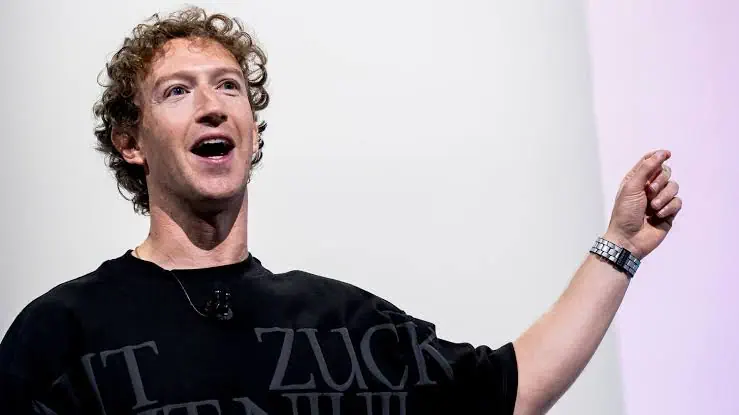
Meta’s new moderation policy raises concerns over misinformation in Nigeria
Meta, the parent company of Facebook and Instagram, recently announced it will end its third-party fact-checking program, a significant shift that could have serious implications for Nigeria. This change, which was made public on January 7, 2025, will replace the existing system with a crowd-sourced moderation model called “Community Notes,” similar to the approach taken by X (formerly Twitter). Meta CEO Mark Zuckerberg stated that the new moderation strategy will focus on high-severity violations, such as child exploitation and terrorism, rather than addressing controversial or misleading content that doesn’t necessarily break community standards. He emphasized the need to simplify policies and restore free expression on the platform. However, this decision has raised alarms among experts, particularly in Nigeria, where misinformation has already had dire consequences. Shirly Ewang, a Senior Specialist at Gatefield, a public strategy and advocacy firm, expressed her concerns about how this change could worsen existing ethnic and religious tensions in the country. Nigeria has been grappling with misinformation for years, especially during the recent 2023 elections. Ewang pointed out that false claims about candidates circulated widely on social media, leading to heightened tensions among different religious and ethnic groups. Reports indicated that fact-checkers were identifying over 100 false claims daily during this period. The African Digital Democracy Observatory has noted that disinformation is often wielded as a political tool to manipulate public opinion. Ewang recalled instances where fake images spread on social media incited violence, such as in Plateau State. One particularly troubling example involved a misleading post by Nigerian politician Femi Fani-Kayode. He shared an image of a man holding a burnt child with a caption that falsely attributed the incident to violence by Fulani terrorists in Oyo State. In reality, the image was from the Southern Cameroon crisis. With Meta’s new policy potentially rolling out in Nigeria, experts fear that misinformation could spread even more unchecked. Ewang warned that without effective moderation, false narratives could exacerbate existing conflicts, particularly in a country where social media plays such a pivotal role in shaping public discourse. In past years, Meta has faced lawsuits over its role in inciting violence and hatred in various African regions. The company was sued in Kenya by Abraham Meareg after his father was killed during the Tigray war, allegedly due to hate speech proliferated on Facebook. Zuckerberg argues that Community Notes will enhance free expression and reduce bias in moderation. However, Ewang is skeptical about its effectiveness as a replacement for traditional fact-checking. She believes that misinformation would likely spread before any community notes could be created to address it.“Community Notes will only encourage conversations,” she said. “It’s not a solid method for content moderation.” With millions of users on Meta platforms, over 51 million on Facebook and 12.6 million on Instagram, Ewang stresses that Nigerian citizens also bear responsibility for combating misinformation. She advocates for individuals to verify information before sharing it online Ewang calls on the Nigerian government to collaborate with civil society organizations to educate citizens about identifying fake news. She emphasizes the need for clear guidelines for tech companies like Meta to ensure safer online spaces. Meta’s new content moderation policy poses significant risks for Nigeria, where misinformation can exacerbate ethnic and religious tensions. To combat this challenge, citizens, civil society organizations, and the government must work together. Promoting media literacy, encouraging verification of information are essential steps and most importantly, regulators should establish clear guidelines for tech companies to ensure safe online spaces.
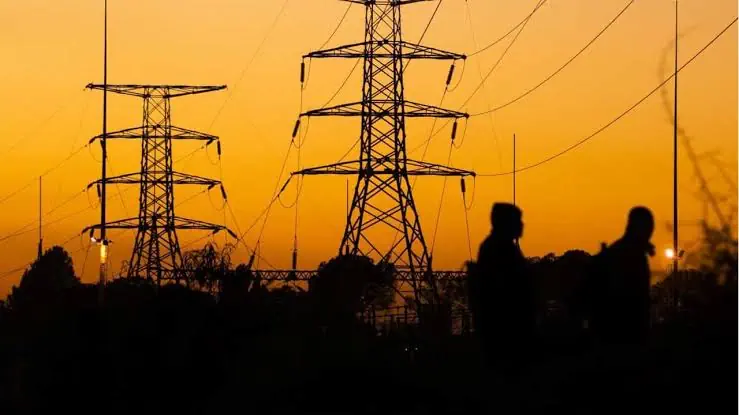
Nigeria’s national grid faces first collapse of 2025
Nigeria’s national grid suffered its first collapse of 2025, plunging many parts of the country into darkness. The blackout occurred at approximately 1:56 PM, leaving millions without electricity According to data from the Nigerian System Operator’s portal, the grid failure was significant, with power generation dropping dramatically from over 2,100 megawatts (MW) to around 390 MW shortly after the incident. Fortunately, restoration efforts were initiated quickly, and by 2:40 PM, generation had increased to 302 MW. Energy experts have noted that this type of collapse is not uncommon; in fact, it marks the 13th occurrence in just over a year. The national grid faced a total of 12 collapses throughout 2024 alone. In an effort to clarify the situation for concerned citizens, EnergyTimePod explained that there are two types of national grid collapses: a partial collapse, where some areas retain power, and a total collapse, which results in widespread blackouts. They emphasized that while some regions may experience delays in losing power following a grid failure, this does not mean that the reports of the collapse are inaccurate. With efforts to restore power already in motion, this latest blackout shines a light on the ongoing struggles within Nigeria’s electricity system. The fact that the grid has failed 13 times in just over a year has left many people worried about how reliable power supply really is in the country. There’s a clear need for significant changes and investments in the infrastructure to create a more stable energy system. Despite these challenges, many Nigerians are hopeful that 2025 will bring real improvements, leading to a brighter and more dependable future for electricity across the country.