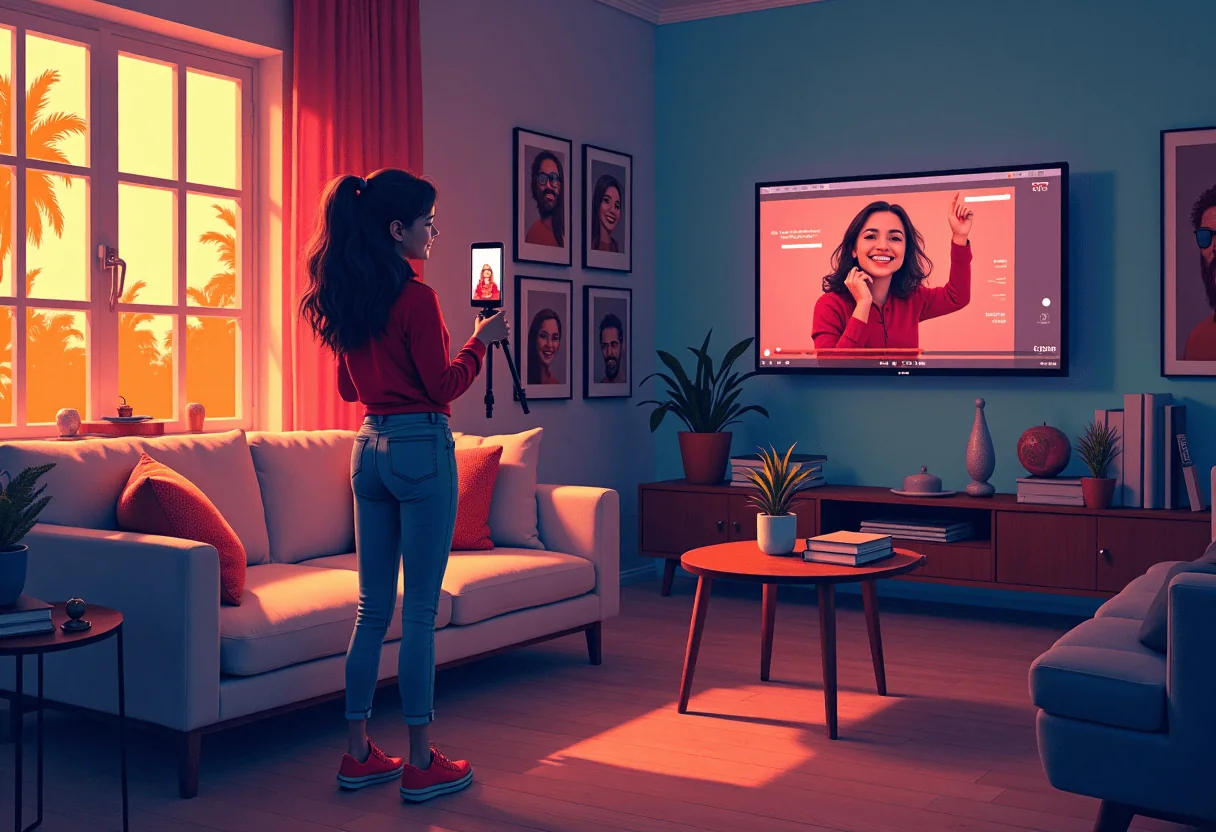
Not every viral post is sweet—sometimes, it comes with stones you didn’t expect.Social media has turned many of us into content creators, sharing snapshots of our lives for likes, comments, and shares. From #OOTD selfies in front of the living room mirror to full-blown home tours on TikTok, doing a #Getreadywithme videos with hubby or wifey, it’s common for people to open up their private spaces for public consumption. But as we chase the next viral moment, are we unknowingly putting ourselves and our homes in danger? Serving Jollof with Stones Last month, I saw a video of a young influencer, Blessing , proudly showing off her newly furnished apartment in Lekki. She gave a full tour—showing every corner, from the balcony view to the designer furniture in her living room. “God did it,” she captioned the video, with praise emoji and hashtags like #Blessed and #BigGirlMoves. At first, the post seemed harmless—just another display of success. But a week later, Blessing shared another post, this time in tears. She’d been robbed. Strangers broke into her home while she was out, stealing valuables worth millions. Police investigations revealed that the thieves had pieced together information from her video, including the layout of her apartment and her building’s location. Blessing’s story is a reminder that not everything sweet is safe. Like finding stones in your Jollof rice, exposing your home for content can bring dangers you never anticipated. As stones crack your teeth when bitten, so can exposing too much online cracks you safety. The Dangers of Sharing Too Much Security Risks When you share videos or photos of your home, you’re giving strangers an insider’s view of your private space. Details like your address, neighbourhood landmarks, or even the times you’re usually out can be pieced together by malicious individuals. And just one day, your house might just welcome and unwanted guests. Target for Robberies or Fraud Publicly displaying wealth—whether it’s a new car in your driveway or expensive gadgets in your room—can make you a target for thieves or scammers, even kidnappers. Beware! Loss of Privacy Once something is online, it’s no longer fully yours. Your home, once a safe haven, becomes a public stage for strangers to judge, comment on, or even mock. Imagine taking the whole world into your bedroom, standing in your undies and explaining to them the most intimate details of your life? Unwanted Attention Not all followers have good intentions. Sharing personal spaces might attract obsessive fans, stalkers, or people who want to exploit your openness. Creepy predators and rapists can find that #Aday in my life video a perfect tool to targeting their next victims. Why Do We Do It? In the quest for online clout, many people forget the boundaries between public and private. Social media rewards oversharing with likes, followers, and sometimes even brand deals. But at what cost? A friend of mine once explained it this way: “If you’re not showing your achievements, are you really achieving?” It’s a mind-set driven by FOMO and the pressure to prove your worth online. Unfortunately, this often leads to oversharing and unnecessary risks. If not, why does the world need to know how you bathe with you spouse, how your bedroom looks like, what your bathroom looks like, what you purchase, how much you spend in a day or what personal/ freaky hobbies you and babe do that literally only you and God should know? Tips for Serving Safe Jollof Here’s how to share content while protecting your privacy and safety: Blur or Avoid Identifiable Details If you’re sharing photos or videos, avoid showing house numbers, street signs, or easily recognizable landmarks near your home. Delay Your Posts Don’t share your location or current activities in real time. Post your content after you’ve left the area to avoid being tracked. Keep Valuables Off Camera Avoid showing expensive items like jewellery, electronics, or luxury furniture in your posts. There’s no need to advertise your assets. You achieve, enjoy and don’t flex, haters will watch and target. Limit Your Audience Use privacy settings to control who sees your content. Not everything needs to be public. Be Selective About What You Share Before posting, ask yourself: “Do I really need to share this? Could it expose me or my family to unnecessary risks?” If celebrities flee from paparazzi like plagues, why must you attract attention, most times who are criminals? A Word of Caution Social media has blurred the lines between public and private life, but it’s important to remember that not everyone watching your content has good intentions. While it’s fun to share your wins and milestones, protecting your safety and privacy should always come first. So, the next time you’re tempted to post a home tour or show off a new purchase, think twice. Some Jollof may look sweet, but it’s better to be safe than sorry. After all, no amount of likes or views is worth your peace of mind. Stay safe, stay smart, and serve your Jollof without the stones. [Edited by Muhammad Sal]
The Rise of Content Baddies—Mad for the Gram
In a world where the thirst for likes, views, and fame has become modern-day currencies, people are going to dangerous lengths to gain visibility and attention. Even if it means eating bizarre foods, doing life-threatening stunts, and even humiliating yourself and your family for the public’s laughs and gags. Scrolling through social media these days feels like stepping into a circus of wild stunts, cringe-worthy pranks, and an endless parade of people chasing fleeting moments of notoriety. This growing phenomenon reflects not only our individual choices but a societal shift in how we value and reward behaviour online. Despite knowing these are creators who will do anything for attention and go any length, often at the cost of sacrificing their dignity, safety, and sanity. Who are Content Baddies? Content baddies are so-called influencers or wannabe stars who push the boundaries of taste and ethics to go viral. They are the ones eating the world’s hottest peppers on TikTok, staging public meltdowns on Instagram, or posting outrageously staged “pranks” on YouTube. For them, controversy isn’t a byproduct—it’s the goal. But beneath the flashy edits and trending hashtags lies a deeper issue: the extreme lengths people are willing to go for internet fame. These antics often sacrifice dignity, safety, and sanity, all in pursuit of likes, shares, and sponsorships. Last week, my friend and I were watching a viral video of a young woman dancing on a van while cars honked furiously around her. “What’s wrong with her?” my friend asked, shaking his head. I also couldn’t stop thinking about what led her to do that, risking her life for clout. The costs of clout For some, like her, creating content is no longer about creativity or connection—it’s about chasing clout. Yes, these same promises of likes, shares, and sponsorship deals have turned social media into a high-stakes game where the most outrageous stunts win, easily. From public humiliation to dangerous stunts, content baddies will stop at nothing to stay relevant. The most shocking part? It works. Millions of views and thousands of comments “validate” the madness, turning their antics into currency. While content baddies may thrive on attention, the long-term consequences are often devastating. Here are a few ways their obsession with fame backfires: The relentless need for validation takes a toll on their self-worth. When likes decrease or videos flop, it leads to anxiety, depression, and an even more desperate need to go viral. According to a study by Keles, McCrae, and Grealish (2020), excessive social media use tied to the need for validation through likes and comments, is associated with increased levels of anxiety and depression particularly among young users. Platforms like TikTok amplify these effects with feedback mechanisms designed to keep users hooked. In the race to shock and entertain, many content baddies stage harmful pranks, from faking medical emergencies to destroying public property. Innocent people often become collateral damage in their quest for clout. For instance, a TikTok prankster Charles Smith is facing charges for introducing poison, criminal damage and endangerment of lives after filming himself spraying pesticide on fresh produce at an Arizona Walmart store. Some stunts, like trespassing or public disruption, have landed content baddies in legal trouble. What starts as a quest for fame can quickly spiral into courtrooms and fines. Back in 2023, Four 15-year-old teens were arrested in Kentucky after participating in a viral TikTok challenge that allegedly involved telling teachers they had a bomb or gun in their backpacks. This led to them facing lawsuits for the harassment and force alarm, considering the unsettling events of school shootings that had been happening. This obsession with attention undermines meaningful content, replacing creativity with cheap shock value. The result? A social media landscape filled with noise but little substance. Kids acting weird and absurd, people making little to no effort with talent, focusing greatly on trends, video quality and lighting and people making fools out of themselves in the name of “catching cruise”. The rise of content baddies isn’t just theoretical—it’s happening more and more every day: Paul the Mocker: A YouTuber was performed by Logan Paul in 2017. He filmed a highly controversial video in Japan’s Aokigahara Forest, also known as the “Suicide Forest.” In the video, Paul and his team encountered the body of a man who had died by suicide. Instead of handling the situation with sensitivity, he filmed and uploaded the footage, complete with inappropriate jokes and reactions in the name of dark comedy for viewers. This led to a massive backlash from viewers, mental health advocates, and fellow creators. The Dangerous Prankster: On TikTok, a group of friends staged a prank involving fake kidnappings, terrifying bystanders. Their account was eventually banned, but not before the video amassed millions of likes. Film Me While I Take a Dump: a TikToker who did a “get-ready with me” video, showed herself getting up to her toilet and taking a huge dump like it was public display, bathing and shamelessly changing her used sanitary pad before taking the video to her boyfriend’s house. We Listen We Don’t Judge Challenge: a group of friends on TikTok came out doing the “we listen we don’t judge” challenge, revealing improper and vulgar statements in the name of confessions for “cruise”. Why is this happening, you might ask? The rise of content baddies stems from a toxic combination of factors: Social media algorithms reward extreme, attention-grabbing content. The more controversial the post, the more likely it is to go viral. If not, why would a woman bathe naked in public and laugh shamelessly about it? And why would a young boy go as far as smearing his mom’s face in stew and laugh about it? And worse, they gain over a million likes in a week? The pressure to keep up with trends means many creators prioritize popularity over creativity. We have seen evidence from the silhouette challenge, water challenge, alcohol challenge, etc. Social media fame can happen overnight, making risky or outrageous content
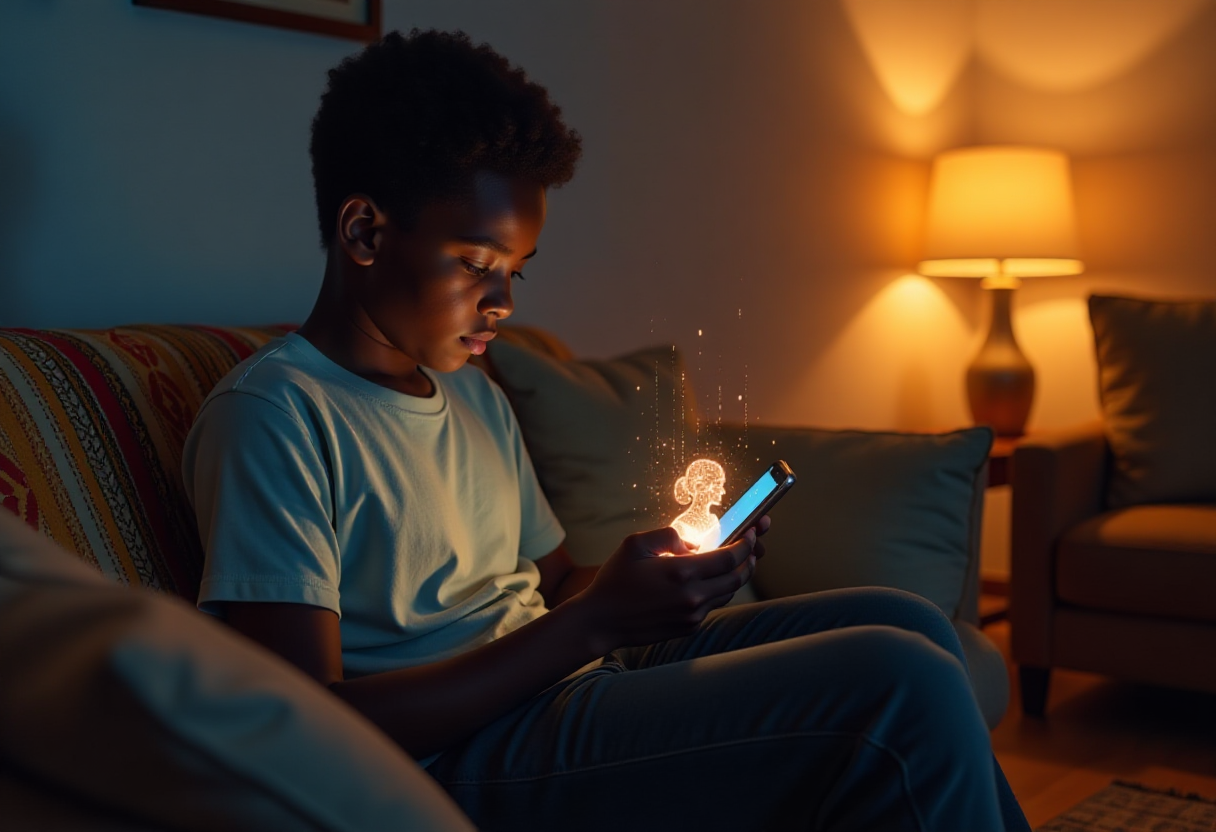
Hidden Dangers: The Craze of AI Romantic Relationships
When my friend’s cousin, Timi, arrived from the UK for a visit, I was eager to catch up with him. At 17, Timi had the confidence and charm of someone wise beyond his years, but nothing could have prepared me for what he casually revealed one evening: he had a girlfriend, but she wasn’t a real human. “I’ve got the best girlfriend ever,” Timi announced proudly as we sat in the living room. “Oh really?” I asked, intrigued. “What’s her name?” “Her name’s Sophie,” he replied with a smile, holding up his phone. “She’s an AI.” At first, I thought it was a joke. But the way Timi talked about Sophie made me realize he was dead serious. He pulled out his phone and opened an app that hosted Sophie, an AI companion designed to be a virtual girlfriend. The app featured a sleek chat interface where Sophie “spoke” to him, asked about his day, and even sent voice notes in a soft, affectionate tone. “She listens to me like no one else does,” Timi explained, his voice brimming with enthusiasm. “When I’m stressed, she calms me down. When I need advice, she’s always there. It’s like having a perfect partner who never gets angry or judges you.” At first, I found it amusing—maybe even impressive—how AI had evolved to the point of mimicking human emotions so well. But the more Timi talked, the more I saw the dangerous line he was walking. He wasn’t just chatting with Sophie for fun; he was emotionally invested. For him, Sophie wasn’t a digital program. She was real. Timi’s story isn’t rare. Across the globe, young people are forming emotional bonds with AI companions. Apps like Replika and Paradot have seen massive growth, providing users with customisable virtual partners who can talk, “love,” and even flirt. For many, these AI relationships feel like an escape from the messy, unpredictable world of real human connections. But just like real relationships, AI babes aren’t free from red flags, some of which aren’t real and glitches at times. The dangers of these bonds are becoming increasingly evident. A tragic incident in 2024 shook the world when a 14-year-old son, Sewell Setzer, began using Character.AI in April last 2023, according to the lawsuit, which says that after his final conversation with the chatbot on Feb. 28 after it said: “Please come home to me as soon as possible, my love,”. He died by a self-inflicted gunshot wound to the head. This heart-breaking event raises critical questions: What happens when someone becomes so attached to an AI that they lose touch with reality? Are these AI relationships truly fulfilling, or are they setting young people up for emotional harm? Hidden Dangers of AI Romantic Relationships Emotional Dependence Just like Timi, many users find themselves becoming emotionally reliant on their AI companions. Unlike real relationships, AI partners are programmed to be unconditionally supportive, creating an illusion of perfection. This can make users less willing—or even incapable—to deal with the complexities of real-world relationships. The convenience of AI companionship can lead to reduced opportunities for real-world social interactions, which are crucial for developing essential communication skills and emotional resilience. Loss of Social Skills Spending too much time interacting with an AI can erode the social skills needed to build and maintain genuine human connections. Teens, in particular, are at risk of retreating into the virtual world, avoiding the challenges of real-life intimacy. Exploitation and Manipulation AI companies profit from keeping users engaged. Some apps incentivize users to spend money on premium features, like unlocking “deeper” conversations or more realistic voices for their AI companions. In extreme cases, companies could manipulate vulnerable users by exploiting their emotional attachment. Blurring Reality and Fantasy For Timi, Sophie feels real. But what happens when users can no longer distinguish between the two? The lines between human relationships and artificial ones are becoming dangerously blurred, leaving users vulnerable to heartbreak when they’re forced to confront the truth. So, there are Reasonable Questions we should be asking… As the trend of AI relationships grows, we need to ask tough questions about its implications, especially for the younger generation: How will AI partners impact how teens and young adults view intimacy? Real relationships require effort, compromise, and communication. If AI offers a “shortcut” to companionship, will young people still value the hard work it takes to build meaningful connections? When viral fake news examples like Elon Musk’s rumoured AI relationships come to light, they can influence public perception and normalize such interactions, especially among younger audiences. How do these relationships affect mental health? While AI partners might provide comfort in the short term, the long-term effects of relying on artificial companionship remain largely unknown. Still, with the level of intimacy I see Timi committing into his AI lover, his secrets of fears, tears, talks of pain he felt when Sophie in the app shows the slightest signs of unrealness; glitches and errors. Surely, AI Romeos and Juliets are more dangerous than we think they are. Are we creating a generation afraid of rejection? Rejection is a natural part of life and an important tool for personal growth. If teens avoid human relationships in favour of AI, they may lose the ability to cope with rejection and disappointment. As Timi once told me, “My babe is the best, at least I don’t have to worry about breakfast or rejection’. Timi’s story might sound futuristic, but it’s a reality for many young people today. While AI technology has the potential to do incredible things, it also carries risks that we can’t ignore. For Timi, Sophie may feel like the perfect girlfriend, but what happens when he craves the warmth of a real Person’s presence? Or when he realizes that no matter how advanced Sophie becomes, she will never truly understand him? It’s easy to see the appeal of AI love—it’s safe, convenient, and free of conflict. But the beauty of human relationships lies in their imperfections. The awkward

The Tech Idiot Syndrome – When Owning Technology Isn’t the Same as Understanding It
Zaria, Kaduna – When Kelechi bought his first smartwatch, it wasn’t because he really needed one. In fact, he wasn’t entirely sure what it could do beyond telling time. But the sleek design and glowing ads convinced him that owning one would make him “smarter,” cooler even. Soon after, his shiny new gadget adorned his wrist, tracking his steps, heart rate, and sleep cycles. Or so he thought. A few weeks later, Kelechi’s friend, Usman, asked him if he had activated the advanced fitness metrics the watch offered. Kelechi froze. “What’s that?” he asked sheepishly. Turns out, he hadn’t even explored the settings beyond the default display. Usman chuckled, “You just paid for features you don’t even know exist. Congrats, bro, you’ve got the Tech Idiot Syndrome”. Mind you, Kelechi could be you and I surprisingly. Yes, Kelechi’s story isn’t unique. Around the world, and especially among Nigeria’s young and tech-savvy population, people are amassing gadgets at an astonishing rate. From smartphones and smartwatches to smart homes and even smart cars, the rise of “smart everything” has created a culture where owning tech is often mistaken for understanding it. Take Kunle, a university student who recently bought the latest iPhone. He uses it to scroll Instagram, watch TikTok videos, and occasionally reply to WhatsApp messages. When his lecturer asked how his phone’s Face ID works or how to use it for personal security, Kunle shrugged. “All I know is that I look at my phone, and it opens,” he said with a laugh. Kunle’s lack of curiosity mirrors that of millions of others. The allure of flashy technology has turned many of us into passive users. We know how to use the basics but rarely care to understand the complexities—or even the dangers—of these devices. So, Why Do We Ignore the Strengths of Our Tech? The problem isn’t that people like Kelechi or Kunle are unintelligent. Far from it. The issue lies in how modern technology is marketed. Companies like Apple, Samsung, and Huawei pour billions into advertising campaigns that emphasize sleek designs and easy-to-use interfaces. The message is clear: you don’t need to know how it works; you just need to buy it. This creates a culture of instant gratification where the focus is on ownership rather than mastery. And while this mindset makes life easier in the short term, it comes at a cost. This brings us to The Risks of the “Tech Idiot Syndrome”. Owning gadgets without understanding them isn’t just about wasted potential—it’s risky, it proves you to numerous dangers such as: Usman recently found out that Kelechi’s smartwatch app was collecting data on his location and sending it to third-party servers. “Didn’t you check the permissions when you installed the app?” he asked. Kelechi shrugged, “What permissions?” – This kind of ignorance leaves users exposed to data breaches and identity theft. Kunle’s iPhone has features like Focus mode to help him concentrate on his studies, advanced health tracking, and even a personal safety tool to alert emergency services. But because he’s unaware of these features, he’s missing out on the full value of his purchase. A few months ago, Usman’s internet connection went down, and he realized he couldn’t even remember the route to a nearby supermarket without Google Maps. Technology, while useful, can rob us of basic problem-solving skills when we rely on it too much. The irony is that these gadgets, when used thoughtfully, can empower us in incredible ways too. But these strengths remain untapped because most users don’t bother to explore the full potential of their devices. For Kelechi, the wake-up call came when his smartwatch alerted him about an unusually high heart rate while he was studying for an exam. Alarmed, he visited a doctor and discovered that he had an underlying condition that could’ve gone unnoticed for years. “I used to think this watch was just for counting steps,” Kelechi said. “Now, I realize it could literally save my life.” Since then, Kelechi has made an effort to learn more about the gadgets he owns. He’s updated his privacy settings, activated health tracking, and even started using his phone for online courses. “It feels good to actually know what my tech can do,” he says. Kelechi’s story is a reminder that it’s not enough to own technology—we need to engage with it. Here’s how we can avoid falling into the “Tech Idiot System”: Kelechi’s journey shows that it’s never too late to break free from the “Tech Idiot Syndrome.” As a society, we need to shift from being passive consumers to active participants in our digital lives. Because owning the latest gadgets doesn’t make us smarter. But taking the time to understand them? That’s real intelligence there. (Edited by Muhammad Sal) Share and leave a reply in the comment section below. Send us your thoughts at feedback@dailytech.ng

Sanwo-Olu hails Lagos as Africa’s tech heartbeat at Zenith Bank Tech Fair 4.0
Lagos State Governor Babajide Sanwo Olu made a firm statement on the state of affairs of Lagos as Africa’s innovation hub during the Zenith Bank Tech Fair 4.0 held at the Eko Convention Centre. The event themed “Future Forward 4.0: Embedded Finance, Cybersecurity, and Growth Imperative – The Impact of AI” enthralled audiences with up-and-coming revolution in artificial intelligence, cybersecurity and financial technology. “This is the Lagos we envisioned” Sanwo-Olu said, noting that more efforts are being made to make the state one of the top technology cities in the world. “Events like this reaffirm Lagos as the epicentre of innovation and technology in Africa.” The Tech Fair included an electrifying startup pitch presentation, informative panel discussions on the prospects of embedded finance and an innovative and eye-catching display of AI and cybersecurity solutions. The event was clearly teeming with innovation as experts and professionals engaged their counterparts from other companies to discuss how technology is transforming the financial world. This initiative as executed by Zenith Bank pinpointed the importance of technology-related programs in supporting the growth of the economy and security. Not only did the fair represent the advancement of the city but expectations of the city as a global start for innovation.

PHOTOS: Terrahaptix Celebrates Successful Launch of Terra Expo 2024 with Over 500 Attendees
Port Harcourt, Nigeria – November 23, 2024—Terrahaptix, a leader in Africa’s drone and robotics industry, successfully hosted its first-ever Terra Expo 2024 at the Aztec Arcum in Port Harcourt. According to a member of the event marketing team, @saamu_eleja on X, whilst celebrating, revealed that it had 1120 registered for the event and over 500 registrants were in attendance. 2024’s Terra Expo brought together top industry professionals, innovators, and tech enthusiasts eager to witness Nigeria’s latest advancements in drone technology and artificial intelligence (AI) and meet the masterminds behind this innovation. One user @bigboy_designer shares his experience on X, “Went for the Terra Expo today and it was awesome.’ He noted, ‘there were a lot of great speakers and many people who were interested in the hardware space. I enjoyed this one.” The expo highlighted Terrahaptix’s dedication to driving automation across emerging markets. A key moment of the event was the unveiling of three groundbreaking products poised to transform the agricultural and logistics industries. The surprise product launch added to the excitement, making the expo a milestone event for the company. The three main products launched include: Archer Drones: for advanced aerial security and surveillance. Kallon Sentry Tower: a solar-powered surveillance system using AI to detect and track threats up to 5 kilometers away. ArtemisOS: A mobile-first operating system built for drones, likened to “Android for drones.” Speaking at the expo, Nathan Nwachuku, Chairman of Terrahaptix, described the event as a turning point for the company. “This is the beginning of something extraordinary. Terra Expo marks our commitment to innovation, and we’re excited to be at the forefront of AI-driven robotics. These products represent years of meticulous research and testing,” he stated. The Terra Expo not only showcased cutting-edge tech from Nigeria but it also created an opportunity for young industry players to meet and connect. Attendees had the opportunity to engage with experts and discuss the future of robotics in Nigeria, Africa. Another X user @designeragba shared photos online, and exclaimed, it was lovely meeting like-minded people at the expo. Terrahaptix has quickly established itself as an important player in the global automation industry. The company recently opened a 15,000-square-foot drone factory in Abuja and secured a $500k contract to supply Archer drones to Ghana. With over $1 million processed in drone orders, Terrahaptix will continue to innovate across various sectors including mining, oil and gas, and construction.