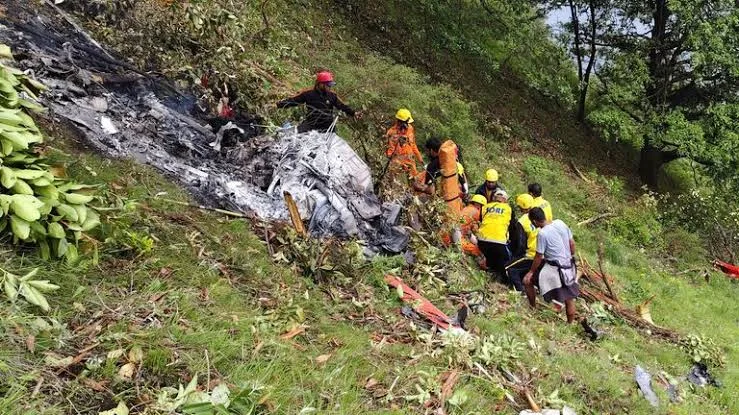
A helicopter carrying seven Hindu pilgrims crashed early Sunday morning near Kedarnath in Uttarakhand, India, killing all passengers and the pilot, officials confirmed. The aircraft, operated by Aryan Aviation, went down shortly after takeoff around 5:20 a.m. local time, en route to Guptkashi, a popular pilgrimage destination. Initial investigations suggest that poor weather conditions, including dense fog and low visibility, likely contributed to the crash, which occurred in a densely forested area several miles off the designated route. The victims included five adults and two children, hailing from various Indian states such as Uttarakhand, Uttar Pradesh, Maharashtra, and Gujarat. Rescue teams from the National Disaster Response Force (NDRF), State Disaster Response Force (SDRF), and local police recovered the charred remains. Due to the condition of the bodies, DNA testing is underway to confirm identities before release to families. This tragedy marks the fifth aviation accident in Uttarakhand during the current pilgrimage season, raising concerns about flight safety in the region’s challenging mountainous terrain. In response, the Directorate General of Civil Aviation (DGCA) and Uttarakhand Civil Aviation Development Authority have suspended all helicopter services for the Char Dham Yatra pilgrimage until further notice. Uttarakhand Chief Minister Pushkar Singh Dhami expressed deep sorrow over the incident and ordered a high-level inquiry to investigate the causes and enforce stricter safety protocols. The crash comes just days after a major Air India plane crash in Ahmedabad that claimed over 270 lives which was extensively reported by Dailytech, intensifying scrutiny on India’s aviation safety measures. Authorities continue to investigate the Kedarnath helicopter crash as rescue efforts conclude and families await confirmation of their loved ones’ identities.

Funeral services held for victims of Air India Ahmedabad crash
On Sunday, June 15, 2025, grieving families across India gathered to hold funeral services for their loved ones lost in the tragic Air India flight crash near Ahmedabad. The somber ceremonies marked a painful step in the nation’s mourning process following one of the deadliest aviation disasters in recent memory. The funerals took place in various communities, including the Christian community at the Sacred Heart Cathedral in New Delhi, where candlelight prayer services were held to honor the victims. White coffins containing the remains of those identified through DNA testing were brought to families, many of whom were advised not to open the coffins to spare them additional trauma. The atmosphere was heavy with grief as relatives, friends, and community members came together to pay their final respects. NGO workers and hospital staff supported families through the difficult process of receiving the bodies and preparing for the funerals. Among the mourners were relatives of Arjun Patoliya, a father who perished in the crash, leaving behind two young daughters. Community leaders, such as Anjana Patel, mayor of London’s Harrow borough, expressed solidarity and called for collective support for the orphaned children.

TikTok personalities Jarvis and Peller face public relationship challenges
Popular TikTok content creators Jarvis and Peller made headlines after an emotional live-streaming session exposed tensions in their relationship. During the broadcast, which also featured fellow influencers Sandra Benede and Seun Pizzle, Jarvis broke down in tears, expressing her frustration over Peller’s tendency to share private details of their relationship during his live sessions. She explained that this breach of trust has made her reluctant to confide in him. Peller, on the other hand, accused Jarvis of being secretive and not keeping him informed about her plans. He stated that he has always been open with her and felt hurt by her actions. The incident has sparked widespread debate among fans, with some questioning whether the drama is genuine or simply content-driven, as they had similar public disagreements in the past. Their relationship, which became public in 2024 and drew significant attention after a viral proposal video, continues to be a topic of speculation online.
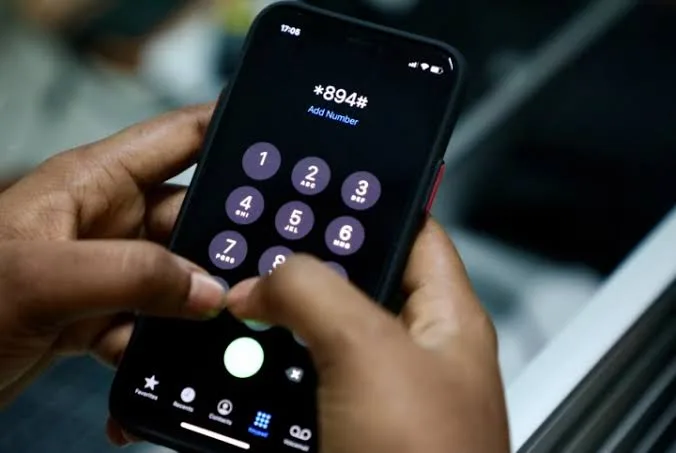
Nigerian banks, Telcos still testing USSD end-user billing, no official start date yet
Despite recent announcements by some Nigerian banks that charges for USSD banking transactions would now be deducted directly from customers’ mobile airtime starting June 3, 2025, sources from the Nigerian Communications Commission (NCC) have clarified that the new billing system is not yet live. According to insiders at the NCC, who spoke on condition of anonymity, banks and telecom operators are still in the process of finalizing technical integration and conducting thorough end-to-end testing. As a result, no official date has been set for the full rollout of the end-user billing (EUB) model. Earlier this month, banks such as UBA and FCMB informed their customers that USSD transaction fees, which were previously deducted from bank accounts, would now be charged against their airtime balance. The banks cited a directive from the NCC as the reason for the change. However, telecom operators have strongly disputed this claim. The Chairman of the Association of Licensed Telecom Operators of Nigeria (ALTON), Engr. Gbenga Adebayo, described the banks’ announcement as misleading and said the transition to airtime billing can only happen after banks clear outstanding USSD debts owed to telcos. “The agreement between the NCC, the Central Bank of Nigeria (CBN), banks, and telcos was clear: banks must settle all USSD debts by June 2, 2025, before migrating to the end-user billing model. Some banks have cleared their debts, but many have not, so the implementation is still on hold” – Adebayo explained. The longstanding dispute over USSD debts has been a major source of tension between banks and telecom operators. Telcos have accused banks of withholding billions of naira owed for USSD services, prompting threats to suspend USSD codes for delinquent banks earlier this year. For consumers, the shift to airtime billing means that USSD transaction fees, typically around ₦6.98 per 120 seconds, would be deducted from their mobile phone credit instead of their bank accounts. While this could simplify payment for telcos, many customers have expressed concerns about being charged twice or not being adequately informed. While some banks have started notifying customers about the upcoming change, the NCC and telcos emphasize that the end-user billing system is still undergoing testing and cannot be fully implemented until all parties agree and outstanding debts are resolved. Consumers are advised to stay alert for official communications from their banks and telecom providers regarding the final commencement date for USSD airtime billing.
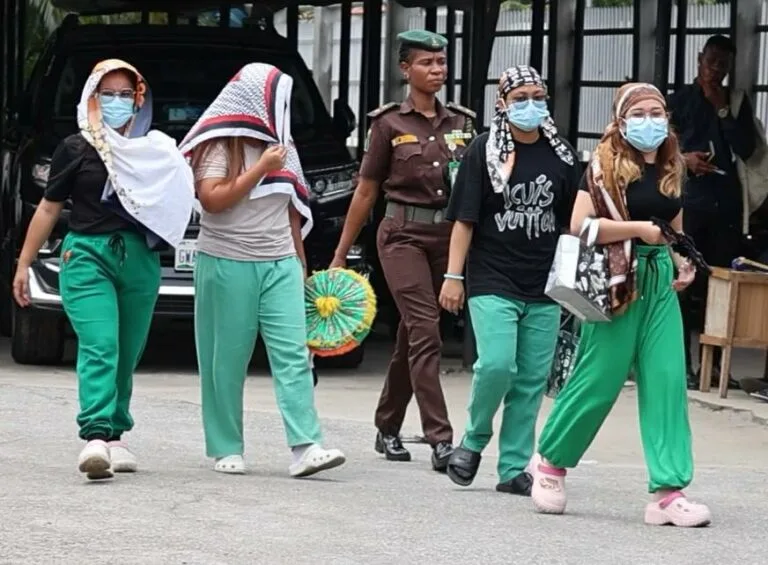
Lagos court sentences four Filipinos, seven Nigerians for cybercrime, orders deportation of foreigners
A Federal High Court in Ikoyi, Lagos, has sentenced four Filipinos and seven Nigerians for internet fraud and cyberterrorism offenses, handing down prison terms and fines while ordering the deportation of the foreign nationals which was extensively reported by Dailytech Justice Yellim Bogoro convicted Reyna Mae Eriba, Chyna Samonte, Zara Fabian, and Dominique Medina to one year imprisonment each or payment of a fine of N1,000,000. The court further directed the Nigeria Immigration Service to deport the four Filipinos within seven days after serving their sentences. The Nigerian convicts, Chidera Ezechukwu, Favour Oluchukwu, Egwenum Ifeanyi, David Okezie, Gbenga Shittu Solomon, Ibraheem Olamilekan, and Oghomienor Jotham, received similar one-year jail terms or fines ranging from N500,000 to N700,000. The Economic and Financial Crimes Commission (EFCC) prosecuted the case, charging the accused under the Cybercrimes (Prohibition, Prevention, Etc.) Act, 2015 (amended 2024) and the Terrorism (Prevention, Prohibition) Act, 2022. The charges included identity theft, recruitment of youths for fraudulent activities, and money laundering. For instance, Chyna Samonte was found guilty of orchestrating schemes that exploited Nigerian youths to impersonate foreigners and commit financial fraud, actions that threatened Nigeria’s economic and social stability. Justice Bogoro also ordered the forfeiture of all assets recovered from the convicts, including vehicles, communication devices, and funds, to the federal government. This ruling highlights the intensified efforts of the nation to clamp down on cybercrime, reflecting recent legislative updates that strengthen penalties and enforcement mechanisms against internet fraud and cyberterrorism. The EFCC continues to lead the fight against cybercrime, aiming to protect the country’s digital and economic infrastructure from growing threats.

Google to end Android Instant Apps by December 2025 due to low usage
Google has announced it will discontinue Android Instant Apps by December 2025, citing low user engagement as the main reason for the shutdown. Introduced in 2017, Instant Apps allowed Android users to try apps instantly via web links without downloading them. The feature aimed to help users preview app functions quickly and developers reach wider audiences. However, Instant Apps never gained significant traction among users or developers, who increasingly prefer other app discovery tools powered by artificial intelligence. A Google spokesperson, Nia Carter, confirmed the decision, explaining that developers now rely more on AI-driven app highlights and simultaneous installs. She added that ending Instant Apps will let Google focus on tools that better support developers and encourage users to download full apps for deeper engagement. Instant Apps required developers to modularize their apps and keep initial downloads small to enable instant launching. The feature supported devices running Android 6.0 and above, with updates allowing Instant Apps to appear like regular apps on home screens. With Instant Apps ending, developers will need to shift to alternative discovery and install methods. Users who previously enjoyed trying apps without installation will now have to download full versions to access app features.