
The Federal High Court in Lagos is set to fully implement its electronic filing (e-filing) system by June 23, 2025, ending manual filing of new cases by June 20. However, Senior Advocate of Nigeria (SAN) Ebun-Olu Adegboruwa has urged the court to delay or suspend the rollout, citing critical concerns about privacy, infrastructure, and equitable access. The Chief Registrar of the Federal High Court, Sulaiman Amida Hassan, announced that from June 23, all new cases in Lagos would be filed electronically, with existing cases continuing manually until resolved. Legal practitioners were advised to comply strictly with the directive. Adegboruwa emphasized that while digitization promises efficiency, it must not compromise litigants’ constitutional rights or the confidentiality of sensitive documents, such as wills and financial records. He highlighted Nigeria’s unreliable power supply and uneven internet coverage as major obstacles that could exclude many lawyers and litigants, especially those in remote areas, from effectively using the system. “The current court registry in Lagos lacks the facilities and space to handle the volume and demands of e-filing,” Adegboruwa said. He recommended postponing full implementation until the court moved to its new, modern complex and suggested running digital and manual filing side-by-side to allow users time to adjust. The SAN also raised concerns about the integration of e-filing with the Court of Appeal, which still operates manually, potentially complicating the appeal process and record transmission. The Federal High Court introduced electronic affidavits last year to improve data protection and streamline court processes. However, Adegboruwa’s call reflects broader challenges in adopting digital systems within Nigeria’s judiciary, balancing innovation with practical realities and privacy safeguards.
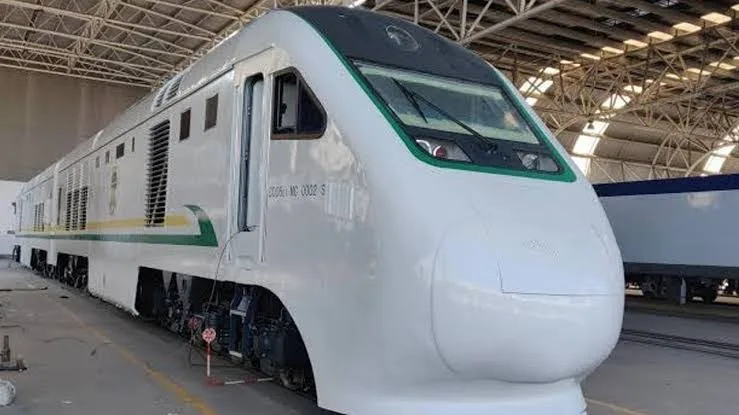
Nigeria Railway Corporation assures public of safety on Warri-Itakpe rail line amid recent concerns
The Nigeria Railway Corporation (NRC) has dismissed recent safety concerns circulating on social media about the Warri–Itakpe rail corridor, affirming that train services remain safe, secure, and fully operational. In a statement issued Monday, NRC’s Acting Deputy Director of Public Relations, Mr. Callistus Unyimadu, addressed a widely shared video showing removed rail clips on the line. He clarified that the issue was identified during a routine inspection and promptly fixed by maintenance crews, posing no risk to passengers or train operations. “The message warning the public to avoid travel on the Warri-Itakpe corridor is misleading and unfounded,” Unyimadu said. “Train services on this corridor and all other NRC routes continue to be safe, reliable, and fully operational.” The NRC emphasized its ongoing commitment to safety, noting continuous surveillance of tracks and rolling stock by trained personnel ready to respond to any challenges in real time. Passengers were urged to rely only on verified NRC communication channels for accurate travel updates. The Warri–Itakpe Railway, spanning 326 kilometres between Delta and Kogi states, has experienced technical disruptions in recent months. In April 2025, operations were temporarily suspended for 72 hours following engine failures and safety upgrades. Earlier in February, services were briefly halted for repairs, and a derailment in July 2024 near Ujevwu caused a two-day suspension, though no injuries were reported. Despite these incidents, NRC maintains that safety standards remain high and that the rail line is fully functional. Passengers are encouraged to continue using NRC services with confidence, as the corporation works to ensure a safer and more efficient transportation network nationwide.
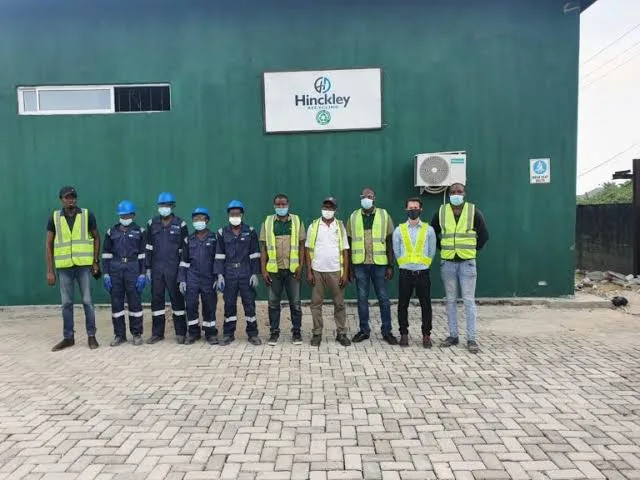
Mauritius investment firm acquires 26% stake in Nigerian e-waste recycler Hinckley
uMunthu Investment Company II, a Mauritius-based private equity fund, has announced its acquisition of a 26% stake in Hinckley E waste Recycling Limited, one of Nigeria’s leading electronic waste management firms. The deal, formalized through a Share Subscription Agreement, involves the purchase of 47.8 million preference shares, injecting significant capital into Hinckley’s operations. Hinckley E waste Recycling specializes in collecting, dismantling, and processing end-of-life electronic devices such as phones and laptops. The company transforms these items into reusable components like batteries and printed circuit boards, which are then sold to local and international recyclers. This investment is expected to enhance Hinckley’s capacity for infrastructure upgrades and working capital, enabling it to expand its reach and efficiency in Nigeria’s growing but underdeveloped e-waste sector. Nigeria faces a mounting e-waste challenge, being the largest importer of electronic waste in Africa, largely through Lagos port. Improper disposal of this waste poses serious environmental and health risks. With uMunthu’s backing, Hinckley aims to lead the country toward a more organized and environmentally responsible e-waste management system. uMunthu Investment Company II focuses on supporting high-growth small and medium enterprises across Africa that deliver both financial returns and positive social and environmental impact. A representative from uMunthu noted, “Hinckley presents a compelling growth opportunity within Nigeria’s e-waste management sector. Their experienced management and business model fit well with our investment philosophy.” This strategic investment marks a significant step toward addressing Nigeria’s e-waste problem while fostering economic growth and sustainability in the region.
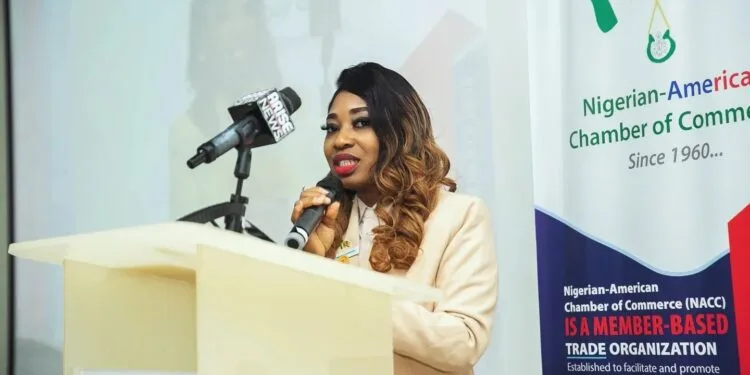
Nigeria’s tech growth hinges on stable power supply, says NACC Acting Director-General
Nigeria’s technology sector cannot reach its full potential without a stable and reliable power supply, the Acting Director-General of the Nigerian-American Chamber of Commerce (NACC), Ms. Wofai Samuel, has said. Speaking in an interview with the News Agency of Nigeria (NAN) on Monday, Samuel emphasized the critical link between power availability and technological advancement. “Without power, how do we even drive technology? Power is correlated to technology, and technology is correlated to power,” she said. Samuel highlighted the importance of technology as a key driver for economic diversification in West Africa, especially amid global trade challenges such as tariffs and uncertainties around the African Growth and Opportunities Act (AGOA). She urged Nigeria to leverage its tech sector to reduce dependence on traditional exports. The NACC chief pointed to the rapid growth of Nigeria’s banking and fintech sectors, which are transforming financial services through innovations like online and mobile banking. She referenced a World Bank projection that these sectors will be among the fastest-growing in 2025. Samuel also called for greater collaboration and policy support, citing the recent $600 billion investment by Saudi Arabia’s Crown Prince in the U.S. tech industry as an example of international cooperation to advance technology. She encouraged Nigerian tech platforms to engage more in global tech conferences and urged government officials to actively participate in shaping policies that support sustainable tech development. Nigeria’s Information and Communication Technology (ICT) sector contributed about 17.68% to the country’s real GDP in 2024, up from 17.34% in 2023. Telecommunications remains the dominant sub-sector, accounting for approximately 14.40% of GDP in the last quarter of 2024, ranking it as the third-largest contributor after crop production and trade. Earlier this year, Nigeria’s Minister of Communications, Innovation, and Digital Economy, Dr. Bosun Tijani, projected that the digital economy would contribute 21% to Nigeria’s GDP, supported by infrastructure projects such as the rollout of 90,000 kilometers of fiber optic cables to improve internet access nationwide.

AGF drops fraud charges against Fidelity Bank CEO Nneka Onyeali-Ikpe
The Attorney General of the Federation (AGF) and Minister of Justice, Lateef Fagbemi, SAN, has officially discontinued the fraud charges against Dr. Nneka Onyeali-Ikpe, Managing Director and CEO of Fidelity Bank Plc. The decision follows a thorough review of the case involving an alleged unlawful conversion of N19 billion belonging to Woobs Resources Limited. The charges were initially filed before the Federal High Court in Lagos against Dr. Onyeali-Ikpe, Fidelity Bank Plc, and others. However, the AGF’s office clarified that Onyeali-Ikpe was neither the account officer nor the bank’s Managing Director when the account linked to the alleged fraud was opened. This key fact led to the discontinuation of the criminal charge against her. Kamarudeen Ogundele, Special Adviser to the President on Communication and Publicity at the AGF’s office, emphasized that the decision reflects the AGF’s constitutional duty to uphold justice and fairness. “This move is to prevent a miscarriage of justice and is guided by the principles of the rule of law,” he said. While the CEO has been cleared, the case against Fidelity Bank Plc itself remains active in court. The AGF urged the public to allow the legal process to proceed without speculation and assured that all individuals found culpable will face appropriate legal consequences.
Meta eyes $10 billion investment in AI startup Scale AI
Meta Platforms Inc. is in talks to invest over $10 billion in Scale AI, a fast-growing artificial intelligence startup. If finalized, the deal could mark one of the largest private funding rounds ever and Meta’s most significant external AI investment to date. This would signal a strategic shift for Meta, which has historically prioritized internal AI development. Founded in 2016 by Alexandr Wang, Scale AI specializes in data labeling services crucial for training machine learning models. The company’s technology assists in cleaning, tagging, and structuring data, enabling AI models to learn effectively. This positions Scale AI as a key player in the ongoing generative AI boom. Scale AI already has established itself with clients like Microsoft and OpenAI. The startup was last valued at $14 billion in a 2024 funding round supported by both Meta and Microsoft. More recently, Bloomberg reported Scale AI was considering a tender offer valuing it at $25 billion, reflecting its rapid revenue growth from $870 million in 2024 to a projected $2 billion in 2025. Neither Meta nor Scale AI has commented on the investment discussions. The terms are still being finalized and are subject to change. The proposed investment signals a sharp turn in Meta’s AI strategy. Until now, Meta has relied primarily on in-house research and open-source initiatives like its Llama large language model (LLM). CEO Mark Zuckerberg declared in January that AI would be Meta’s top priority, outlining plans to spend up to $65 billion on AI in 2025. Llama powers Meta’s AI chatbot integrated into Facebook, Instagram, and WhatsApp and is already used by over 1 billion people monthly. Scale AI’s growing role in defense technology may also be part of Meta’s motivation. The two companies are already collaborating on Defense Llama, a specialized version of Meta’s LLM adapted for military use. Last week, Meta partnered with Anduril Industries, a defense contractor, to co-develop AI-powered helmets with augmented and virtual reality for the U.S. military. Meta has recently approved the use of its AI models by U.S. government agencies and contractors, a rare move in Big Tech. Meanwhile, Scale AI has also deepened its federal footprint. Earlier this year, it secured a U.S. Department of Defense contract for AI agent technology, which the company hailed as a “significant milestone in military advancement.” Meta’s potential mega-investment in Scale could be a bold step to not only keep pace with peers but also redefine its position as a leader in both commercial and military-grade AI solutions.