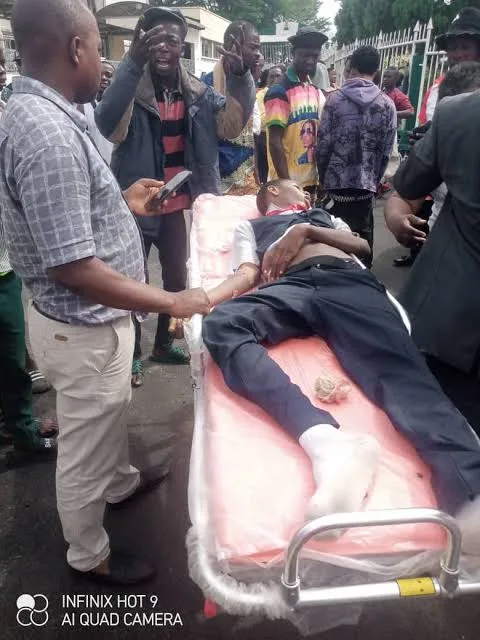
A secondary school student on his way to sit for the West African Senior School Certificate Examination (WASSCE) was killed by a stray bullet fired by a police officer during a vehicle chase in Ibadan, Oyo State, on Tuesday, May 19, 2025. The incident occurred around the Welfare Hospital area in Alakia, Ibadan. Eyewitnesses said officers of the Nigeria Police Force were pursuing a fleeing vehicle along Gbagi Market Road when one officer opened fire in an attempt to stop the suspect. A bullet allegedly missed its intended target and struck the student, who was in his father’s car with his twin brother, en route to their exam center. The boy was rushed to Welfare Hospital but was declared dead on arrival. Videos circulating online showed the student lying lifeless on a hospital stretcher, with visible injuries around his waist. A bullet hole was also observed in the father’s car, and blood stains were seen on the car’s floor. The incident sparked outrage among bystanders and local traders, who expressed frustration over what they described as persistent police brutality in the area. In protest, sympathizers and market traders carried the boy’s body to the Oyo State Secretariat, demanding justice and seeking an audience with Governor Seyi Makinde. As of press time, neither the Oyo State Police Command nor the state government had issued an official statement regarding the shooting.
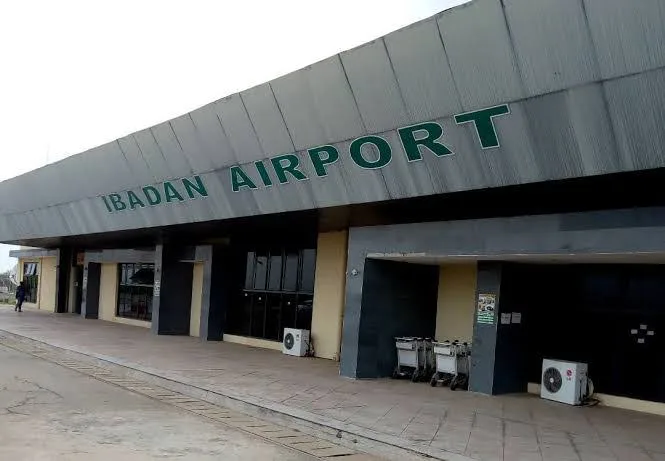
Ibadan airport to launch international flights by June 2026
Ibadan’s Ladoke Akintola International Airport is set to begin international flight operations by June 2026, the Oyo State Government announced on Monday. The airport is currently undergoing extensive upgrades to meet global aviation standards, including runway extension and terminal expansion. Prince Dotun Oyelade, Commissioner for Information and Civic Orientation, confirmed that the international terminal, currently 15% complete, will be ready for operation by the target date. The runway is being extended from 2,400 meters to 3,000 meters and widened from 45 meters to 60 meters to accommodate wide-body aircraft. Additionally, the airport’s airfield lighting has been upgraded to CAT C standards, and firefighting and safety measures have been enhanced. “Facilities for Customs, Immigration, and other essential agencies are also being put in place to support international travel,” Oyelade said. Domestic flight services, which were paused for the upgrade, are expected to resume by the end of this year once the runway, apron, taxiway, and blast pads, currently 55% complete, are finalized and regulatory approvals secured. Governor Seyi Makinde launched the first phase of the upgrade project in September 2024, with construction led by Craneburg Construction Ltd. The airport temporarily closed in March 2025 to accelerate the work. The modernization aims to boost passenger flow, expand cargo handling capacity, and position Ibadan Airport as a key player in Nigeria’s aviation sector. Governor Makinde’s vision for the airport is part of broader infrastructure development efforts aimed at economic growth in Oyo State. “The upgrades will not only enhance domestic travel but also open Ibadan to international destinations, including the upcoming Hajj flights to Saudi Arabia,” Oyelade added. Ladoke Akintola International Airport serves Ibadan, the capital of Oyo State in southwestern Nigeria, and these improvements mark a significant step toward transforming it into a world-class facility.

Blum co-founder Vladimir Smerkis arrested in Moscow on fraud charges
Vladimir Smerkis, co-founder of the Telegram-based cryptocurrency project Blum and former head of Binance’s CIS division, was arrested in Moscow on suspicion of large-scale fraud, Russian state media outlet TASS reports. The Zamoskvoretsky District Court approved his detention as the investigation proceeds under Article 159 of the Russian Criminal Code, which addresses fraud and carries potential prison terms of two to 12 years. The allegations relate to Smerkis’ previous ventures, The Token Fund and Tokenbox, rather than his work with Blum. These companies, founded in 2017, are accused of causing investor losses totaling around $15 million, sparking speculation about a possible exit scam. Following the arrest, Blum quickly announced Smerkis’ resignation as Chief Marketing Officer and confirmed he is no longer involved with the project. The team reassured users that daily operations would continue unaffected and reaffirmed their commitment to the project’s roadmap, including plans for a decentralized exchange and reward-based games. Blum’s community, which grew rapidly amid the 2024 tap-to-earn trend, has expressed mixed reactions. The project’s popular “Drop Game” allowed users to earn points convertible into BLUM tokens, but delays in the token generation event (TGE) and Smerkis’ arrest have raised doubts about the airdrop’s future. Industry experts emphasize that transparency and regulatory compliance will be crucial for Blum and similar projects to maintain trust and growth in the evolving crypto market.
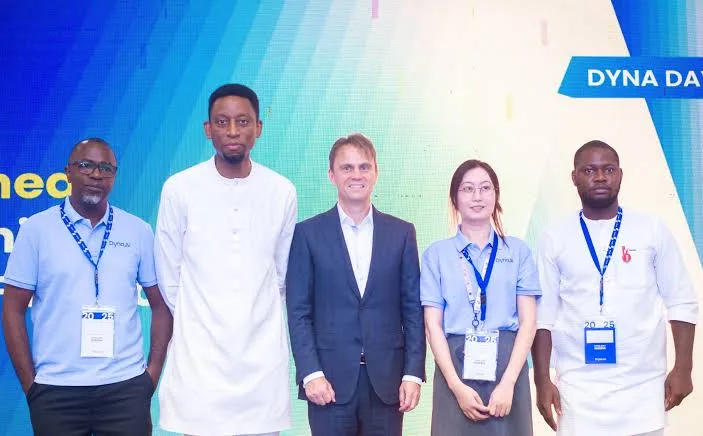
Dyna.Ai officially launches operations in Nigeria, to transform the financial sector with AI
Dyna.Ai, a global leader in AI-as-a-Service (AIaaS), has officially launched its operations in Nigeria, marking a significant milestone in the country’s fintech and digital innovation landscape. The launch event, dubbed “Nigeria Dyna Day,” took place on May 15, 2025, at Four Points by Sheraton Lagos, bringing together key players from Nigeria’s AI, financial, fintech, and telecom sectors. The event, themed “AI Unleashed: Revolutionising Nigeria’s Financial Future,” featured an immersive AI Experience Forum with panel discussions, fireside chats, and live demonstrations of Dyna.Ai’s cutting-edge AI products designed to enhance customer service, marketing, collections, and human resources in financial institutions. In his opening remarks, Tomas Skoumal, Chairman and Co-President of Dyna.Ai, emphasized Nigeria’s strategic importance as the largest market in Africa and a hub of rapid digital transformation. “Africa is no longer just the future; it is actively transforming today,” Skoumal said, highlighting the company’s commitment not only to selling AI solutions but also to building local infrastructure, creating jobs, and scaling innovation across the continent. Dyna.Ai showcased advanced AI technologies including Agent Studio, a platform for intelligent automation, and VoiceGPT, a voice agent capable of communicating in local Nigerian languages such as Yoruba, Hausa, and Igbo. These innovations aim to bridge communication gaps and foster financial inclusion. The event also featured a keynote address by Tokoni Peter Igoin, Special Assistant to the President on ICT Development and Digital Innovation, who reiterated the Nigerian government’s commitment to responsible innovation, data protection, and digital security under President Bola Ahmed Tinubu’s leadership. Dyna.Ai’s entry into Nigeria comes amid a booming African financial services market, projected to reach $230 billion by 2025. The company is already collaborating with local banks and fintech firms to deploy AI solutions that improve operational efficiency, customer engagement, and decision-making.
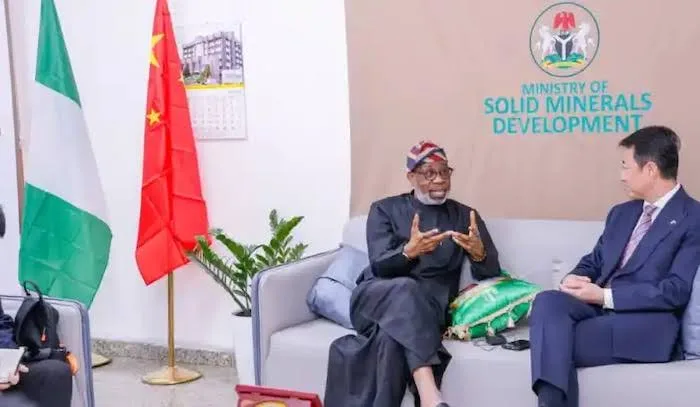
China to establish electric vehicle factories in Nigeria
China has announced concrete plans to establish electric vehicle (EV) factories in Nigeria, marking a significant step in deepening economic and industrial ties between the two countries. This move is part of a broader strategy to leverage Nigeria’s abundant solid mineral resources, particularly lithium, for local value addition and industrial growth. The decision was formalized during a recent bilateral meeting between Nigeria’s Minister of Solid Minerals Development, Dr. Dele Alake, and the Chinese Ambassador to Nigeria, Yu Dunhai. Both officials emphasized the importance of enhanced collaboration, especially in the solid minerals sector, to unlock Nigeria’s industrial potential. The initiative follows high-level discussions between President Bola Tinubu and Chinese President Xi Jinping, where both leaders agreed to elevate Nigeria-China relations to a comprehensive strategic partnership. This partnership is expected to create new opportunities for industrial cooperation, technology transfer, and economic diversification. Nigerian authorities have stressed that investments should focus on the entire value chain-from mineral extraction to processing and manufacturing within Nigeria-to maximize economic benefits and job creation. The government is particularly keen on leveraging its lithium reserves for EV and battery production. Both governments have reiterated their commitment to regulatory compliance. The Chinese embassy has emphasized a zero-tolerance policy for illegal mining and has pledged to support Nigeria’s efforts to enforce environmental, safety, and corporate social responsibility (CSR) standards among Chinese companies operating in the country. Nigeria’s EV AmbitionsNigeria’s push for electric mobility is gaining momentum, supported by government policies such as the Electric Vehicle Development Plan and the Energy Transition Plan, which aim for significant EV adoption and local manufacturing by 2033 and carbon neutrality by 2060. The removal of fuel subsidies and the rising cost of petrol have also made EVs a more attractive option for consumers and investors. The establishment of Chinese-backed EV factories is expected to accelerate Nigeria’s industrialization, create jobs, and foster technology transfer. Local EV production aligns with Nigeria’s goals for economic diversification, cleaner energy, and reduced greenhouse gas emissions. This initiative further cements China’s role as Nigeria’s largest import partner and a key player in its industrial transformation. China’s commitment to establishing EV factories in Nigeria represents a pivotal development in the country’s journey toward sustainable industrialization and electric mobility leadership in Africa.

Telegram founder accuses French intelligence of attempting to censor Romanian conservatives ahead of election
Telegram founder Pavel Durov has publicly accused France’s intelligence chief of trying to interfere in Romania’s democratic process by requesting a ban on conservative voices on the messaging platform just before Romania’s presidential election. In a statement posted on X (formerly Twitter) on Sunday, Durov revealed that Nicolas Lerner, head of France’s intelligence agency, approached him earlier this year during a meeting in Paris with the request to block conservative channels in Romania. Durov said he refused the demand, emphasizing Telegram’s commitment to free speech, noting, “We didn’t block protesters in Russia, Belarus, or Iran. We won’t start doing it in Europe.” This revelation comes hours after Romania’s surprising presidential election result, where centrist Bucharest mayor Nicușor Dan defeated a hard-right nationalist candidate. France’s Foreign Ministry swiftly denied the allegations, calling them “baseless” and urging respect for Romanian democracy. Romanian officials have yet to comment on the claims. Durov’s accusations highlight growing tensions around the role of encrypted messaging platforms like Telegram in political discourse and election integrity, especially in Europe. Telegram is known for its minimal content moderation, often sparking debate over free speech and state influence.