
Gabriel Onyeka, a Nigerian national residing in India, has been arrested by Indian authorities for allegedly defrauding an Indian businessman of approximately ₹1.25 crore (around N250 million) through an online scam. The arrest took place at Onyeka’s residence in Kalyan, Maharashtra. According to police reports, Onyeka posed as a senior executive from a reputable pharmaceutical company and convinced the victim to invest in Plukenetia volubilis, an Ayurvedic product. He offered the businessman a dealership and lucrative orders, persuading him to buy samples from a fake supplier controlled by Onyeka. After the initial purchase, individuals claiming to be quality control agents pressured the businessman to make additional payments, promising high returns. This led to a total loss of ₹1.25 crore. Authorities traced Onyeka using the mobile number he used during the scam. During the arrest, police recovered four mobile phones, one containing a WhatsApp screenshot linking Onyeka directly to the fraud. Further investigations revealed Onyeka had been living in India illegally since 2012, having overstayed his medical visa. He was previously booked for visa overstay by Mumbai Police. Indian police are continuing investigations to identify other members of the syndicate. Onyeka and his accomplice are set to be arraigned before an Indian High Court. Experts warn that scams often prey on individuals seeking quick profits and urge caution in online business transactions.
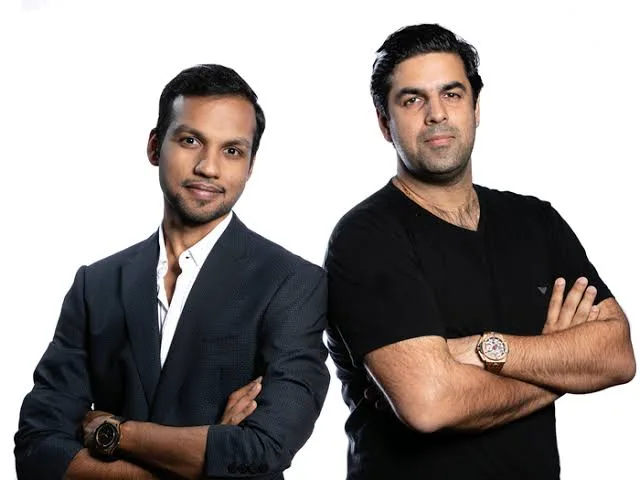
Builder.ai that promised app building as easy as ordering pizza, now faces insolvency
London-based artificial intelligence startup Builder.ai, once valued at over $1 billion and backed by major investors including Microsoft and Qatar’s sovereign wealth fund, has announced it will enter insolvency proceedings due to ongoing financial difficulties. The company, which raised more than $450 million since its founding in 2016, informed employees of its financial struggles during a company-wide call on May 20, 2025. Builder.ai’s main operating unit, Engineer.ai Corporation, will appoint an administrator to manage the company’s affairs as it seeks to address historic challenges and past decisions that severely strained its financial position. Builder.ai gained attention for its AI-powered platform designed to simplify app and website development, promising to make the process “as easy as ordering pizza.” Riding the wave of enthusiasm following the launch of ChatGPT, the startup raised a $250 million funding round in 2023. However, the company later revised its revenue forecasts downward by about 25% for the second half of 2024 and restated its 2023 revenues to $140 million amid concerns over inflated sales figures. Leadership changes have marked recent months at Builder.ai. Founder Sachin Dev Duggal stepped down as CEO in February 2025 amid scrutiny and legal challenges unrelated to the company’s operations. Manpreet Ratia, previously a managing partner at investor Jungle Ventures, took over as CEO and led a significant restructuring that included cutting roughly 270 jobs, about 35% of its global workforce. Despite efforts to stabilize the business, including securing a $50 million debt facility last year, Builder.ai’s cash reserves dwindled, leading to the decision to enter insolvency. The company emphasized its priority remains supporting employees, customers, and partners through this transition while working closely with the appointed administrators to explore all possible options for the business.
MTN Nigeria sues over 20 banks to recover N6 billion interconnect debt from SleekChip Technologies
MTN Nigeria has taken legal action against more than 20 banks to recover about N6 billion owed by SleekChip Technologies Limited, a licensed international Direct Access and National Transit service provider. This follows a Federal High Court judgment in Abuja delivered in November 2024 by Justice Peter Lifu, which ordered SleekChip to pay MTN $1,971,409.85 (approximately N3.28 billion at the prevailing Central Bank rate at the time), plus interest at 2% above the Nigerian Interbank Offer Rate from January 31, 2022, until full repayment. The dispute arose from a network interconnect agreement signed on July 23, 2019, allowing MTN and SleekChip to exchange voice calls and messages for agreed fees, known as interconnect charges. MTN alleged that SleekChip accumulated the debt between January and October 2022 by using MTN’s network but failed to settle the charges despite multiple demand notices. SleekChip acknowledged the debt in a letter dated May 30, 2023, promising to pay by July 20, 2023, but did not fulfill this commitment. MTN’s legal team emphasized that SleekChip never disputed the debt within the 60-day window allowed by their agreement to challenge invoices. Following the court ruling, MTN commenced garnishee proceedings to freeze and recover the judgment sum from SleekChip’s accounts held across various banks. During a court session on May 16, 2025, MTN’s lawyers presented affidavits from most banks confirming SleekChip’s funds, while some banks were discharged after confirming no accounts existed for the company. The case has been adjourned to June 26, 2025, for further hearing. The Nigerian Communications Commission has previously authorized disconnections of operators failing to settle such debts, highlighting the sector’s ongoing challenges with interconnect billing disputes.
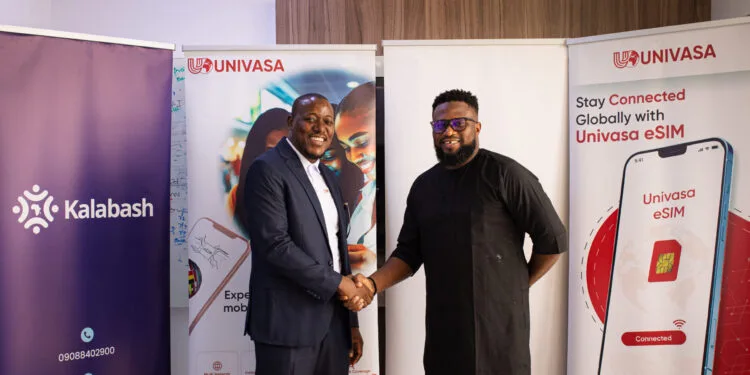
Univasa and Kalabash54 launch travel eSIM to simplify connectivity for international travelers
Univasa, a licensed mobility and connectivity solutions provider, has partnered with Kalabash54, the fintech arm of the Wakanow Group, to introduce a Travel Data eSIM product aimed at international travelers. The new service, now available on Wakanow.com, enables users to purchase and activate mobile data plans seamlessly during the flight booking process. This innovation eliminates the need for travelers to swap physical SIM cards or deal with costly roaming charges abroad. According to Ben Adeniyi, CEO of Univasa, the partnership offers “high-quality, affordable Travel Data services in over 190 countries, all without swapping SIM cards. It’s seamless, secure, and exactly what modern travel requires.” Kalabash54 CEO Ladi Ojuri emphasized the broader vision behind the initiative: “We’re building the future of travel services where payments, connectivity, and convenience all converge. This partnership solves a real problem many travelers face, staying connected easily once they arrive at their destination.” The Travel Data eSIM is integrated directly into Wakanow’s booking flow, allowing customers to add mobile data plans alongside flight reservations. This approach removes the friction of sourcing local SIM cards and ensures reliable connectivity from the moment travelers land. “This partnership combines the right technology and distribution synergy to scale this service while delivering on our promise of innovation and mobility,” Adeniyi added. Backed by Univasa’s global infrastructure and real-time activation technology, the service promises consistent performance across supported destinations. The collaboration further strengthens Wakanow Group’s digital ecosystem, offering a one-stop platform for flights, accommodation, payments, and connectivity.

56% of Nigerian government IT projects fail due to poor planning and compliance – NITDA
The National Information Technology Development Agency (NITDA) has disclosed that over half 56 percent of IT projects undertaken by Federal Public Institutions (FPIs) in Nigeria, have failed to meet their objectives. The agency attributes this high failure rate primarily to poor compliance with its IT Project Clearance Guidelines and inadequate project design and coordination. NITDA’s Director-General, Kashifu Inuwa, made the revelation during recent engagements with key government oversight bodies, including the Accountant General of the Federation, the Auditor General of the Federation, and the Bureau of Public Procurement (BPP). He emphasized that many Ministries, Departments, and Agencies (MDAs) initiate IT projects without proper clearance or alignment with the national digital economy priorities, leading to fragmented and inefficient systems that waste public funds. “These projects fail because they are not cleared to ensure alignment with national standards and priorities. We must stop wasting public funds on fragmented, uncoordinated IT systems that don’t deliver value,” Inuwa stated. The Director-General highlighted that a common pitfall is the rush to adopt the latest technology without adequate planning or consideration of the business value the projects are supposed to deliver. He warned that continued siloed implementation will prevent systems from working together effectively, undermining Nigeria’s goal of a unified, digitized government service. To address these challenges, NITDA has revised its IT Project Clearance Guidance Document, which sets out a structured framework covering solution design, implementation, and quality assurance. The updated guidelines require contractors to have certified personnel across these phases before being awarded government IT contracts. This move aims to enhance transparency, reduce duplication, and curb corruption in IT procurement. Supporting these efforts, the BPP’s Director-General, Dr. Adebowale Adedokun, acknowledged widespread abuses in IT procurement, noting that some MDAs use intangible IT projects as a cover to siphon public funds. He called for standardized bidding documents and closer collaboration with NITDA to ensure accountability and cost efficiency. The Auditor General of the Federation also pledged to assess how the IT clearance process impacts government efficiency and the economy, while the Accountant-General committed to integrating the clearance framework into financial processes.

EFCC arrests 120 suspected internet fraudsters in Lagos, seizes 26 exotic cars
The Economic and Financial Crimes Commission (EFCC) has arrested 120 suspected internet fraudsters in Lagos, including 95 men and 25 women, following a coordinated operation on May 19, 2025. The arrests came after credible intelligence and surveillance linked the suspects to internet-related fraud activities. During the operation, EFCC operatives seized 26 exotic cars, expensive jewelry, smartphones, laptops, and several incriminating documents. The suspects are currently under further investigation and will be arraigned in court once the probe is complete. Earlier this year, the commission arrested 133 individuals connected to a Ponzi Scheme Academy in Abuja and 28 alleged Ponzi scheme operators in Minna, Niger State. These actions follow the passage of the Investments and Securities Repeal and Re-enactment Bill, 2024, which imposes harsher penalties, including up to 10 years in prison and hefty fines, for operators of Ponzi schemes and related fraudulent activities.