The United States Embassy in Nigeria has announced new, stricter guidelines for visa applications, effective April 22, 2025. The updated rules are designed to streamline the application process and reduce delays caused by technical errors. Under the new policy, all visa applicants must ensure that the barcode number on their DS-160 form matches the one used to book their visa appointment. This requirement is mandatory for all applications submitted at the U.S. Embassy in Abuja and the Consulate General in Lagos. The DS-160 barcode must begin with “AA” followed by two zeroes, and appointments must be scheduled at the same location selected when filling out the form. Applicants whose barcode numbers do not match will be denied entry to the Consular Section and will not be allowed to attend their visa interviews. The embassy is urging applicants to double-check their DS-160 barcode numbers at least two weeks before their scheduled interview date. If errors are found, applicants should log into their AVITS account at least 10 days before their appointment to submit a support ticket for corrections. For those turned away due to mismatched barcodes, a new appointment must be booked after resolving the issue. If the visa fee has expired during this time, applicants may need to pay a new fee before rescheduling. The U.S. Embassy stated that these changes are necessary to ensure smoother and faster processing of visa applications. By eliminating mismatched barcodes and other errors, applicants can avoid unnecessary delays and complications. The DS-160 form is a critical component of most nonimmigrant visa applications, including visitor visas (B1/B2), student visas (F-1/M-1), work visas (H-1B), and others. While there is no fee for filing the DS-160 itself, applicants must pay a visa processing fee based on the type of visa they are applying for. Applicants are encouraged to carefully follow all instructions provided by the embassy to ensure compliance with these updated rules.

Nigeria takes Binance to court over alleged $81.5 billion tax evasion and economic losses
The Federal Inland Revenue Service (FIRS) of Nigeria has filed a lawsuit against Binance, the world’s largest cryptocurrency exchange, seeking $81.5 billion in damages for alleged tax evasion and economic harm caused by its operations in the country. The case, which has drawn widespread attention, accuses Binance of failing to pay corporate income tax and Value Added Tax (VAT), as well as neglecting tax filing obligations. FIRS claims Binance has a “significant economic presence” in Nigeria, making it liable for corporate taxes under Nigerian law. The agency alleges the company failed to register for tax compliance and violated key regulations, including the Companies Income Tax Act and the FIRS Establishment Act. Additionally, Binance is accused of destabilizing Nigeria’s currency, the naira, contributing to an estimated $79.5 billion in economic losses over six months. The Nigerian government is demanding $2 billion in back taxes for 2022 and 2023, alongside penalties and interest rates of up to 26.75% on unpaid amounts. The total claim exceeds Binance’s valuation by over 30%. The case has seen dramatic developments, including the detention of two Binance executives in 2024 and allegations that one fled custody. Binance denies wrongdoing and has challenged court procedures, arguing it does not have a physical office in Nigeria. The trial is set to continue on April 30, 2025. This lawsuit highlights Nigeria’s increasing scrutiny of cryptocurrency platforms as the government seeks to regulate digital finance amid economic challenges. Public finance experts have criticized systemic weaknesses that may have allowed such alleged violations to occur.
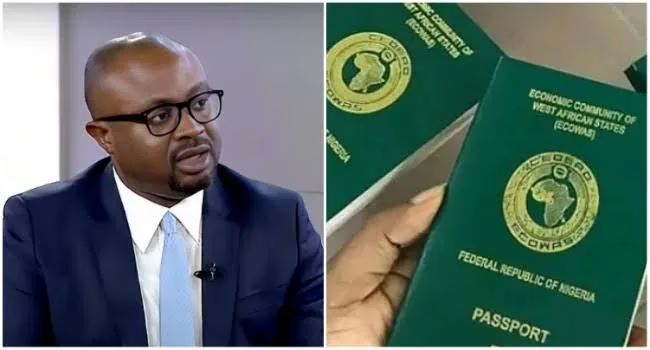
Nigeria immigration service expands contactless passport system to four new countries
The Nigeria Immigration Service (NIS) has launched the second phase of its contactless biometric passport application system, now available in the United States, Brazil, Jamaica, and Mexico. This innovative system allows Nigerians abroad to renew their passports online without visiting passport offices for biometric enrollment. The rollout began in the U.S. on April 11, followed by Jamaica on April 14, with Mexico and Brazil also joining the initiative. The service is accessible via the “NIS Mobile” app on Google Play Store, with an iOS version expected soon. This technology-driven approach simplifies passport renewal for Nigerians globally, ensuring secure and efficient processing. The NIS has already implemented this system in Canada, Europe, and Asia, marking significant progress in enhancing service delivery for the diaspora community. However, the service is yet to be launched in Australia and Nigeria, with future dates to be announced. By eliminating physical interactions, the contactless system offers convenience and ensures faster processing of applications from anywhere with internet access. This development highlights NIS’s commitment to leveraging technology for better service delivery worldwide.

Nigeria announces stricter penalties for visa overstays starting August 2025
The Nigerian government has unveiled new immigration measures aimed at curbing visa overstays, set to take effect in May 2025, with enforcement beginning in August after a three-month grace period. Minister of Interior Olubunmi Tunji-Ojo announced the policy during a stakeholders’ meeting in Lagos, highlighting its role in promoting responsible migration and safeguarding national security. Under the revised Nigeria Visa Policy 2025: Daily fines: Foreign nationals who overstay their visas will incur a $15 fine for each day beyond their visa expiration. Entry bans: Overstays exceeding three months will result in a five-year ban, while overstays of one year or more will lead to a ten-year re-entry ban. The grace period until August allows visa holders to regularize their status without penalties. Tunji-Ojo emphasized that the policy is not punitive but aims to ensure compliance and transparency regarding foreign nationals residing in Nigeria. Additionally, the government plans to fully digitize the application process for the Combined Expatriate Residence Permit and Aliens Card (CERPAC), enabling online submissions and payments. This modernization effort seeks to streamline procedures and integrate security checks with global systems. The Nigeria Immigration Service will oversee enforcement of these reforms, marking a significant step toward improved migration governance.

Thieves steal Nuhu Ribadu’s official Hilux vehicle in Abuja during Juma’at prayers
A black Toyota Hilux vehicle belonging to the Office of the National Security Adviser (ONSA), Nuhu Ribadu, was reportedly stolen in Abuja during Friday’s Juma’at prayers. The theft occurred on April 11, 2025, while the vehicle was parked near the Abuja Municipal Area Council (AMAC) complex in Area 10. The official had left the vehicle at approximately 1:05 PM to attend prayers at a nearby mosque. Upon returning after the prayers, the vehicle was nowhere to be found. According to security sources, the incident was immediately reported to the Garki Police Division at around 2:00 PM. Law enforcement authorities responded swiftly, initiating a stop-and-search operation at various checkpoints and monitoring all entry and exit points across the Federal Capital Territory (FCT). The FCT Police Command confirmed that investigations are underway to locate the stolen Hilux and apprehend those responsible. In a statement, police officials assured that efforts have been intensified to track down the suspects and recover the vehicle as soon as possible.
8 Killed, 11 injured in Boko Haram IED explosion in Borno
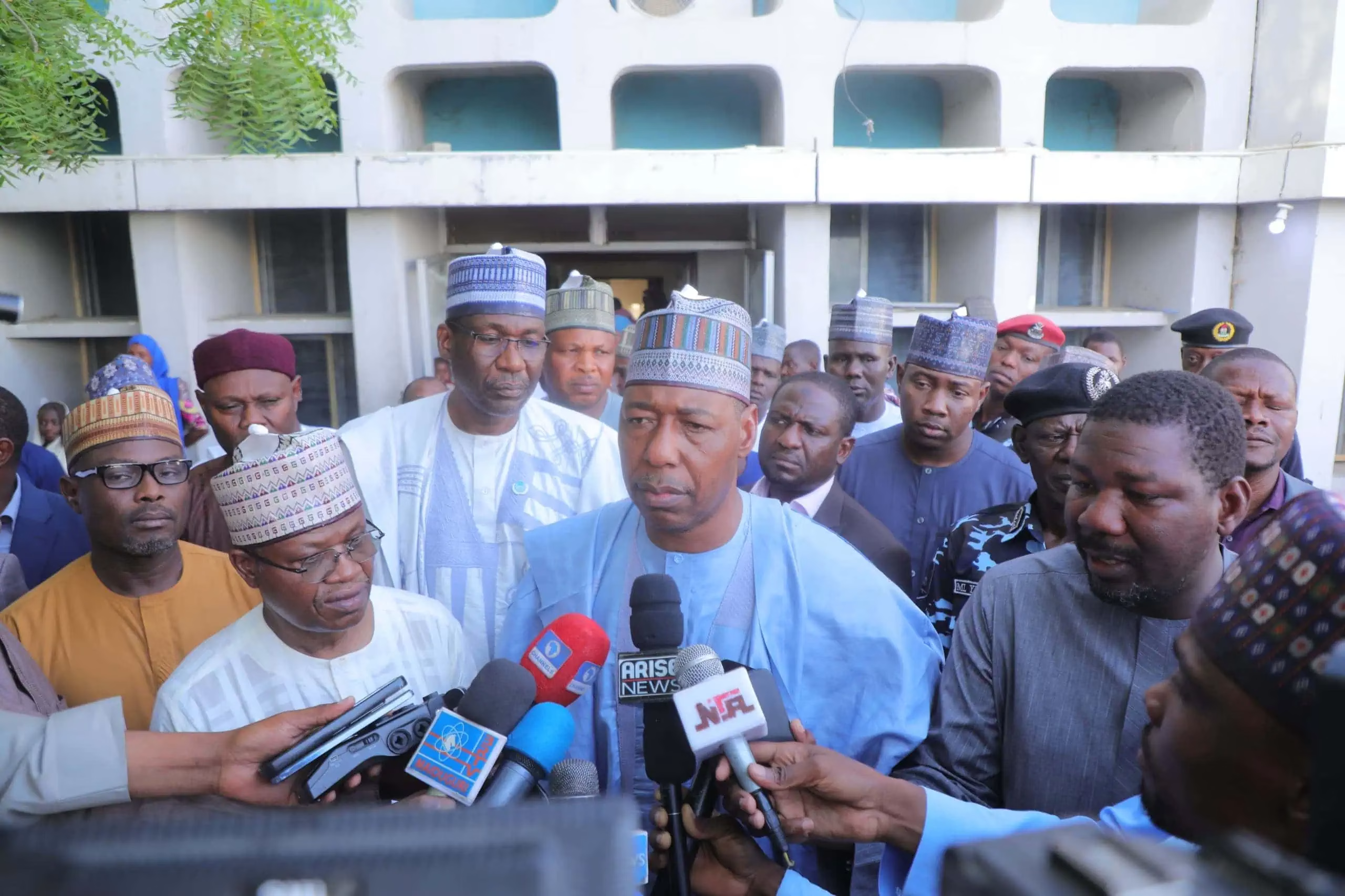
Tragedy struck on Saturday morning as an Improvised Explosive Device (IED) planted by suspected Boko Haram terrorists exploded along the Damboa-Maiduguri road, killing eight people and injuring eleven others. The incident occurred near Gidan Kaji in Konduga Local Government Area at approximately 11:30 AM. The victims were part of a convoy of private and commercial vehicles being escorted by troops. Among those killed were the driver of a Hummer bus and seven passengers, while the injured were promptly evacuated to the State Specialist Hospital in Maiduguri for treatment. District Head Lawan Maina expressed deep sorrow over the attack and urged the federal government to intensify efforts to combat terrorism in the region. “This explosion is a painful reminder of the ongoing threat posed by Boko Haram,” he stated. Governor Babagana Zulum visited the injured victims at the hospital, ensuring they receive free medical care and offering immediate financial assistance of N50,000 to each survivor. He also voiced concerns about the resurgence of Boko Haram attacks, describing recent developments as a significant setback in the fight against insurgency. The Borno State Police Command confirmed that joint clearance operations between police and military forces are underway to address security challenges in the area.