
The China Civil Engineering Construction Corporation (CCECC) has officially launched its cargo freight service on the Lagos-Ibadan Railway, marking a significant milestone for Nigeria’s logistics and transportation sector. This development follows the Nigerian Railway Corporation’s (NRC) approval of a three-year operational license for CCECC, effective from October 2024 to October 2027. The inaugural freight journey began at the Ajuba Bonded Terminal, where goods were transported to Apapa Port in Lagos. Import containers were then loaded onto the train for the return trip to Ajuba, creating a seamless logistics cycle for both import and export operations. This service aims to alleviate road congestion and streamline cargo movement along Nigeria’s busiest port corridor. Spanning 157 kilometers with an additional 7-kilometer branch line, the Lagos-Ibadan Railway was constructed by CCECC at a cost of $1.5 billion and launched in June 2021. Built to modern standards, it supports speeds of up to 150 km/h and connects Lagos, Nigeria’s economic hub, to Ibadan, a key industrial city. CCECC’s freight operations represent Nigeria’s first standard-gauge rail freight service, providing businesses with a reliable and cost-effective logistics solution while boosting economic activity along the corridor. By March 2024, the railway had already transported over 2 million passengers and is now expanding its impact through cargo services.
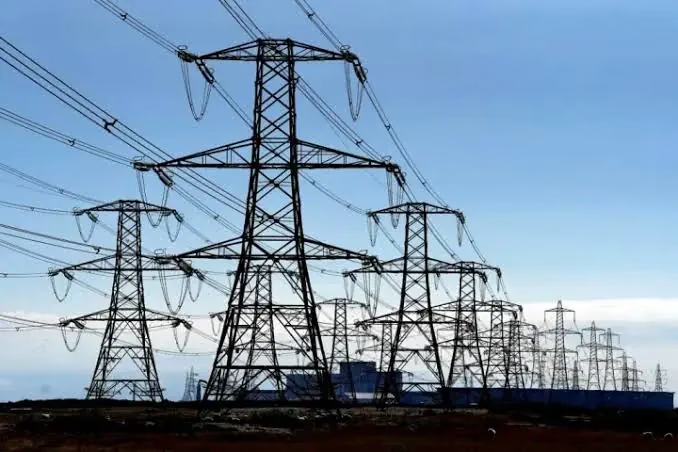
FG launches national dialogue to address energy crisis in hospitals
The Federal Government has announced plans to tackle the escalating energy costs and power shortages crippling healthcare delivery in tertiary hospitals across Nigeria. This initiative was unveiled by the Minister of State for Health and Social Welfare, Dr. Iziaq Salako, during a press briefing in Abuja on Friday. Dr. Salako emphasized the urgent need for sustainable energy solutions, highlighting how unreliable power supply and rising electricity expenses have severely impacted hospital operations. “Hospitals across the country are grappling with massive energy deficits and escalating costs. The time for uncoordinated, haphazard energy solutions is over,” he stated. While interventions such as a 50% electricity subsidy and solar mini-grids have been introduced, these measures have not sufficiently resolved the issues. To address this, the government plans to host a National Stakeholders’ Dialogue aimed at rethinking traditional power generation models and exploring innovative solutions like renewable energy. Key Objectives of the DialogueThe dialogue will: Assess current power policies and challenges in public hospitals. Explore alternative energy sources such as solar and energy-efficient technologies. Strengthen Public-Private Partnerships (PPPs) to attract investments in sustainable power solutions. Develop a comprehensive policy framework for long-term energy sustainability in healthcare facilities. Dr. Salako also inaugurated an Implementation Committee tasked with organizing the dialogue and driving its outcomes. He called for collaboration across sectors, stressing that resolving these challenges requires a “whole-of-government approach.” Many tertiary hospitals are struggling with soaring energy costs, spending millions monthly on diesel due to unreliable electricity supply. This has led to surgery delays, disrupted clinic schedules, and increased patient fees to offset operational costs. The upcoming dialogue seeks to bring stakeholders from health and power sectors together to create actionable solutions that will strengthen Nigeria’s healthcare system and improve patient care.
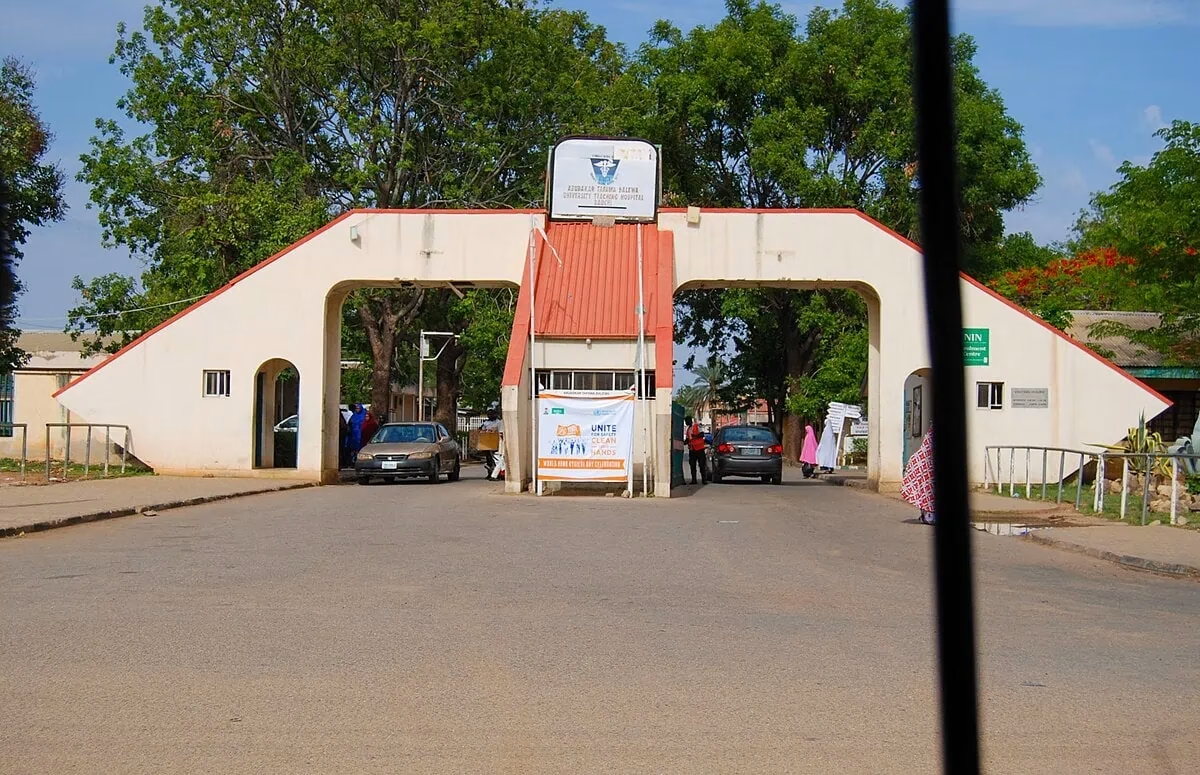
ATBUTH Bauchi warns the public against fraudulent laptop contract scam
The Abubakar Tafawa Balewa University Teaching Hospital (ATBUTH) in Bauchi has alerted the public about a fraudulent scheme involving impersonation of its Chief Medical Director, Professor Yusuf Bara Jibrin. Scammers are falsely claiming to award contracts for the procurement of 200 HP laptops, allegedly approved by the Federal Ministry of Health, as part of the hospital’s digitization efforts. In a statement issued by Usman Koli, Head of Public Relations at ATBUTH, the hospital clarified that no such procurement process has been initiated. The scammers have been using the phone number ‘08167069701’ to contact unsuspecting individuals via WhatsApp, phone calls, and SMS, attempting to deceive them into believing the legitimacy of the contract. Koli emphasized that all official procurement activities at ATBUTH strictly follow due process and legal procedures. He urged the public to remain vigilant and report any suspicious communication to relevant authorities immediately. The hospital management is collaborating with security agencies to identify and prosecute those responsible for the scam. This warning comes amidst increasing cases of fraudulent contract schemes in Bauchi State. In a related incident in 2022, a civil servant was sentenced to two years imprisonment for forging documents and fraudulently awarding fake laptop contracts. Such scams highlight the need for heightened public awareness and caution when dealing with unsolicited offers. ATBUTH reassures stakeholders of its commitment to transparency and accountability in all operations while working to protect the public from fraudulent activities.
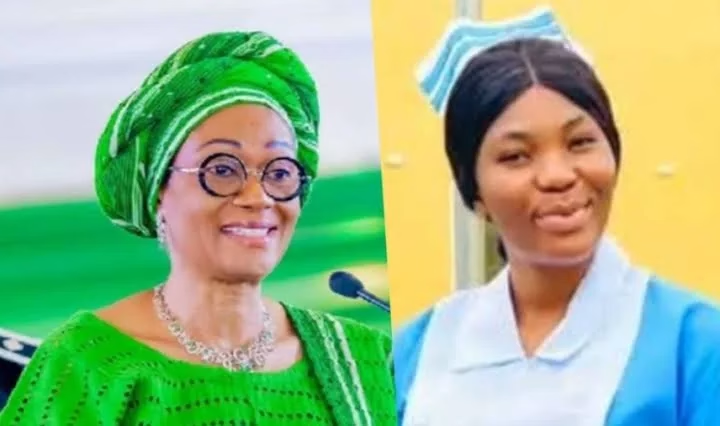
Delta nursing school withdraws query against student after public outcry
The Delta State College of Nursing Sciences, Agbor, has rescinded a disciplinary query issued to a student, Osato Edobor, following widespread backlash over her involvement in a viral video during Nigeria’s First Lady, Oluremi Tinubu’s visit to the state. The video captured nursing students humorously rejecting the customary title of the First Lady as “everyone’s mother,” sparking public debate. The controversy began when Edobor recorded and shared a TikTok video where students responded to the First Lady’s introduction with chants of “Na your mama be this o” (This is your mother), refusing to accept the designation. In her own clip, Edobor added, “Na your mama be that ooo, my mama dey house” (That is not my mother; my mother is at home). The school accused her of violating disciplinary rules by posting the video without authorization. Public reaction was swift, with many Nigerians criticizing the school’s move as an infringement on free expression. Human rights activist Omoyele Sowore described the query as emblematic of repression under the current administration. Similarly, Mr. Macaroni, a popular content creator, questioned the necessity of such disciplinary action over what he termed harmless self-expression. Responding to the backlash, Delta State Commissioner for Health, Dr. Joseph Onojaeme, directed the school to withdraw the query and assured the public that no student would be victimized. The withdrawal was confirmed in a letter dated March 28, 2025. In a statement, Oluremi Tinubu characterized the students’ actions as playful and urged the institution to balance discipline with free expression.

High cost of CNG conversion hindering adoption in Nigeria, says Ogun Governor
Ogun State Governor, Dapo Abiodun, has raised concerns over the high cost of converting vehicles and machinery to run on Compressed Natural Gas (CNG), describing it as a significant obstacle to widespread adoption in Nigeria. Speaking at the third edition of the Chemical Handlers and Users Workshop organized by the State Ministry of Environment in Abeokuta, Governor Abiodun stressed the need for greater investment in clean energy solutions to reduce pollution and promote environmental sustainability. Represented by his deputy, Noimot Salako-Oyedele, the governor highlighted the importance of transitioning to cleaner energy sources like CNG but acknowledged that financial and technical barriers are slowing progress. He noted that as of May 2024, only 131 CNG conversion centers existed across the country, with Ogun State having a relatively high concentration. “Concerns over conversion costs, refueling infrastructure, and technical expertise remain major barriers to adopting CNG,” Abiodun said. To tackle these challenges, the Ogun State government is partnering with private investors to provide financing options and expand CNG infrastructure. The governor also pointed out that Ogun has been utilizing CNG for its commercial transport system since 2022, even before fuel subsidies were removed, demonstrating its commitment to clean energy solutions. Ogun State has been at the forefront of environmental sustainability efforts through programs such as the Waste-to-Resource Revolution and the Electric Mobility Leadership Program. These initiatives aim to promote cleaner energy alternatives and reduce dependence on fossil fuels. The state’s Commissioner for Environment, Ola Oresanya, echoed this sentiment during the workshop, urging stakeholders, including chemical handlers, industry players, and farmers, to adopt clean energy technologies and embrace circular economy practices. “We urge all stakeholders to prioritize environmental compliance and work together to build a legacy of sustainability that fosters economic growth and improves public health for future generations” – Oresanya CNG is derived from natural gas and burns cleaner than traditional fossil fuels, significantly reducing harmful emissions. Despite its environmental benefits, adoption has been slow due to financial constraints faced by industries, farmers, and public transport operators. A recent report revealed that many vehicle owners are reluctant to switch to CNG because of inadequate refueling infrastructure and limited space in their vehicles after conversion. The federal government has introduced several initiatives to ease adoption, including free vehicle conversions at select locations and credit schemes for businesses interested in making the transition. However, experts warn that unless financial and technical barriers are addressed comprehensively, many industries and individuals may struggle to embrace this cleaner energy alternative.

Nursing student faces punishment for viral video rejecting Remi Tinubu’s ‘Motherly’ title
Delta State College of Nursing has issued a formal query to student nurse Osato Edobor for her involvement in a viral video where nursing students rejected Nigeria’s First Lady, Oluremi Tinubu, as “our mother” during her visit to Asaba. The incident occurred on March 25, 2025, during the First Lady’s Renewed Hope Initiative Health Programme at the Dome Event Center. The video, shared on TikTok, captured students singing a dissenting tune as Mrs. Tinubu arrived. The college accused Edobor of recording and circulating the footage, labeling it a “malicious act.” The provost, Evbodaghe Rita Ogonne, stated that Edobor’s actions violated disciplinary rules outlined in the Student Handbook and demanded her response within 24 hours. The First Lady’s visit was part of her initiative to distribute 10,000 professional kits to midwives across Nigeria’s South-South zone. Despite initial enthusiasm from attendees, some nurses expressed disappointment over unmet expectations regarding the distribution of kits. Delta State Commissioner for Works and Public Information, Charles Aniagwu, clarified that the reaction was misrepresented online. He emphasized that the First Lady had apologized to nurses for prioritizing midwives in this phase of donations and assured them their turn would come. Aniagwu dismissed claims of hostility during the visit and praised Mrs. Tinubu’s contributions to healthcare development. “This reaction was taken out of context by certain individuals on social media,” he said during a press conference. The college’s disciplinary action against Edobor has sparked debate online, with critics questioning the severity of the response and broader implications for freedom of expression among students.