
The Nigeria Customs Service (NCS) has seized $578,000 in undeclared foreign currency from a passenger at Lagos’ Murtala Muhammed International Airport (MMIA), marking one of the largest recent cash interceptions linked to suspected money laundering. The incident occurred on Friday, March 21, when a male traveler arriving from Johannesburg aboard South African Airways Flight SA60 declared $279,000 at the airport’s currency desk. However, during a routine inspection, customs officers discovered an additional $299,000 concealed in multiple packages within his luggage, alongside €100 and a counterfeit $250 note. The total undeclared amount of $578,000, nearly 60 times the legal limit, was immediately confiscated. Effiong Harrison, Comptroller of the MMIA Command, confirmed the seizure violated Nigeria’s Money Laundering (Prohibition) Act of 2011, which mandates that travelers carrying over $10,000 (or equivalent in foreign currency) must declare it to authorities. “This was a deliberate attempt to bypass financial regulations,” Harrison stated. “The suspect’s actions undermine Nigeria’s economic integrity and investor confidence. We’ve handed over his international passport and all documents to the EFCC for prosecution.” The Economic and Financial Crimes Commission (EFCC), Nigeria’s anti-graft agency, has taken custody of the funds and launched an investigation into the source of the money. Ahmed Ghali, Acting Director of EFCC’s Lagos Office 2, warned that undeclared cash movements risk severe penalties. “Full disclosure is non-negotiable. Honest travelers face no issues, but evasion will be met with strict legal action,” he said. This seizure follows a similar incident days earlier at Abuja’s Nnamdi Azikiwe International Airport, where customs intercepted $193,000 hidden inside a carton of yogurt. Authorities attribute the uptick in interceptions to heightened surveillance at major entry points, part of a federal push to curb capital flight and money laundering. Customs officials emphasized that undeclared cash often fuels illegal activities, including terrorism financing and tax evasion. Harrison reiterated the NCS’s commitment to “safeguarding Nigeria’s financial systems” and urged travelers to comply with declaration rules to avoid forfeitures and criminal charges. While the Lagos suspect’s identity remains undisclosed, EFCC sources say the probe will trace the money’s origins and potential ties to broader syndicates. The agency has secured 29 convictions for internet fraud in Benin City this week alone, signaling intensified efforts to tackle financial crimes ahead of global anti-corruption reviews. Experts note that Nigeria’s porous borders and cash-driven economy make it a hotspot for illicit financial flows, with the World Bank estimating $18 billion annually lost to money laundering.

Heathrow Airport in London closes due to major power outage caused by substation fire
London’s Heathrow Airport, one of the world’s busiest, was forced to shut down on Friday, March 21, 2025, due to a significant power outage caused by a fire at an electrical substation in Hayes, west London. The incident led to widespread disruptions, with over 1,351 flights canceled and at least 120 flights diverted to other airports like Amsterdam and Frankfurt. The fire, which ignited late Thursday night, prompted a massive response from the London Fire Brigade, with around 70 firefighters and 10 fire engines deployed to combat the blaze. The power outage not only affected the airport but also left thousands of homes in the surrounding area without electricity. Heathrow announced it would remain closed until midnight, citing safety concerns for passengers and staff. Travelers were advised to avoid the airport and contact their airlines for updates. The disruption is expected to have lasting impacts, with significant travel chaos anticipated over the coming days. Counter-terrorism police are also investigating the incident, adding another layer of complexity to the situation. As the situation unfolds, passengers and residents alike are bracing for the aftermath of this major disruption.

Abuja hosts Nigeria’s latest electric vehicle charging station in push for green energy
The Federal Government of Nigeria has officially launched a hybrid electric vehicle charging station in Abuja. This initiative, spearheaded by the Ministry of Innovation, Science and Technology in collaboration with the Electric Motor Vehicle Company (EMVC), marks a crucial step in Nigeria’s transition to cleaner transportation options. Located at the headquarters of the Energy Commission of Nigeria (ECN), the charging station is designed to be both durable and sustainable. It operates as a 5.5 kW solar-powered facility, capable of using both grid power and solar photovoltaic energy. Equipped with a 10 kW lithium battery and an 8 kVA intelligent inverter, the station can fully charge an electric vehicle in approximately 30 minutes and can concurrently charge up to four vehicles. This project aligns with President Bola Ahmed Tinubu’s Renewed Hope Agenda, focusing on reducing fossil fuel dependence and promoting green innovation. The initiative also supports Nigeria’s climate change goals by utilizing solar energy to achieve net-zero greenhouse gas emissions. Minister Uche Nnaji emphasized the importance of collective efforts to expand this initiative across the country, ensuring electric mobility becomes a widespread reality in Nigeria. The project is expected to foster technological advancement, attract investment, and create sustainable employment opportunities within the green economy.
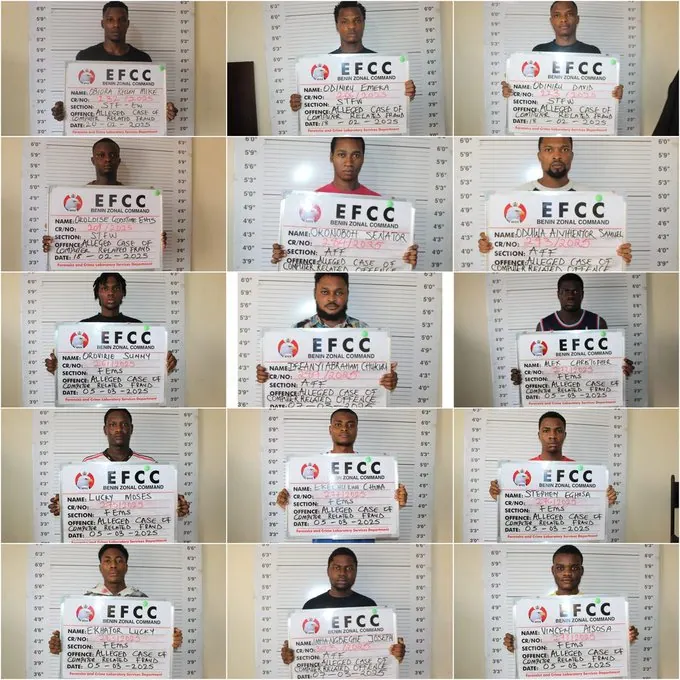
Edo State high courts sentence 29 internet fraudsters in major EFCC operation
The Edo State High Courts in Benin City have convicted 29 individuals for internet fraud, sentencing them to varying jail terms or fines. Justices A.N. Erhabor and W.I. Aziegbemhin delivered the judgments on Thursday, following charges brought by the Economic and Financial Crimes Commission (EFCC). The convicts, identified as Edeyibo Rukewe Hope, Igbafe David, Emakhu Bonfrey, Genesis Ndujifor, Okolosie Godstime, Chukwu David, Ebuka Emmanuel, Akhere Akahomhen, Odiniru Emeka Vet, Obiora Mike Kelvin, and others, were arrested during a sting operation by the EFCC’s Benin Zonal Directorate. The arrests were based on credible intelligence linking them to fraudulent online activities. Each defendant faced charges ranging from obtaining money under false pretenses to possession of fraudulent documents. All pleaded guilty when the charges were read in court. Justice Erhabor sentenced 18 of the convicts to two years in prison or an alternative fine of ₦200,000 each. Justice Aziegbemhin imposed similar sentences on others but increased the fine to ₦400,000 for some offenders. Additionally, the court ordered the forfeiture of assets linked to the crimes. This included a red Mercedes Benz C300 with registration number BEN258CM and other items such as mobile phones, computers, and cash. The convicts were also required to sign undertakings to exhibit good behavior moving forward. EFCC’s Ongoing Fight Against CybercrimeThis case highlights the EFCC’s relentless efforts to combat internet fraud in Nigeria. The agency has consistently warned about the growing sophistication of cybercriminals and their involvement in other crimes such as ritual killings and armed violence. The crackdown comes amid rising concerns over cybercrime’s impact on Nigeria’s reputation and economy. Earlier this year, the EFCC mourned the loss of one of its officers, Aminu Sahabi Harisu, who was killed while pursuing a suspected internet fraudster. This serves as a stern warning to those engaging in fraudulent activities and reinforces the government’s commitment to upholding justice and safeguarding citizens from cybercrime threats.
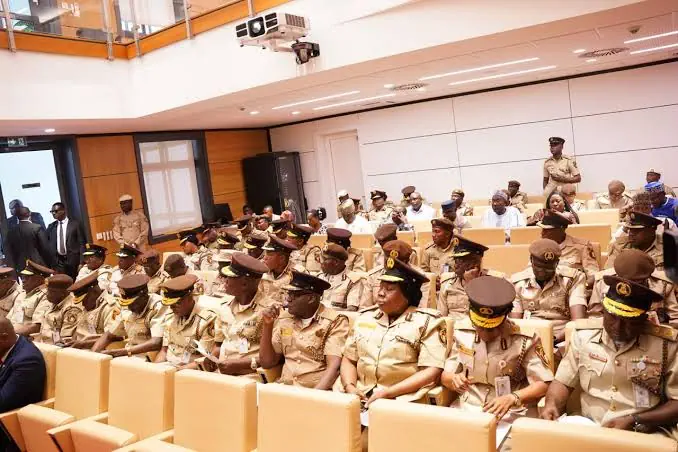
Nigeria Immigration Service introduces e-Visa platform to enhance efficiency
The Nigeria Immigration Service (NIS) has reaffirmed its commitment to combating corruption and enhancing service efficiency through the adoption of innovative digital technologies. Speaking at the launch of the agency’s 3rd Nationwide Sensitization and Awareness Campaign Against Corruption in 2025, themed “Increased Digitalization and Consolidated Innovations for Efficient and Transparent Services,” Comptroller General Kemi Nandap outlined key initiatives aimed at modernizing immigration processes. Among the highlights of the NIS’s digital transformation is the Contactless Passport Application System, which allows Nigerians to renew their passports online without visiting NIS offices. This initiative, launched earlier this year, is designed to simplify the passport renewal process, reduce bureaucratic hurdles, and curb opportunities for corrupt practices. Additionally, the agency is set to roll out an e-Visa platform, further streamlining immigration services and making them more accessible to Nigerians and foreign nationals alike. These efforts are part of a broader push to leverage technology for transparency and efficiency. During her remarks, Nandap emphasized the importance of these reforms in fostering a more transparent immigration system. “We are committed to using technology to eliminate bottlenecks, improve service delivery, and ensure that our processes are fair and customer-friendly,” she said. The NIS is also working closely with key anti-corruption agencies such as SERVICOM, the Independent Corrupt Practices and Other Related Offences Commission (ICPC), and the Economic and Financial Crimes Commission (EFCC). These partnerships aim to reinforce internal controls within the agency while promoting ethical standards. Princess Zahrah Mustapha Audu, Director General of the Presidential Enabling Business Environment Council (PEBEC), commended these efforts, noting that corruption remains a significant barrier to economic growth and ease of doing business in Nigeria. “The proactive measures by the NIS are commendable steps toward a service-driven immigration system that aligns with national development goals,” she stated. Similarly, SERVICOM National Coordinator Mrs. Nnena Akajemeli and ICPC representative Mr. Demola Bakare praised the agency for prioritizing transparency but also highlighted areas for improvement. Both reiterated their commitment to supporting the NIS in delivering professional and ethical services. Despite these advancements, some users have reported challenges with the contactless passport application system. Many Nigerians who downloaded the NIS mobile app have complained about difficulties completing their applications online, with issues arising after creating profiles. The NIS has acknowledged these concerns and is working to address them to ensure a seamless user experience.

Eu charges tech giant Google for violating antitrust rules
The European Commission has issued preliminary findings accusing Alphabet Inc., the parent company of Google, of violating the Digital Markets Act (DMA) in two key areas: Google Search and Google Play. The Commission alleges that Alphabet unfairly prioritizes its services in search results and restricts app developers from directing consumers to alternative purchasing options, violating the DMA’s requirement for fair and non-discriminatory practices. Key Allegations:Google Search Practices: Alphabet is accused of favoring its own services, such as shopping and financial results, over those of third-party providers by placing them prominently in search results. Google Play Restrictions: The Commission claims that Alphabet restricts app developers from steering customers to alternative purchasing options through technical barriers and excessive fees. Regulatory Response:Alphabet has the opportunity to respond to these findings before the Commission makes a final decision. If confirmed, this could lead to significant financial penalties or regulatory actions. Meanwhile, Google has also opened applications for its Building Opportunities for Leadership and Development (BOLD) Internship Program for 2025. This paid summer internship targets undergraduate students interested in non-technical roles like marketing and finance, emphasizing diversity and inclusion. The program offers a 12-week experience starting in May or June 2025.