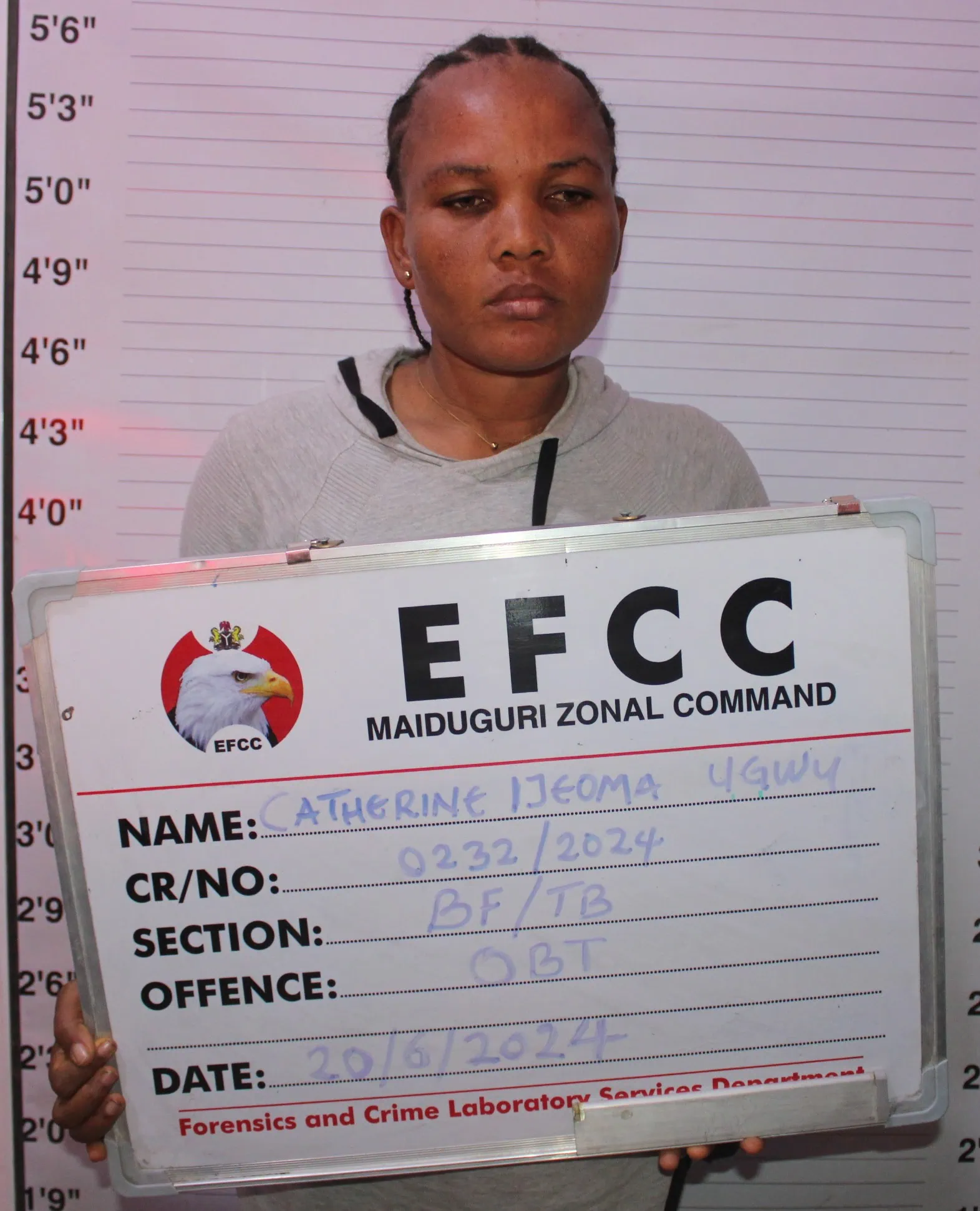
The Economic and Financial Crimes Commission (EFCC) has arraigned Catherine Ijeoma Ugwu for her alleged involvement in a romance scam. The case, which involves obtaining money by false pretence, criminal misappropriation, and impersonation, totals N6,815,300. Ugwu was brought before Justice Aisha Kumaliya at the Borno State High Court in Maiduguri, where she pleaded not guilty to the charges. The prosecution, led by S.O. Saka and Faruku Muhammad, requested that she be remanded in a correctional center until the trial begins on April 8, 2025. The alleged scam involved Ugwu impersonating the fiancée of Emmanuel Ani, deceiving him into transferring N6.8 million under false pretences. When confronted, Ugwu was unable to account for or return the money, leading to her legal troubles. This case highlights the EFCC’s commitment to tackling financial crimes and protecting citizens from exploitation. As romance scams continue to pose a threat, law enforcement agencies are stepping up efforts to prosecute offenders and ensure justice for victims.
MTN Group to separate fintech operations in Africa to pave way for Mastercard deal
MTN Group, Africa’s largest telecommunications provider, has announced plans to spin off its financial technology (fintech) operations in Nigeria, Ghana, and Uganda during the first half of 2025. This strategic move is part of a broader reorganization aimed at enabling Mastercard Inc. to acquire a minority stake in these fast-growing fintech units. The announcement was made by MTN CEO Ralph Mupita during an interview with Bloomberg on Monday. According to Mupita, the spin-off will help streamline operations and create a more focused approach to expanding MTN’s fintech business across Africa. The deal with Mastercard, initially struck in 2023, values MTN’s fintech business at $5.2 billion. Mastercard is expected to invest up to $200 million for a minority stake in the units. This partnership also includes commercial agreements aimed at accelerating the growth of MTN’s payments and remittance services. In a statement released alongside the announcement of the deal, MTN noted: “Following the bespoke process to identify and potentially introduce strategic minority investors into MTN Group Fintech, we executed commercial agreements with Mastercard to support the acceleration and growth of our fintech business’s payments and remittance services.” While the spin-off processes are progressing smoothly in Ghana and Uganda, Nigeria presents additional hurdles due to regulatory complexities. Mupita acknowledged these challenges but emphasized MTN’s commitment to completing the reorganization across all three markets. “Nigeria has a bit more complexity with some more regulatory processes to work through,” Mupita said. Despite this, he expressed confidence in the company’s ability to finalize the restructuring. Beyond its fintech ambitions, MTN is exploring network-sharing agreements as part of its strategy to optimize infrastructure costs and improve service delivery. This approach aligns with trends already prevalent in European markets. MTN has also signaled confidence in its financial outlook despite posting a loss of 9.59 billion rand for the full year ended December 31, 2024, a figure lower than its estimated loss of 3.87 billion rand. The company announced a dividend payout of 3.45 rand per share for 2024 and plans to increase this to at least 3.70 rand per share for the current financial year. The spin-off represents a significant milestone for MTN as it positions itself as a major player in Africa’s growing fintech sector. With mobile-money transactions rising by 35%, the company sees immense potential in leveraging its existing customer base and infrastructure to drive financial inclusion across the continent.

FG unveils plan to establish CNG facilities in 20 federal tertiary institutions
The Federal Government of Nigeria has unveiled plans to set up Compressed Natural Gas (CNG) conversion centers and refuelling stations in 20 federal tertiary institutions across the country. The initiative, spearheaded by the Midstream and Downstream Gas Infrastructure Fund (MDGIF) in collaboration with Femadec Energy, aims to promote clean energy adoption and alleviate transportation costs for students and lecturers. Announced via the official X account (formerly Twitter) of the Presidency on Monday, the project aligns with President Bola Ahmed Tinubu’s commitment to affordable, sustainable energy solutions. It represents a significant step toward integrating clean energy into Nigeria’s educational system. The Minister of Education, Dr. Morufu Olatunji Alausa, recently met with Vice-Chancellors and representatives from MDGIF, Femadec Energy, and the Presidential Compressed Natural Gas Initiative (PCNGI) to finalize project details. According to the statement, six institutions are expected to have fully operational CNG facilities by May 29, 2025. Dr. Alausa emphasized the importance of the initiative, noting its dual benefits of reducing transportation costs for students and lecturers while advancing clean energy integration within academic environments. “This initiative not only aims to lower transportation costs for our students and lecturers but also represents a pivotal step towards integrating clean energy solutions within our educational institutions,” he said. A representative from Femadec Energy highlighted the project’s focus on sustainability, stating that the partnership reflects a shared commitment to promoting cleaner energy solutions. This push for CNG adoption gained momentum following the removal of fuel subsidies in 2023, which led to a sharp rise in petroleum prices and transportation costs. To support this transition, the Federal Government has invested over $75 million in developing CNG infrastructure nationwide. This investment aligns with broader efforts to cut carbon emissions and advance sustainable energy practices. The Nigerian Midstream and Downstream Petroleum Regulatory Authority (NMDPRA) disclosed earlier this year that Nigeria’s CNG conversion capacity increased significantly in 2024, with 186 new conversion centers established. This marks a 2,500% growth in capacity compared to previous years. The establishment of CNG facilities in tertiary institutions is expected to ease financial burdens on students and staff while contributing to Nigeria’s environmental goals. It highlights the government’s commitment to fostering innovation and sustainability within critical sectors like education and energy.
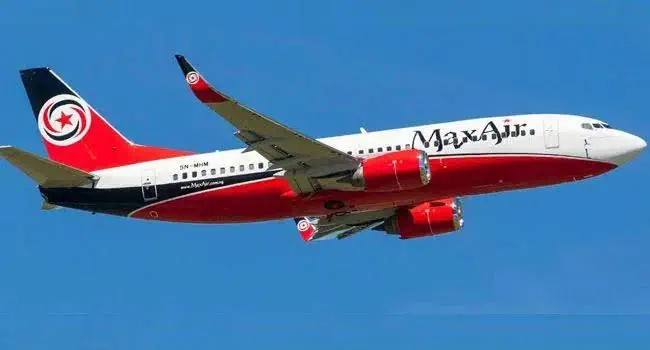
Max Air resumes domestic flights following 90-day suspension
Max Air is set to resume domestic flight operations across Nigeria after receiving clearance from the Nigeria Civil Aviation Authority (NCAA). The approval, effective from midnight on March 17, 2025, follows a comprehensive safety and economic audit conducted by the regulatory body. The announcement was made in a statement signed by Michael Achimugu, Director of Public Affairs and Consumer Protection, on behalf of the NCAA’s Director General. The statement confirmed that Max Air had met all regulatory requirements after voluntarily suspending its domestic operations for 90 days earlier this year. The airline’s suspension came after a series of safety-related incidents raised concerns about its operational standards. Among these was a January 2025 incident at Mallam Aminu Kano International Airport, where a Boeing 737 (5N-MBD) experienced a nose wheel collapse and rear tire burst during landing. Fortunately, all 53 passengers and six crew members onboard were unharmed. Another notable incident occurred in July 2024 at Yola Airport when another Boeing 737 (5N-ADB) suffered multiple tire bursts during takeoff, leaving the aircraft immobilized. In addition, a 2023 report by the Nigerian Safety Investigation Bureau (NSIB) found Max Air guilty of overwriting critical cockpit voice recorder data following a serious landing incident at Nnamdi Azikiwe International Airport in Abuja. During the suspension period, the NCAA conducted an extensive review of Max Air’s operations between February 26 and 28, 2025. The audit assessed the airline’s structure, personnel, maintenance practices, and overall compliance with the Nigeria Civil Aviation Regulations (NCAR) 2023. After confirming that Max Air had addressed all safety concerns, the NCAA granted approval for its return to service. “The Director-General of the NCAA has approved Max Air to resume its domestic flight operations following the successful completion of an economic and safety audit,” the statement read. While granting clearance, the NCAA emphasized that it would closely monitor Max Air through an enhanced surveillance program to ensure continued compliance with safety regulations. The agency reaffirmed its commitment to maintaining high safety standards across Nigeria’s aviation sector. Max Air has yet to release an official statement regarding its resumption plans or updated flight schedules. However, passengers can expect operations to restart across key domestic routes in the coming days.

CIG motors takes the wheel at LagRide, introducing Salaried model and electric vehicles
CIG Motors, the local distributor of GAC vehicles, has taken over operational management of LagRide, a state-backed ride-hailing platform in Lagos. This move marks the end of Zenolynk Technology Ltd.’s involvement, following the abrupt termination of their contract by the Lagos State government. CIG Motors, led by Chairwoman Diana Chen, is replacing LagRide’s drive-to-own model with a salaried employment structure. Drivers will now receive a fixed monthly salary of ₦150,000, a significant change from the previous system where drivers could earn up to ₦10,000 daily after expenses. This shift aims to stabilize driver earnings but has raised concerns about reduced income potential. CIG Motors plans to phase out the current fleet in favor of electric vehicles, aligning with global trends toward sustainable mobility. However, no timeline has been disclosed for this transition, which could pose logistical challenges for both drivers and the company. Launched in 2021, LagRide was designed as a state-backed alternative to traditional taxis and a competitor to global ride-hailing platforms. The previous asset-financing model required drivers to make a ₦700,000 down payment and daily installments over four years, totaling ₦10 million for a vehicle. Rising inflation and living costs made these payments unsustainable for many, leading some drivers to abandon their vehicles. CIG Motors’ new approach aims to improve driver satisfaction and retention. However, success will depend on addressing the financial and operational challenges faced by drivers and the platform.

Nigerian fintech Sycamore secures SEC license, eyes asset management growth
Nigerian digital lender Sycamore has secured a fund manager license from the Securities and Exchange Commission (SEC), marking a strategic expansion into asset management. This development positions Sycamore as a one-stop shop for Nigerians seeking to borrow, invest, and grow their wealth. Sycamore, known for its peer-to-peer lending services, aims to tap into the growing demand for accessible investment options among retail and institutional investors. The company will offer diversified portfolios across stocks, bonds, and money-market instruments in both local and foreign currencies. This expansion is driven by customer demand, particularly from its 300,000 users, including freelancers and SMEs, who have expressed a desire for straightforward investment pathways. To lead its new division, Sycamore Investment and Asset Management Limited (SIAML), the company has appointed Oluwagbenga Magbagbeola, a seasoned capital markets expert. Magbagbeola brings 17 years of experience from roles at ARM Securities, FBNQuest Securities, and Profund Securities. Sycamore plans to launch an upgraded mobile app featuring real-time investment analytics and AI-powered portfolio management. The app will also include a multi-currency wallet, allowing users to hold and invest in USD, EUR, GBP, and NGN. This move aligns with Sycamore’s goal to democratize access to wealth management solutions, making it more accessible to everyday Nigerians. The company expects asset management to become a significant revenue driver, generating income through management fees and performance-based incentives. Sycamore plans to raise additional capital in late 2025 or early 2026 to support its growth ambitions across Africa. By targeting freelancers, SMEs, and everyday Nigerians, Sycamore is addressing a major gap in Nigeria’s investment market, where traditional asset management has remained out of reach for many. This strategic shift positions Sycamore to compete effectively in a market dominated by legacy firms and newer fintech challengers.