
The much-anticipated “MyLagos App,” launched by the Lagos State Government in partnership with MTN Nigeria, has stirred controversy following its unavailability on major app stores. Despite the fanfare surrounding its unveiling on March 13, searches for the app on Google Play Store and Apple Store have yielded no results, leaving Lagosians puzzled and questioning the rollout of the digital platform. The app was introduced as a groundbreaking solution to simplify city navigation and improve the urban experience for residents of Lagos. According to Deputy Governor Dr. Obafemi Hamzat, the app is designed to provide seamless access to essential services such as real-time traffic updates, emergency services, utility payments, business listings, and tourism information. He described it as a step forward in leveraging technology to enhance governance and improve the quality of life in Africa’s most populous city. However, hours after its launch, attempts to locate the app on Google Play Store resulted in a “No results for MyLagos App” message. Similar searches on Apple Store also failed to produce any results, even when variations like “My Lagos” were tried. Technext reporters reached out to individuals in Lagos to confirm if the app might be location-specific, but they encountered the same issue: the app was nowhere to be found. Further investigation revealed a curious link between the newly launched app and an existing platform called “MyLagosApp,” developed by Paperworks First Real Nigeria Limited. A visit to the website www.mylagosapp.mobi showed striking similarities between the two platforms, including identical features such as traffic updates, security alerts, trending news, tourism information, job listings, and transport services. The website also displayed reviews dating back as far as 2016 and 2018, raising questions about whether the newly launched app is an original creation or a rebranded version of an older product. Efforts to contact Paperworks First Real Nigeria Limited for clarification were unsuccessful. Additionally, clicking on the “Download App on Google Play” link on their website led to an error message stating “Item not found.” During the launch event, MTN’s Manager of Digital Channel Management, Abdulhakeem Giwa, described the app as revolutionary and capable of transforming urban living in Lagos. He emphasized its potential for better navigation and real-time solutions for residents. However, with its absence from app stores and similarities to an existing platform, doubts have emerged about whether this initiative truly represents a new technological milestone or merely repackages an older concept. The controversy surrounding the “MyLagos App” raises broader concerns about government-led tech initiatives in Nigeria. It highlights issues of transparency and execution that could affect public trust in similar projects going forward. While stakeholders touted the app as a symbol of Lagos State’s commitment to digital transformation, its unavailability has cast a shadow over these claims.
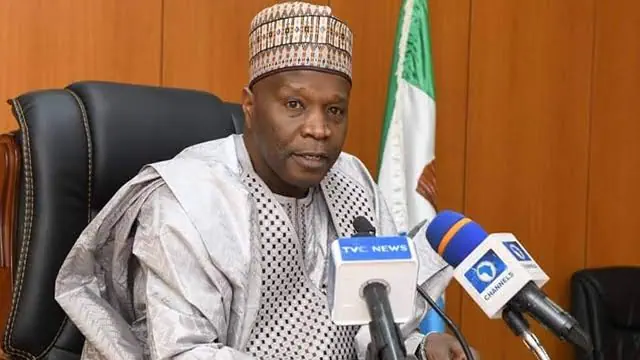
Gombe state invests in solar street lights and infrastructure
Gombe State Government has approved a substantial budget of N1.15 billion for the installation of solar street lights and other development projects across three local government areas. Key Projects and Locations Kumo: The government has allocated N740 million for installing solar street lights along newly constructed roads, aiming to improve visibility and safety for residents. Yamaltu/Deba: In the Kwadon area, N362 million will be spent on fencing the National Agricultural Land Development Authority (NALDA) market and installing solar street lights. Billiri: An initial N47 million has been approved for expanding the grains market and constructing six public toilets, with a later revision increasing the budget to N159 million to include additional facilities. To address rising theft cases in public buildings, the state has decided to deploy the Gombe Security Traffic and Environmental Corps (GOSTEC) and Operation Hattara personnel to enhance surveillance in schools and cemeteries. This initiative will be expanded across all 11 local government areas. Local government council chairpersons have expressed their commitment to building on Governor Inuwa Yahaya’s achievements in education and healthcare. This includes strengthening human resources by recruiting qualified personnel to improve service delivery in primary healthcare and basic education. In a bid to mitigate farmer-herder conflicts, the Kwami Local Government Council has initiated the resurvey and remapping of grazing reserves and cattle routes. Strict sanctions will be imposed on anyone found encroaching on these designated areas.
Servicom launches innovative e-feedback portal to transform government service delivery in Nigeria
Nigeria’s public service landscape is set to experience significant transformation following the launch of a new digital platform designed to bridge the communication gap between citizens and government agencies. The Service Compact with All Nigerians (SERVICOM) has officially unveiled its ‘Citizens E-Feedback Portal,’ a technological innovation aimed at enhancing service delivery across government institutions nationwide. The Citizens E-Feedback Portal was formally introduced on Thursday, March 13, 2025, during the National Council of SERVICOM Nodal Officers’ meeting held in Abuja. This digital initiative represents a crucial step in Nigeria’s ongoing efforts to improve the quality, efficiency, and transparency of public service delivery. The platform creates a direct communication channel between the Nigerian public and government Ministries, Departments, and Agencies (MDAs), enabling citizens to provide real-time feedback on their service experiences. Mrs. Nnenna Akajemeli, SERVICOM’s National Coordinator, emphasized the strategic significance of the portal during the launch event. According to Akajemeli, the platform perfectly aligns with Nigeria’s commitments under the Open Government Partnership (OGP), an international initiative that promotes government transparency, citizen empowerment, and anti-corruption efforts. “We are currently at the end of National Action Plan 3 under OGP, and one of our commitments was to establish a technology-based e-feedback platform. Today, we are proud to announce that this platform is now operational,” she stated. The timing of this launch is particularly significant as it coincides with the culmination of Nigeria’s efforts under the OGP’s National Action Plan 3, showcasing the country’s dedication to fulfilling its international governance commitments through tangible technological solutions. How the E-Feedback Portal Functions The newly launched portal employs a comprehensive three-tier operational framework designed to ensure accountability and effectiveness in addressing citizen concerns. At the first level, citizens can submit feedback regarding their experiences with government services, whether to report service failures or commend exemplary service delivery. This aspect of the portal empowers ordinary Nigerians to actively participate in governance by sharing their first-hand experiences with public services. The second operational level involves MDA response feedback, where government agencies review and process the complaints and commendations received through the platform. This creates a responsibility for MDAs to acknowledge and address citizen concerns in a timely manner, thereby enhancing their responsiveness to public needs. The third level involves SERVICOM’s oversight function, where the agency supervises the interactions between citizens and MDAs to ensure accountability and continuous improvement in service delivery. This multi-layered approach establishes a robust system of checks and balances that promotes transparency and effectiveness in public service provision. Akajemeli explained the portal’s significance, noting that “this platform will enhance transparency, efficiency, and effectiveness in service delivery. Citizens can now provide feedback on government services, enabling real-time engagement between service providers and the public.” The launch of the Citizens E-Feedback Portal marks a milestone in Nigeria’s journey toward more transparent and citizen-centered governance. During the launch event, Akajemeli highlighted several key achievements that Nigeria has recorded under the OGP initiative. These accomplishments include the development of service charters across various MDAs, increased citizen participation in governance processes, and improved service tracking and reporting mechanisms. Another significant development is the formulation of a draft National Policy on Service Delivery, which is currently awaiting final government endorsement. This policy document is expected to provide a comprehensive framework for standardizing service delivery across all government institutions, further strengthening Nigeria’s public service architecture. Efforts are also underway to extend SERVICOM’s reach beyond federal institutions to state-level government agencies. This expansion strategy aims to ensure that the benefits of improved service delivery are felt by citizens across all levels of governance in Nigeria. Akajemeli announced that Nigeria will participate in an international OGP review meeting scheduled to take place in Kenya from March 25 to 28, 2025. During this high-level meeting, Nigeria’s delegation, led by the OGP Nigeria National Secretariat, will present the country’s achievements under the National Action Plan 3, with particular emphasis on the newly launched e-feedback portal. This international engagement provides an opportunity for Nigeria to showcase its innovations in public service delivery to a global audience while also learning from the experiences of other OGP member countries. The exchange of ideas and best practices at such forums can further enrich Nigeria’s approach to improving government services. For the Citizens E-Feedback Portal to achieve its full potential, widespread adoption across all government institutions is essential. Recognizing this, Akajemeli has urged Chief Executive Officers (CEOs) of MDAs to integrate the feedback mechanism into their service delivery processes. She emphasized the relationship-building potential of such platforms, stating, “When CEOs actively engage with citizens through platforms like SERVICOM, they build stronger connections between government and the people, ensuring continuous improvement in service delivery.” This call for institutional adoption reflects an understanding that technological innovations alone cannot transform public service delivery without corresponding changes in organizational culture and leadership commitment across MDAs. To fully appreciate the significance of this new portal, it is important to understand the historical context of SERVICOM itself. Established in 2004, SERVICOM was created to address the persistent inefficiencies in Nigeria’s public service delivery system. Prior to its establishment, many Nigerians experienced frustrating delays, poor services, and a general lack of accountability when dealing with government institutions. SERVICOM’s core mandate involves ensuring that government MDAs prioritize citizen satisfaction in their service delivery approaches. By promoting principles of transparency, responsiveness, and accountability, SERVICOM has worked over the years to transform the relationship between the government and its citizens from one characterized by frustration to one defined by mutual respect and collaboration. The Citizens E-Feedback Portal represents a significant technological evolution in SERVICOM’s approach to fulfilling this mandate. By leveraging digital technology, the agency is adapting its strategies to meet the expectations of an increasingly tech-savvy Nigerian population while also enhancing its capacity to monitor and improve service delivery across government institutions. The launch of the Citizens E-Feedback Portal marks a significant advancement in Nigeria’s quest for improved public service delivery. By creating a direct communication channel between citizens and government institutions, this innovative platform empowers ordinary Nigerians to actively
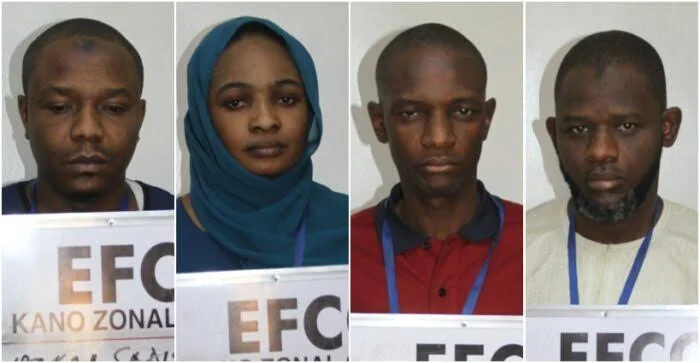
A couple and two others face charges for impersonating Katsina First Lady in N197 million fraud
The Economic and Financial Crimes Commission (EFCC) has arraigned four individuals before the Kaduna State High Court on allegations of a sophisticated fraud scheme involving the impersonation of Fatima Dikko Radda, wife of the Katsina State Governor. The defendants allegedly defrauded victims of nearly N198 million through an elaborate currency exchange scam. In a statement released on Thursday, the EFCC confirmed the arraignment of Baba Sule Abubakar Sadiq, Hafsat Kabir Lawal, Abdullahi Bala, and Ladani Akindele Ayodele on a six-count charge before Justice Amina Bello. The quartet faces serious allegations of obtaining money by false pretenses, engaging in money laundering activities, and committing theft amounting to N197,750,000. According to the anti-graft agency, the defendants allegedly worked together to defraud their victims through multiple tactics, with the primary strategy involving the impersonation of the Katsina State Governor’s wife. The case initially came to light through the Department of State Services (DSS), which arrested the suspects before transferring them to the EFCC upon determining that the offenses fell under the category of financial crimes. The charges detail how the defendants allegedly obtained substantial sums under false pretenses. One count specifically outlines how they allegedly secured N89,000,000 from a victim named Aminu Usman by falsely claiming to have $53,300 to exchange for the naira equivalent. This transaction reportedly involved payments into a Taj Bank account belonging to defendant Abdullahi Bala. During the court session, all four defendants entered not guilty pleas when the charges were read by the court registrar. Their legal representation, including Senior Advocate of Nigeria M.S. Katu, along with counsels Jazuli Mustapha and Paul A. Okachi, informed the court that they had filed and served various bail applications on behalf of their clients. The prosecution, represented by Bright C. Ogbonna, requested that the court set a trial date and asked that the defendants be remanded in a correctional facility pending the determination of their bail applications. Ogbonna strongly opposed the bail applications, arguing that they were not yet ready for consideration by the court. After hearing arguments from both sides, Justice Bello ordered the defendants to be remanded in a correctional facility and adjourned the case until March 17, 2025, when the court will hear the bail applications. The EFCC’s investigation revealed a calculated operation that leveraged high-profile impersonation to gain trust and access to significant funds. According to the commission, defendant Hafsat contacted the victims while pretending to be the wife of Katsina State Governor Malam Dikko Radda. Under this fraudulent identity, she allegedly obtained N89,000,000 and an additional N108,000,000 from a petitioner, claiming to possess $118,300 that she was willing to sell at favorable rates. Further investigations uncovered that Hafsat’s husband, Sadiq (the second defendant), allegedly provided his wife with two SIM cards that were registered on Truecaller as “Fatima Dikko Radda.” This digital disguise was reportedly crucial to establishing credibility with potential victims. The scheme allegedly expanded when Sadiq contacted defendant Ladani Akindele, a former colleague from a new-generation bank, requesting the contact information of Unity Bank Chairman Hafiz Bashir. Through this connection, they obtained contact details for the petitioner, Aminu Usman, who operates as a bureau de change operator. The EFCC statement indicates that after securing nearly N198 million from Usman under the pretext of having dollar equivalents to exchange, the funds were deposited into Abdullahi Bala’s bank account. From there, the money was allegedly distributed among the four defendants and systematically laundered through various channels. The case highlights the growing sophistication of impersonation fraud in Nigeria, where criminals leverage the names and positions of high-profile individuals to execute financial crimes. The EFCC continues to warn the public about such schemes while pursuing prosecutions against those involved in similar offenses. If convicted, they face substantial penalties under the Advance Fee Fraud and Other Fraud-Related Offences Act of 2006. This case comes amid increasing efforts by Nigerian law enforcement agencies to combat financial crimes and fraud schemes that have damaged both individual victims and the nation’s financial reputation. The EFCC has recently intensified its operations against various forms of financial crimes, including a recent alert about 58 illegal Ponzi scheme operators. The commission continues to urge Nigerians to exercise caution when engaging in financial transactions, particularly those involving currency exchange or investment opportunities that promise unusually favorable returns.
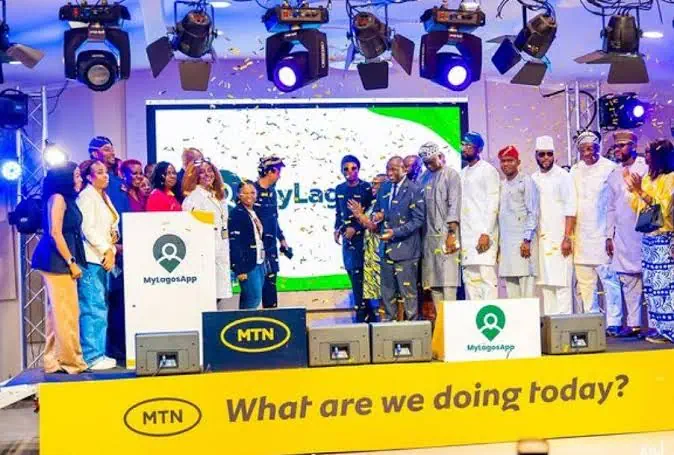
Lagos state government launches “MyLagos App” to transform urban experience
The Lagos State Government has unveiled a new digital platform aimed at revolutionizing how residents navigate and interact with Nigeria’s most populous city. The ‘MyLagos App,’ launched on Thursday at MTN Plaza in Falomo, Ikoyi, represents a significant milestone in Lagos State’s journey toward becoming a leading smart city in Africa. During the launch event, Governor Babajide Sanwo-Olu, represented by his Deputy, Dr. Obafemi Hamzat, emphasized the critical role of technology in modern governance. “Technology has evolved from being a luxury to a necessity. In our fast-paced world, effectively utilizing technology can significantly enhance governance, improve service delivery, and simplify the lives of every resident in this vibrant state,” he stated. The governor described the launch as a pivotal moment in Lagos’ digital transformation journey, positioning the state to remain at the forefront of technological innovation not just in Nigeria but across the African continent. The initiative emerged from a collaborative effort between the Lagos State Government, MTN Nigeria, and various stakeholders in the technology ecosystem. This public-private partnership approach demonstrates how synergy between government entities and corporate organizations can drive meaningful progress in urban development. Governor Sanwo-Olu highlighted that such collaborations are essential for creating sustainable solutions that address the complex challenges of urban living in contemporary Lagos. The MyLagos App has been designed as an all-encompassing digital platform that offers seamless access to essential city services. Users can access real-time traffic updates to navigate the often congested Lagos roads more efficiently. The app also provides personalized navigation options tailored to individual preferences and needs. In emergencies, users can quickly access relevant services through the platform, potentially saving crucial time in critical situations. Beyond transportation and emergency services, the app incorporates utility payment systems, allowing residents to conveniently manage their bills. Business listings featured in the app will help users discover local enterprises and services. For tourists and residents alike, the app includes comprehensive information about attractions and events happening throughout the city. This multifaceted approach aims to address various aspects of urban living through a single, user-friendly interface. A significant aspect of the MyLagos App is its potential to strengthen the relationship between the government and Lagos residents. Governor Sanwo-Olu noted that the platform serves as a vital link that promotes transparency and accountability in governance. By providing direct access to information and services, the app reduces bureaucratic barriers that often frustrate citizens’ interactions with government institutions. Mr. Abdulhakeem Giwa, Manager of MTN Digital Channel Management, described the MyLagos App as “revolutionary” in its approach to transforming urban experiences. According to Giwa, the app ensures “better and easier navigation for all residents” while enhancing quality of life through real-time solutions to everyday urban challenges. He emphasized that the platform functions as a one-stop destination for essential city information, covering everything from location services to job listings. The range of features incorporated into the MyLagos App demonstrates its ambitious scope. Beyond basic navigation, the platform includes information about markets nearby, transport ordering options, trending news, and tourism events. Job seekers can browse through vacancy listings, while visitors can discover the city’s attractions more efficiently. These diverse functionalities reflect an understanding of the varied needs of Lagos’ heterogeneous population. Governor Sanwo-Olu encouraged all residents to embrace this digital initiative by downloading and exploring the app’s features. He emphasized that maximizing the utility of the MyLagos App requires active participation from citizens. “Together, we can shape a smarter future for our city. Let us remember that innovation is a continuous journey rather than a final destination,” he remarked, highlighting the evolutionary nature of the smart city project. The launch of the MyLagos App aligns with Lagos State’s broader digital transformation agenda. This development comes in the context of significant digital investments in the state, with Governor Sanwo-Olu previously announcing that Lagos had secured over $1.2 billion in digital investments over the past five years. Such investments reflect the state government’s commitment to leveraging technology for socioeconomic development. The MyLagos App represents a tangible manifestation of Lagos’ smart city ambitions. By integrating various urban services into a unified digital platform, the government aims to create a more coherent and accessible urban experience. The success of this initiative could potentially establish a template for other Nigerian cities seeking to implement digital solutions to urban challenges. The launch of the MyLagos App marks a significant step in Lagos State’s digital transformation journey. By bringing essential urban services to citizens’ fingertips, the platform aims to streamline interactions between residents and their city. The collaborative approach between government and private sector entities demonstrates how partnerships can drive innovation in addressing urban challenges. The real measure of success, however, will be determined by widespread adoption and the app’s ability to deliver on its promised convenience and efficiency in daily urban life.

Four transmission towers collapse due to vandalism, affecting rivers and bayelsa states
Four transmission towers along the Owerri-Ahoada 132kV Double Circuit line collapsed due to vandalism. The incident, which occurred at approximately 6:23 pm on Tuesday, has disrupted power supply to significant parts of Rivers State and the entire Bayelsa State. The affected towers, identified as T171 to T174, were compromised by vandals, leading to their collapse. This act of sabotage has impacted the Ahoada, Gbarain, and Yenagoa 132kV transmission substations, causing widespread power outages in the region. Mrs. Ndidi Mbah, General Manager of the Transmission Company of Nigeria (TCN), condemned the vandalism, emphasizing its detrimental effect on efforts to maintain a robust transmission grid. “We urge host communities to join us in combating this destructive practice,” she said. TCN is currently mobilizing resources to repair the damaged towers and restore power supply to the affected areas. The incident highlights the ongoing challenges faced by Nigeria’s power sector due to vandalism, which results in significant economic losses and disruptions to daily life.