
Nigerian artists have achieved an unprecedented financial milestone, earning over N58 billion in royalties from Spotify in 2024, according to the streaming giant’s latest Loud & Clear report. This remarkable figure represents more than double the earnings from 2023 and a fivefold increase compared to 2022, highlighting the explosive growth and global appeal of Nigerian music in recent years. The substantial increase in revenue reflects both expanding international recognition and surging domestic consumption, positioning Nigerian artists as increasingly influential players in the global music industry. The N58 billion royalty achievement marks a watershed moment for Nigerian artists on the world’s largest music streaming platform. This exponential growth reflects a dramatic shift in how Nigerian music is being consumed globally and compensated financially. According to Spotify’s 2024 Loud & Clear report, the number of Nigerian artists earning at least N10 million in royalties from the platform has more than doubled since 2023 and tripled compared to 2022 figures. This widening prosperity indicates that financial success is spreading beyond just the top-tier artists to include a broader segment of Nigeria’s music creators. The scale of this financial milestone becomes even more significant when viewed against the backdrop of Nigeria’s overall music industry growth. A substantial portion of the N58 billion in royalties came from international listeners, reinforcing the global appeal and reach of Nigerian sounds. This international revenue stream represents a critical diversification for artists, reducing dependency on the local market alone and opening sustainable career paths for more Nigerian musicians. The financial success corresponds directly with remarkable growth in audience engagement metrics. Nigerian artists were discovered by first-time listeners over one billion times in 2024, demonstrating the increasing reach and discovery of the country’s musical talent. This discovery metric is particularly valuable as it represents new audience acquisition rather than just repeated plays from existing fans, suggesting continued expansion potential. Global listeners spent over 1.1 million hours streaming Nigerian artists in 2024, reflecting substantial consumption of Nigerian music worldwide. Additionally, users created approximately 250 million playlists featuring Nigerian artists, showing the extensive integration of the country’s music into everyday listening habits globally. This level of playlist inclusion represents an important indicator of cultural penetration, as it signals that Nigerian music is being incorporated into diverse listening contexts rather than being treated as a novelty or niche interest. Over the past three years, Nigerian artists have experienced a 49% growth in international exposure, showing steady expansion into new markets. Even more impressive is the domestic growth, with local consumption surging by 206% year-over-year. In a broader context, Nigerian music has seen an astonishing 782% increase in domestic consumption over the last three years, indicating that Nigerian listeners are increasingly embracing local content. This domestic enthusiasm provides a stable foundation for artists while they build international audiences. Spotify’s Sub-Saharan Africa Managing Director, Jocelyne Muhutu-Remy, emphasized the company’s ongoing commitment to supporting Nigerian artists. “We remain committed to empowering Nigerian artists to earn from their art whilst maintaining transparency with artists and stakeholders. The incredible growth of Nigerian music, both locally and globally, is a testament to the talent and creativity within Nigeria, and we are proud to support its continued rise,” she stated. This commitment from Spotify’s regional leadership suggests continued investment in promoting Nigerian content both locally and internationally. The platform’s focus on the Nigerian market can also be seen in its business decisions. In October 2024, Spotify raised its monthly premium subscription fees in Nigeria by 44%, a significant pricing adjustment that may reflect the increased value of the platform’s offering in the market, including its robust Nigerian content library. While price increases might affect subscriber numbers in the short term, they potentially enable greater investment in local content and artist development. Spotify’s own financial performance has been robust during this period, with the company’s stock rising 10% as revenue climbed by $400 million in Q3, indicating strong overall business performance. The company crossed 250 million subscribers in late 2024 and projected a $1.5 billion operating profit for the year. This financial strength positions Spotify to continue investing in emerging markets like Nigeria while maintaining competitive royalty payments to artists. The exponential growth in Spotify royalties represents more than just financial gains for individual artists, it signals a fundamental shift in Nigeria’s position within the global music ecosystem. As Nigerian artists achieve greater financial independence through streaming revenues, they gain leverage in negotiating more favorable terms with labels, distributors, and concert promoters. This financial autonomy can lead to greater creative control and investment in production quality, potentially elevating the overall standard of Nigerian music. The international success of Nigerian artists also creates a positive feedback loop that benefits the broader industry. As Nigerian sounds gain recognition globally, international collaborations become more frequent, production standards rise to meet global expectations, and investment in the sector increases. This virtuous cycle has already begun to manifest in higher production values, more sophisticated marketing campaigns, and increased international touring opportunities for Nigerian artists. The record-breaking royalty figures from 2024 establish a new baseline for Nigerian music industry success, but questions of sustainability and continued growth remain central. While the 782% growth in domestic consumption over three years demonstrates remarkable momentum, maintaining such explosive growth rates becomes increasingly challenging as the market matures. Future growth will likely depend on continued expansion into new international markets, deeper penetration of existing ones, and innovation in music styles and production techniques. The unprecedented success highlighted in Spotify’s report reinforces the dynamic evolution of Nigeria’s music industry and validates the platform’s ongoing investment in Nigerian artistic talent.

South Africa to eliminate luxury tax on smartphones starting April 1, 2025
South Africa is set to remove luxury excise duties on smartphones priced below 2,500 rand (approximately $136) starting April 1, 2025, as part of a bold initiative to make digital technology more accessible to low-income citizens. The move, announced by the South African Treasury in its recent budget statement, aims to significantly reduce the cost of entry-level smartphones and accelerate digital inclusion across the nation. Currently, South Africa imposes a 9% ad valorem excise duty on smartphones, a tax typically reserved for luxury items, which is charged in addition to standard Value Added Tax and import duties. This tax structure has contributed to higher device costs, placing smartphones beyond the reach of many lower-income South Africans despite their essential role in modern communication and economic participation. “The government proposes that as of 1 April 2025, this duty rate be applied only to smartphones with a price paid greater than 2,500 rands at the time of export to South Africa,” the Treasury explained in its budget statement. The proposal explicitly aims to “enhance smartphone affordability at the lower end of the price spectrum and support efforts to promote digital inclusion for low-income households.” Communications Minister Solly Malatsi has been a vocal advocate for the tax reduction, having engaged in preliminary discussions with the Treasury about making smart devices more affordable. “Our proposal is that the ad valorem tax contributes to the high cost of smart devices. When you eliminate that cost it will help drive down affordability and that’s my key interest,” Malatsi stated in November. The tax reduction comes at a critical time as South Africa prepares for a major telecommunications transformation. The government has set December 31, 2027, as the deadline for the complete shutdown of 2G and 3G networks to free up radio spectrum for faster 4G LTE and 5G networks. This transition, outlined in the Next Generation Radio Frequency Spectrum Policy paper, represents a significant step toward modernizing the country’s digital infrastructure. However, experts have expressed concerns that phasing out older network technologies could potentially widen the digital divide. Many lower-income consumers, particularly those in remote areas and underserved communities, rely on more affordable feature phones that operate on 2G and 3G networks. Without access to affordable smartphones capable of connecting to newer networks, these populations risk being left further behind in the digital economy. Data from Statista shows that smartphone penetration in South Africa is expected to grow steadily between 2024 and 2029, with projections indicating an increase of 11.8 percentage points over this period. By 2029, smartphone penetration is forecast to reach 39.05% of the population, continuing an upward trend that began in 2020. South Africa already demonstrates strong mobile connectivity overall. According to GSMA Intelligence, as of January 2025, there were approximately 124 million mobile connections in the country, equivalent to 193% of the total population of 64.4 million. This high percentage reflects the common practice of individuals using multiple mobile connections. Between early 2024 and 2025, mobile connections increased by 5.2 million, representing a 4.4% growth. The GSMA report also indicates that 97.5% of mobile connections in South Africa now operate on “broadband” networks (3G, 4G, or 5G), though not all of these connections necessarily utilize cellular mobile data. Some subscription plans may be limited to voice and SMS services only. The country’s leading telecom operators, MTN and Vodacom, have emphasized the need for collaboration between operators, regulators, and the government to ensure a smooth network transition. Industry groups, including the Association of Comms and Technology, have advocated for government assistance through tax reductions and flexibility regarding implementation deadlines. The removal of excise duties on more affordable smartphones represents a concrete step toward addressing these concerns. By reducing the tax burden on lower-priced devices, the government hopes to accelerate the adoption of smartphones capable of operating on modern networks, thereby easing the eventual transition away from 2G and 3G technologies. The tax reduction initiative reflects growing recognition that smartphone access has evolved from a luxury to a necessity in the digital age. As South Africa continues its digital transformation journey, measures that enhance affordability and accessibility of essential technologies will play a crucial role in ensuring that all citizens can participate in and benefit from the digital economy. For many South Africans, this tax reduction could represent the difference between digital inclusion and being left on the wrong side of the digital divide.

Nigeria and Jamaica set to launch direct flights in historic aviation agreement
Nigeria and Jamaica are making significant strides toward establishing direct flights between the two nations, marking a major development in their diplomatic and economic relations. The initiative comes as part of ongoing efforts to strengthen the Bilateral Air Services Agreement (BASA) between the countries. In a diplomatic engagement in Abuja, Nigeria’s Minister of Aviation and Aerospace Development, Festus Keyamo, welcomed Jamaican Ambassador Lincoln Downer and Consular Andre Hibbert to discuss the establishment of direct air routes. Keyamo expressed enthusiasm about the proposal, committing to set up a special committee to expedite the BASA arrangement between the two nations. “I am delighted to start the BASA arrangements,” Keyamo stated during the meeting. The minister demonstrated his commitment to the initiative by offering to travel to Jamaica personally if necessary to finalize and sign the agreement. This hands-on approach underscores the importance Nigeria places on fostering stronger ties with Jamaica. Ambassador Downer, who has served as Jamaica’s envoy to Nigeria for four months, shared a personal revelation that set a warm tone for the discussions. “I have since discovered that Nigeria might be my ancestral home after all,” he remarked, highlighting the deep historical and cultural connections between the two nations. The proposed air link comes at a time when cultural exchange between Nigeria and Jamaica is flourishing. Ambassador Downer noted the growing popularity of Nigerian cultural exports in Jamaica, particularly Afrobeat music and Nollywood films, which are gaining significant traction among Jamaicans. “There is no reason why we should not have a direct flight between our countries. Nigerians love Jamaica, and there is a rising demand for Jamaican spices in Nigeria,” Downer emphasized. This cultural affinity creates a natural foundation for enhanced travel and trade relations between the nations. Jamaica currently lacks a national carrier, relying instead on neighboring Trinidad and Tobago for much of its air transport needs. To overcome this hurdle, Ambassador Downer proposed an innovative solution, combining the BASA between Jamaica and Trinidad and Tobago to address the air services gap. This proposal shows the increasing demand for travel from Nigeria to Jamaica and demonstrates the creative thinking needed to establish viable air connections between the countries despite existing limitations. The establishment of direct flights would have far-reaching implications beyond mere transportation convenience. It would facilitate increased trade, tourism, and cultural exchange between Nigeria and Jamaica, potentially opening new markets for businesses in both countries. The meeting in Abuja represents a significant milestone in reinforcing bilateral ties and sets the stage for future collaboration in aviation, trade, and cultural sectors. As both nations work to implement the proposed air link, they are positioning themselves to benefit from stronger economic and diplomatic relations in the years to come. With committees being formed and high-level diplomatic engagement underway, travelers may soon be able to fly directly between these two culturally rich nations, bridging the physical distance between Africa and the Caribbean.

Interswitch showcases cutting-edge digital payment solutions at Mega HORECA Expo 2025
Interswitch, one of Africa’s leading digital payment and commerce companies, demonstrated its innovative payment solutions at the recently concluded Mega HORECA Expo 2025, reinforcing its commitment to transforming digital transactions in the hospitality sector. The three-day exhibition, held from February 26th to 28th at the Balmoral Convention Center in Victoria Island, Lagos, served as a strategic platform for industry professionals to explore technological advancements designed to enhance operational efficiency and customer satisfaction. The Mega HORECA Expo 2025, organized by Elan Expo, brought together business owners, hospitality stakeholders, and industry leaders seeking to elevate their service delivery standards. The premier event for the Hotel, Restaurant, and Café (HORECA) industry featured a diverse array of products from both local and international markets. Beyond product showcases, the expo facilitated valuable networking opportunities and partnership development across the West African hospitality sector. Interswitch seized this opportunity to present its comprehensive suite of digital payment solutions specifically tailored for the unique demands of hospitality businesses. The company’s exhibition booth attracted significant attention from attendees eager to witness firsthand demonstrations of technologies designed to streamline payment processes and enhance overall guest experiences. Throughout the exhibition, Interswitch showcased several flagship products engineered to address various operational challenges within the hospitality industry. The Interswitch Smart POS system stood out as a particularly valuable tool for fast-paced hospitality environments, enabling seamless transactions for guest check-ins, restaurant billing, and general payment acceptance. This solution demonstrated clear benefits for enhancing operational efficiency while simultaneously improving customer satisfaction through faster service delivery. The company also highlighted its Payment Gateway, a solution enabling hotels and restaurants to offer frictionless online booking and reservation experiences. This technology extends to streamlining takeaway orders through secure and swift digital transactions, addressing the growing consumer demand for convenient digital interaction with hospitality businesses. The integrated approach helps establishments maintain service quality across both physical and digital customer touchpoints. For back-office operations, Interswitch presented its Disbursement solution, branded as Autopay. This system simplifies bulk payment processing, allowing hospitality businesses to efficiently manage vendor payments, staff salaries, and supplier settlements with enhanced accuracy and reduced administrative burden. Additionally, the Till Integration solution ensures seamless synchronization between POS systems and tills, effectively eliminating manual errors and transaction delays that can negatively impact customer experiences during peak business hours. Industry Response and Executive InsightsThe solutions presented by Interswitch generated substantial interest from industry professionals attending the expo. Visitors to the Interswitch booth engaged with live demonstrations that provided practical insights into how these technologies could be implemented to optimize business operations and enhance service delivery across various hospitality contexts. Reflecting on the company’s participation, Muyiwa Asagba, Managing Director of Commercial Inclusion at Interswitch, emphasized the strategic importance of the event: “The International MEGA HORECA 2025 was a fantastic opportunity to showcase how our solutions are reshaping payment experiences in the hospitality sector. The engagement with industry stakeholders reinforced the growing demand for seamless, technology-driven payment systems that enhance efficiency and customer satisfaction. At Interswitch we are committed to delivering innovative solutions that not only simplify transactions but also empower businesses to scale and thrive in an evolving digital landscape.” Osasere Atohengbe, Vice President of Sales and Account Management for Commercial Inclusion at Interswitch, also shared positive observations about the industry response: “We are delighted by the overwhelming response our solutions received at the International MEGA HORECA 2025 expo. The event provided a valuable opportunity to engage with hospitality professionals, understand their evolving needs, and showcase how our solutions can transform their businesses. From seamless payment acceptance to operational efficiency, our technology is designed to enhance customer experience while driving revenue growth for merchants. By leveraging insights gained at the event, we remain committed to delivering solutions that not only meet industry standards but also anticipate and address the future needs of the hospitality and food service sectors.” The Mega HORECA Expo 2025 underscored the significant growth potential within Nigeria’s hospitality market, providing a comprehensive showcase of products and services designed to elevate industry standards across the continent. The strong turnout and engagement demonstrated the sector’s increasing recognition of technology as a critical factor in business competitiveness and customer satisfaction. Interswitch’s active participation in the expo highlights its strategic focus on the hospitality sector as a key market for digital payment innovations. By equipping businesses with cutting-edge solutions that drive efficiency, enhance guest satisfaction, and optimize financial operations, the company is positioning itself as an instrumental partner in the digital transformation journey of hospitality businesses throughout Africa. The integration of efficient payment systems into the broader hospitality experience demonstrates how technology can enhance traditional service models while opening new opportunities for business growth and customer engagement in an increasingly digital marketplace.

Nigeria could spend $110 billion on food imports by 2025 without digital agriculture adoption
Nigeria risks spending a staggering $110 billion on food imports by 2025 if the country fails to adopt and strengthen digital agricultural extension services, according to a warning issued by the Sasakawa Africa Association (SAA). Dr. Godwin Atser, Country Director of SAA, sounded this alarm during the Annual Stakeholder Workshop held Tuesday in Abuja. The workshop, themed “Transforming the Agricultural Landscape through Digital Agricultural Extension and Advisory Services,” brought together key agricultural stakeholders to discuss innovative approaches to boosting Nigeria’s food production capacity. “If we continue along this path, we are essentially exporting jobs, which will further impact our economy,” Dr. Atser cautioned. He emphasized that the continuous spending on food imports is unsustainable and represents a significant drain on Nigeria’s foreign exchange reserves. The projected $110 billion import bill highlights the urgent need for agricultural transformation in a country with vast arable land and a large farming population. Dr. Atser further explained that climate change compounds these challenges, stating, “If we keep importing food while our productivity remains low, climate change, one of the key factors, will further worsen the situation.” This sobering assessment underscores the need for immediate action to address the fundamental issues affecting Nigeria’s agricultural productivity. A critical factor contributing to low agricultural productivity in Nigeria is the weak extension system, according to the SAA Country Director. Extension services, professional support that helps farmers improve their methods and increase yields, are virtually non-existent in some states. “In some states, there is currently no extension service at all,” Dr. Atser noted. This gap prevents farmers from accessing vital information about improved farming techniques, pest management, and climate-smart agriculture practices that could significantly boost their output. Dr. Atser pointed to successful models elsewhere, stating, “We have consistently seen that economies making progress in agricultural transformation are those that prioritize technology transfer.” This observation highlights the crucial role that knowledge dissemination plays in agricultural development and food security. Digital Solutions as the Path ForwardThe workshop focused on leveraging digital technologies to revolutionize Nigeria’s agricultural sector. With over 90% of Nigeria’s population using mobile phones and rapidly increasing internet penetration across Africa, there exists a tremendous opportunity to transform how agricultural information reaches farmers. “Harnessing the power of digital solutions will be a key tool in driving agricultural transformation,” Dr. Atser stated. Digital platforms can provide farmers with timely information on weather patterns, market prices, pest outbreaks, and best practices, allowing them to make informed decisions that improve productivity and reduce losses. Dr. Atser elaborated on the transformative potential of digital tools: “In today’s fast-changing world, digital solutions are revolutionizing the delivery of extension and advisory services. They help bridge gaps, empower stakeholders, and ensure that critical knowledge reaches those who need it most, whether in agriculture, health, education, or business.” Artificial Intelligence (AI) is increasingly playing a vital role in global agriculture, and Nigeria stands to benefit significantly from its adoption. Dr. Atser highlighted that AI-driven tools can predict various factors affecting agriculture through computer-based analysis, from weather patterns to potential disease outbreaks. These predictive capabilities allow farmers to take preventive measures rather than reactive ones, potentially saving entire harvests from devastation. AI can also optimize resource use, ensuring that inputs like water and fertilizer are applied at the right time and in the right quantities. The integration of AI with mobile technology creates powerful tools that can reach millions of Nigerian farmers, even in remote areas. This technological convergence represents a promising pathway to transforming Nigeria’s agricultural landscape. Collaboration: The Key to ImplementationThe success of digital agricultural solutions ultimately depends on strong collaboration among various stakeholders, including government agencies, private sector players, research institutions, and farming communities. Dr. Atser emphasized that addressing the productivity challenge in agriculture requires coordinated efforts from all parties involved. Such collaboration ensures that digital solutions are appropriately designed, effectively deployed, and widely adopted. It also helps in creating the necessary infrastructure and policy environment to support digital transformation in agriculture.
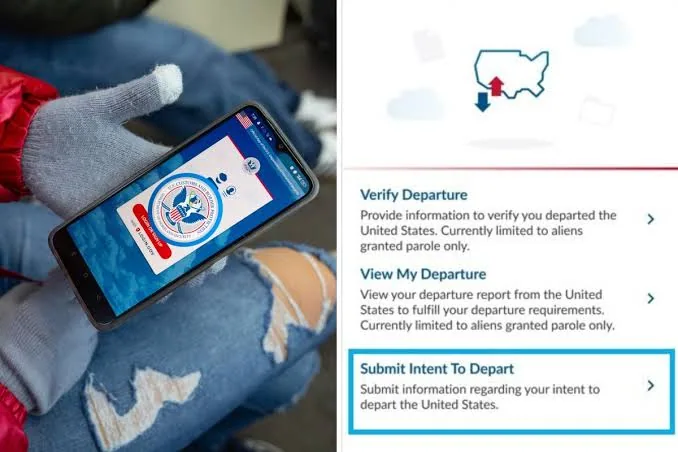
Trump administration transforms migrant app into self-deportation tool
The Trump administration has revamped a mobile application originally designed to help asylum seekers, turning it into a platform for undocumented migrants to voluntarily leave the United States. The app, formerly known as CBP One and now rebranded as CBP Home, represents a significant shift in immigration enforcement strategy as the administration pursues its hardline approach to immigration policy. The CBP Home app now allows undocumented migrants to submit an “intent to depart” form, effectively declaring their plan to leave the country without facing what officials describe as “harsher consequences” that might come with formal deportation proceedings. This transformation marks a dramatic departure from the app’s original purpose, which was established in 2020 and later expanded by the Biden administration to help prospective migrants schedule appointments at U.S. ports of entry, creating safer pathways for those seeking asylum. Under its new iteration, the platform encourages self-deportation by allowing migrants to identify themselves and declare their intention to leave the United States voluntarily. U.S. Customs and Border Protection hopes this approach will motivate undocumented individuals to depart on their own accord rather than face detention and forced removal. Homeland Security Secretary Kristi Noem has framed the self-deportation option as an opportunity for migrants, suggesting it provides a path to potentially return legally in the future. “If they don’t self-deport, we will find them, deport them, and they will never be able to return,” Noem warned, emphasizing the stark choice facing undocumented individuals under the new policy. This messaging clearly communicates that those who use the app to leave voluntarily may preserve future options to “live the American dream” legally, while those who remain would face permanent consequences. The administration’s approach reflects a carrot-and-stick strategy: offering potential future benefits for compliance while threatening severe penalties for those who remain without documentation. This dual approach forms part of the broader immigration policy overhaul being implemented since the administration took office. App Functionality and RequirementsThe CBP Home application goes beyond simply recording intentions to leave. It also performs a practical assessment, asking users whether they have “enough money to depart the United States” and if they possess “a valid, unexpired passport from their country of citizenship”. These questions highlight the practical considerations of self-deportation, acknowledging that voluntary departure requires both documentation and financial resources. Additional features include the ability to apply for and pay for I-94 entry and exit cards, which remain valid for up to seven days before departure. The app also maintains some of its original utility functions, such as services for booking inspections for perishable cargo and checking wait times at U.S. border crossings. These continued services suggest an effort to maintain the app’s broader border management functionality while adding the self-deportation component. The rebranding of the app comes amid a comprehensive shift in U.S. immigration policy. The administration has moved quickly to dismantle previous immigration measures, including pausing parole programs that had provided temporary legal status to certain groups. Simultaneously, Immigration and Customs Enforcement (ICE) has reportedly increased enforcement operations, creating a climate of heightened pressure on undocumented communities. In late February, the administration announced plans to establish a national registry for undocumented migrants, requiring all individuals aged 14 and older to provide their U.S. address and fingerprints. Those failing to register could face criminal prosecution, adding another layer of enforcement pressure alongside the self-deportation initiative. The feasibility of the new approach has raised questions among immigration experts, particularly regarding the national registry component. Critics have highlighted significant enforcement challenges and logistical issues that could complicate implementation. The scale of the undocumented population in the United States, estimated at approximately 11 million people, presents a formidable operational challenge for any registration or self-deportation initiative. Additionally, the administration’s approach raises questions about due process and humanitarian considerations, particularly for individuals who may have legitimate asylum claims or deep community ties in the United States. The transformation of a tool originally designed to facilitate safer, more orderly migration into one focused on removal reflects the administration’s prioritization of enforcement over humanitarian considerations in its immigration approach. The rebranding of CBP One to CBP Home represents more than a simple name change or app update, it symbolizes a fundamental shift in U.S. immigration policy. By transforming a tool once used to facilitate legal entry into one that encourages self-deportation, the administration has clearly signaled its enforcement priorities.