
Nollywood star and filmmaker Omoni Oboli has achieved yet another milestone with her latest romantic drama, Love in Every Word. The film, which premiered on March 8, 2025, has taken YouTube by storm, amassing an impressive 11.5 million views within its first week of release. The movie initially garnered 4.3 million views within its first 72 hours, signaling strong audience interest. However, its trajectory faced a brief setback when it was removed from the platform due to a copyright claim filed by Canadian-based network engineer Chinonso Obiora Skyberry. Following swift resolution of the dispute, the film was reinstated and has since continued its meteoric rise in popularity. Penned by Mfon-Abasi Michael Inyang, Love in Every Word tells the heartfelt story of two individuals from vastly different backgrounds who must confront personal fears and societal pressures to find love. Set against the backdrop of a fast-paced world where ambition often overshadows romance, the film explores themes of cultural clashes and destiny. Starring Uzor Arukwe and Bamike “Bambam” Olawunmi as the lead characters, the movie has been praised for its engaging storyline and the undeniable chemistry between its stars. Fans have flocked to social media to commend Oboli for delivering yet another compelling Nollywood production that resonates with audiences across cultures. Omoni Oboli, 46, has long been celebrated as one of Nollywood’s most influential figures. A graduate of French from the University of Benin and an alumna of the New York Film Academy, Oboli has consistently pushed the boundaries of storytelling in Nigerian cinema. Her portfolio includes acclaimed films like Being Mrs. Elliott, The First Lady, Wives on Strike, and Moms at War. Her international breakthrough came with Anchor Baby, which earned her Best Actress awards at both the Harlem International Film Festival and the Los Angeles Movie Awards in 2010. She also co-produced The Rivals, the first Nigerian film to premiere at the New York International Independent Film & Video Festival. In recent years, Oboli has continued to dominate both cinemas and streaming platforms. Her 2024 production, The Uprising: Wives on Strike 3, grossed over ₦100 million at the box office and generated ₦10 million in presale vouchers before its release, a testament to her ability to captivate diverse audiences. The success of her latest film underscores the growing global appetite for African stories told with authenticity and flair.

Telegram founder Pavel Durov temporarily leaves france on five million euros bail amid ongoing probe
The Agence France-Presse reports that Pavel Durov, the founder and CEO of Telegram, has been granted permission to temporarily leave France. This move comes as part of an ongoing investigation into alleged criminal activities linked to the messaging app. Durov, who holds Russian, French, and UAE passports, was detained at Le Bourget airport near Paris in August 2024 and charged with multiple infractions, including failing to curb extremist content. He was released on a €5 million bail and had been prohibited from leaving France until now. An investigating judge has authorized Durov to leave for several weeks, and he is believed to have departed for Dubai on Saturday morning. This decision marks a relaxation of his obligations under the probe, which has strained relations between Paris and Moscow and sparked debates on free speech and digital regulation. Durov’s departure has been met with mixed reactions, with some viewing it as a victory for freedom of speech, while others question whether it signals a strategic mover to evade further legal complications. The case continues to attract international attention, with support from figures like Elon Musk, who has publicly backed Durov.
NAFDAC cracks down on international scam: syndicate dupes foreign firms with fake documents
The National Agency for Food and Drug Administration and Control (NAFDAC) has exposed a sophisticated fraud syndicate that has been impersonating the agency to scam foreign businesses using counterfeit documents. This revelation followed a petition from Thani Almaeeni Trading Group, based in Abu Dhabi, UAE, which fell victim to the scheme. In a statement issued by NAFDAC’s Director General, Prof. Mojisola Christianah Adeyeye, the agency disclosed that the operation was led by Ikoro Mang Ifendu, who was arrested on February 7, 2025, in Aba, Abia State. Ifendu allegedly defrauded multiple foreign firms by posing as a NAFDAC official and issuing fake approvals and certificates. How the Scam OperatedNAFDAC revealed that the syndicate employed a complex three-step scheme involving a buyer, a bank, and a lawyer. Here’s how it worked: The Buyer: The fraudsters would contact foreign companies under the guise of purchasing goods for importation into Nigeria. The Bank: Victims were introduced to a bank where they were informed that NAFDAC approval was required for the transaction. The Lawyer: A supposed legal representative would then offer to facilitate the NAFDAC certification process for a fee. Using this strategy, the group issued fake receipts and counterfeit NAFDAC certificates to unsuspecting victims. Investigations revealed that the syndicate managed 15 domiciliary accounts and 5 local accounts across seven Nigerian banks, with inflows exceeding $950,000 in Nigeria and $450,000 in offshore accounts in Cotonou, Benin Republic. Even after Ifendu’s arrest, victims continued sending money, with one recent transfer amounting to $75,000. The fraudulent documents included: A counterfeit Certificate of Registration for Dried Fish (Seafood) under NAFDAC Registration No. A2-7059. Fabricated revenue receipts amounting to millions of naira. Forged processing requirement documents purportedly signed by a retired NAFDAC director. Fraudulent Swift Advice copies and telegraphic transfer records showing significant dollar transactions. The syndicate also used fake letterheads under the name “HALI & CO Chambers,” operated by Ifendu and another accomplice named Rosemary Obosi. Foreign Companies AffectedSeveral international companies fell victim to this scam. These include: Thani Almaeeni Trading Group (UAE) Japan Long Tie (China) Co. Ltd (China) BEYOND-Korea (USA) Aquaforest SP (Poland) Nomea srl (Italy) Tianyan Filter Cloth Co. Ltd (China) Siam Canadian China Ltd (China) NAFDAC has transferred the case to the Economic and Financial Crimes Commission (EFCC) for further investigation. The probe will extend beyond NAFDAC-regulated products to track assets acquired through fraudulent activities under the Proceeds of Crime Act (POCA). “This investigation will invoke POCA on all assets illegally acquired during these fraudulent activities,” NAFDAC stated. NAFDAC has warned businesses against engaging unauthorized consultants or intermediaries claiming to facilitate product registrations. The agency urged firms to verify all registration processes directly through its official portal.

NITDA partners with Jigawa State to equip Almajiri children with digital skills
The National Information Technology Development Agency (NITDA) has joined forces with the Jigawa State Government to launch a groundbreaking initiative aimed at equipping Almajiri and out-of-school children with essential digital skills. This innovative project was unveiled during a meeting at the University of Lagos (UNILAG) Design Studio, where NITDA’s Director-General, Kashifu Inuwa, hosted Abubakar Maje Hamisu, the Executive Secretary of the Jigawa State Tsangaya Education Board. The initiative seeks to modernize the Almajiri education system by integrating digital literacy into traditional Quranic learning. As part of the plan, Jigawa State will establish three mega schools, each capable of accommodating 4,000 students. These schools will combine conventional Islamic education with technology training, preparing students for a rapidly evolving digital world. Speaking about the project, Hamisu emphasized its transformative potential: “The initiative aims to bridge the digital divide, empowering Almajiri children with knowledge that will enhance their future opportunities and improve their socioeconomic conditions.” The program is designed as a pilot project that could be scaled nationwide if successful. It aligns with broader government efforts to reform the Almajiri system, historically plagued by underfunding and inadequate facilities. The Almajiri system, a traditional form of Islamic education prevalent in northern Nigeria, has faced significant challenges over the years. Many schools lack basic infrastructure, such as proper buildings, reliable electricity, and internet access, key components for any modern educational institution. Additionally, issues like unqualified staff and poor management have further eroded the quality of education provided. To address these systemic problems, President Muhammadu Buhari signed a bill in 2023 establishing the National Commission for Almajiri Education and Out-of-School Children. This commission aims to integrate literacy, vocational skills training, and entrepreneurship programs into the Almajiri curriculum. The goal is to reduce youth poverty and create pathways for economic empowerment while steering vulnerable children away from crime. Sponsored by Balarabe Shehu Kakale and 18 others, the bill advocates for a holistic approach to education that combines traditional learning with practical skills development. The newly formed commission will oversee these programs to ensure children and teenagers have better access to quality education and opportunities. While the digital skills initiative is a step forward, it faces significant hurdles due to longstanding infrastructural deficiencies in Tsangaya schools, the Islamic educational framework under which most Almajiri schools operate. Many of these schools lack adequate hostels, emergency facilities, and even basic resources like food and medical care. These issues have discouraged enrollment and undermined the welfare of students and staff alike. To succeed, Jigawa’s new mega schools must overcome these chronic challenges by providing state-of-the-art facilities and resources that support both traditional and digital learning environments. This collaboration between NITDA and Jigawa State represents a bold vision for transforming education in Nigeria. By combining digital literacy with Quranic studies, the program aims to prepare Almajiri children for a future where technology plays an increasingly central role in society. Together with the recently passed legislation supporting practical skills training and entrepreneurship education, this initiative offers hope for addressing poverty and creating sustainable opportunities for vulnerable children across Nigeria. If executed effectively, it could serve as a model for educational reform not just in northern Nigeria but across the entire country.
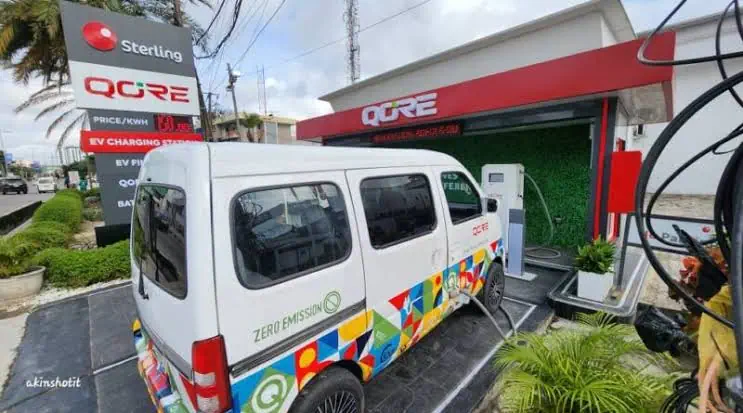
Sterling Bank launches EV charging station in Yaba, offers free charging for three months
Sterling Bank Plc, one of Nigeria’s leading financial institutions, has taken a bold step toward promoting sustainable transportation with the launch of an electric vehicle (EV) charging station in Yaba, Lagos. This marks a significant milestone in the bank’s commitment to fostering environmentally friendly initiatives and supporting Nigeria’s transition to cleaner energy solutions. The charging station, strategically located in Yaba, a bustling hub for technology, education, and innovation, is designed to cater to the growing number of EV users in Lagos, Nigeria’s commercial capital. Equipped with fast-charging capabilities and solar panels to power part of its operations, the facility aligns with global efforts to reduce carbon emissions and combat climate change. Speaking at the launch event, Sterling Bank’s Managing Director and CEO, Abubakar Suleiman, highlighted the bank’s dedication to driving sustainable development in Nigeria. “As a forward-thinking institution, Sterling Bank recognizes the transformative potential of electric vehicles in addressing environmental challenges and reducing our reliance on fossil fuels,” Suleiman said. “This charging station is not just infrastructure; it is a statement of intent—a commitment to a greener, more sustainable future for Nigeria.” The Yaba charging station features multiple charging ports capable of servicing various EV models. Industry experts estimate that the facility can charge up to 20 vehicles daily, with plans to expand capacity as demand grows. To encourage adoption among Lagos residents, Sterling Bank announced that charging services will be free for the first three months. This latest initiative builds on Sterling Bank’s previous efforts to champion EV adoption in Nigeria. In 2022, the bank collaborated with local automotive firms to introduce affordable financing packages for electric motorcycles and tricycles. These packages targeted commercial riders, enabling them to transition from petrol-powered vehicles to electric alternatives through low-interest loans and flexible repayment plans. In 2023, Sterling Bank partnered with the Lagos State Government to launch an EV awareness campaign called “Drive Green Lagos.” The campaign included workshops, exhibitions, and test-drive events aimed at dispelling myths about EVs, such as high costs and limited range,while showcasing their long-term economic and environmental benefits. During this pilot phase, Sterling Bank sponsored the installation of two charging points in Ikeja and Victoria Island. The launch of the Yaba charging station comes at a pivotal moment for Nigeria’s EV sector. While global leaders like China and Europe have made significant strides in EV adoption, Nigeria is still catching up due to challenges such as inadequate infrastructure, high electricity costs, and limited consumer awareness. Sterling Bank’s move addresses one of these critical barriers: the lack of charging stations. With Lagos accounting for over 60% of Nigeria’s vehicle population, urban centers like Yaba are ideal locations for such facilities. The bank has hinted at plans to replicate the Yaba model in other cities like Abuja and Port Harcourt as part of a broader rollout of EV infrastructure. The new charging station shows Sterling Bank’s proactive role in advancing Nigeria’s green mobility ecosystem. By investing in infrastructure and advocating for cleaner transportation options, the bank continues to position itself as a key player in addressing the country’s energy and environmental challenges.

Lagos State ends 25% transport fare reduction, forfeiting N500 million monthly revenue
The Lagos State Government has announced the conclusion of its 25% transport fare reduction program, a social intervention aimed at easing commuting costs for millions of residents. According to the Lagos Economic Development Update (LEDU) 2025 report, the initiative cost the government N500 million in foregone monthly revenue but provided significant financial relief to commuters across the state. Implemented by the Lagos Metropolitan Area Transport Authority (LAMATA), the program reduced fares on Bus Rapid Transit (BRT), Bus Rapid Intervention (BRI), Metro Rail, and Water Transport services. In 2024 alone, 18.54 million commuters benefitted from the subsidy, with 16.84 million using BRT and BRI services and an additional 708,427 passengers utilizing metro rail and water transport services. The LEDU report highlighted that these transport-related social assistance programs were designed to cushion the impact of economic reforms, particularly following inflationary pressures on food and transportation costs. The initiative was part of broader efforts by the Lagos State Government to support vulnerable households during challenging times. The fare reduction program began with a 50% rebate introduced on August 2, 2023, following the removal of fuel subsidies. Although this initial discount ended on November 6, 2023, a subsequent 25% reduction was implemented on November 7, 2023. The government intermittently reinstated this discount throughout 2024 to balance affordability for residents with the sustainability of the transport system. While the fare reductions provided much-needed relief for commuters, they came at a significant cost to state finances. The LEDU report noted that sustaining these interventions required forfeiting substantial revenue, highlighting the challenges of balancing social assistance programs with fiscal sustainability.