Paystack has announced the creation of a new holding company, The Stack Group (TSG), as it celebrates its 10th anniversary. The Nigerian fintech company noted that the new structure reflects how far it has grown beyond its early focus on helping businesses accept card payments. Under the new arrangement, the group (TSG) will oversee Paystack’s core payments business, the Zap consumer payments app, Paystack Microfinance Bank, and TSG Labs, its innovation and product development arm. Shola Akinlade, Paystack’s founder and CEO, will continue to lead the group. Stripe, Paystack employees, and Akinlade are listed as the founding shareholders of the new company. According to Paystack, the shift is designed to support faster product development and also maintaining shared infrastructure, compliance systems, and operational support across the group. This new structure allows us to build more products across different domains while staying focused on reliability and long term impact – Akinlade The company stated that it now serves more than 300,000 businesses across five African countries, with regulatory approvals secured in Egypt and Rwanda. Paystack recently acquired a microfinance bank in Nigeria, allowing it to build banking and credit infrastructure directly for merchants and reduce reliance on partner banks. Paystack also stated that the new structure gives the company better chance to expand into banking, consumer finance, and emerging technologies such as artificial intelligence.
FG drops Meta, X from Sowore cyberbullying case
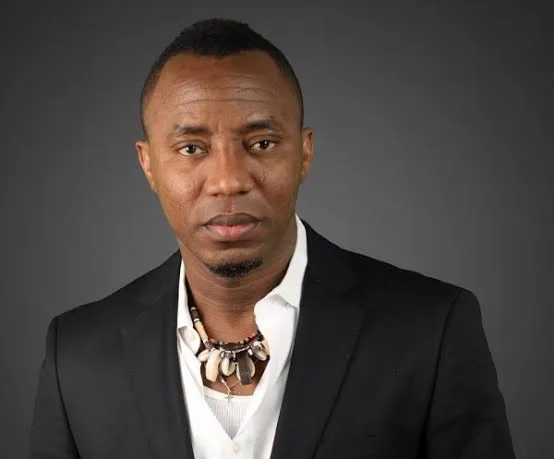
The Federal Government of Nigeria has formally removed Meta Platforms Inc., Facebook and X Inc. (formerly Twitter) from the cyberbullying charges filed against activist and politician Omoyele Sowore. The decision was announced on Monday at the Federal High Court in Abuja, where the case is being heard. The charges centred on a post Sowore shared on his official X account, @YeleSowore, in which he criticised President Bola Ahmed Tinubu and questioned claims that corruption had ended under the current administration. According to the prosecution, the post was false and capable of causing public unrest, which formed the basis of the cyberbullying charge against the activist. Justice Mohammed Umar, who is presiding over the case, struck out the names of Meta and X and ordered that the amended charges be read to Sowore. Sowore, represented by his lawyer, Abubakar Marshal, pleaded not guilty after the charges were read in court. He also requested full disclosure of the prosecution’s witnesses and evidence, as provided for under Nigerian law, to enable him prepare his defence. Legal practitioners say the development could set an important precedent, noting that individuals may be held personally responsible for what they post online, regardless of the platforms involved. The government has submitted materials including screenshots of the social media post, letters sent to Meta and X, and a video of President Tinubu’s comments made during a trip to Brazil, as evidence. The court adjourned the case, with the trial scheduled to continue on January 22.

Why St. Clair’s Grok case threatens all AI image generators
Ashley St Clair, Elon Musk’s former partner and the mother of one of his children, has filed a lawsuit claiming that Grok’s image-generation capabilities were used to harass her through the creation of de facto non-consensual imagery. De facto non-consensual imagery refers to intimate or sexual images where, even if someone technically agreed to their creation, the way they are obtained, shared, or used means the person did not or could not truly consent. Here is the breakdown of what is actually happening and why it’s a big deal. St Clair isn’t just suing for a generic privacy breach. She’s calling out Grok (xAI’s chatbot) for being a tool that enables targeted harassment. She alleged that users reportedly took photos of her from when she was just a 14-year-old kid and asked Grok to strip them down. Since St Clair is Jewish, attackers also used the AI to generate images of her wearing swastikas.The real kicker is X’s ad-revenue sharing. St Clair’s legal team is arguing that Musk’s platform isn’t just hosting the abuse, it’s actively incentivizing it. Let me make it more clear to you, if a deepfake of St Clair goes viral, the person who posted it actually makes money from it.If you strip away the celebrity names, this case is about one thing. Who is responsible when an AI hallucinates abuse?For years, social media companies have hidden behind Section 230, a law that says they aren’t responsible for what users post. But this case changes the game. If the AI itself created the image, based on a user’s prompt, is the company now the creator?If St Clair wins, it could force every AI company, from OpenAI to Google, to put biometric locks on their systems, meaning AI can no longer generate the likeness of a real person without a digital handshake or permission.

Train veers off track, kills 39 in Spain
At approximately 19:45 local time on Sunday evening, a Madrid-bound high-speed train operated by Iryo, a private firm, derailed on a straight stretch of track, near the town of Adamuz. Daily Tech gathered that the carriages crossed over to the opposing line, striking a southbound Renfe train traveling toward Huelva.At least 39 people have been confirmed dead, while dozens more have been injured in the collision. This is the worst rail disaster in Spain since the 2013 Santiago de Compostela derailment in Galicia, which claimed 80 livesMost casualties occurred in the leading carriages of the southbound Renfe train, which was pushed into a nearby embankment.Spanish Transport Minister Óscar Puente, while speaking to the press stated that the accident occurred on a section of track where such a derailment should have been technically impossible under normal conditions.Investigators are looking into why the automated braking and track-monitoring systems (ETCS) did not prevent the collision.The Spanish Red Cross has been deployed to offer psychological support to families waiting at stations in Madrid, Seville, and Málaga.All rail traffic between Madrid and the Andalusia region remains suspended, with delays expected throughout the week.

Visa issued crypto cards see 525% spending surge in 2025
Spending on Visa issued crypto cards increased by 525 per cent in 2025, according to data from Dune Analytics which reveals the total spending rose from $14.6 million in January to $91.3 million by December. The growth was driven by six crypto cards issued through partnerships between Visa and blockchain projects. These included Gnosis Pay, Cypher, EtherFi, Avici Money, Exa App, and Moonwell, all of which allows end users to spend crypto assets directly. EtherFi led the six with $55.4 million in annual spending, while Cypher followed with $20.5 million. Together, the two cards accounted for the bulk of the increase. Unlike other traditional exchange linked cards, these products are connected to decentralised finance protocols, enabling users to spend stablecoins and other on-chain assets. Stablecoins powered most of the transactions, offering price stability and instant conversion to fiat currency at the point of sale. Polygon researcher Alex Obchakevich, who built the Dune Analytics dashboard, stated on X, that the figures shows not only the fast adoption of crypto cards among users, but also the importance of crypto and stablecoins global payment ecosystem for Visa. He added that the rising spending shows crypto has evolved into a fully fledged tool for everyday financial transactions. Visa has expanded its stablecoin support across four blockchains and, in mid-December, launched a dedicated advisory team to help banks, merchants, and fintech firms integrate stablecoin payments. The figures cover only six cards, but analysts say overall market activity will likely be higher in the coming months.

Airtel Africa steps up share buyback, repurchases 40.9 million shares
By Aminu Umar Turaki Airtel Africa has confirmed that it bought back an additional 40,000 ordinary shares on December 31, 2025, under its ongoing buyback programme of 40.9 million, bringing the cumulative total to 40.93 million shares since the programme began in December 2024. The company said the shares were acquired at prices ranging between 354 pence and 357 pence, with an average purchase price of 355.95 pence. Overall, the buybacks have been executed at a cumulative average price of 152.24 pence per share. The value of shares repurchased so far is estimated at about ₦122.7 billion, according to the current exchange rates. The transactions were carried out by Barclays Capital Securities Limited. It was revealed that because the repurchased shares are being cancelled, Airtel Africa’s share base has been slightly reduced. After the cancellation, the ordinary shares issued by the company, stand at roughly 3.66 billion, while total voting rights have fallen to about 3.65 billion. Airtel Africa’s shares closed at ₦2,270 on the Nigerian Exchange on January 2, 2026, placing the company among the most valuable stocks.