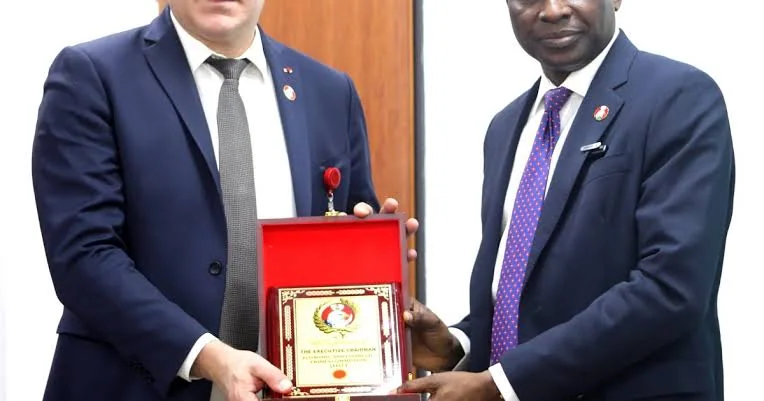
The Economic and Financial Crimes Commission (EFCC) has announced a strengthened partnership with the French government to enhance efforts in asset tracking, cybercrime investigations, and security training in Nigeria. This agreement was formalized during a meeting on Tuesday, March 4, 2025, at the EFCC headquarters in Abuja. Lieutenant General Régis Colombet, Director of Security and Defence Cooperation at the French Ministry for Europe and Foreign Affairs, led the French delegation and met with EFCC Chairman Ola Olukoyede. The collaboration shows the importance of international cooperation in addressing cross-border financial crimes and cyber threats. During the meeting, Colombet highlighted France’s extensive efforts in regional security, including the establishment of specialized training centers. He pointed to initiatives such as the Cyber School in Dakar, Senegal, which provides training on cyber investigations, ransomware threats, and asset tracking. Additionally, he referenced an academy in Abidjan, Côte d’Ivoire, focused on counterterrorism training. “In our cooperation, we prioritize developing academic centers and training hubs, particularly in cyber investigations and security threats,” Colombet said. “Since crime knows no borders, international collaboration is essential, and the EFCC’s role in combating financial and cybercrimes is crucial to our collective security efforts.” Colombet also noted that this visit builds on a strategic meeting held in December 2024 aimed at deepening Nigeria-France security ties. The partnership extends beyond cybercrime to include cybersecurity, civil defense, and broader security concerns. EFCC Chairman Ola Olukoyede welcomed the renewed partnership, emphasizing the longstanding relationship between Nigeria and France in combating crime. He stressed the need for joint efforts to address transnational financial offenses such as money laundering and cybercrimes. “Nigeria and France have a long history of collaboration in crime prevention and investigation,” Olukoyede stated. “Given the borderless nature of financial and cybercrimes, international cooperation is crucial in curbing these offenses.” Olukoyede cited a recent success story where an international criminal syndicate operating across Europe and Asia was dismantled before it could establish operations in Nigeria. He noted that some victims of this syndicate were based in France, further underscoring the importance of sustained collaboration. The EFCC chairman also highlighted the differences between investigative approaches in Nigeria and Europe. While European agencies often rely on digital tools for immediate access to records, Nigerian investigations frequently require extensive fieldwork. He expressed optimism that combining Nigeria’s practical expertise with France’s advanced technological tools would create a more effective strategy for combating crime. “We appreciate the opportunities for training and capacity building,” Olukoyede added. “By working together, we can significantly reduce the chances of criminals finding safe havens anywhere in the world.” The partnership reflects a shared commitment to tackling financial crimes linked to arms trafficking, terrorism, and civil unrest. Both parties emphasized that international cooperation is vital for global security. This collaboration marks another step forward in addressing modern security challenges through technology-driven solutions and cross-border partnerships

Nigerians express frustration as CBN’s new ATM withdrawal charges take effect
Bank customers across Nigeria have voiced their dissatisfaction as the Central Bank of Nigeria’s (CBN) revised ATM withdrawal charges officially came into effect on Saturday, March 1, 2025. The updated fee structure has introduced new costs for withdrawing cash from Automated Teller Machines (ATMs), sparking widespread complaints amid ongoing economic challenges. Under the new policy, customers withdrawing up to N20,000 from ATMs located outside their bank’s network will now pay a fee of N100 per transaction. For off-site ATMs, those not directly affiliated with a bank branch, withdrawal fees have increased to N600 per transaction. However, withdrawals from one’s own bank ATMs remain free. The CBN, in a circular issued on February 10, 2025, explained that the changes were necessary to address rising operating costs and improve the efficiency of ATM services across the banking sector. Yet, many Nigerians see the move as an additional burden in an already challenging economic climate. Many customers are struggling to adjust to the new fees. Halima, a shopper, shared her frustration after being charged N600 for withdrawing N15,000 at a shopping mall. “I needed cash to complete payment for some items I bought, and I was shocked by the charge,” she said. John Showemimo, another customer, lamented the lack of viable alternatives. “Using a Point-of-Sale (POS) agent is even more expensive. To withdraw N20,000 via POS, I would pay N500. If I go to my bank’s ATM to avoid fees, I’ll spend N600 on transport. What better option do I have?” he asked. For small business owners like Iya Bode, who rely heavily on cash transactions, the new charges are particularly troubling. “I use my ATM card more than five times daily because of my trade. POS agents charge too much, so I prefer ATMs. Now they’ve increased the fees again, this is too much,” she said. Despite customer complaints, some banking officials believe the new charges are justified and necessary for improving services. A staff member working in a bank’s operations department noted that while customers are unhappy about the fees, there hasn’t been a noticeable decline in ATM usage since the policy took effect. “Customers are still using our ATMs despite the complaints,” she said. “The CBN’s move to reduce cash flow in the economy is aimed at curbing criminal activities and promoting digital transactions, it’s a step in the right direction.” However, others predict a shift in customer behavior. Daniel, an employee at one of Nigeria’s tier-1 banks, anticipates that more people will turn to POS agents for smaller withdrawals to avoid long queues and potential issues with ATMs. “For amounts below N10,000, many will prefer POS agents over traveling to distant ATMs,” he explained. The new charges have also drawn criticism from advocacy groups. The Socio-Economic Rights and Accountability Project (SERAP) has filed a lawsuit against the CBN over what it describes as an “unlawful and unfair” increase in ATM fees. In an open letter addressed to President Bola Tinubu, SERAP urged him to direct CBN Governor Olayemi Cardoso to suspend the implementation of these charges until the lawsuit is resolved. “Implementing these increased fees while the case is pending undermines both judicial processes and the rule of law,” SERAP stated. On-site ATMs (located within or directly affiliated with bank branches) remain free for customers withdrawing from their own accounts. Off-site ATMs (found in public spaces like malls or fuel stations) now attract higher withdrawal fees. Customers denied withdrawals up to N20,000 per transaction can file complaints with the CBN via cpd@cbn.gov.ng. For international withdrawals, banks will charge customers based on cost recovery, the exact fee imposed by foreign ATM operators.

Habby Forex embroiled in scandal after trader loses $110,000
The Nigerian forex trading community is grappling with a storm of allegations against Habby Forex, a prominent trading academy founded by Damilare Ogundare. While the academy has built a reputation for offering mentorship programs and trade signals, recent accusations from multiple victims have cast a shadow over its operations. The controversy gained traction after a trader, @deekay_umar, shared his devastating experience. He alleged that Habby Forex mismanaged his account, leading to a staggering $111,000 loss over two years. “I gave @Habbyforex_ $111,000 of my hard-earned money, believing it was in the right hands. Instead, he wiped it out like it was nothing,” the victim shared in an emotional post. He further accused Michael Udoh of playing a significant role in convincing him to invest through Infinox with Habby managing the trades. According to @deekay_umar, he was encouraged to add more funds to “save” the account but ended up losing $62,000 in a single day. What made matters worse was Habby Forex allegedly using screenshots of his account for promotional purposes without consent. In his own words, @deekay_umar recounted:“He (Habby) took screenshots of the $10,000 from my account and posted it on his Telegram group… I checked his Instagram and YouTube only to find videos of my blown account being used as bragging material.” “Imagine—this wasn’t even his withdrawal. I made it myself, yet he used it as proof of his so-called expertise,” he said. The victim described how he was lured into investing through promises of financial growth and stability, after trusting Habby Forex and his associate Michael Udoh. Instead, he faced financial ruin and emotional distress. The allegations have drawn attention from activists like Very Dark Man, who have been vocal about scams in the forex trading industry. They have warned potential investors to exercise caution and thoroughly verify credentials before engaging with trading academies. Very Dark Man emphasized that flashy lifestyles and promises of guaranteed profits are often red flags in the forex space. The academy claims to have helped thousands of individuals gain financial independence through its mentorship programs and sniper entry trading strategies.However, the growing number of complaints has left many questioning its credibility. While some still view Habby Forex as a valuable resource for traders, others see these allegations as evidence of deeper issues within the academy’s operations. The stories of @deekay_umar and other victims highlight the risks associated with unregulated forex trading platforms. In an industry often plagued by scams and misinformation, these cases serve as stark reminders for investors to remain vigilant and avoid handing over funds without thorough due diligence. As calls for accountability grow louder, it remains to be seen how Habby Forex will respond to these mounting allegations. For now, trust in the academy appears to be hanging by a thread.
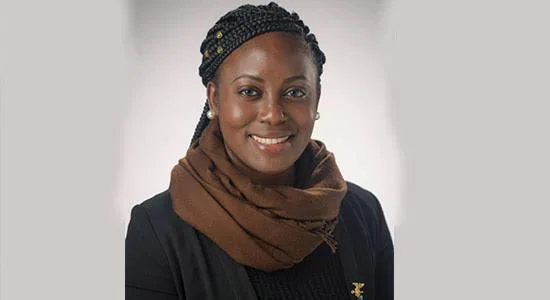
Wendy Okolo: The first black woman to earn a PhD in aerospace engineering
At just 36 years old, Wendy Okolo is breaking barriers and inspiring a new generation of innovators in aerospace engineering. As the first Black woman to earn a PhD in the field, her story is one of brilliance, determination, and a relentless pursuit of excellence. Born in 1989 and raised in Lagos, Nigeria, Okolo’s academic journey began at Saint Mary’s Primary School and Queen’s College. From a young age, she demonstrated exceptional intelligence, consistently earning top grades. However, her path to engineering was initially shaped by her mother, who envisioned her daughter becoming an engineer long before Okolo herself understood what that entailed. Her passion for aerospace engineering took flight during her undergraduate studies at the University of Texas at Arlington (UTA). It was there that she discovered her true calling and began laying the foundation for an extraordinary career. Rising Through the Ranks at NASAOkolo’s career trajectory has been nothing short of remarkable. She began as an undergraduate intern at Lockheed Martin, where she worked on NASA’s Orion spacecraft. This early exposure gave her hands-on experience in systems and mechanical engineering. Later, as a graduate student, she contributed to the Air Force Research Laboratory at Wright-Patterson Air Force Base. Today, Okolo serves as a sub-project manager and researcher in the Intelligent Systems Division at NASA Ames Research Center. She conducts cutting-edge research in the Discovery and Systems Health Technology (DaSH) division, focusing on autonomous systems and vehicle safety. Her work is helping shape the future of aerospace innovation. A Trailblazer with Numerous AccoladesOkolo’s groundbreaking contributions have earned her numerous prestigious awards. Among her many honors are: The Amelia Earhart Fellowship The Department of Defense National Defense Science and Engineering Graduate (NDSEG) Fellowship NASA Ames Early Career Researcher Award (2019) – becoming the first woman to receive it NASA Exceptional Technology Achievement Medal (2021) Black Engineer of the Year Award for Most Promising Engineer in U.S. Government Recognition as one of the Most Influential People of African Descent by the United Nations (2021) In addition to her professional achievements, Okolo made her literary debut with Learn to Fly: On Becoming a Rocket Scientist in June 2023. The book chronicles her journey and aims to inspire young people, especially women and minorities, to pursue careers in science, technology, engineering, and mathematics (STEM). Wendy Okolo’s story is not just one of personal success but also a testament to what is possible when talent meets opportunity. As she continues to soar in her career, she remains a beacon of hope for aspiring engineers around the world.
Nigeria launches new revenue collection platform, TMRAS, to replace Remita
The Federal Government of Nigeria (FGN) has introduced a new payment platform, the Treasury Management & Revenue Assurance System (TMRAS), to replace the widely used Remita for revenue collection. The new system, designed to enhance transparency and efficiency in managing public funds, officially launches today, March 4, 2025. According to a memo issued by the Office of the Accountant General of the Federation (OAGF) on February 28, TMRAS will streamline revenue collections and payments across federal ministries, departments, and agencies (MDAs). This includes organizations benefiting from donor funds, trust funds, social security funds, and other special accounts. The implementation of TMRAS will occur in two phases: Phase One: Starting today, this phase will focus on payments and collections in naira. It will allow MDAs and the OAGF to generate bank statements, track balances, and automate the deduction and remittance of taxes such as VAT, Withholding Tax, and Stamp Duty. Phase Two: Scheduled for June 1, 2025, this phase will expand to include payments and collections involving foreign currencies. It will also integrate with MDA Enterprise Resource Planning (ERP) systems and activate a budget module for MDAs not included in the national budget. The platform introduces several features aimed at improving financial management: Automatic Revenue Splitting: Internally Generated Revenue (IGR) from federal agencies will be automatically split between the Federal Government’s account and the respective MDAs’ accounts. Enhanced Reporting: Detailed financial reports will be generated for both the OAGF and MDAs to ensure accountability. Elimination of Manual Processes: All extra-budgetary payments will now be processed exclusively through TMRAS, eliminating manual mandates. Certified Payment Solution Providers: Only Central Bank of Nigeria (CBN)-licensed Payment Solution Service Providers approved by the OAGF will be allowed to collect government revenue. To ensure a smooth transition, Remita will continue operating alongside TMRAS until May 4, 2025. After this period, all MDAs are expected to fully migrate to TMRAS for their payment processes. Government’s VisionThe introduction of TMRAS aligns with the commitment of Wale Edun, Coordinating Minister of Finance and National Economy, to improve treasury management, revenue assurance, and budget performance across federal agencies. The government aims to enhance transparency and accountability while ensuring efficient public fund management.

JAMB clarifies UTME exam format amidst misconceptions
The Joint Admissions and Matriculation Board (JAMB) has addressed a common misconception about its Unified Tertiary Matriculation Examination (UTME), emphasizing that the exam is not conducted over the internet but rather through a Local Area Network (LAN). This clarification was made by JAMB Registrar, Prof. Is-haq Oloyede, during a visit from the National Association of Proprietors of Private Schools. The UTME, a crucial step for students seeking admission into Nigerian tertiary institutions, uses a computer-based test (CBT) format. The exam consists of multiple-choice questions, with 60 questions in the mandatory “Use of English” section and 40 questions each in three other subjects chosen by the candidate. The total exam duration is two hours, and candidates are advised to arrive early at their assigned centers, as specified on their e-registration slips. Prof. Oloyede highlighted that the use of LAN ensures data security and prevents potential technical glitches. He also reaffirmed that possessing a National Identification Number (NIN) is mandatory for registration. The 2025 UTME registration deadline is March 8. Candidates are urged to comply with JAMB’s protocols and utilize the “REQUERY” feature to resolve any discrepancies in their records. In preparation for the exam, candidates should familiarize themselves with the CBT format and adhere to the strict rules prohibiting electronic devices in the exam hall. The mock exam, scheduled for an earlier date, serves as a practice session to help candidates acclimate to the CBT environment.