
Google has unveiled a groundbreaking update to its AI assistant, Gemini, allowing users to interact with the chatbot in real-time through video and screen sharing. The announcement was made during the Mobile World Congress (MWC) 2025 in Barcelona, showcasing how the new features enhance user experience by providing more interactive and practical solutions. The new “Screenshare” feature enables users to share their phone screens with Gemini, allowing the AI to analyze and respond to what is being displayed. For example, during a demonstration, a user shopping for baggy jeans asked Gemini for styling suggestions. The AI quickly analyzed the video and suggested complementary clothing options, such as matching jackets and accessories. Another standout feature is Gemini’s ability to process live video input. Users can film their surroundings or specific items and ask questions in real time. In one demo, a ceramicist sought advice on which glazes would best suit newly fired vases for a mid-century modern aesthetic. By moving the camera around, the user allowed Gemini to analyze various glaze options and provide tailored recommendations. These updates are designed to improve communication between users and the AI by making interactions more dynamic and visually intuitive. For users who struggle to articulate their queries in text, these features provide a hands-on way to demonstrate problems or seek advice. This functionality is particularly useful for tutorials or lessons, where screen sharing can facilitate more interactive learning experiences. The live video and screen-sharing features will roll out to Gemini Advanced subscribers on Android devices later this month. Currently available only in English, Google plans to expand these capabilities to other languages and its Workspace Business and Enterprise customers soon. This announcement follows a series of updates to Gemini over recent months. Google recently introduced a memory feature that allows the AI assistant to recall past conversations, enabling more personalized responses. Additionally, January saw the release of Gemini 2.0 Pro with enhanced reasoning capabilities through its “Flash Thinking Experimental” model, aimed at improving performance and explainability. Google’s rapid innovation with Gemini reflects the intense competition in the AI chatbot market. Rivals like OpenAI are also pushing boundaries with their models. OpenAI recently launched ChatGPT-4.5, which boasts improved understanding of human intent and excels in creative tasks like writing and design. With GPT-5 expected later this year, the race between Google and OpenAI continues to heat up as both companies strive for dominance in the AI space.

Ahmadu Bello University wins prestigious AI award
Ahmadu Bello University (ABU) Zaria has emerged as the winner of the ‘Best AI or AI-related Programme (University)’ award at the 2025 AI Awareness Day in Higher Education in Nigeria. The virtual event, held on February 17, 2025, recognized institutions making significant strides in AI education and policy development. ABU’s B.Eng Computer Engineering (Artificial Intelligence Option) program was commended for its excellence, securing the top spot in the category. Additionally, the university took second place for its outstanding contributions to shaping AI policies within higher education. The Awards Selection Committee, chaired by Prof Nasiru Maiturare, praised the exceptional entries from ABU’s Department of Computer Engineering and the IIOE Nigeria National Centre. The event featured four prestigious awards, including Best Institutional AI Policy and Best AI Researcher. Prof Maiturare congratulated ABU on its remarkable achievement, acknowledging its dedication to advancing AI in higher education. Ahmadu Bello University’s achievement highlights its commitment to innovation and excellence in AI education, reinforcing its position as a leading institution in Nigeria’s higher education landscape.

M-KOPA’s Babajide Duroshola warns Nigerians against falling for Forex scams
Babajide Duroshola, the General Manager of M-KOPA Nigeria, has raised concerns about the growing number of fraudulent Forex tutors exploiting unsuspecting Nigerians. In a recent post on his social media platform, Duroshola criticized the trend, describing many of these so-called experts as fraudsters preying on people’s desperation to make quick money. “Una no dey hear word about this Forex thing! Many people are just fraudsters pretending to be experts,” he wrote on X (formerly Twitter). Duroshola questioned the credibility of individuals claiming to teach Forex trading, pointing out that even major banks invest heavily in technology and expertise to navigate the complexities of foreign exchange markets. “Do you know how much money and engineering investment banks spend on Forex trading? Yet, someone with just four screens and chatting online wants to teach you? It’s hilarious!” he added. The Rise of Forex Scams in NigeriaForex trading has gained significant traction among young Nigerians seeking alternative income streams. However, this surge in interest has also created fertile ground for scammers posing as tutors. These individuals often promise quick success with minimal effort, luring victims with flashy advertisements and unrealistic claims. Many of these tutors provide little more than basic instructional materials, leaving their students ill-equipped to navigate the volatile Forex market. The allure of quick riches, coupled with economic hardship and a growing “tech-bro” culture, has made many young Nigerians vulnerable to these schemes. Prince Sokwaibe, a seasoned Forex trader, echoed Duroshola’s sentiments. He attributed the prevalence of scams to greed and a lack of proper understanding among aspiring traders. “Trust me, Forex is more stable an investment than crypto. The way it’s been taught and advertised is the problem. The talking and publicity are majorly from scammers. They are the ones mostly talking about it,” Sokwaibe explained. He revealed that he had fallen victim to fraudulent tutors multiple times before gaining a deeper understanding of the market. According to him, many of those who introduced Forex trading to Nigeria were brokers primarily interested in making quick profits rather than educating traders. This approach has since devolved into outright fraud. Sokwaibe also highlighted how brokers use aggressive marketing tactics, often enlisting influencers like comedians and skit makers who have little knowledge of Forex trading. These brokers lure people in with promises of turning small investments into massive profits, only for most participants to lose their money due to inadequate training and understanding. “This pyramid scheme-like arrangement keeps spreading because those who lose money are often recruited to bring in others,” Sokwaibe added. The consequences of falling for these scams can be devastating. Nigerian comedian Mark Angel recently shared his harrowing experience after losing $3.7 million in a failed Forex investment. The loss left him drowning in debt and battling depression. “I trusted the wrong hands in Forex and lost all my money. Nobody knew except my family and closest circle. The weight of the loss was suffocating,” Angel revealed. As Forex trading continues to grow in popularity, experts like Duroshola are urging Nigerians to exercise caution and seek credible sources before venturing into the market. While legitimate opportunities exist, they require significant knowledge, discipline, and risk management—qualities often overlooked by fraudulent tutors promising overnight success. Forex trading may hold potential for financial growth, but without proper education and guidance, it remains a risky endeavor that could lead to significant losses.
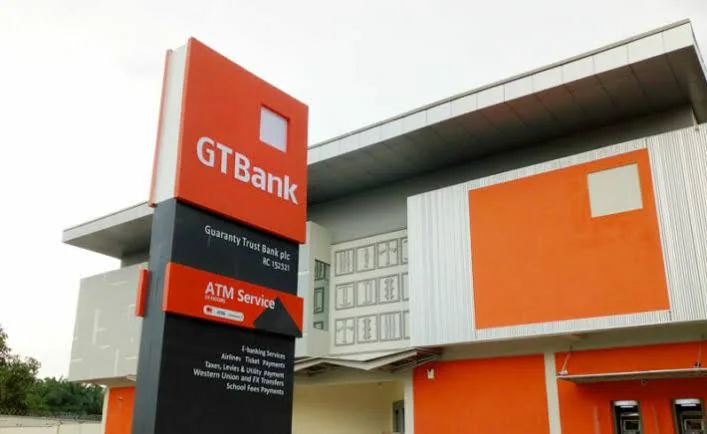
GTBank customers frustrated over network failures, delayed transactions
Customers of Guaranty Trust Bank (GTBank) have taken to social media to express their frustration over widespread network failures that have disrupted banking services, including ATM transactions and mobile app functionality. The issues, which began on Monday, March 3, 2025, have left many users stranded and unable to complete critical financial transactions. The disruptions come as GTBank transitions its core banking system from ICS Financial Services to the Finacle platform developed by EdgeVerve Systems, an Indian technology company. While the upgrade aims to improve service delivery in the long term, it has caused significant short-term challenges for customers. On X (formerly Twitter), users vented their anger and disappointment at the bank. One user, @Muhammed_NFT, sarcastically suggested that GTBank should consider shutting down its banking operations entirely:“Aye GTB ti baje. If they know they can’t run a banking business properly, they should shut down and start selling popcorn or akara.” Another user, @fabianthafirst_, criticized the bank’s customer service, calling it the worst they had ever experienced. Similarly, @Qwestionaire lamented the decline of GTBank’s reputation:“How have the mighty GTBank fallen? They used to be one of the best banks; now they’ve completely ruined it.” Other users shared personal experiences of failed transactions. For instance, @SeyisolaI reported a delayed transfer made on Monday morning that had yet to be credited by press time. Meanwhile, @waywardk_ expressed frustration over the bank’s silence on the issue:“The painful thing is they haven’t come out to address the issue. They don’t care about their customers. I hope everyone moves their money and leaves this useless bank.” As of now, GTBank has not issued any official statement addressing the network failures or providing updates on when services will be fully restored. Customers are demanding transparency and swift action from the bank to resolve these issues. The ongoing disruptions have sparked broader concerns about service reliability in Nigeria’s banking sector, particularly during system upgrades. Many customers are now considering alternative financial institutions due to repeated service failures.

Nigeria, UN launch $500 million fund to boost solar energy development
Nigeria, in collaboration with the United Nations, has announced a $500 million funding initiative to support local developers of renewable energy projects. The fund, which aims to expand access to electricity through solar home systems and mini-grids, is targeted at addressing the country’s significant energy gap, particularly in rural areas. The initiative is spearheaded by the Nigerian Sovereign Investment Authority (NSIA) and the UN’s Sustainable Energy for All (SEforALL), with Africa50, an infrastructure investment platform established by the African Development Bank (AfDB), managing the fund. Speaking on the project, SEforALL CEO Damilola Ogunbiyi highlighted that the fund would be accessible in local currency, making it easier for small-scale energy providers to invest in Nigeria’s renewable energy sector. “The aim is to put together a fund that would be accessible and will be in local currency for local developers,” Ogunbiyi said during a global development finance forum held in Cape Town, South Africa. This initiative is part of the broader Mission 300 program, an ambitious effort led by the World Bank and AfDB to provide electricity to 300 million people across Africa by 2030. Countries that implement key power sector reforms and regulatory changes to attract private investment are expected to benefit from the program’s multibillion-dollar funding. In addition to this effort, Africa50 is launching a separate $200 million Africa Solar Facility, supported by the International Solar Alliance, to promote distributed renewable energy projects across the continent. With over 86 million Nigerians currently lacking access to electricity—making it one of the most energy-deprived nations globally—this fund comes at a critical time. Mini-grids and solar home systems are seen as vital solutions for rural communities far removed from the national grid. Sub-Saharan Africa as a whole accounts for more than 80% of the global population without electricity, highlighting the urgency of such initiatives. The Mission 300 program has already garnered significant support, with pledges of $40 billion from the AfDB and World Bank Group during an energy summit held in January 2025 in Tanzania. Experts believe that massive investments like these are essential for bridging Nigeria’s electricity gap and driving economic growth through sustainable energy solutions.

Ghana is set to launch the e-cedi in 2025, aiming to revolutionize digital payments
After years of delays, Ghana is finally set to roll out its much-anticipated central bank digital currency (CBDC), the e-Cedi, in 2025. The Bank of Ghana (BoG) has announced that the digital currency is ready for launch, pending approval from lawmakers. This move positions Ghana as a key player in the race for CBDC adoption in Africa, following Nigeria’s introduction of the eNaira in 2021. While Nigeria’s eNaira has struggled to gain traction, accounting for just 0.36% of the country’s money supply by March 2024, Ghana is taking a different approach to ensure broader adoption. One standout feature of the e-Cedi is its offline functionality, which allows users to transact without internet connectivity. This innovation could be a game-changer for rural communities where internet access remains limited. Kwame Oppong, head of fintech and innovation at the BoG, emphasized that the goal is to make digital cash as accessible and easy to use as physical cash, particularly for the unbanked population. “We want to ensure that everyone, regardless of their location or internet access, can benefit from this technology,” Oppong said. Unlike some countries experimenting with blockchain-based CBDCs, Ghana plans to start with a centralized system for simplicity. However, there’s potential for future integration with blockchain technologies as the system evolves. Despite these advancements, debates around the necessity of CBDCs persist globally. Critics argue that existing payment systems are sufficient, while others point out challenges like low trust in government and financial crime concerns. Still, Ghana insists that an offline-capable CBDC offers unique advantages over traditional instant payment systems by eliminating reliance on internet connectivity. Broader Implications for AfricaGhana’s move comes at a time when digital currencies are reshaping financial ecosystems across Africa. While Nigeria’s experience serves as a cautionary tale, it also provides valuable lessons. Ghana’s focus on offline usability and gradual technological scaling could set a new standard for CBDC implementation on the continent.