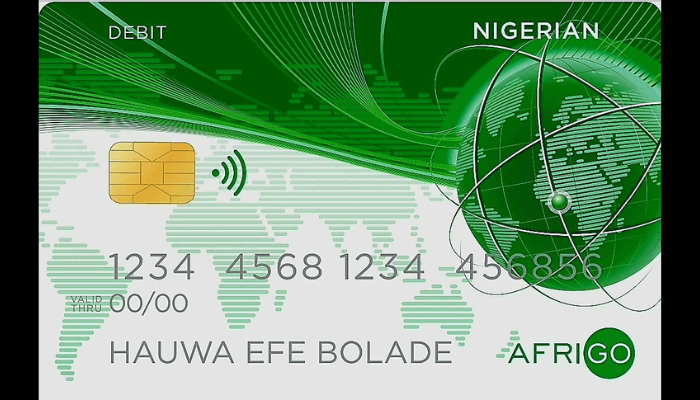
Moniepoint Inc., a leading fintech company, has announced a strategic partnership with Afrigopay Financial Services Limited (AFSL), a subsidiary of the Nigeria Inter-Bank Settlement System (NIBSS), to distribute five million AfriGO cards across Nigeria. The AfriGO card, part of Nigeria’s National Domestic Card Scheme launched in January 2023 by the Central Bank of Nigeria (CBN) and NIBSS, is tailored to address local payment needs while reducing reliance on foreign card systems. By offering an alternative to international cards, the AfriGO card ensures data sovereignty and promotes local business growth. Through this partnership, Moniepoint will utilize its extensive infrastructure to roll out tap-to-pay solutions that enable users to make seamless payments with contactless cards or NFC-enabled devices. This technology allows payments by simply tapping a card or device on a compatible terminal, making transactions faster and more convenient. Speaking on the collaboration, Mrs. Ebehijie Momoh, Managing Director and CEO of Afrigopay, highlighted the transformative potential of the partnership. She noted that the AfriGO card would enhance financial services delivery, particularly in underserved areas. Merchants and agents will benefit from instant settlements and improved cash flow management, reducing risks associated with cash handling. “The AfriGO card strengthens local businesses by reducing dependency on foreign exchange for payment transactions while creating new opportunities in Nigeria’s growing card ecosystem,” Mrs. Momoh said. Tosin Eniolorunda, CEO of Moniepoint Inc., emphasized the broader impact of contactless payments on financial inclusion and the digital economy. “This partnership is about unlocking potential and creating better opportunities for all Nigerians. Together, we aim to reshape the digital economy so individuals, businesses, financial institutions, and governments can achieve their goals,” he stated. The AfriGO card initiative positions Nigeria alongside countries like China, Russia, Turkey, and India that have developed domestic card schemes. While it does not replace existing international cards, it provides Nigerians with more payment options tailored to their unique needs. In addition to this rollout, Afrigopay is also collaborating with the National Identity Management Commission (NIMC) to integrate payment functionality into Nigeria’s general multipurpose national identity card. This further underscores the drive toward a more inclusive and efficient financial system in the country.
MTN Nigeria reports 47% drop in MoMo wallet users amid strategic shift
MTN Nigeria has revealed a significant decline in active users of its mobile money platform, MoMo Payment Service Bank (PSB), as part of a deliberate strategy to enhance user quality and operational efficiency. The number of active wallets dropped by 47% in 2024, falling to 2.8 million from 5.3 million recorded at the end of 2023. The company disclosed this in its audited financial results for the year, attributing the decline to a recalibration of its growth strategy. According to MTN Nigeria’s CEO, Karl Toriola, the move was necessary to establish a sustainable growth trajectory for the MoMo ecosystem. “Although this intervention resulted in a decline in active wallets, it was essential to improve the quality and stickiness of our wallet base while developing advanced services,” Toriola explained. The number of MoMo agents and merchants also saw steep declines, dropping by 76.8% and 79.2%, respectively. However, despite these reductions, transaction volumes on the platform increased by 4.3%, signaling stronger engagement among remaining users and sustained demand for financial technology services. While active wallet numbers fell, MTN’s fintech business delivered a strong performance in 2024, with revenue growing by 23.2% year-on-year. The fourth quarter was particularly robust, with a 38.7% revenue increase driven by the popularity of its airtime lending product, Xtratime. This service has gained significant traction among users and contributed substantially to the company’s fintech growth. MTN’s digital services segment also experienced remarkable growth, with revenue surging by 95.2% compared to the previous year. Monthly active subscriptions for rich media services grew by 22.4%, reaching 9.8 million users by the end of 2024. The company credited this success to ongoing investments in digital content and enhancements to user experiences, which have resonated with customers seeking personalized and engaging services. Despite these successes, MTN Nigeria faced financial challenges in 2024, reporting a ₦400.4 billion loss after tax due to record-high inflation and the devaluation of the naira. The company’s operational expenses were further impacted by net foreign exchange losses, which rose by nearly 25% year-on-year to ₦925.36 billion. MTN Nigeria remains optimistic about its future prospects. The company expects a recent tariff hike to boost revenue by at least 40% in 2025 and plans to focus on restoring a positive net asset position while increasing capital expenditure intensity.

African airlines see 14.9% surge in passenger demand in January 2025 – IATA
African airlines recorded a significant 14.9% increase in passenger demand in January 2025 compared to the same period last year, according to a new report from the International Air Transport Association (IATA). This growth highlights the continent’s expanding role in global aviation and its strong recovery from pandemic-era disruptions. The report, part of IATA’s Global Passenger Demand data for January 2025, also revealed that capacity among African carriers grew by 11.2% year-on-year. The load factor, a measure of how full planes are, rose to 75.9%, up to 2.4 percentage points from January 2024. This indicates that not only were more seats made available, but a higher percentage of them were occupied by passengers. While all international passenger markets showed robust growth, Africa stood out as one of the best-performing regions. This reflects an increasing appetite for air travel across the continent and the ability of African airlines to meet rising demand by expanding capacity. Globally, total passenger demand increased by 10% compared to January 2024, with international travel seeing a stronger rise of 12.4%. The overall global load factor reached an all-time high for January at 82.1%, underscoring the continued recovery and growing confidence in air travel. Among other regions, Asia-Pacific airlines led the way with a remarkable 21.8% year-on-year growth in passenger demand. Capacity in the region grew by 16.5%, and the load factor reached an industry-leading 86.7%. Latin American airlines saw a 12.9% rise in demand, but their capacity growth of 15.5% slightly outpaced demand, causing a dip in their load factor to 84.3%. Middle Eastern carriers posted a solid 9.6% increase in demand with a notable load factor improvement to 83.8%. In contrast, North American airlines reported the slowest growth at just 3.8%, with capacity inching up by only 0.6%. Despite this modest performance, their load factor remained strong at 81.8%. The strong performance of African airlines underscores their growing importance in global aviation markets and their ability to adapt to rising demand. According to Willie Walsh, IATA’s Director General, the record-high load factors globally reflect both supply chain challenges and airlines’ effective management of fleet and infrastructure constraints. IATA’s November 2024 passenger survey suggested that most travelers plan to maintain or increase their travel frequency over the next year, a promising sign for continued growth across all regions, including Africa
Lagos secures $1.2 billion in digital investments over five years – Sanwo-Olu
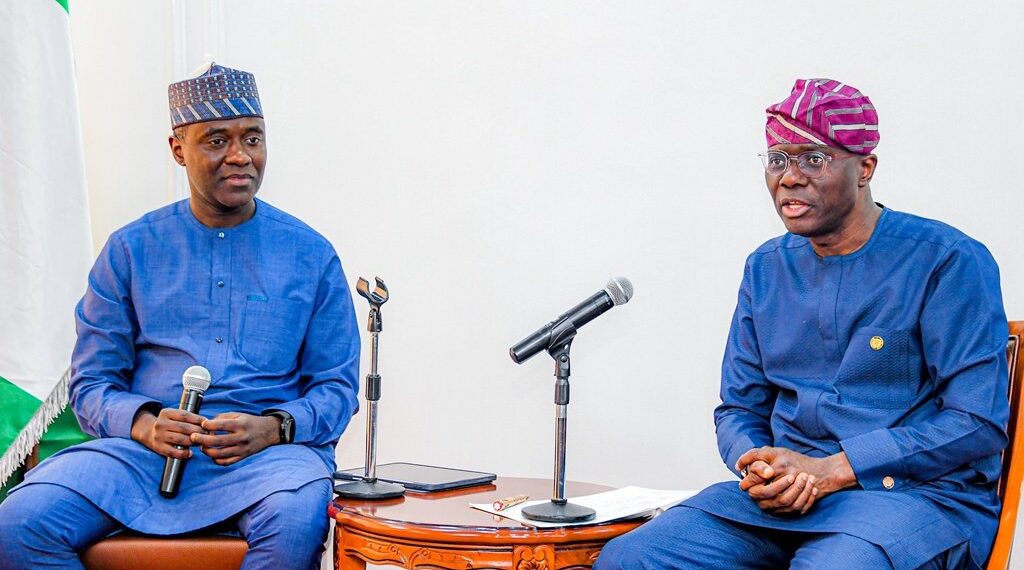
Lagos State has attracted over $1.2 billion in digital investments in the past five years, according to Governor Babajide Sanwo-Olu. The governor revealed this during a courtesy visit by the Nigerian Communications Commission (NCC) delegation, led by its Executive Vice Chairman and CEO, Aminu Maida, at the Lagos House in Ikeja on Friday. Sanwo-Olu highlighted that the funds have been channeled into critical digital infrastructure projects, including the development of data centers, the installation of submarine cables, and the expansion of the state’s digital network. These investments are part of ongoing efforts to strengthen Lagos’ digital economy and position it as a leading tech hub in Africa. “Within five years of our administration, we have attracted investments exceeding $1.2 billion directly into the digital space,” Sanwo-Olu stated. “These funds have been used to build hyperscale data centers, land submarine cables, and create a robust network for users and providers.” Strengthening Digital InfrastructureThe governor emphasized his administration’s commitment to bolstering digital infrastructure through strategic partnerships with organizations like the NCC. This effort aligns with the Education and Technology pillar of his THEMES+ agenda, which aims to leverage technology for economic growth and improved service delivery. Sanwo-Olu assured residents that his government is working closely with the NCC to protect critical telecom infrastructure and advance Lagos’ digital economy. He also noted that these initiatives would make internet access more affordable and accessible across the state. NCC Commends Lagos’ EffortsAminu Maida, CEO of the NCC, praised Lagos State for its strides in telecommunications and technology development. He described Lagos as a strategic partner in safeguarding digital infrastructure and facilitating seamless telecom operations. “Lagos is a key partner for us at the NCC,” Maida said. “Collaboration is essential to address issues like Right of Way, proper notifications during road construction, and other challenges affecting telecom infrastructure.” Maida also referenced President Bola Tinubu’s Executive Order signed in July 2024, which prioritizes protecting critical infrastructure nationwide. He urged continued efforts to safeguard Nigeria’s growing digital ecosystem. Driving Economic Growth Through TechnologyLagos State has been implementing several initiatives to boost its tech ecosystem’s contribution to GDP from 3% to 10%. This includes plans to establish a fund-of-funds to co-invest with venture capital firms supporting Lagos-based tech startups. Additionally, ongoing expansions of data centers in areas like Lekki and Eko Atlantic are projected to add up to $7 billion to Lagos’ economy. In May 2024, the state completed the first phase of a project aimed at reducing internet connectivity costs by laying 2,700 kilometers of fiber ducts. A second phase will add another 3,300 kilometers to further improve internet accessibility for residents.

Citigroup mistakenly credits $81 trillion instead of $280 to customer’s account
A leading American multinational investment bank, accidentally credited $81 trillion to a customer’s account instead of the intended $280. The error, which occurred in April 2024, was quickly identified and reversed before causing any financial impact. According to a report by the Financial Times, the mistake slipped through the hands of two employees during the payment processing stage but was flagged by a third employee approximately 90 minutes later. The transaction, which involved internal ledger accounts within the bank, was ultimately reversed several hours after being processed. Citigroup disclosed the incident to U.S. regulators, including the Federal Reserve and the Office of the Comptroller of the Currency (OCC). In a statement, the bank assured that its internal controls worked as intended to promptly detect and address the issue. “Despite the fact that a payment of this size could not actually have been executed, our detective controls promptly identified the inputting error between two Citi ledger accounts and we reversed the entry,” Citi said. This incident is part of a broader pattern of operational challenges at Citigroup. The bank reported 10 similar “near misses” involving errors of $1 billion or more in 2024, down from 13 in 2023. These issues have drawn regulatory scrutiny in recent years. In July 2024, Citi was fined $136 million for insufficient progress in addressing compliance and risk management shortcomings. Earlier, in 2020, it faced a $400 million fine for similar failures. Citigroup’s Chief Financial Officer Mark Mason recently acknowledged these challenges and emphasized the bank’s ongoing investments in compliance and technology improvements. “We saw the need to invest more in the transformation on data, on technology, on improving the quality of the information coming out of our regulatory reporting,” Mason said during an earnings call.

Ibadan airport set for six-month closure starting march for major upgrade
The Samuel Ladoke Akintola Airport in Ibadan, Oyo State, is set to undergo a six-month closure starting in March 2025 to facilitate a comprehensive maintenance and infrastructure upgrade. This announcement was made on Friday via the official X (formerly Twitter) account of Michael Achimugu, Director of Public Affairs and Consumer Protection at the Nigerian Civil Aviation Authority (NCAA). According to Achimugu, the planned upgrade is aimed at improving operational safety and efficiency at the airport. While specific details of the project have not been disclosed, the six-month timeline suggests an extensive overhaul of the facility. This development follows a proposal by the Oyo State Government in August 2024 to expand and modernize the airport, with the goal of transforming it into an international aviation hub. The project is part of Governor Seyi Makinde’s vision to enhance Oyo State’s aviation infrastructure and position Ibadan as a key player in both domestic and international travel. In August 2024, representatives from the Oyo State Committee on the Airport Expansion Project met with officials from the Federal Airports Authority of Nigeria (FAAN) to discuss plans for upgrading the airport to international standards. The proposed expansion includes extending runways, upgrading terminals, and incorporating state-of-the-art facilities to meet global aviation standards. This move aligns with a broader trend among Nigerian states to invest in aviation infrastructure. For instance, Cross River State recently expanded its state-owned airline, Cally Air, while Abia and Ebonyi States have embarked on developing new airports and acquiring commercial aircraft to boost connectivity and economic growth. The planned upgrade of Ibadan Airport is expected to improve travel options for residents and businesses in Oyo State while stimulating local economic activity through enhanced connectivity and tourism opportunities. Passengers intending to use the airport are advised to make alternative arrangements during the closure period. Further details about the project are expected to be released in due course.