
Access Bank customers across Nigeria are voicing their frustrations over ongoing service disruptions following the bank’s recent system upgrade. Many have reported being unable to access their funds, complete transactions, or use the bank’s mobile app, leaving them stranded and financially distressed. For Kola, a customer who needed urgent access to his money, the experience was deeply frustrating. “I could not access my money with Access Bank and had to borrow until I could,” he said. Similarly, Banji recounted multiple issues with the bank’s services, including unexplained deductions from his account. “There was a time earlier when Access Bank started deducting money from my account and called it a loan, one I don’t remember taking. When I reached out, they responded but did not resolve the issue. So, I shut down my account and moved to another bank,” he explained. The impact of the service failures extends beyond individuals to businesses as well. An Ankara trader in Oshodi lost a ₦2.1 million sale because the Access Bank app failed during a crucial transaction. “This customer loved the Ankara and was ready to buy, but we lost that money because the app wouldn’t work,” she lamented. Another business owner shared how three of her customers were unable to make payments due to the app’s malfunctioning. “Transactions that should have been seamless became impossible,” she said, highlighting the ripple effect on businesses reliant on digital payments. The frustration has spilled onto social media, where customers are airing their grievances. One user, @Hereistrustnkem, tweeted: “I can’t even pay for food… Over an hour, the bank app has been malfunctioning this week and they keep making stupid excuses.” Another user, @exon_Idy, expressed anger over unresolved issues: “Access Bank, I have been waiting since Monday to get back my money but it seems you are not ready to do anything about it. Return my money please.” The chaos began after Access Bank announced a system upgrade scheduled for February 22-23, promising customers “a new phase of digital banking experience.” However, instead of smoother operations, customers have faced prolonged downtimes and failed transactions. While the bank later sent an email claiming services had been restored and urged users to reach out for assistance, complaints suggest otherwise. This isn’t the first time a Nigerian bank has faced backlash over system upgrades. GTBank encountered similar challenges during its transition to a new digital platform in the past, resulting in widespread criticism from customers. Despite such precedents, Access Bank’s rollout appears to have repeated these mistakes. Attempts to reach Access Bank for comments have so far been unsuccessful. The lack of communication has left many customers feeling abandoned as they struggle with inaccessible funds and disrupted transactions. For some like Banji, the solution has been drastic, closing their accounts entirely and moving to other banks. For others still waiting for resolution, the silence from Access Bank only deepens their frustration.

FG targets improved power supply with tariff adjustments and infrastructure upgrades
The Federal Government of Nigeria has unveiled plans to overhaul the country’s electricity sector, focusing on tariff adjustments and infrastructure improvements to ensure a more reliable power supply for consumers. This was disclosed by the Minister of Power, Adebayo Adelabu, during the public presentation of the National Integrated Electricity Policy (NIEP) and the Nigeria Integrated Resource Plan in Abuja. The policy, developed with support from the UK Foreign, Commonwealth and Development Office (FCDO) and the UK Nigeria Infrastructure Advisory Facility (UKNIAF), aims to address long-standing challenges in the power sector, including irregular supply and revenue shortfalls. Under the current tariff structure, customers are categorized into service bands based on the number of daily supply hours they receive. Band B customers, who get 17 to 18 hours of electricity daily, pay ₦63 per kilowatt-hour (kWh), while Band A customers, receiving 20 hours or more, pay ₦209 per kWh. Adelabu explained that recent tariff adjustments are not intended as price hikes but as a strategy to improve revenue generation and accelerate infrastructure upgrades. He noted that in 2024, cost-reflective tariffs were introduced for about 15% of electricity consumers, a move he described as a significant step toward reforming the sector. The Minister highlighted that improving distribution and transmission infrastructure has already allowed more customers to transition to Band A. This shift has resulted in a 70% increase in power sector revenue, growing from ₦1.05 trillion in 2024 to ₦1.7 trillion. “As we continue to improve our distribution and transmission infrastructure, more consumers will be upgraded to Band A,” Adelabu said. Efforts are also underway to address Nigeria’s metering deficit. In February 2025, Eko Electricity Distribution Company (EKEDC) began distributing free prepaid meters to Band A customers under the Meter Acquisition Fund (MAF) scheme. This initiative is part of broader reforms by NERC, which recently deregulated meter access to allow consumers to procure meters directly through approved Meter Asset Providers (MAPs). Long-Term Goals for Power ReliabilityThe government’s reforms aim to create a sustainable power sector by encouraging investments, boosting revenue, and upgrading aging infrastructure. These measures are expected to improve service quality for consumers while reducing the government’s electricity subsidy burden. Adelabu emphasized that these steps are critical for transitioning lower-band customers into higher service categories like Band A, ensuring more Nigerians have access to reliable electricity.

FG introduces e-gates at Abuja airport to ease immigration process, plans expansion nationwide
The Federal Government of Nigeria has launched its first set of automated e-gates at the Nnamdi Azikiwe International Airport, Abuja, marking a significant step towards modernizing airport immigration processes. This initiative is designed to provide Nigerian passport holders with a seamless and efficient entry experience while reducing human interaction and curbing harassment by immigration officers. Dr. Joe Abah, a public affairs commentator, shared his experience with the new system on social media, likening it to similar facilities at London’s Heathrow Airport. According to him, the process was swift and straightforward. “I simply scanned my passport, and the gate opened. Then I removed my cap and glasses for facial recognition, and the second gate opened. That’s it! I was in, no long queues or unnecessary greetings from immigration officers asking what I brought back for them,” he wrote. The e-gates leverage biometric technology, including facial recognition and fingerprint scanning, to verify passengers’ identities. Once cleared, travelers pass through without needing their passports stamped, a shift from traditional practices. The system is currently exclusive to Nigerian passport holders and is part of a broader plan to enhance border security while improving travelers’ experiences. The Minister of Interior, Olubunmi Tunji-Ojo, announced that similar e-gates would be installed across all five international airports in Nigeria by mid-2024. Lagos’ Murtala Muhammed International Airport is expected to receive 21 e-gates by April 2024, with installations at Kano, Port Harcourt, and Enugu airports following shortly after. “Once you’re Nigerian and coming into Nigeria, you will have no business seeing an immigration officer unless you’re flagged as a person of interest,” Tunji-Ojo explained. This move aligns with the government’s goal of reducing human interference in immigration processes while enhancing national security. The introduction of e-gates has been widely applauded on social media. Many Nigerians expressed relief at the potential end of harassment by some immigration officers notorious for soliciting favors. One user commented, “This should get to Lagos, Enugu, Kano, and PH [Port Harcourt] to eradicate all those embarrassing officers.” Another noted how this development could gradually eliminate touting in immigration services. However, concerns have also been raised about maintaining the system’s functionality. Some users highlighted the need for uninterrupted power supply to ensure the e-gates operate 24/7. “We don’t want to hear stories that touch,” one user remarked humorously. Others cautioned against potential sabotage by individuals resistant to change or seeking to undermine the system for personal gain. The successful implementation of e-gates at Abuja airport represents a significant milestone in Nigeria’s efforts to modernize its aviation sector. While challenges such as power reliability and system maintenance remain, many see this as a positive step toward creating a more efficient and traveler-friendly experience at Nigerian airports.
FCCPC orders MultiChoice to halt planned 21% price hike pending investigation
The Federal Competition and Consumer Protection Commission (FCCPC) has directed MultiChoice Nigeria, the parent company of DStv and GOtv, to suspend its proposed subscription price increase until an ongoing investigation is concluded. The regulator issued this directive following MultiChoice’s announcement of a 21% tariff hike across all its packages, set to take effect on March 1, 2025. In a statement released on Thursday, FCCPC explained that the decision to pause the price adjustment is aimed at protecting consumers from potential exploitation while the investigation is underway. The commission emphasized that MultiChoice must maintain its current pricing structure as of February 27, 2025. MultiChoice was initially summoned to appear before the FCCPC on February 27 for an investigative hearing but requested a postponement. The hearing has now been rescheduled for March 6, 2025. The FCCPC has mandated the attendance of MultiChoice’s CEO and other key officers, along with comprehensive documentation addressing the inquiry. The commission highlighted concerns over what it described as recurring unilateral price adjustments by MultiChoice. It noted that such actions raise critical questions about fairness, potential market abuse, and anti-competitive practices within Nigeria’s pay-TV industry. Proposed Price AdjustmentsIf implemented, the new pricing would see significant increases across DStv and GOtv packages. For example: DStv Compact: From ₦15,700 to ₦19,000 DStv Premium: From ₦39,500 to ₦44,500 GOtv Value: From ₦3,600 to ₦3,900 GOtv Plus: From ₦4,850 to ₦5,800 MultiChoice attributed the proposed hike to Nigeria’s challenging economic environment, including naira depreciation, rising energy costs, and inflation, which reached 24.48% in January 2025. In a statement to customers, the company said the adjustment was necessary to continue delivering high-quality content and services. The FCCPC has expressed deep concern over the frequency of price increases by MultiChoice and allegations of inconsistent pricing strategies across different markets. The commission warned that failure by MultiChoice to provide a satisfactory explanation could result in penalties or other corrective measures. The regulator reaffirmed its commitment to ensuring fair competition and protecting Nigerian consumers in the pay-TV sector. It also pledged to collaborate with relevant agencies to strengthen consumer rights and promote ethical business practices. This development comes at a time when Nigerians are grappling with broader economic pressures, including inflation, rising telecom tariffs, and the removal of fuel subsidies, factors that have significantly strained household budgets.
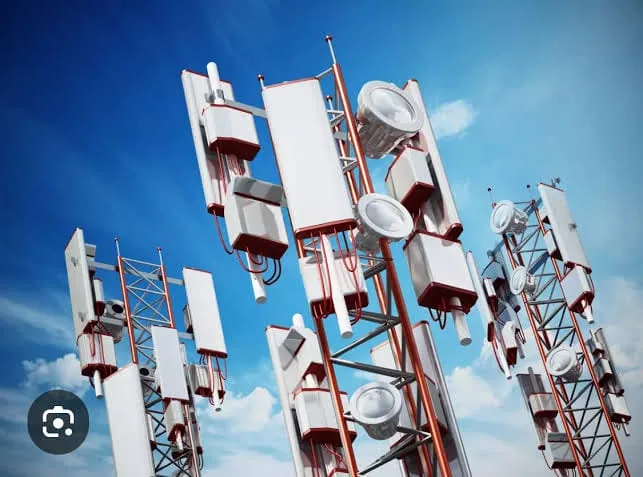
FEC approves 7,000 new telecom towers as Airtel commits $500 million to Nigeria’s digital future
The Federal Executive Council (FEC) has approved the construction of 7,000 new telecom towers across rural Nigeria in a bold move to bridge the country’s connectivity gap. This announcement was made by Bosun Tijani, Minister of Communications, Innovation, and Digital Economy, following a meeting with President Bola Tinubu at the Presidential Villa in Abuja on Thursday. The approval comes alongside significant private sector support, with Airtel pledging $500 million to bolster Nigeria’s telecom infrastructure. Sunil Bharti Mittal, Founder and Chairman of Airtel, revealed the investment plans during the meeting. The funds will be directed toward expanding radio networks, building a new data center, and acquiring additional spectrum to enhance urban and suburban connectivity. The initiative aims to address Nigeria’s persistent connectivity challenges, particularly in underserved rural areas. Minister Tijani emphasized that the government is committed to ensuring that Nigerians not only have access to telecom services but also enjoy high-quality connectivity. “We want Nigerians to have meaningful access, not just service,” Tijani said. He also highlighted the Nigerian Communications Commission’s shift toward prioritizing “quality of experience” metrics for telecom users. In addition to the towers, the government is deploying 90,000 kilometers of fiber-optic cables nationwide to further expand coverage. Tijani described this as a collaborative effort requiring strong public-private partnerships. The announcement comes amid a recent 50% hike in telecom tariffs, which has stirred mixed reactions among consumers grappling with inflation and rising costs. Defending the decision, Tijani explained that the increase was necessary to sustain the telecom industry and prevent job losses. “If we refused the increase, we risked losing jobs. It was a tough but necessary call,” he said, citing a KPMG study that found the adjustment essential for balancing operator viability with consumer affordability. Mittal echoed these sentiments, attributing rising operational costs to inflation, currency devaluation, and increased expenses for diesel, electricity, and imported equipment. Despite these challenges, he reaffirmed Airtel’s commitment to Nigeria as a key market. “Nigeria is the heart of our African strategy,” Mittal said. “We’ve invested $200 million last year and plan another $200 million by year-end.” Airtel’s planned $500 million investment includes $250 million for radio network expansion and $140 million for a new data center. The company also announced scholarships for 10 Nigerian students annually to pursue engineering degrees in India as part of its broader social impact initiatives. This aligns with President Tinubu’s “3 Million Technical Talent” program aimed at developing skilled professionals for Nigeria’s digital economy. Mittal praised recent economic reforms by President Tinubu’s administration, such as subsidy cuts and foreign exchange unification, as steps that encourage foreign investment. He expressed optimism about Nigeria’s potential for digital innovation and financial inclusion. The combination of government-led infrastructure projects and Airtel’s substantial investment signals a major push to modernize Nigeria’s telecom sector. While these efforts promise improved connectivity and digital transformation, their success will depend on effective execution and public acceptance of higher costs in exchange for better service.
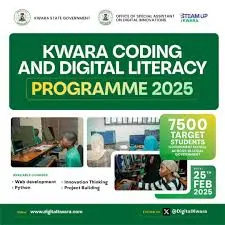
Kwara state embarks on ambitious digital literacy drive
The Kwara State Government has launched a comprehensive coding and digital literacy training program, to equip its youth with essential digital skills. This initiative, which targets at least 50 public primary and junior secondary schools across the state, aims to impact over 150 students per school in its pilot phase. The program, organized by the Office of the Special Assistant to the Governor on Digital and Innovation, Mr. Ishola Kayode, is part of a broader strategy to strengthen the education sector and prepare Kwara’s children for global competitiveness. As Governor Abdulrahman Abdulrazaq’s administration emphasizes embracing the digital revolution, this initiative seeks to lay the foundation for a digital society. Selected schools include Bishop’s Smith Junior Secondary School, Ilorin Grammar School, and Sheikh Alimi L.G.E.A Primary School. The program will undergo a data-driven assessment to guide its expansion in subsequent phases. By equipping students with digital literacy, Kwara State aims to empower them to solve community problems using technology. Mrs. Akanbi Janet Ayoola, Principal of Bishop Smith College, praised the initiative as a significant step in preparing students for the era of technology and artificial intelligence. Students like Opadili Boluwatife and Akinola Abdulrahman have expressed their appreciation and commitment to making the most of this opportunity. Adopting a forward-thinking approach to education, Kwara State’s digital literacy initiative marks a significant step towards creating a more technologically adept and globally competitive generation