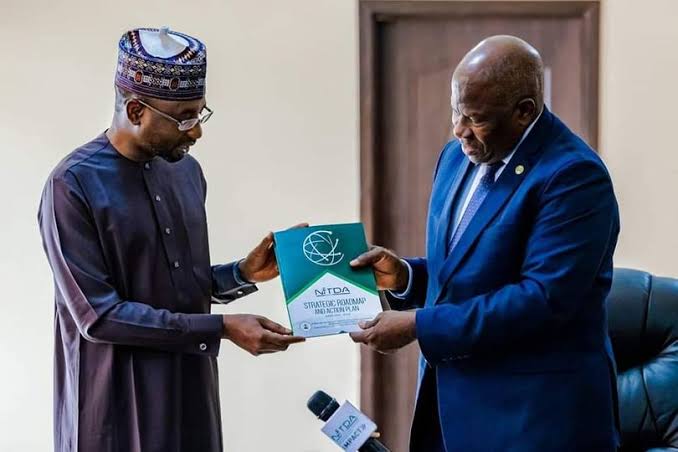
The National Insurance Commission (NAICOM) has urged insurance companies to develop and roll out cyber insurance products. This call to action comes at a time when digital transactions are becoming increasingly prevalent in the country, with e-payments reaching unprecedented levels. During a recent Insurers’ Committee Meeting in Lagos, NAICOM emphasized the need for insurers to adapt to the changing digital landscape. Mrs. Ebelechukwu Nwachukwu, Head of the Communication and Stakeholders Management Sub-committee, highlighted the importance of compliance with Nigeria’s Data Protection Regulations. She noted that insurance practitioners are being encouraged to undergo training on data protection measures to better equip them for this new frontier. NAICOM is working closely with the National Information Technology Development Agency (NITDA) and the Nigeria Data Protection Commission to advance this initiative. The collaboration aims to enhance Nigeria’s digital infrastructure and promote awareness about the importance of cyber insurance. Cyber insurance policies will provide crucial financial protection against losses resulting from cyberattacks, covering costs associated with investigations, crisis communication, and legal services. This move is part of a broader effort to align Nigeria’s digital economy with global standards, ensuring that businesses and individuals are better equipped to navigate the risks associated with digital transactions. In addition to the push for cyber insurance, NAICOM is also focusing on sanitizing the insurance sector. The commission has directed insurance companies to settle all resolved claims promptly, aiming to reduce complaints from policyholders and promote accountability among insurers. This initiative is designed to boost confidence in the insurance industry and improve overall customer satisfaction. Furthermore, NAICOM is addressing risks in the aviation sector by enhancing insurance coverage and emphasizing the need for better security measures. The commission is also urging support for enforcing third-party motor insurance and collaborating on its innovation lab.

Nigerian edtech startup Edukoya shuts down after three years, plans to refund investors
Nigerian education technology startup, Edukoya, has officially closed its doors after three years of operation. The company, which aimed to revolutionize online learning for African students, cited a combination of market challenges and economic pressures as the reasons behind its decision to wind down. In a statement shared with stakeholders, Edukoya explained that it faced significant hurdles in scaling its synchronous learning model. These challenges included limited internet connectivity, restricted access to devices, and broader macroeconomic headwinds that made it difficult to sustain operations. Founded in 2021 by Honey Ogundeyi, Edukoya quickly gained attention for its ambitious mission to make high-quality educational content more accessible and affordable for African students. The platform offered real-time online learning through a digital curriculum and on-demand teachers. During its debut week, the Edukoya app became the second most downloaded education app in Nigeria, signaling strong initial interest. The startup also achieved notable milestones, including serving over 80,000 students, hosting thousands of live classes daily, and facilitating over 15 million answered questions on its platform. However, despite these successes, the company struggled to scale in a market it described as not yet ready for its innovative approach. Edukoya’s closure comes as a surprise given its impressive start. In 2021, the company raised $3.5 million in pre-seed funding, the largest pre-seed round for an African edtech at the time. The funding round was led by Target Global and included prominent angel investors such as Shola Akinlade (CEO of Paystack), Babs Ogundeyi and Musty Mustapha (founders of Kuda), and Brandon Krieg and Ed Robinson (founders of Stash). Despite these resources, Edukoya ultimately decided that continuing operations would deplete resources without achieving meaningful scale. Instead, the company has opted to return funds to its investors, a rare move in the startup world but one that has been praised for demonstrating integrity. One investor commended founder Honey Ogundeyi’s decision, noting that it reflects her ability to recognize when market conditions make large-scale success unviable. The sector holds immense potential, with projections suggesting it could reach $57 billion by 2030 as internet connectivity and digital infrastructure improve across the continent. Analysts believe that Edukoya’s experience offers valuable lessons for future innovators navigating the intersection of technology, market readiness, and economic realities in Africa.

UK updates visa processing times for 2025: what applicants need to know
The UK Visas and Immigration (UKVI) department has announced updated visa processing times for 2025, offering clearer timelines to help applicants better plan their travel and visa applications. These updates apply to various visa categories, including visit, study, work, and family visas, providing essential guidance for those applying from outside the UK. Updated Processing Times by Visa CategoryVisit Visas: Standard Visitor, Marriage Visitor, Chinese Tour Group, and Transit visas: 3 weeks. Study Visas: Student, Child Student, and Short-term English Language visas: 3 weeks. Work Visas: Skilled Worker, Health and Care Worker, Temporary Worker, and Work Visas without a job offer: 3 weeks. Family Visas: Partner, Parent, Child, and Adult Dependent visas: 12 weeks. Other Specific Visas: British National (Overseas) visas: Up to 12 weeks. Specialized visas like International Sportsperson or Minister of Religion: 3 weeks. Applicants who need faster decisions can opt for priority or super-priority services at an additional cost. These services significantly reduce wait times but are not available for all visa categories. Key Considerations for ApplicantsDo Not Book Travel in Advance: Applicants are advised to wait for their visa decision before booking flights or making travel arrangements. Non-Refundable Fees: Visa application fees are non-refundable once processing begins. Refunds are only possible if no processing has occurred. Accurate Documentation is Crucial: Delays may occur if applications are incomplete, inaccurate, or require additional documentation or interviews. Factors That Can Cause DelaysProcessing times may be extended due to: Missing or incorrect information in the application. High application volumes. Technical issues affecting UKVI systems. The need for further verification of documents or interviews. Visa processing begins once applicants verify their identity and submit required documents. This can be done via the UK Immigration: ID Check app (if eligible) or by attending a Visa Application Centre (VAC) to provide biometric information. The standard processing time for most visa categories remains at 3 weeks, though family visas and some specialized categories may take up to 12 weeks. Applicants are encouraged to ensure their applications are complete and accurate to avoid unnecessary delays. For those requiring urgent decisions, priority services remain an option where available.

Nigeria’s ICT sector boosts GDP with 17% contribution in Q4 2024, growth slows year-on-year
The Information and Communication Technology (ICT) sector continues to play a vital role in Nigeria’s economy, contributing 17% to the country’s real Gross Domestic Product (GDP) in the fourth quarter of 2024. This marks an improvement from the 16.66% recorded during the same period in 2023 and 16.35% in Q3 2024, according to new data from the National Bureau of Statistics (NBS). Despite this solid performance, the sector experienced a slowdown in growth compared to previous years. In nominal terms, ICT grew by 11.57% year-on-year in Q4 2024, a sharp decline from the remarkable 39.57% growth recorded in Q4 2023. For the full year, ICT contributed 12.48% to nominal GDP, slightly down from 12.95% in 2023. In real terms, the sector grew by 5.90% year-on-year in Q4 2024, a modest drop from the 6.32% growth seen in Q4 2023. However, quarter-on-quarter growth was stronger at 16.81%. Overall, the ICT sector’s real GDP growth for 2024 stood at 5.42%, lower than the impressive 7.91% recorded in 2023. The telecom sub-sector remains the backbone of ICT growth in Nigeria, contributing a significant 14.40% to GDP in Q4 2024. Telecommunications also emerged as the third-largest contributor to Nigeria’s real GDP during this period, trailing only crop production (23.42%) and trade (15.1%). The industry is dominated by major players such as MTN, Globacom, Airtel, and 9mobile, alongside numerous Internet Service Providers (ISPs). While the ICT sector continues to drive economic activity across various industries, challenges persist. The Nigerian Communications Commission (NCC) has expressed its commitment to boosting the telecom sector’s contribution to GDP from its current level of around 14% to an ambitious target of 25%. According to Dr. Aminu Maida, Executive Vice Chairman of the NCC, achieving this goal will require addressing existing hurdles through strategic policies and investments. The ICT sector remains a cornerstone of Nigeria’s economic diversification efforts, with its steady contributions underscoring its potential for further growth despite current challenges.

Fraudsters steal N400 million using stolen identities in Nigeria – NIBSS report
The Nigeria Inter-Bank Settlement System (NIBSS) has revealed that fraudsters stole approximately N400 million in 2024 by exploiting financial accounts opened with stolen identities. According to the latest NIBSS Fraud Report, the perpetrators primarily targeted the identities of senior citizens, using them to open fraudulent accounts where proceeds from illegal activities were funneled and dissipated. The report disclosed that some of these accounts were operated by an individual based in Asia, with verification selfies showing locations in Hong Kong across at least three financial institutions. However, NIBSS did not name the institutions involved. In one notable case, a corporate account for an oil and gas company was opened on July 30, 2024, using falsified documents and a registered company number sourced from the internet. Supporting documentation was fabricated to complete the process. On the same day, the account received N335 million in fraudulent proceeds, which were quickly transferred to unlicensed Bureau De Change (BDC) operators. Fortunately, law enforcement agencies, in collaboration with NIBSS, managed to recover all the stolen funds. Investigations led to the discovery of incriminating documents with an account officer, who has since been apprehended by the Economic and Financial Crimes Commission (EFCC). The report also highlighted alarming cases involving compromised bank staff who registered minors for Bank Verification Numbers (BVNs) to facilitate fraud. Two minors had enterprise accounts opened in their names, with one account receiving N495.3 million and another receiving N507 million. Both sums were subsequently moved out of these accounts. NIBSS confirmed that the bank agent responsible for registering these BVNs has been reported to law enforcement. Additionally, discussions are ongoing with the implicated bank to address its staff’s role in enabling these fraudulent activities. The NIBSS Fraud Report underscores growing concerns about identity theft and systemic vulnerabilities within Nigeria’s financial sector. In total, over one billion naira was funneled through fraudulent accounts tied to compromised BVNs in 2024. As the central system for inter-bank transaction settlements in Nigeria, NIBSS compiles industry-wide fraud reports to track attempted and successful fraud cases. These findings are crucial for identifying trends and strengthening measures against financial crimes. This latest report follows broader revelations that Nigeria’s financial sector suffered a staggering N52.26 billion loss to fraud last year, emphasizing the urgent need for enhanced security protocols across banks and payment platforms.

11 States agree to waive right of way fees – Minister Tijani
11 states have agreed to waive Right of Way (RoW) charges for telecom operators. This development was confirmed by the Minister of Communications, Innovation, and Digital Economy, Dr. Bosun Tijani, during a presentation of the Digital Economy report to President Bola Tinubu on Monday. The waiver is part of an ongoing federal government initiative aimed at reducing the cost of deploying telecom infrastructure, such as fibre optic cables, which are critical for reliable internet services. RoW charges are fees paid by telecom operators to state governments for permission to dig roads and lay these cables. However, inconsistencies in these charges across states have hindered investment in broadband infrastructure. Previously, seven states, Zamfara, Katsina, Anambra, Kebbi, Nasarawa, Bauchi, and Adamawa, had waived these fees. With the addition of four more states, the total now stands at 11. Minister Tijani expressed optimism that all states would align with this initiative before the end of President Tinubu’s second year in office. Despite federal efforts to standardize RoW fees at N145 per linear meter, disparities persist. For example, some states charge significantly higher rates, Ebonyi’s fees are reportedly up to 69 times more than Ekiti’s. This inconsistency has slowed network rollout and increased costs for telecom operators. According to the GSMA, a global body for mobile operators, reducing RoW charges nationwide could cut network deployment costs by approximately 15%. The federal government is also making strides in other areas of digital infrastructure. In 2024, it approved a $2 billion investment to deploy 90,000 kilometers of fibre optic cables across Nigeria. This project will create Africa’s third-largest fibre network after South Africa and Egypt. With additional support from the Ministry of Finance and a $500 million World Bank commitment, significant progress has already been made. The Digital Economy report presented to President Tinubu included several recommendations to further drive innovation and connectivity in Nigeria. Among them: Encouraging all government agencies to migrate to the OneGov.ng portal. Promoting youth empowerment through digital skills development. Accelerating the transition from IPv4 to IPv6 internet protocols. Establishing Digital Health Innovation Hubs. Developing preventive maintenance applications for Nigeria’s automotive industry. Minister Tijani noted that Nigeria is on track to become one of the first African nations to fully transition from IPv4 to IPv6. President Tinubu reaffirmed his administration’s commitment to youth empowerment and innovation during his response to the report. He directed Minister Tijani to coordinate with relevant stakeholders and streamline the implementation of the recommendations. “At the core of our administration is youth empowerment,” Tinubu stated. “We cannot relent on that, and we need everyone’s collaboration.” This renewed focus on digital transformation underscores Nigeria’s ambition to position itself as a leader in Africa’s digital economy while addressing long-standing infrastructure challenges. The waiver of RoW charges is expected to lower costs for telecom operators and accelerate broadband expansion across the country. This could lead to faster internet speeds and more reliable connectivity for millions of Nigerians, a critical step toward achieving nationwide digital inclusion.