
A Lagos-based crypto trader narrowly avoided losing his digital assets after receiving a convincing call from fraudsters impersonating Bybit customer support. Ewgi, known online as Ssaasquatch, shared his frightening experience on X, drawing attention to the escalating dangers in the cryptocurrency world. The caller, posing as a polished Bybit agent, greeted him by full name and account ID, warning that a hacker in Slovakia was attempting to drain 1 BTC from his wallet. The scammer even referenced a transaction Ewgi carried out earlier that day in Lagos, heightening the call’s believability. My heart was racing. It felt way too real. They knew just enough to scare me…get yourself a hardware wallet – Ewgi He Praised Tangem’s portability, stressing the importance of keeping keys offline to thwart remote hacks. Suspicion eventually took hold when the caller stumbled while discussing his current balance, vaguely mentioning only “inflows and outflows”. Ewgi demanded her identity, at which point the call abruptly ended. Realizing the danger, he promptly transferred his funds to a Tangem hardware wallet and alerted the crypto community on X. Recall, Daily Tech Nigeria reported about the Bybit’s record-breaking February 21 hack, where North Korea-linked Lazarus Group exploited vulnerabilities to siphon $1.5 billion. Among the stolen assets were user details, KYC documents, and transaction records, now circulating for mere pennies on dark web marketplaces. Cybercriminals leverage this data to orchestrate sophisticated scams, contacting victims with precise personal information to build trust before attempting to steal assets or credentials. A recent report from Calcalistech revealed AI-powered vishing rings targeting crypto executives globally. Traders increasingly share stories of narrowly evaded calls, with some opting to abandon centralized exchanges altogether. Even high-profile losses, such as a $1.3 million scam suffered by a THORChain co-founder, underline the widespread nature of the menace. Bybit has responded with measures including anti-phishing codes and peer-to-peer escrow protections. However, users report frustrations stemming from slow dispute resolutions and scams exploiting complaint systems, resulting in further financial damage to victims. Forbes warned against blind signing and unsolicited requests, while The New York Times attributed Bybit’s breach to overlooked security flaws in free wallet services. With Web3-related losses totaling $1.6 billion this year, vigilance is paramount. Bybit stresses that no genuine representative will call unexpectedly or demand sensitive information. Yet scammers persist, continually refining tactics using pilfered user data. For traders like Ewgi, always verify through official platforms, move funds to secure cold storage solutions, and maintain cautious awareness. In the high-stakes realm of digital currency, vigilance transcends advice, it ensures survival.
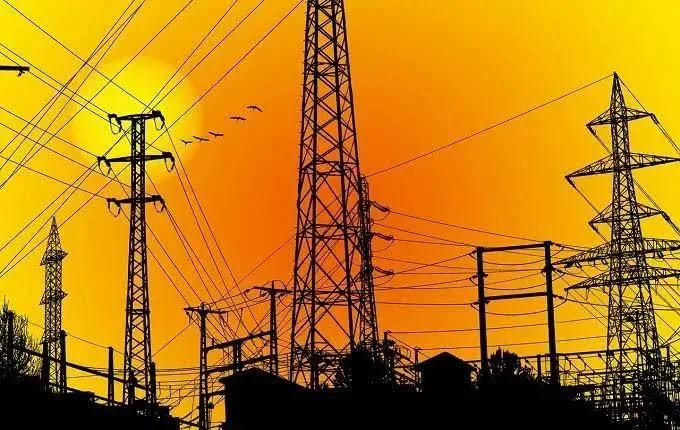
TCN confirms Kaduna tower collapse caused by severe weather and vandalism
The Transmission Company of Nigeria (TCN) confirmed the fall of a key transmission tower in Kaduna State on September 18, attributing the damage to intense weather conditions coupled with deliberate sabotage. Tower No. 7 along the Kaduna Town Line I and II in Rigasa Community came down following a heavy downpour accompanied by gusty winds. An investigation revealed that crucial structural parts had been removed by vandals, severely compromising the tower’s stability. Ndidi Mbah, TCN’s General Manager of Public Affairs, explained in a Saturday statement that the incident disrupted power supply to several distribution points, especially within Kaduna South. In response, the company has launched emergency operations aimed at reducing the blackout’s impact. Collaborating with Kaduna Electricity Distribution Company (KAEDCO), TCN recommended linking the 33kV Mogadishu feeder with the 33kV Abakwa feeder to maintain electricity flow to affected neighborhoods. Nevertheless, certain districts such as Kinkinau, Yan Tukwane, and Kaduna North continue to enjoy uninterrupted service. Technicians have mobilized to the site and are in the process of dismantling the remains of the damaged tower. Plans are progressing to construct a replacement structure as swiftly and safely as possible, reassuring residents of a prompt restoration. TCN reiterated its dedication to protecting its assets and urged local communities to report any suspicious actions near power installations.

Crypto project uses Kenya’s former PM in deepfake controversy
A post appeared briefly on former Kenyan prime minister Raila Odinga’s verified X account on September 18, promoting a new cryptocurrency named Kenya Token ($KENYA). The message, which was soon deleted, claimed the token would launch shortly and place Kenya at the forefront of Africa’s crypto revolution. Alongside the text was a video seemingly showing Odinga endorsing this digital currency. The post read, We are pleased to announce that [Kenya] token will soon launch. Kenya is stepping up to lead Africa into the crypto revolution, embracing digital finance and shaping a more crypto-friendly future However, Odinga has yet to make any official statement, and reports suggest the promotion was unauthorized, with the video being a fabricated deepfake. A similar event occurred earlier this year in Tanzania, where billionaire Mohammed Dewji’s X account was compromised to promote a counterfeit token called $Tanzania. A fabricated video showed Dewji apparently backing the scam, and despite swift account recovery and warnings, nearly $1.48 million had already been defrauded. It was later revealed that the team behind Kenya Token unveiled a basic version of their website last Thursday, branding it as the “official digital token” of Kenya. The platform promised staking options, allowing investors to hold the token and earn interest. Currently, as at the time this report was published, the associated Telegram group has around 1,620 participants, but as the token is yet to launch officially, no contract address exists, making actual adoption difficult to measure. Many experts have dismissed the venture as fraudulent, due to lack of any prior activity before September 17, suggesting it was hastily assembled without meaningful groundwork. It remains uncertain if those managing the token still control Odinga’s X profile to further manipulate public perception. According to 2024 data from Chainalysis, high-yield promises are a frequent lure in crypto scams, with nearly half arising from projects offering unrealistic rewards with no practical utility. Other common deceitful methods include pig-butchering and rug pulls. Kenya has also been embroiled in controversy over another similarly named token. On July 11, anonymous developers introduced the Kenya Digital Token (KDT or $KDT), portraying it as a means for civic engagement and allowing participants to “buy into Kenyan heritage”. From the outset, skepticism arose due to the absence of a white paper or pre-sale, critical tools investors use to assess projects. An anonymous insider stated that when the token launched in July, there were clear warning signs like no white paper and bot activity. He added that the crypto community alerted these issues, pushing the developers to stay active in forums and gradually make improvements to gain credibility. The KDT team later published a white paper, framing the token as a non-investment venture that lets users earn tokens by engaging in community activities like scanning QR posters, participating in educational drives, or sharing updates online, with earnings vested over 36 months. Nonetheless, these tokens are also available for purchase on decentralized exchanges, effectively making them speculative assets, which critics argue may be a tactic to sidestep regulatory oversight while permitting market trading. $KDT operates reveals modest usage, with around 2,800 holders, under $200,000 in liquidity, and a total token supply of one million. A red flag is the concentration of 60% of tokens in a single wallet, a classic indicator of potential rug-pull risk if the holder dumps a large stake after price increases, possibly causing investors significant losses. These events emphasize the risks inherent in the crypto market worldwide, particularly where regulation remains limited. The Virtual Asset Service Providers (VASP) Bill in Kenya, designed to regulate the sector extensively is due for its second parliamentary reading on September 23 as lawmakers return from recess.

E1 Lagos GP brings ‘Formula 1 on water’ race to Africa for the first time
Thousands of Lagosians gathered at the LASWA Boat Jetty in Ikoyi for a unique preview of the E1 Lagos GP. Rather than a typical press event, guests embarked on a lagoon cruise to experience the planned racecourse firsthand, setting the stage for a first ever electric raceboat competition on October 4-5, 2025. The waterways that sustain Lagos’ bustling trade and daily life will soon be home to the world’s fastest electric raceboats. This introduction invited attendees to envision the spectacle about to unfold, showcasing Lagos as a vibrant host city on the global watersport map. What Is the E1 Series? Think of it as Formula 1, but on the water. The E1 World Championship is the first-ever electric raceboat series worldwide. Central to the competition are the futuristic RaceBirds: sleek vessels powered entirely by renewable energy that slice across the water at incredible speeds. Celebrity-backed teams with names like Rafael Nadal, Tom Brady, Didier Drogba, and LeBron James add star power to what is a seven-race global tour. Lagos proudly marks the sixth stop on this exciting calendar. Each race winner earns 25 points toward the season-long championship, which culminates in Miami’s final showdown where the overall victor will be crowned. This is the future of aquatic sports, and Lagos now takes its rightful place on the circuit, with fast, eco-friendly, and futuristic innovations. Sam Egube, chairman of the local organising committee, described the city as one with destiny. He added that he wants Lagos to stand alongside Miami, Monaco, and other prestigious marine racing cities. More than just lofty goals, Lagos already commands regional dominance as Africa’s tech capital and entertainment powerhouse, boasting over eight unicorn firms. From fintech to Afrobeats, Lagos drives continental and global conversations, making this world-class sporting event a natural extension of its dynamic ethos. With a third of its geography covered by water, from lagoons to the Atlantic ocean, Lagos possesses a unique stage. This aquatic backdrop that has fostered commerce and growth will now host a fusion of sport, technology, and sustainability. For the first time on African soil, the E1 Series will race in Lagos, where electric boats, elegant and whisper-quiet, will be steered by men and women competing equally. The event promises a mix of races, fashion, concerts, culinary delights, and cultural festivities that epitomize local Lagosian flair. Partnerships Power the Vision Delivering an event of this dimension requires strong alliances. Lagos has mobilized heavyweight partners including FirstBank, Afriximbank, FESBAN, as well as investors like Toleran behind the Lekki Deep Sea Port, plus major firms such as Oando, Spiro, and Guinness. Lagos recognizes the fragile balance of its waterways. The 100% electric RaceBirds run on renewable energy systems producing zero emissions. This event offers a platform for Lagos to position itself as a leader in innovative, climate-conscious sporting events.
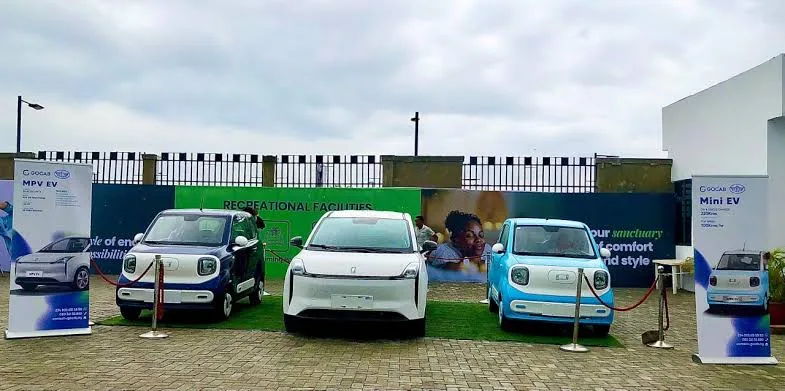
FAW Nigeria debuts luxury electric cars at Lekki Avana Phase 2 launch
FAW Nigeria made a grand entrance into the Nigerian electric vehicle market on September 11, 2025, unveiling an elegant lineup of luxury EVs during the much-anticipated launch of Lekki Avana Phase 2. The event heralded a new chapter in the nation’s pursuit of greener transport solutions. The occasion drew an esteemed gathering, including government officials, traditional leaders, real estate industry players, and prominent personalities such as football icon Kanu Nwankwo. They were all captivated by the collections of electric cars presented. Representing the Lagos State Governor, the Director of Lands and Housing Development, ESV Collins Olushina Alabi, praised the unveiling and launch, calling it a significant milestone for residents of Lagos and Nigerians nationwide. Among the vehicles that captivated attendees was the FAW Mini EV. This compact yet stylish automobile offers a maximum output of 20kW, seats four passengers, and features an innovative gaming controller-inspired dashboard. Safety takes center stage with standards like automatic emergency braking, rear parking sensors, a robust cage body, tire pressure monitoring, and ABS brakes. The Mini EV can travel up to 220 kilometers on a single charge and reach speeds of 100 kilometers per hour. Commanding equal admiration was the MVP EV, a stronger model designed for longer journeys. Powered by a 53kW motor with peak power of 120kW and 85Nm torque, it benefits from a lithium iron phosphate battery that fully charges in one hour with fast charging or in eight hours on a slower setting. The vehicle blends performance with comfort, equipped with dual airbags, ABS, Brake Assist, Traction Control System, Electronic Stability Program, rearview camera with parking assist, sliding door on one side, leather seats, a 10-inch LCD display, LED headlamps, daytime running lights, and electric air conditioning. FAW Nigeria stressed its dedication to leading sustainable automotive technology that aligns with international norms and Nigeria’s goal of lowering carbon emissions while promoting renewable energy sources. Debanjan Paul, Sales Representative for FAW Nigeria, emphasized that the reveal of these premium EV models is a pivotal moment in accelerating Nigeria’s shift towards environmentally friendly transportation and with the combination of sleek design, top safety features, and advanced tech, he said FAW cars aim to transform the driving experience and support a cleaner future. Far beyond merely adding new cars on Nigerian highways, the FAW EV presentation symbolizes innovation, eco-consciousness, and a futuristic vision for the country’s transport landscape.

Cyberattack disrupts Collins Aerospace systems, delays flights at key European airports
A cyberattack on Collins Aerospace’s technology caused interruptions in passenger services at several major European airports on Saturday, leading to delays and cancellations. The cyber intrusion targeted Collins Aerospace, a subsidiary of RTX that provides critical software used by airlines and airports worldwide. Heathrow Airport, London’s busiest, confirmed that technical difficulties with Collins Aerospace’s platform halted normal check-in and boarding processes. Similarly, Brussels and Berlin airports experienced operational setbacks, forcing their staff to switch from automated to manual systems. Brussels Airport reported the incident began Friday night, rendering self-service check-in and baggage handling unavailable, which severely impacted flight schedules. Berlin Airport warned travelers to expect extended waiting times as efforts to restore systems continued. RTX, the parent firm, acknowledged the digital disruption in a statement, describing it as a cyber-related issue localized at select airports, primarily affecting electronic customer check-in and bag drop procedures. The company assured quick remedial action while noting manual alternatives were mitigating the fallout. Notably, Frankfurt and Zurich airports were unaffected by the breach. Among airlines, EasyJet confirmed normal operations without anticipating weekend disturbances, while Ryanair and British Airways were yet to comment. Poland’s Deputy Prime Minister for Digital Affairs reassured that Polish airports remained secure from this incident. Passengers using affected hubs received advice to verify their flight status directly with airlines ahead of travel, as delays and cancellations were expected until full system recovery.