The Islamic Development Bank (IDB) is stepping up efforts to help Nigeria fix electricity problems, committing an active $2 billion portfolio to boost the nation’s power infrastructure. Nigeria’s Minister of Power, Adebayo Adelabu, met with top IDB leaders this week to discuss new ways of tackling Nigeria’s inconsistent energy supply. The meeting, held in Abuja, signals a shift from small, one-off projects to a bigger, program-based approach designed to match Nigeria’s vision for electricity reform. Mr. Alagi Gaye, a senior official from IDB, explained, “Unlike before, the bank now prefers programme-based interventions aligned with Nigeria’s policies.” The bank’s current projects in Nigeria include improvements in energy, transport, agriculture, and education. But with the new engagement framework, the focus is now more on the power sector, an area critical to daily life and economic growth. Minister Adelabu thanked the IDB for its support and highlighted the government’s plans: “Our goal is stable, affordable electricity for all Nigerians. We’re creating frameworks to attract private capital and modernize our grid.” Nigeria’s new Electricity Act (2023) is at the center of these efforts, aiming to open up the sector for more private investment and stronger regulation. Major power projects are already underway, including, the $2.3 billion Presidential Power Initiative (PPI) with Siemens Energy. This project has seen the delivery of 10 power transformers and 10 mobile substations, which are already improving grid reliability. The proposed ‘Super Grid’ project to make the system more robust, supported by the World Bank and African Development Bank (AfDB). But problems remain, especially in distributing power. Despite partial privatization, the government still owns 40% of Nigeria’s electricity distribution companies (DisCos) and wants to work with new partners to boost their performance. A big challenge is metering. Out of over 13 million registered electricity users, only 6 million have meters. To address this, the government has started the Presidential Metering Initiative, aiming to bring in 2 million new meters each year for the next five years. Adelabu also announced the “Mission 300” programme, which focuses on getting power to rural areas through solar mini-grids and home systems. “Our renewables drive is born from necessity, not emissions targets,” he said, emphasizing Nigeria’s need to expand access rather than just reduce carbon emissions. The IDB will review new project studies to find ways to speed up Nigeria’s journey to reliable, affordable electricity for everyone.
Neuralink plans 20,000 brain implants a year, targets $1 billion in revenue by 2031
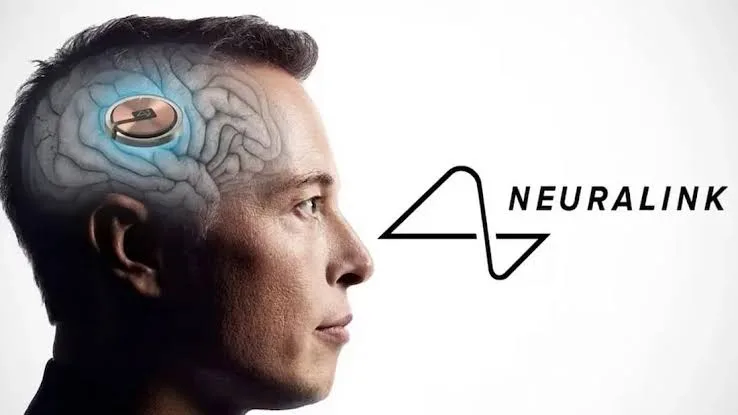
Elon Musk’s Neuralink wants to fit brain chips in 20,000 people every year by 2031, hoping to make over $1 billion in annual revenue. Neuralink’s internal documents, seen by Bloomberg, show the company’s huge ambitions for changing how humans and technology connect. So far, fewer than 10 people have publically received a Neuralink implant. But the company expects things to ramp up quickly in the next few years. Neuralink expects U.S. approval for its first commercial brain chip, called Telepathy, by 2029. This device is designed to let people control computers and other devices just by thinking. By 2030, the company wants to run five large clinics and launch at least three devices: Telepathy: Links your brain to devices. Blindsight: Aims to restore sight for blind people, set to launch in 2030. Deep: Targets neurological conditions like tremors and Parkinson’s disease. Neuralink hopes to do 10,000 surgeries a year by 2030, bringing in over $500 million. Each surgery is estimated at $50,000. The company has already raised $1.3 billion in funding and is valued around $9 billion, according to PitchBook. Neuralink is still in the research stage. The company must get approval from U.S. health regulators before its devices become widely available. The U.S. Food and Drug Administration (FDA) has not yet fully approved any brain-computer interface for permanent use in humans. Musk isn’t alone in this race. Several other neurotech companies are building their own brain-machine interfaces and face similar safety and testing requirements. Early trials are promising. Some paralyzed patients have used Neuralink implants to surf the internet, play games and even edit videos using their thoughts. The company has also shown that its chips can help blind monkeys detect objects. Founded in 2017, Neuralink wants its technology to help people with serious neurological problems move, see, or communicate better. Its first brain implant in a human happened in January last year. In April, Neuralink started searching globally for people to join new studies on mind-controlled devices. While Elon Musk is known for setting big targets and sometimes overshooting timelines, Neuralink’s plans are already pushing the boundaries of science and medicine. The next five years will show whether brain chips can really change lives as promised. But safety, regulation and affordability remain big questions.

Russian passenger plane crashes in remote Siberia, rescue mission underway
A Russian passenger plane with 49 people on board crashed on Thursday morning near Tynda, a remote town in Russia’s Far East, as emergency teams scour rugged terrain hoping to find survivors. The Angara Airlines An-24, a reliable twin turboprop model often used for regional flights, lost radar contact shortly before it was meant to land at Tynda Airport, close to the Chinese border. According to Russia’s Ministry of Emergency Situations, the aircraft went down in a forested area about 15km from the airport. Search and rescue crews responded quickly. Local authorities told RIA Novosti that parts of the burning wreckage were found on a mountainside. So far, no survivors have been spotted from the air, but search teams are moving across rough ground in hopes of finding people alive. “While no survivors have been seen from the air, ground searches are ongoing and we remain hopeful,” an Amur regional emergency command spokesperson said. There are conflicting reports about how many people were on the plane. The regional governor, Vasily Orlov, put the figure at 43 passengers, including five children, plus six crew, totaling 49. However, the local emergency ministry gave a lower estimate of around 40 on board. Officials say the crash site is difficult for rescuers to reach, as thick forests, hills, and lingering poor visibility in this Siberian region frequently complicate emergency response. Video from Russian media has shown heavy smoke rising over dense trees at the crash scene. The Antonov An-24 has served Russia and other former Soviet states since the 1960s, popular for its sturdy build on remote routes. However, experts have long pointed out that ageing planes and Siberia’s harsh weather can threaten air travel safety. At the time of the crash, conditions were said to be moderate, though it’s still too early to rule out any technical or environmental cause. Authorities said no distress signal was sent before the aircraft disappeared from radar. Emergency teams continue working at the site as families anxiously await news. Aviation authorities are expected to begin a full investigation soon, as the country works to clarify what led to the crash and improve safety for future flights.
Open banking set to surpass card payments in Africa, says Mono CEO
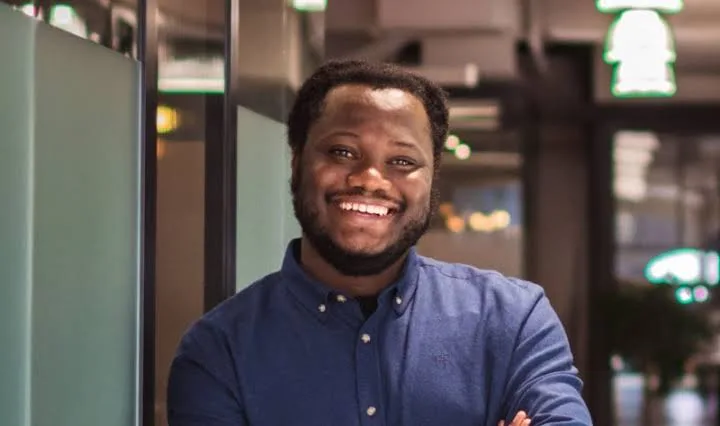
Mono’s Abdulhamid Hassan believes open banking will soon outrun traditional card payments in Africa, as Nigeria prepares for a landmark shift in its digital finance landscape. Mono, founded by Hassan in 2020 after his departure from Paystack, has grown quickly. The fintech has processed more than 150 billion transactions for over 7 million users, now serving customers in Kenya and Ghana too. But Hassan says it’s not just about growth, it’s about building something that lasts. Open banking is about letting people and businesses securely share their financial data, if they choose to, with trusted apps and platforms. This makes loans, payments, and other services faster and easier. Before the Central Bank of Nigeria (CBN) officially endorsed open banking, Mono was already connecting banks and businesses through its platform. “Data isn’t just about payments. It’s what will drive the next generation of fintech in Africa,” Hassan said during an interview. CBN plans to officially launch open banking guidelines in August. That’s a huge step, not just for Mono but for the whole ecosystem. According to Hassan, banks in Nigeria have been more open to data sharing than many fintechs. Mono’s platform only shares data with customer permission, a key point CBN’s new rules will reinforce. Hassan said Nigerian banks are leading the way. “Open banking will now make it mandatory for every financial institution to open up their system. That’s exciting,” Hassan explained. The new rules will also create a registry of licensed data providers, making sure only trusted organizations can handle sensitive information. For banks and fintechs worried about security, Hassan said the new regulations address these issues. “There is now a guideline on how to do this properly,” he said. Mono isn’t just sticking to APIs or behind-the-scenes banking tools. With its new Owo API, the company wants to help people send money directly over messaging apps like WhatsApp, no need to leave chats or open banking apps. “We’re using our APIs to build new experiences. When people see how easy it is, they’ll know Mono is powering it. The open banking market will be bigger than card payments in Africa because it covers everything, data, payments, identity” – Hassan said. Notably, Mono is almost profitable, with operations now funded by its revenue. The 40-strong team operates both remotely and from an office once a week. Hassan sees Nigeria as the best environment for fintech in Africa, owing to population, regulatory openness, and the maturity of local banks.

Nigerian fintechs thrive despite global funding challenges, says FintechNGR president
At a recent press conference in Lagos, Dr. Stanley Jacob, President of the Fintech Association of Nigeria (FintechNGR), revealed that Nigerian fintech companies continue to perform well despite a global slump in startup funding. Dr. Jacob explained that while worldwide venture capital funding has slowed down, Nigerian fintech investors remain active but have shifted focus. Instead of funding many early-stage startups, they are now backing growth-stage fintech companies with more mature business models. This shift indicates greater confidence in already established fintechs showing promising progress. He stated the rise of Nigerian-backed fintech firms such as Zest by Stanbic IBTC, Quad by GTBank, and Hydrogen by Access Bank. These companies are growing strongly without the need for foreign venture capital support. Dr. Jacob also noted that many local angel investors and high-net-worth individuals are quietly funding startups, even though they usually operate outside of traditional venture capital. Supporting this positive outlook is an ongoing regulatory reform by Nigeria’s Securities and Exchange Commission (SEC), which aims to make it easier for fintechs to list on the stock exchange. This is expected to encourage greater investment transparency and participation from domestic investors in the near future. The Fintech Association’s upcoming Nigeria Fintech Week 2025 promises to be the largest ever. Scheduled for October 7-9, the event will bring together CEOs and leaders across many sectors, including oil and gas, aviation, education, entertainment, agriculture, and FMCG, to discuss how fintech can improve efficiency in every part of the economy. Dr. Jameelah Sharrief-Ayedun, Vice President of FintechNGR and Chair of the NFW Committee, emphasized this year’s plan to hold events simultaneously in Lagos, Abuja, Delta, and Enugu. This expanded footprint aims to make fintech accessible beyond the usual hubs, inviting participation from all regions and industries. The Nigeria Fintech Week 2025 will be a key platform to watch for fresh ideas and partnerships shaping the nation’s digital tomorrow.
Microsoft warns of active Chinese hacker attacks exploiting SharePoint flaw
Microsoft has warned that hackers linked to the Chinese government are exploiting a serious security flaw in its SharePoint software to launch a global cyberattack. The vulnerability, known as CVE-2025-53770, allows attackers to gain control over corporate networks by stealing security keys and installing malware on self-hosted SharePoint servers. Microsoft revealed that since early July, at least three Chinese-backed hacking groups named Linen Typhoon, Violet Typhoon, and Storm-2603 have been targeting unpatched SharePoint systems. These groups aim to steal intellectual property, conduct espionage, and access sensitive data across organizations worldwide. The company urged all SharePoint users to immediately apply the latest security updates it has released, which fix this critical flaw and prevent further attacks. Microsoft also recommended that affected organizations assume their systems may have been compromised and carry out thorough forensic investigations. This attack raises concerns for businesses and governments relying on SharePoint for document management, as hackers can remotely execute malicious code and access internal files if systems remain unprotected. The U.S. Cybersecurity and Infrastructure Security Agency (CISA) confirmed the risk, stating that there are potentials for large-scale data breaches. This is not the first instance of China-linked cyber groups exploiting Microsoft products. Similar attacks on Microsoft Exchange servers in 2021 compromised thousands of organizations globally. As the situation develops, users should monitor official updates from Microsoft and cybersecurity authorities. Prompt action can prevent data theft and protect critical networks.