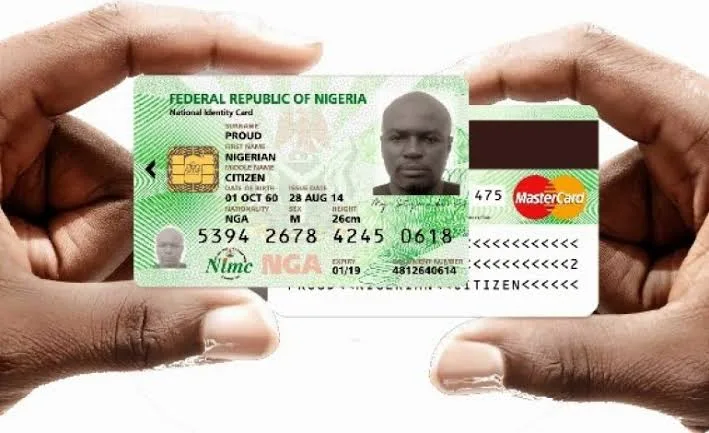
The Federal Government has announced a major step to overhaul Nigeria’s credit landscape by linking every citizen’s credit score to their National Identification Number (NIN). The move, led by the Nigerian Consumer Credit Corporation (CREDICORP), is designed to boost financial inclusion, improve loan recovery, and tackle corruption by making credit behavior traceable nationwide. Speaking at a press briefing in Abuja, CREDICORP Managing Director Uzoma Nwagba explained that all financial institutions, commercial banks, fintechs, and microfinance lenders, will now be required to report loan performance. This means every Nigerian will have an accurate, centralised, and traceable credit score, regardless of where they borrow. “There will be consequences for loan defaulters, but these will be subtle and structured rather than predatory. If you owe money somewhere, you may not be able to renew your passport, obtain a driver’s license, or even rent a house. There is no hiding place,” Nwagba said. The centralised credit bureau will create a comprehensive database of Nigeria’s credit profiles, making it easier for lenders to assess risk and for responsible borrowers to access loans. The government believes this will help unlock lending for up to 80 million Nigerians and support an estimated annual credit need of N180 trillion. The initiative is also expected to reduce the pressure on civil servants and other citizens to engage in corruption, as improved access to credit can help meet personal and family needs without resorting to unethical practices. CREDICORP is also preparing to launch a major youth-focused credit programme, targeting 400,000 young Nigerians, starting with National Youth Service Corps (NYSC) members. The government is urging all financial institutions to support the new infrastructure, promising that with better systems in place, lenders will be more confident and Nigerians will have greater access to credit.
Five Nigerians sentenced to over 159 years in US prison for $17 million fraud
A United States federal court has sentenced five Nigerian nationals to a combined 159 years in prison for orchestrating a $17 million fraud scheme that targeted more than 100 victims across the globe. The convicted individuals, Damilola Kumapayi, Sandra Iribhogbe, Edgal Iribhogbe, Chidindu Okeke, and Chiagoziem Okeke, were found guilty of running a transnational criminal enterprise that preyed on elderly and vulnerable people. According to US prosecutors, the group used romance scams, business email compromises, and other fraudulent tactics to steal money, often wiping out victims’ life savings. The scheme, which began in 2017, involved laundering stolen funds through a network of bank accounts and sending money to associates in Africa and Asia. Following their arrest, the defendants faced multiple charges, including conspiracy, wire fraud, and money laundering. US District Judge Amos Mazzant handed down lengthy sentences, with some defendants receiving up to 40 years in federal prison. Prosecutors emphasized that the convictions reflect the US government’s commitment to protecting its citizens from international fraudsters. “Transnational organised criminals targeting the hard-earned savings of elderly and vulnerable populations are simply despicable,” said US Attorney Ray Combs. “The defendants’ lengthy sentences in this case reflect the seriousness of their crimes and the dedication of law enforcement officers and prosecutors to bring them to justice.” This case stands as one of the largest involving Nigerians convicted for online fraud in the United States.

Deadly fireworks factory explosion in central China kills 9, injures 26 amid ongoing rescue efforts
An explosion at a fireworks factory in Linli County, Hunan Province, central China, has killed nine people and injured 26 others, authorities confirmed as of Tuesday morning. The blast occurred around 8:23 a.m. on Monday at the Shanzhou Fireworks Factory, a facility specializing in explosives and fireworks production. Rescue operations have been ongoing for more than 20 hours amid challenging conditions. The site is located in a mountainous area with no large water source, complicating firefighting efforts. Rescue teams have used remote-controlled water cannons to extinguish the fire while continuing to search for survivors and treat the injured. The Ministry of Emergency Management has dispatched a team to oversee the rescue and investigation. Officials emphasized the urgency of determining the cause of the explosion and holding those responsible accountable. Industrial accidents like this are not uncommon in China, where safety regulations are often lax. Recent similar incidents include a chemical plant explosion in Shandong Province last month and the deadly 2015 Tianjin warehouse blasts. The local government and emergency services remain focused on rescue, medical treatment, evacuation of nearby residents, and a thorough investigation into the accident.
Nigerian politicians using ”Yahoo boys” for money laundering – EFCC
The Economic and Financial Crimes Commission (EFCC) has raised serious concerns about a growing collaboration between Nigerian politicians and internet fraudsters, commonly known as “Yahoo boys,” to launder stolen government funds. EFCC Chairman Ola Olukoyede revealed in a recent statement that Politically-Exposed Persons (PEPs) are increasingly using these young fraudsters as conduits to move billions of naira through cryptocurrency wallets, sending illicit funds abroad. This alarming trend, he said, is severely damaging Nigeria’s international reputation and economy. Olukoyede described the situation as a “crisis” that threatens the country’s image globally. He noted that the activities of Yahoo boys have led to Nigerians being unfairly viewed as criminals by immigration officials worldwide. Highlighting the scale of the problem, the EFCC boss cited the case of a 22-year-old suspect who, despite never having held a legitimate job, had over N5 billion in his account within 18 months. He also warned that fraud is now deeply entrenched even among secondary school students, some of whom are abandoning education for criminal lifestyles. The EFCC further disclosed that these fraudsters are not only involved in internet scams but also linked to more serious crimes such as banditry and kidnapping. Some suspects reportedly use fetish objects and recruit young women to assist in their schemes. Chairman Olukoyede called on Nigerians to support the EFCC’s efforts and help steer the youth away from fraudulent activities towards honest living. “This is not just about ‘Yahoo’ anymore; it’s about mega cybercrimes and high-level corruption,” he said. The EFCC’s warning comes amid rising concerns over the impact of cybercrime on Nigeria’s social fabric and economic development, emphasizing the urgent need for collective action to curb this menace.
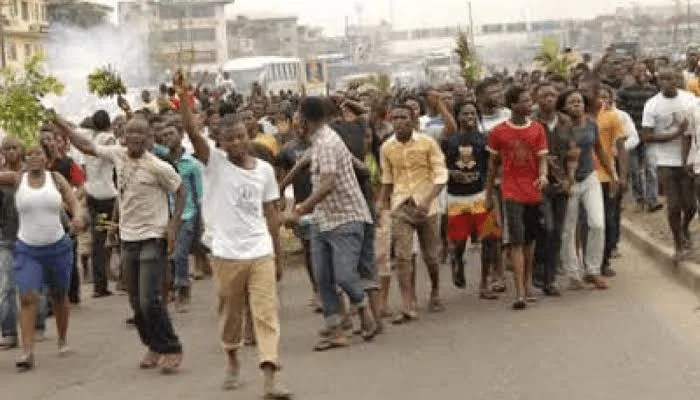
Hundreds protest over 16 years of darkness in Delta’s Ndokwa communities
Hundreds of youths and residents from the Ndokwa area blocked the Kwale axis of the Ughelli-Asaba expressway on Monday, June 16, 2025, protesting over 16 years of power outages despite hosting the Okpai Independent Power Plant (IPP). The protesters carried placards with messages like “Light Up Ndokwa Nation” and “Electricity in Ndokwa Land: Enough is Enough; Nepa No, IPP Yes,” demanding that electricity generated by the IPP be supplied to their communities. The demonstration caused significant traffic disruption as travelers were caught in gridlock. Mr. Enubuzor, one of the protesters, expressed frustration that while the IPP supplies power to over nine states, the host communities remain in darkness. “It is painful that we have something that can generate electricity for us, but we are suffering. Our people are tired of buying fuel to power our generators,” he said. The protest escalated when some participants burned tires and stoned vehicles, prompting police to disperse the crowd with tear gas. The Police Public Relations Officer, SP Bright Edafe, justified the use of tear gas, saying the protest had turned violent. Meanwhile, the Ndokwa Neku Union, the apex cultural organization of the Ndokwa nation, stated it was not against the protest but questioned its timing. The union revealed it had set up a committee to engage with government authorities on the power step-down issue. Senator Ned Nwoko has called on the Delta State Government to take over the electricity sector locally to ensure the host communities benefit from the IPP’s power. He noted that despite the plant’s increased capacity from 480MW in 2005 to 980MW in 2022, Ndokwa communities remain without electricity. The protest highlights long-standing grievances over energy injustice and highlights the urgent need for sustainable solutions to bring power to the people of Ndokwa.
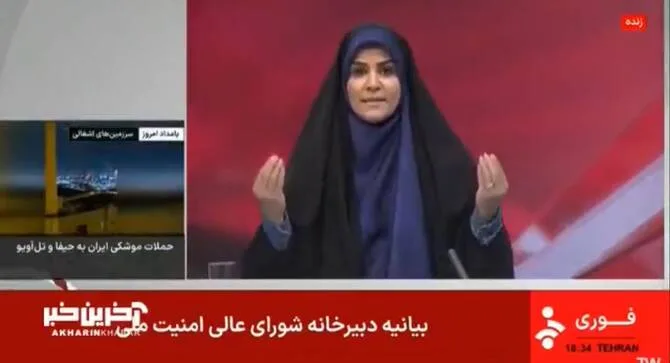
Israel strikes an Iranian state TV building in Tehran during live broadcast
An Israeli airstrike hit the Islamic Republic of Iran Broadcasting (IRIB) headquarters in southwest Tehran on Monday, disrupting a live television broadcast and escalating tensions in the ongoing conflict between Israel and Iran. The explosion occurred while a presenter was on air criticizing Israel, forcing an immediate cut to the live transmission. Iranian media shared footage showing smoke billowing inside the studio and the anchor fleeing the scene. The Israeli military confirmed the strike targeted a “communication center” used by Iran’s military under the guise of civilian operations. Iran condemned the attack as a “war crime” and called on the United Nations Security Council to intervene. Foreign Ministry spokesman Esmaeil Baqaei described the strike as a “wicked act” and urged the international body to stop what he called “genocidal aggression” against the Iranian people. The Islamic Revolutionary Guard Corps also denounced the attack as “inhuman, criminal and a terrorist act.” This strike is part of a broader Israeli campaign targeting Iran’s nuclear and military infrastructure. Since Friday, Israeli operations have killed at least 224 people in Iran, including military commanders and nuclear scientists. In retaliation, Iran has launched drone and missile attacks that have killed at least 24 people in Israel. The attack on IRIB, a state broadcaster closely linked to the Iranian government, marks a significant escalation in the conflict, affecting up to 330,000 residents in Tehran who were warned to evacuate the area. Israeli Defense Minister Israel Katz described the strike as hitting the “propaganda broadcast authority” and vowed further actions against Iranian targets. The situation remains volatile as both sides continue to exchange attacks, raising fears of a wider regional conflict.