Nigeria’s booming telecom sector could leave some states behind if unfriendly policies aren’t changed, industry leaders say. At an industry event over the weekend, Engr. Gbenga Adebayo, Chairman of the Association of Licensed Telecommunications Operators of Nigeria (ALTON), raised the alarm about hostile state regulations that may block needed investments and slow broadband rollout. Adebayo said many states still demand excessive levies, frustrate right-of-way approvals, or enforce regulations that scare away telecom companies. The digital train is moving very fast. States that create hostile conditions for telecom operations risk being left behind. Where deployment is unwelcome, investments will move to more supportive neighbouring states, and citizens of unfriendly states will inevitably suffer limited connectivity – Adebayo Currently, operators are aggressively expanding across Nigeria, building new sites, upgrading infrastructure, and rolling out more high-speed fibre links. These moves are driving some of the largest investments seen since before the COVID-19 pandemic. But Adebayo said that states refusing to support telecom deployment will miss out, meaning their people could face slower internet speeds, fewer digital jobs, and less access to technology. The situation is especially urgent as the industry recovers from years of sluggish investments. Recent government reforms, such as efforts to reduce the 56 separate taxes and levies telecom companies face, are giving new hope. Change is expected to continue in early 2026 with the federal tax reform plan. Adebayo also applauded the new board at the Nigerian Communications Commission (NCC), describing its appointment as a boost for stability and investor confidence. He praised the rebranding of 9Mobile to T2 and also workforce training on service quality, saying these moves are vital for the sector’s “march forward”. However, he called on all stakeholders, especially state governments, and ordinary Nigerians to help protect telecom infrastructure. Attacks, vandalism, and the sale of stolen equipment damage progress. The transformation we are witnessing in our sector has not been experienced in recent years… but for this to be sustainable, all stakeholders, especially state governments, must play their part. Telecoms is not just about calls and data, it is a driver of national economic stability and growth – Adebayo His remarks restates recent NCC reports that Nigeria’s telecom industry has attracted over $1 billion in new infrastructure investments since mobile operators began adjusting prices earlier this year, after nearly a decade of price stagnation. But if state-level bottlenecks aren’t addressed, some Nigerians may miss out on the digital benefits the rest of the country now expects.
NCC lists 9 simple ways Nigerians can save data amid rising complaints
The Nigerian Communications Commission (NCC) has shared nine easy tips to help Nigerians control their mobile data and avoid quick depletion. Subscribers across the country have been complaining that their data finishes too fast. Some even accuse network providers of “siphoning” their data. Both the NCC and telecom operators say this isn’t true, but the Commission admits that new smartphone features can confuse users and lead to higher data use without them noticing. In a recent statement, the NCC revealed practical steps anyone can take to save data. Top on the list is monitoring data usage closely, using your phone’s built-in tracker or apps. The Commission also advises switching to Wi-Fi whenever possible, and turning off automatic updates so apps only refresh when you want them to. Here is the full list of NCC’s smart data management Tips: Mrs. Freda Bruce-Bennett, the Director of the NCC Consumer Affairs Bureau, said in an interview We want every telecom subscriber to know how to monitor, control and optimize their data, whether it’s a daily, weekly or monthly plan.There are many factors that can make data finish faster. For example, most browsers play videos by default, even when you only want to read an article. Streaming apps like Netflix, YouTube and Spotify also use up a lot of data She stated that the Commission is speaking to network providers and working on new policies to make data usage clearer and fairer for everyone. Data depletion is one of the most common complaints the NCC gets from Nigerians. The Commission is not only educating consumers, it has started studies and talks with telecom companies to improve the overall experience and make it easier for users to track their data. For millions of Nigerians relying on mobile data for daily life, these tips could help stretch their internet plans and reduce frustration.
MTN and Airtel invest $400 million to naira-priced cloud services for Nigerian startups
MTN and Airtel are teaming up to change how Nigerian startups access cloud and AI services by investing nearly $400 million (₦613.81 billion) to offer affordable, local options priced in naira. The two telecom giants want to challenge global leaders like AWS, Google Cloud, and Microsoft Azure, which currently dominate the market. Their strategy focuses on pricing cloud services in naira, not just billing in naira, promising better affordability, faster local compute power, and data sovereignty. MTN has already invested $120 million and plans to put in another $135 million. The company is building a Tier 4 data centre designed to support startups and businesses looking to digitalise operations. Our cloud is crafted for Nigerian startups, enterprises, and public institutions – Ifeanyi Otudor, senior consultant at MTN Enterprise Solutions. MTN also runs an accelerator programme with grants up to ₦100 million to support startups. Airtel’s focus, meanwhile, is on AI infrastructure. The telco broke ground in 2024 on Nigeria’s first hyperscale data centre in Eko Atlantic. It’s being built to handle massive AI workloads using high-performance GPUs, a critical resource for startups working with artificial intelligence. Airtel’s director of business, Ogo Ofomata, emphasized We are building at a hyperscale level, designed for the new server loads that modern infrastructure demands Since the naira’s sharp devaluation in 2023, many startups have struggled with soaring costs linked to dollar-priced cloud services. By offering cloud priced competitively in naira and keeping data local, MTN and Airtel hope to keep millions of dollars of tech spending within Nigeria. Startups are cautiously optimistic. Aaron Sotunde-Adesina, CEO of AI startup Quonos, pointed out the challenge ahead: If it is cheap and works, people will adopt it. If it doesn’t work or isn’t reliable, it will be a big struggle. Many local providers have struggled with reliability compared to global giants. Despite these hurdles, the Nigerian government supports efforts to build sovereign cloud infrastructure. Kashifu Inuwa, director general of NITDA, noted at MTN Cloud’s launch that local cloud services are given the opportunity to show the world we are ready to build sovereign cloud infrastructure. The move by MTN and Airtel is vital because cloud and AI services could add billions to Nigeria’s economy. According to Oxford Insights, AI alone could boost Nigeria’s GDP by $15 billion by 2030, but this depends on affordable, modern data centres.

Nigeria’s internet subscriptions dip in June, but data use keeps rising
Nigerians are spending more time online, even though fewer people are renewing their internet subscriptions, according to the latest figures from the Nigerian Communications Commission (NCC). The NCC reports that active subscriptions for internet across mobile, fixed, and VOIP networks dropped slightly to 141.1 million this June, down 0.3% compared to May’s 141.5 million. The four biggest mobile network operators, MTN, Airtel, Globacom, and T2 (9mobile), still hold the lion’s share of the market with a combined 140.6 million subscriptions. Meanwhile, standalone internet service providers (ISPs) and other smaller players remain on the sidelines with just 528,633 users. Yet, even as subscriptions dipped, Nigerians’ appetite for data grew. Subscribers chewed through 1.044 million terabytes of data in June, just above May’s 1.043 million terabytes, marking one of the highest usage months since the NCC began recording this data in January 2023. At a recent media roundtable, telecom CEO Dinesh Balsingh said cities like Lagos are driving a data explosion, as more people and businesses go online with more devices. Cities like Lagos are growing at lightning speed, more people, more businesses, more devices – Balsingh Mobile subscriptions also took a hit in June, slipping to 171.5 million from May’s 172.4 million. MTN, the sector heavyweight, saw its subscriber numbers fall by 1 million to 89.2 million, but still controls over half of Nigeria’s mobile market. 9mobile lost nearly a quarter million users, dropping to 2.4 million, despite a recent deal to piggyback on MTN’s network infrastructure. Not all networks shrank, though. Airtel gained 36,316 new subscriptions, hitting 58.9 million. Globacom had the biggest boost, adding 263,028 subscriptions to reach a total of 20.8 million. The shifting numbers pushed Nigeria’s teledensity down to 79.22%, meaning fewer active phone connections per 100 inhabitants, compared to May’s 79.65%.
Nigeria’s 9mobile rebrands as T2, marking a new chapter after years of struggle
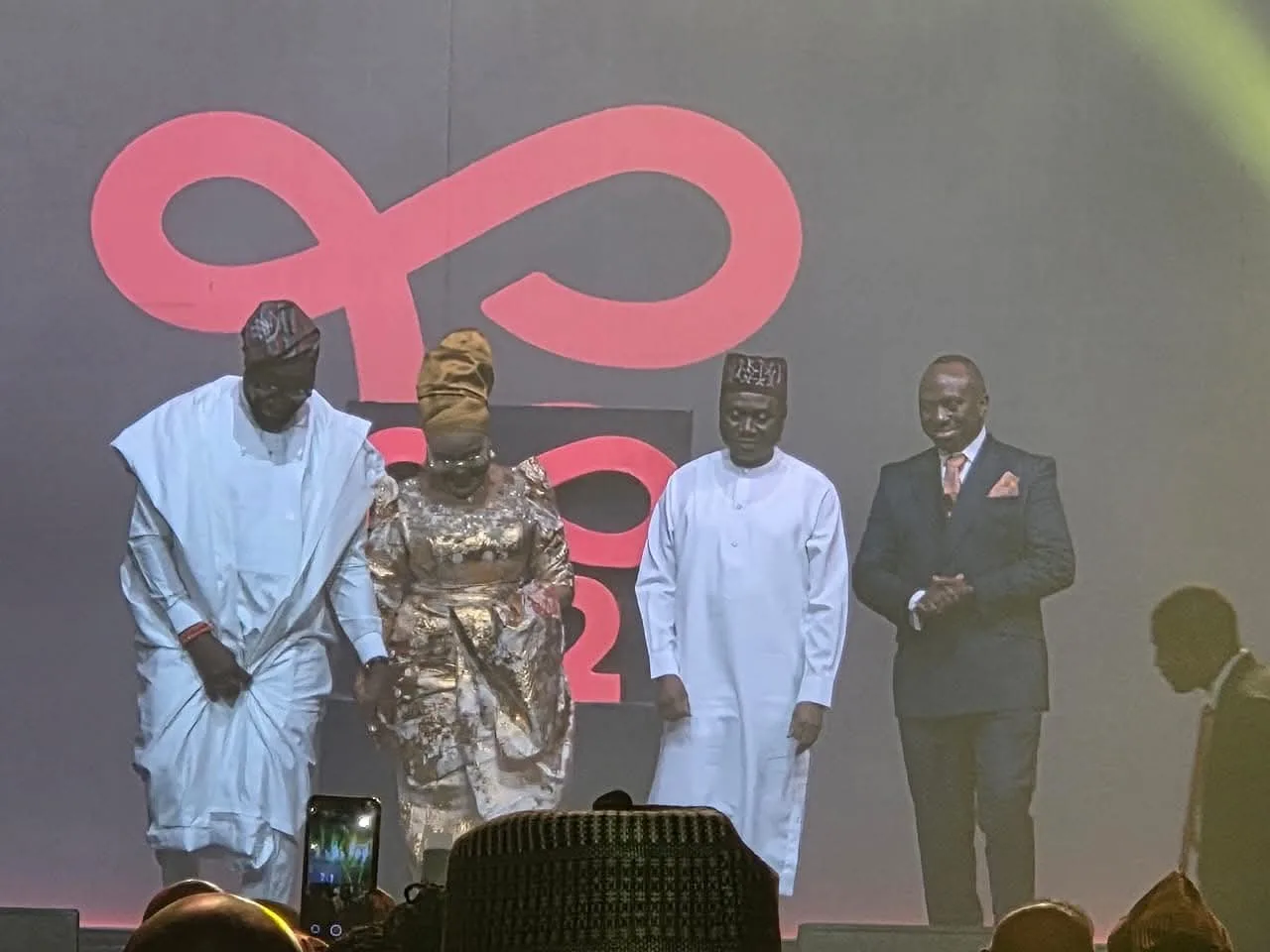
Telecom operator 9mobile has officially rebranded to T2, signaling a fresh start after years of market challenges and survival battles. The rebrand, launched in Lagos on Friday night, comes after 9mobile’s strategic partnership with MTN Nigeria to use MTN’s infrastructure for its dwindling customer base. Along with the new name, T2 changed its brand colors from the iconic green to a bright orange. The company says the orange color represents a “ripe arrival” after enduring a long period of hardship. T2’s journey began in 2008 as Etisalat Nigeria, backed by a UAE group known for innovative products and strong youth appeal. However, by 2017, debts exceeding $1.2 billion forced Etisalat out of Nigeria. The network was then taken over by a Nigerian bank consortium and rebranded as 9mobile. Despite leadership changes, 9mobile struggled to regain market share amid fierce competition from MTN, Airtel, and Globacom. Subscriber numbers plunged from a peak of 23 million in 2015 to just 2.4 million by June 2025, according to the Nigerian Communications Commission (NCC). At the rebranding event, T2 CEO Obafemi Banigbe recounted on the company’s tough journey but expressed optimism. “We have struggled as a business, but like Nigeria, we always bounce back stronger and sharper,” he said. Banigbe emphasized that the rebrand is more than an image change; it’s a commitment to becoming leaner, faster, and smarter. The shift from green to orange signals maturity and readiness to meet new market challenges. Minister of Communications, Innovation and Digital Economy Dr. Bosun Tijani congratulated T2 but urged it to match its new look with improved service quality. He encouraged the company to deliver innovation and excellence to the millions of Nigerians relying on its network. T2 Chairman Thomas Ethu described the rebrand as a rebirth after a long and exhausting journey. While the partnership with MTN offers hope for improved service, T2 still needs significant investment in infrastructure to reclaim its place in Nigeria’s competitive telecom market.
Truecaller reaches 100 million monthly users in Middle East and Africa, Nigeria among top markets
Truecaller, the app known for verifying contacts and blocking unwanted calls, has hit a major milestone. As of August 2025, it boasts 100 million monthly active users across the Middle East and Africa (MEA), with Nigeria ranking as one of its biggest markets. This number marks a 19% increase from last year and includes users on both Android and iOS devices. In Nigeria and other leading countries like Egypt, South Africa, Kenya, Algeria, Ghana, and Jordan, Truecaller is installed on 20% to 45% of connected smartphones. Truecaller’s global user base surpassed 450 million earlier this year. The company credits this growth mainly to more people getting smartphones and easier access to mobile data in these regions. The app plays a vital role in solving communication issues by helping users avoid spam calls and verify caller identities. CEO Rishit Jhunjhunwala said, “With Middle East and Africa growing fast in smartphone use, we’re proud to help individuals and businesses connect safely. Our strong focus on mobile-first markets like MEA is driving this growth.” He also promised ongoing investments to expand the company’s reach and partnerships in the region. Globally, Truecaller has been downloaded over one billion times since launching in 2009. The platform blocked nearly 56 billion unwanted calls in 2024 alone, showing the scale of its impact. However, in Nigeria, Truecaller faced scrutiny earlier this year when the Nigeria Data Protection Commission (NDPC) started investigating claims of data breaches and whether the app complies with Nigeria’s data privacy laws. This investigation is part of Nigeria’s efforts to enforce the Nigeria Data Protection Act and related rules, which set clear data processing and grievance procedures. The full implementation of these rules is expected by September 2025.