
OpenAI has released GPT-5, its most advanced AI model to date, just as ChatGPT usage worldwide surpasses 700 million weekly users. GPT-5 is being hailed as OpenAI’s smartest, fastest, and most useful model so far. It delivers big improvements in reasoning, accuracy, speed, and structured problem-solving. Businesses from several industries are already adopting tools powered by GPT-5 to transform how they operate and innovate. Major companies like BNY Mellon, California State University, Morgan Stanley, SoftBank, and T-Mobile have begun integrating GPT-5 into various departments. Over 5 million users currently subscribe to ChatGPT’s business offerings, showing growing adoption in the corporate world. Sean Bruich, Senior Vice President of AI & Data at Amgen, praised GPT-5 for its accuracy and reliability, saying it better handles complex contexts where quality matters most. OpenAI states that GPT-5 responds faster and more precisely, understands context better, and offers stronger API support for building intelligent applications. These features make it ideal for tasks such as coding, customer service, research, and major business decisions. The model is available now to ChatGPT Team customers, with enterprise and educational users set to get access soon. Developers can also start using GPT-5 through OpenAI’s API, and a premium GPT-5 Pro version with enhanced capabilities will arrive shortly. This launch comes as the AI industry sees massive investment from tech giants like Microsoft, Meta, Amazon, and Alphabet, with nearly $400 billion expected to be spent this year on AI infrastructure and innovation. OpenAI itself is discussing a valuation increase to $500 billion, reflecting its role in advancing AI technology.
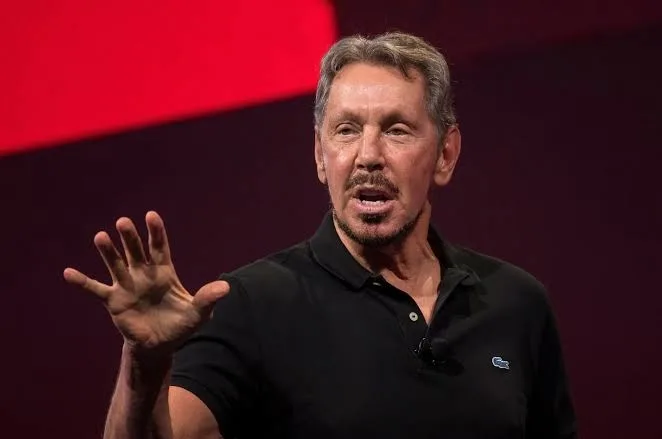
Oracle’s AI push lifts Larry Ellison’s wealth to $301.7 billion
Larry Ellison, co-founder and chief technology officer of Oracle, saw his net worth jump by $12.4 billion on Tuesday. This rise is linked to the growing belief on Wall Street that AI infrastructure will transform the tech industry. Ellison, aged 80, now has an estimated net worth of $301.7 billion, making him the world’s second-richest person, according to Forbes’ real-time tracker. This increase happened as Oracle’s shares climbed 1.24% to $255.67, following Bank of America’s decision to raise its price target for the company from $220 to $295. The bank’s upgrade was based on strong capital spending forecasts by tech giants Microsoft and Meta. Microsoft expects to spend over $30 billion in the coming quarter on tech infrastructure, much higher than previous estimates. Meta also raised its spending forecast to $69 billion for the year. Oracle’s growth shows Ellison’s long-term strategy to shift the company beyond its traditional database business into cloud services and AI. In 2021, Oracle made a major acquisition by buying electronic health records company Cerner for $28.3 billion. Though Ellison stepped down as CEO in 2014, he remains deeply involved in Oracle as chairman and CTO, holding about 40% ownership in the firm. Outside Oracle, he is known for his unique lifestyle, including owning almost all of the Hawaiian island of Lanai and previously serving on Tesla’s board. Despite optimistic market views, Bank of America kept a “Neutral” rating on Oracle stock, citing uncertainty about how much the AI infrastructure boom will actually boost Oracle’s revenues.
OpenAI launches free GPT-OSS AI models to boost global developer access
OpenAI has announced the launch of GPT-OSS, a new open-weight artificial intelligence model now available free to developers, researchers, and companies worldwide. The release includes two versions: a large model with 120 billion parameters and a smaller 20 billion-parameter model that can run on a laptop with 16GB RAM. The bigger model requires more powerful hardware such as an 80GB GPU. These models are designed to perform complex tasks and mimic human reasoning. They are accessible on popular platforms like Hugging Face, Amazon Bedrock, Groq’s inference cloud, and Saudi Arabia’s Humain AI. This launch marks OpenAI’s first open-weight model since 2019’s GPT-2, allowing developers to access and build upon the models’ underlying parameters, known as weights. However, OpenAI has not made the training data publicly available, so the release falls short of being fully open source. OpenAI CEO Sam Altman said that the company delayed the launch to conduct extra safety reviews after concerns about open-weight AI security risks. He noted the challenge that once weights are released, they cannot be taken back, a first for OpenAI. Despite this, the company anticipates users, including companies such as Orange SA and Snowflake Inc., will experiment and provide feedback to shape future model releases. Chinese firm DeepSeek and Meta with its LLaMA models have also contributed to the open AI ecosystem. OpenAI offers resources including an open model playground and guides for developers to get started with the new models. The ongoing dialogue between AI creators and users will likely influence the next chapter in open AI technology worldwide.

SpaceX rapidly delivers four astronauts to International Space Station in just 15 hours
SpaceX has successfully carried four astronauts to the International Space Station (ISS) only 15 hours after launching from Florida’s Kennedy Space Center. The crew includes NASA’s Zena Cardman and Mike Fincke, Japan’s Kimiya Yui, and Russia’s Oleg Platonov. They will stay aboard the ISS for at least six months, replacing astronauts who arrived in March. SpaceX will likely bring the outgoing crew back to Earth this week. Fincke greeted the space station over the radio shortly after docking over the South Pacific, saying, “Hello, space station!” The journey time is fast by US standards but still slower than the Russian Soyuz’s record 3-hour trip. All four astronauts were originally set for different missions. Cardman’s last-minute move made room for NASA astronauts delayed by Boeing Starliner’s technical issues, while Fincke and Yui shifted from planned Starliner flights due to ongoing delays. Platonov, previously removed from a Soyuz mission for health reasons, was cleared to join this SpaceX flight. With their arrival, 11 people now occupy the ISS. The existing crew welcomed them with cold drinks and hot meals. The mission is a key part of keeping human presence alive in space for scientific research and international collaboration.

Pope Leo XIV urges protection of human dignity amid AI rise
Pope Leo XIV has warned that human dignity must be safeguarded as artificial intelligence (AI) develops rapidly around the world. Speaking at the Vatican’s Jubilee of Youth, the Pope addressed Catholic social media influencers, urging them to use technology responsibly. He stressed that nothing created by humans, including AI, should harm others’ dignity. Instead, such technologies should serve the benefit of all humanity. The event, held in St Peter’s Basilica, drew young worshipers who were reminded to use their platforms to support unity and care for those in need. The Pope highlighted the need to protect our ability to listen and speak in this new era of AI. He encouraged influencers to be “agents of communion,” breaking divisions and promoting love rather than individualism. Since his election in May, Pope Leo XIV has consistently pointed to the Church’s role in defending human dignity and justice as AI and other technologies advance. The Pope, who studied maths in the US and has strong ties to both the US and Peru, called for thoughtful development of AI that respects people and fosters community.
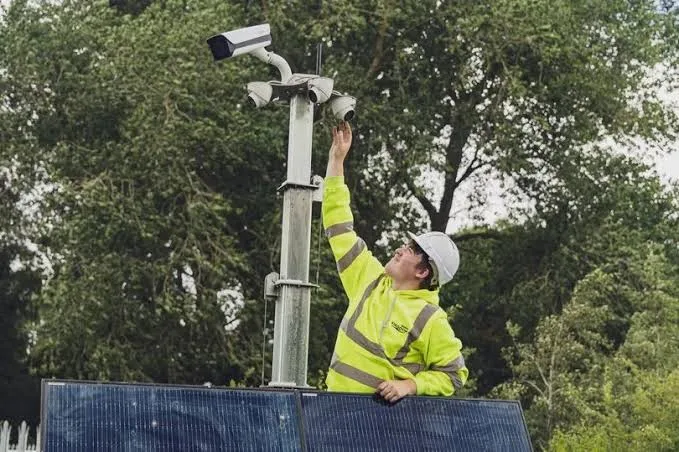
East Yorkshire Council deploys AI-powered CCTV to fight fly-tipping
East Riding of Yorkshire Council has installed CCTV cameras equipped with artificial intelligence (AI) technology in several areas to help reduce illegal rubbish dumping, known locally as fly-tipping. The council has set up CCTV towers in Cottingham, Boynton, Rawcliffe, and Hessle, with a second camera planned for Cottingham. These AI cameras are designed to detect instances of rubbish dumping automatically and alert council enforcement officers for quick action. The council receives about 2,500 reports of fly-tipping every year, a problem that local authorities say has become a serious nuisance, especially in rural communities. Councillor Lyn Healing said the fly-tipping issue had grown into a “blight and a nuisance” in some parts of the county. The new cameras are part of the council’s effort to step up enforcement and tackle the problem more effectively. She also mentioned that this technology has been successfully used by other councils and hopes for the same positive results in East Riding. The AI-enabled CCTV towers will operate for a trial period of 12 months and feature anti-vandal measures to protect the equipment. After the trial, the council will assess how effective the cameras have been before deciding whether to make them permanent. This development follows a smaller 12-week pilot scheme using a similar AI CCTV camera in Willerby aimed at reducing roadside littering. People caught fly-tipping on camera could face fines of up to £1,000 or prosecution in court. The success of this technology could set an example for other local governments battling similar problems.