
A small plane carrying 20 people crashed shortly after takeoff from Tullahoma Regional Airport in Coffee County, Tennessee, on Sunday, June 8, 2025. Emergency responders rushed to the scene on Old Shelbyville Road, where the aircraft came down with its nose buried in the grass and its tail broken off. The plane, identified by the Federal Aviation Administration (FAA) as a de Havilland Canada DHC-6 Twin Otter, was reportedly used for skydiving expeditions. The crash occurred around 12:45 p.m. local time. Three passengers were airlifted to nearby hospitals for medical treatment, with one transported by ground ambulance due to more serious injuries. Other individuals sustained minor injuries treated at the scene. There were no fatalities, and no damage was reported to airport or ground facilities, according to Lyle Russell, a city spokesman. The FAA has launched an investigation into the cause of the crash. The Tennessee Highway Patrol continues to assist local police at the active crash site. This incident highlights the risks involved in skydiving operations and small aircraft flights, though swift emergency response helped mitigate the severity of injuries. Further updates will be provided as more information becomes available.
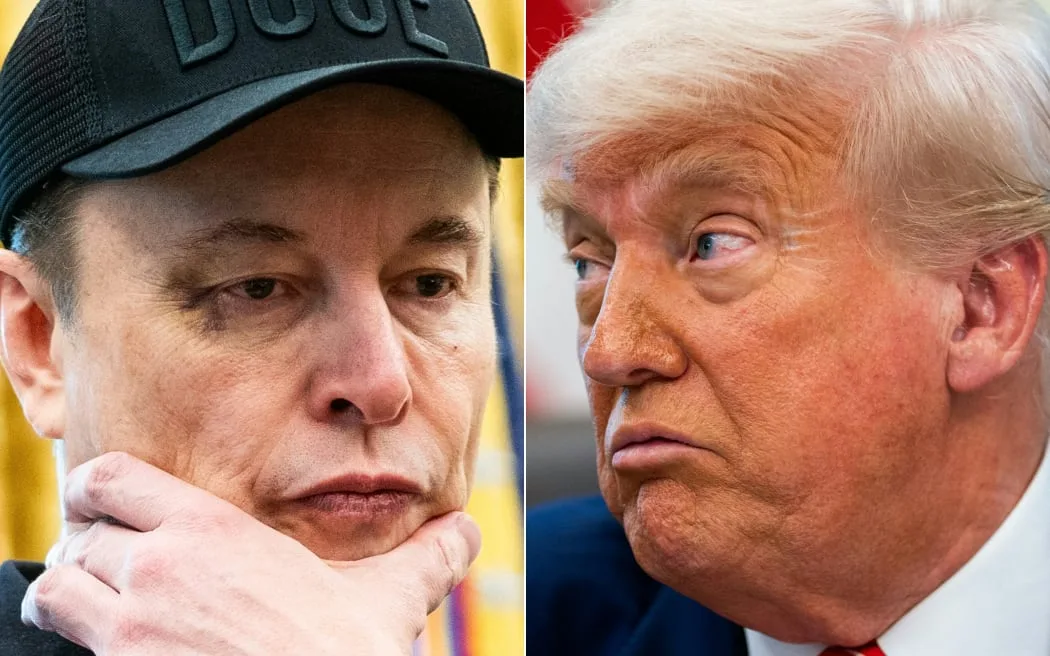
Tesla shares plunge $150 billion as Trump-Musk feud erupts over EV tax credits
Tesla shares suffered a dramatic fall on Thursday, losing more than 14% of their value and wiping out approximately $150 billion in market capitalization, as a bitter public feud between CEO Elon Musk and U.S. President Donald Trump rattled investors. The dispute centers on Trump’s sweeping new budget bill, which proposes eliminating the popular $7,500 federal tax credit for electric vehicle buyers, a move Musk argues would deal a significant blow to Tesla’s sales. Musk took to his social media platform X, calling the legislation a “disgusting abomination” and urging lawmakers to reject it. Trump, in turn, accused Musk of only objecting to the bill because it threatened his business interests, and suggested he might end government contracts and subsidies for Tesla and Musk’s other ventures, including SpaceX. “Look, Elon and I had a wonderful rapport. I’m not sure if that will continue,” Trump told reporters, expressing disappointment over Musk’s public criticism. Musk fired back, claiming Trump was “ungrateful” and asserting that his support had been crucial to Trump’s 2024 election victory. The clash unnerved Wall Street. Tesla’s stock plummeted by 14% in a single day, the largest one-day drop on record for the company, bringing its market value below the $1 trillion threshold. Investors, who once bet heavily on Tesla due to Musk’s close relationship with Trump, are now worried that the fallout could lead to regulatory hurdles and the loss of lucrative government deals. “The budget bill includes unfavorable provisions for Tesla, particularly the termination of EV credits. Moreover, his fallout with Trump poses risks for Tesla and Musk’s other ventures,” commented Ellerek, manager at Ent Capital Management. Analysts at J.P. Morgan estimate Tesla could lose $1.2 billion in annual profits if the EV credit is scrapped, not to mention potential losses from other regulatory changes. After Thursday’s rout, Tesla shares rebounded slightly, rising over 5% in premarket trading Friday. However, the broader outlook remains uncertain as the political drama continues to unfold. “This conflict does not alter our optimistic outlook on Tesla and its autonomous capabilities, but it certainly complicates the regulatory landscape under Trump moving forward,” said Dan Ives, an analyst at Wedbush Securities. The feud has left Tesla investors and industry watchers on edge. The company, still the world’s most valuable automaker, faces a more challenging environment as political and regulatory risks mount. Whether Musk and Trump can mend their relationship, or whether Tesla will have to navigate a new era without the benefit of federal incentives, remains to be seen.

Binance’s head of financial crime compliance Tigran Gambaryan departs months after Nigeria detention
Tigran Gambaryan, Binance’s Head of Financial Crime Compliance, is leaving the world’s largest cryptocurrency exchange, marking the end of a turbulent chapter for both the executive and the company. His departure comes just months after his release from nearly eight months of detention in Nigeria, where he faced serious allegations. Gambaryan, a former U.S. Internal Revenue Service agent known for his expertise in tracing illicit crypto transactions, joined Binance in 2021. During his tenure, he played a key role in strengthening the company’s anti-money laundering protocols and worked closely with global law enforcement agencies to enhance compliance and asset recovery efforts. In 2024, Gambaryan was arrested in Nigeria on charges of money laundering and currency manipulation while on a business visit. The detention sparked international attention, with Binance and Gambaryan himself alleging that Nigerian lawmakers demanded a $150 million bribe for his release, claims the Nigerian government has strongly denied. After months of legal battles and deteriorating health, Gambaryan was released on humanitarian grounds in October 2024, and the charges against him were eventually dropped. In a statement confirming his exit on June 6, 2025, Gambaryan expressed gratitude for his time at Binance and his commitment to making the crypto industry safer. Binance also praised his contributions, highlighting his dedication to transforming their financial crimes compliance organization. “Thanks to his tireless efforts, the crypto industry is safer for all,” a Binance spokesperson said. Gambaryan’s departure comes as Binance continues to face regulatory challenges worldwide. The company recently settled a $4.3 billion case with the U.S. government over anti-money laundering violations and agreed to significant penalties, with its co-founder Changpeng Zhao stepping down as CEO and serving a prison sentence.
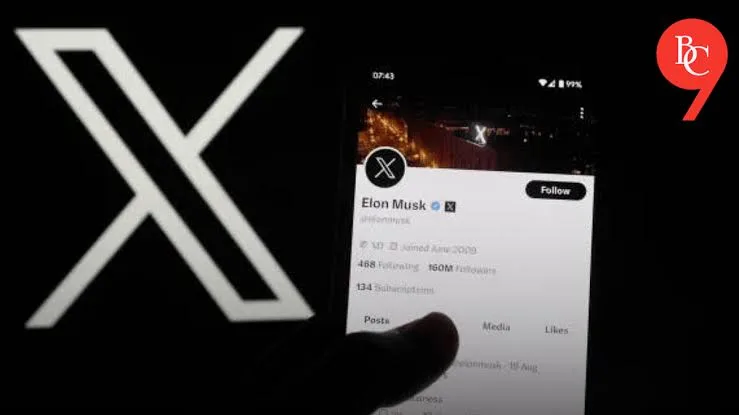
Elon Musk launches XChat, a new messaging feature to rival WhatsApp and Telegram
Elon Musk has unveiled XChat, a new messaging feature integrated within X (formerly Twitter), aimed at transforming the platform into an “everything app” that rivals popular messaging services like WhatsApp, Telegram, and Signal. XChat introduces end-to-end encryption, ensuring that only the sender and recipient can read messages, enhancing user privacy and security. The feature also supports vanishing messages that disappear after a set time, file sharing, and audio/video calls, all without requiring users to share their phone numbers. This marks a significant upgrade from X’s previous direct messaging capabilities. Built on the Rust programming language with what Musk describes as “Bitcoin-style” encryption, XChat offers a fresh architecture designed for secure, private communication. Users who enable XChat must set a four-digit passcode for an extra layer of protection, preventing unauthorized access even if someone gains control of their account. Currently, XChat is in beta testing and available to paid subscribers, with features like group chats and vanish mode already confirmed through leaked screenshots. This rollout is part of Musk’s broader vision to evolve X into a Western super app, akin to China’s WeChat, encompassing messaging, payments, commerce, entertainment, and dating functionalities. With over 600 million monthly active users, XChat could help shift the platform from a public social media space to a daily digital utility, integrating communication and financial services under one roof.
France launches mandatory online visa appointment system for 2025 travelers
France has introduced a new mandatory online system for booking visa appointments starting this year. All international travelers planning to visit France in 2025 must now follow this fully digital procedure to schedule appointments for both Schengen short-stay and long-stay national visas. The French government’s new approach requires applicants to use official online tools, the Visa Wizard and Demarches Simplifiées portals, to determine visa eligibility and book appointments. This multi-step system aims to make the process more efficient, reduce unnecessary bookings, and prevent delays. The process begins with the Visa Wizard, an online tool designed to help travelers find out if they need a visa, identify the correct visa type, and understand the documentation and fees required. For those who have recently spent time in the Schengen Area, the Visa Calculator helps determine how many days they can legally remain. Once eligibility is confirmed, applicants proceed to the Demarches Simplifiées platform to register and submit their appointment request. Here, travelers fill out a detailed questionnaire covering the purpose of their visit, travel dates, and length of stay. Accuracy and completeness are crucial to avoid processing delays. Skipping any step or bypassing the Visa Wizard can result in application delays or outright rejection. The system applies to all nationalities with no exceptions, reflecting France’s commitment to digitizing consular services. Visa rejections in Schengen countries often stem from common errors such as missing documents, unclear travel intentions, lack of accommodation proof, insufficient financial evidence, or incomplete forms. Experts advise applicants to plan ahead, use only official channels, and double-check their eligibility before submitting requests. Facing labour shortages in 38 key occupations, France is actively seeking foreign talent to fill gaps in its workforce. The new visa booking system is part of a broader effort to attract qualified international applicants while improving administrative efficiency. In 2023, EU countries earned over €130 million from unsuccessful visa applications, particularly from Africa and Asia, highlighting the need for clearer guidance and streamlined processes. Travelers planning to visit France this year should familiarize themselves with the new online system and start their applications early. For more information, visit the official Visa Wizard and Demarches Simplifiées websites.
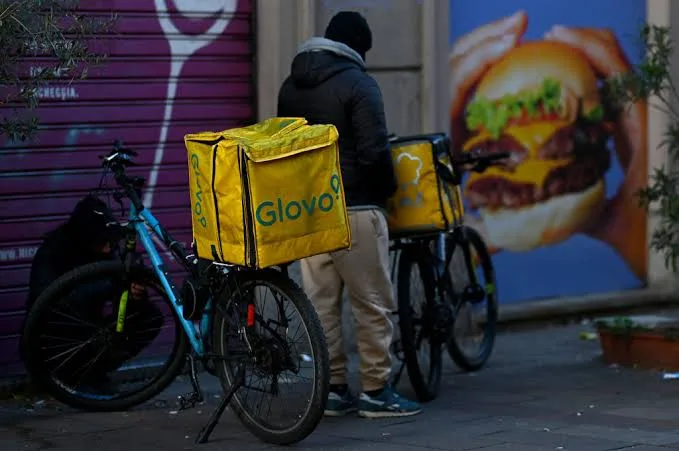
EU hits Delivery Hero and Glovo with €329 million fine for food delivery cartel
brussels
The European Commission has imposed a record €329 million fine on Delivery Hero and its Spanish subsidiary Glovo, two of Europe’s largest food delivery companies, for operating an illegal cartel that stifled competition and limited job opportunities across the continent. The Commission’s investigation revealed that between July 2018 and July 2022, Delivery Hero and Glovo secretly coordinated to avoid competing with each other in several key ways. The companies agreed not to hire each other’s employees, exchanged sensitive business information, including pricing and strategy, and divided up national markets for online food delivery across the European Economic Area (EEA). “Cartels like this reduce choice for consumers and business partners, limit opportunities for employees, and diminish incentives to compete and innovate,” the Commission said in its statement. The scheme began in 2018 when Delivery Hero acquired a minority stake in Glovo. What started as limited “no-hire” clauses for select staff soon expanded into a broad agreement not to recruit each other’s employees at all. The companies also regularly exchanged commercially sensitive information, sometimes over WhatsApp, allowing them to align their market strategies and avoid direct competition. Additionally, Delivery Hero and Glovo agreed to carve up the European market, ensuring they would not compete in each other’s strongest territories and coordinating on market entries elsewhere. This arrangement lasted until Delivery Hero took full control of Glovo in July 2022. This is the first time the European Commission has fined companies for a so-called “no-poach” labor cartel, marking a significant precedent in EU antitrust enforcement. According to EU competition chief Teresa Ribera, “These actions were enabled by the anticompetitive exploitation of Delivery Hero’s minority investment in Glovo. This is the first instance where the Commission is imposing sanctions for no-poach agreements, which hinder companies from competing for top talent and limit job opportunities for workers”. Fines and SettlementDelivery Hero will pay €223 million. Glovo will pay €106 million. Both companies admitted their misconduct and agreed to settle, earning them a 10% reduction in their fines.