
The Inspector-General of Police (IG) has temporarily suspended the enforcement of the controversial tinted glass law across Nigeria, following legal challenges and public concerns. The suspension is effective until after the Federal High Court in Warri, Delta State, hears a scheduled motion on October 16, 2025. According to Police spokesperson Frank Mba, the suspension was instituted “out of consideration for the interest of Nigerians and regard for the Nigerian Bar Association.” Though no formal court order currently bars the enforcement, the police have paused operations to await judicial guidance on the matter. This decision came in response to petitions disputing the legitimacy and application of the tinted glass regulation, which restricts the level of window tint allowed on vehicles. The tinted glass law, introduced to enhance road safety by improving driver visibility and aiding law enforcement in vehicle inspections, has sparked controversy. Many Nigerians, including drivers and legal experts, questioned its enforcement methods and the extent of compliance. The Nigerian Bar Association (NBA) has actively engaged in challenging aspects of the law, citing concerns for due process and citizens’ rights. This suspension marks a critical pause for Nigeria’s transport sector and motorists who have faced penalties under the tinted glass regulation since its implementation. Experts note that the government’s cautious approach may help prevent a wider confrontation while awaiting the court’s decision. Aviation and law enforcement analysts point out that clarity from the court will be crucial in balancing vehicle regulation with citizens’ freedoms. The ruling could set precedents not only for tinted glass enforcement but also for how similar regulations are applied nationally.

SEC Warns Nigerians of AI-Generated Fake Celebrity Endorsements in Investment Scams
The Securities and Exchange Commission (SEC) of Nigeria has issued a strong warning about a rising wave of artificial intelligence (AI)-driven scams wherein fraudsters are fabricating celebrity endorsements to lure investors into fraudulent schemes. These AI-manipulated endorsements, including deepfake videos of well-known politicians, celebrities, and TV personalities, are being widely circulated on social media platforms, including Facebook, Instagram, and Telegram, threatening unsuspecting Nigerians with false promises of guaranteed returns. On Monday, September 29, 2025, the SEC alerted the public to remain vigilant against illegal investment platforms such as CBEX, Silverkuun, and TOFRO, which falsely advertise AI-powered trading systems promising unrealistic profits but operate without regulatory approval or registration. The Commission emphasized that these platforms are not regulated by the SEC and carry significant investment risks. “Scammers are exploiting AI to fabricate endorsements and testimonials that appear genuine. This has made traditional fraud detection methods less effective, hence the need for tech-enabled regulation and greater public awareness,” stated a representative of the SEC. In addition to ramping up surveillance systems that use advanced technology to detect fraudulent activities in real time, the SEC is working closely with the Central Bank of Nigeria and the Nigerian Financial Intelligence Unit for data sharing and coordinated enforcement actions. The Commission has also engaged social media companies to remove misleading advertisements and cautioned influencers about collaborating with or promoting unlicensed investment schemes. “Any influencer or blogger found complicit in promoting illegal platforms will face regulatory sanctions or prosecution,” the SEC warned.

Nigerian scientist’s cassava and yam innovation scales food security across 15 countries
The International Institute of Tropical Agriculture (IITA) has honoured Nigerian scientist Dr. Mercy Elohor Diebiru-Ojo after she was named a 2025 Africa Food Prize laureate for pioneering the application of Semi-Autotrophic Hydroponics (SAH) technology in multiplying cassava and yam seedlings. The award, announced earlier this month at the Africa Food Systems Forum in Dakar, Senegal, recognises her groundbreaking work in improving seed systems for two of Africa’s staple foods. Dr. Diebiru-Ojo shared the prize with Kenyan scientist Professor Mary Abukutsa-Onyango, with each receiving part of the US$100,000 award. Dr. Diebiru-Ojo’s SAH technology enables rapid, clean multiplication of cassava and yam planting materials that are disease-free and vigorous, addressing longstanding challenges in seed multiplication that have traditionally limited crop yields and food security. Unlike conventional methods where planting material multiplication is slow and prone to pests and diseases, SAH provides farmers faster access to high-quality seedlings at scale. The technology has been deployed in more than 15 African countries, including Nigeria, where multiple production facilities are operational, some with government support to empower local farmers. IITA Director General Dr. Simeon Ehui hailed the achievement as a landmark for African agriculture, noting: “It is a proud day for our Institute and a significant moment for African agriculture. Dr. Diebiru-Ojo’s leadership has been pivotal in advancing Semi-Autotrophic Hydroponics (SAH) node culture for cassava and yam, two of Africa’s most important staples. SAH is a clean, nursery-based method that rapidly multiplies disease-free plantlets at scale, lowering risk, shortening time to field, and strengthening seed systems end-to-end.” Dr. Diebiru-Ojo, a plant breeder with a PhD from the West Africa Centre for Crop Improvement, expressed gratitude to IITA, CGIAR, Nigeria’s National Root Crops Research Institute, and other partners who supported the research. She emphasized that the award is a beginning rather than an end, urging continued efforts towards food security in Africa. The affordability of the SAH technology, dubbed “cassava-in-a-box,” makes it accessible to smallholder farmers, costing around ₦800 per 25 plants in Nigeria, with farmers appreciating its reliability and yield benefits.
Meta unveils controversial AI video feed ‘Vibes’ amid mixed reactions
Meta CEO Mark Zuckerberg and his AI Chief Alexandr Wang recently launched “Vibes,” a new feature within the Meta AI app that offers an endless feed of short, completely AI-generated video clips. Unveiled on September 25, 2025, this latest product replaces the app’s previous Discover feed to redefine user engagement by offering a text-free, human-free, plot-free “TikTok-style” experience created and centered entirely on artificial intelligence video content. The rollout of Vibes marks a bold move by Meta, the parent company of Facebook and Instagram, which has been investing billions to become a leader in AI technology and wearable smart devices. Alexandr Wang, brought on board from AI startup Scale AI to lead Meta’s expanding AI efforts, revealed the new product alongside Zuckerberg via social media posts encouraging users to create, remix, or simply scroll through AI-created videos. These videos range from photorealistic to surreal depictions – such as humanoid bunnies dancing and aliens performing pull-ups – and often set to popular music snippets. However, the reception to Vibes has been overwhelmingly negative among tech experts, social media users, and industry commentators alike. The feed has been criticized as “AI slop,” reflecting a growing disdain for AI-generated content perceived as low-quality or mindless. “Nothing beats a real human video. Full circle effect is going to happen soon.” – says a commentator, Ubong Henry Udomah. Comments under Zuckerberg’s announcement included reactions like “gang nobody wants this” and “Bro’s posting ai slop on his own app,” highlighting widespread skepticism about the product’s appeal. Some industry voices have warned the feature could exacerbate issues of addictive, low-value content that platforms like YouTube are actively trying to curb. The introduction of Vibes signals Meta’s experimentation with novel AI-driven content formats, attempting to harness the viral nature of short-form video while bypassing traditional human creators. Yet, the harsh public and expert reaction underscores the challenges ahead in balancing innovation with user demand and content quality.

UBA Foundation extends helping hands to vulnerable communities in Lagos
UBA Foundation, the Corporate Social Responsibility arm of the United Bank for Africa (UBA), has extended a helping hand to vulnerable groups in Lagos through a recent charity outreach. The Foundation visited So-Said Charity Homes Community and SOS Children’s Village, supplying essential food items like rice and beans to the elderly, children, and others in need. Alero Ladipo, UBA’s Group Head of Marketing and Corporate Communications, said the initiative shows the Foundation’s commitment to giving back to communities and supporting those who need it most. “The elderly and children are some of the most vulnerable in society, and it’s our duty to support them. This outreach reflects our dedication to corporate social responsibility and sustainable development”- Alero The outreach was warmly received. Mrs. Felicia Martins, CEO of So-Said Charity Homes Community, thanked the Foundation for their generosity, saying the donations would provide much-needed relief. Ayodeji Adelopo, Programme Director at SOS Children’s Village, also praised the support and expressed hope for continued collaboration. UBA Foundation’s Managing Director, Bola Atta, reaffirmed the bank’s focus on making a positive impact through various social programs including education and empowerment. The Foundation is known for its philanthropic work across Africa, helping improve lives through scholarships, healthcare support, and poverty relief.
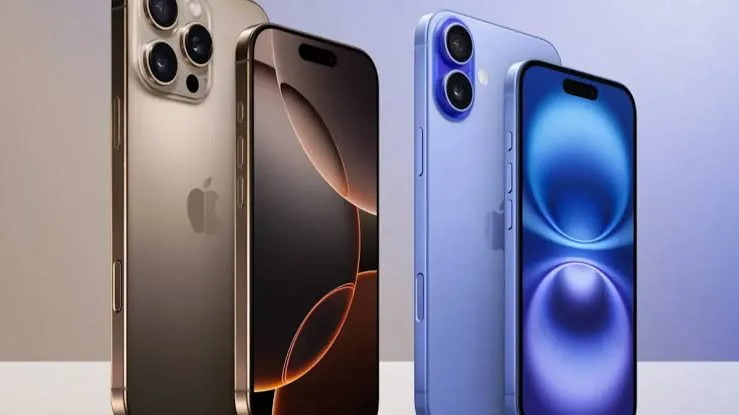
Apple bets on AI to solve iPhone battery woes, launching new feature in September
Apple is turning to artificial intelligence to tackle one of the most persistent frustrations for iPhone users: battery life. Starting September 2025, the tech giant will roll out a groundbreaking AI-powered battery management feature as part of its upcoming iOS 19 update, aiming to make dead batteries a thing of the past. The new feature, first reported by Bloomberg and confirmed by Apple sources, will use advanced AI algorithms to monitor how users interact with their iPhones and make real-time adjustments to power consumption. By learning individual habits-like when you typically stream videos, check emails, or play games-the system will automatically scale back energy use for background processes and power-hungry features when they’re not needed. This innovation is part of Apple’s broader push into artificial intelligence, branded as “Apple Intelligence.” The company is leveraging data from millions of devices to predict optimal times to conserve energy, ensuring users get the most out of every charge. A new lock-screen indicator will also debut, showing exactly how long your phone will take to fully charge-a small but welcome change for anyone who’s ever been in a rush. The timing couldn’t be better. Apple is preparing to launch its slimmest iPhone yet, the iPhone 17 Air, which will feature a smaller battery to accommodate its thinner design. While this could have meant shorter battery life, Apple’s AI solution is designed to offset that drawback, promising longer usage without sacrificing performance. Importantly, the new feature won’t be limited to the latest models; any iPhone compatible with iOS 19 will benefit from smarter battery management. But Apple’s AI ambitions don’t stop with the iPhone. The company plans to extend Apple Intelligence across its ecosystem, including iPads, Macs, and even the Apple Watch. While the Watch may not run AI models directly due to hardware constraints, it will still offer new features “powered by Apple Intelligence,” ensuring a consistent experience for users across devices. Alongside battery improvements, iOS 19, iPadOS 19, and macOS 16 will introduce a redesigned interface, internally codenamed “Solarium,” inspired by sunlit glass rooms. The update aims to unify the look and feel of Apple’s devices, making it easier to switch between iPad and Mac. Another practical upgrade: users will soon be able to sync and auto-connect to Wi-Fi networks that require browser logins-a common headache in hotels and public spaces. With competition from OpenAI, Google, and Microsoft heating up, Apple’s deepening investment in AI signals its determination to stay ahead in the race for smarter, more efficient devices. For iPhone users, it could mean fewer low-battery warnings and more time doing what they love on their devices-a win for everyone.