
Africa’s most influential creator platforms, Douglas Kendyson has made his mark on the continent’s digital landscape. As the founder and CEO of Selar, Kendyson has empowered thousands of creators to monetize their digital products, transforming the way knowledge and skills are shared across Africa. Kendyson’s journey began during his time at Covenant University, where he developed a passion for software development. His early career included stints at fintech giants Paystack and Flutterwave, where he identified a gap in the market for individual creators to sell digital products. This insight led him to launch Selar in 2016, initially as a side project. By 2020, Kendyson had dedicated himself full-time to Selar, which has since grown to serve over 1.5 million users across 194 countries. In 2024, Selar paid out a staggering ₦9.8 billion to creators, solidifying its position as a pivotal player in Africa’s booming creative economy. Kendyson’s success is not just about numbers; it reflects his commitment to empowering creators and fostering a culture of innovation and profit-sharing within his team.

Domino’s Pizza ordered to pay ₦3 million for breaching customer’s data privacy rights
The Federal High Court in Abuja has ordered Domino’s Pizza, operated by Eat‘n’Go Limited, to pay ₦3 million in damages to a customer for breaching his privacy rights. The court found the company guilty of sending unsolicited marketing messages without the customer’s consent, marking a significant precedent in Nigeria’s data protection landscape. The case was brought forward by Chukwunweike Araka Akosa, who first noticed the issue on December 14, 2023, when he received a promotional message from Domino’s Pizza on his phone. The message, which began with “Hi Jumians,” suggested that his personal data had been obtained from Jumia Food, an e-commerce platform where he had previously placed an order. Despite Akosa’s efforts to resolve the matter directly with Jumia Food, the unsolicited messages persisted, totaling 16 instances by May 25, 2024. Frustrated by the lack of resolution, Akosa sought legal assistance from Equibridge Attorneys (EBA) and filed a formal complaint through Paradigm Initiative’s Ripoti platform, a digital rights advocacy tool. The case was filed on July 12, 2024, and concluded swiftly within eight months, with a ruling delivered on February 18, 2025. During the hearing, it was revealed that Jumia Food had shared Akosa’s personal data with Domino’s Pizza under an On-Demand Service Agreement (ODSA). However, Domino’s Pizza used this information for marketing purposes without obtaining Akosa’s explicit consent, a clear violation of Nigeria’s data protection laws. Justice Emeka Nwite ruled that Domino’s Pizza had breached Section 37 of Nigeria’s Constitution and Sections 25 and 26 of the Nigeria Data Protection Act (NDPA) 2023. The court emphasized that:Domino’s Pizza acted as a data processor under the NDPA and had no legal right to repurpose Akosa’s data for marketing without his consent. Jumia Food fulfilled its duty by warning Domino’s to stop using the customer’s data unlawfully. Domino’s Pizza ignored these warnings and continued sending unsolicited messages, making it solely liable for the violations. In addition to awarding ₦3 million in damages to Akosa, the court ordered Domino’s Pizza to erase his personal data from its systems and cease all direct marketing communications with him. The ruling has been widely celebrated as a milestone for digital rights in Nigeria. Paradigm Initiative, which supported Akosa through its Ripoti platform, called it a “landmark case” that reinforces the importance of enforcing Nigeria’s data protection laws. “This judgment highlights the importance of consent in data processing,” Equibridge Attorneys stated after the ruling. “It sends a strong message to businesses that unauthorized use of personal data will not be tolerated.” Legal experts have also highlighted how quickly this case moved through the courts, a rarity in Nigeria’s legal system. Oladiupupo Ige, Managing Partner at EBA, praised the efficiency of the process: “We commenced this case on July 12, 2024, and got judgment on February 19, 2025, just eight months.” This ruling signals a new era of accountability for businesses operating in Nigeria. With stricter enforcement expected from the Nigeria Data Protection Commission (NDPC), companies must now prioritize compliance with data protection laws or face severe consequences. Key takeaways for businesses include:Consent is mandatory, Companies must obtain explicit consent before using customer data for marketing purposes. Data controllers bear responsibility – Platforms like Jumia Food must ensure their partners comply with data protection regulations. Legal risks are real – Violating Nigeria’s data privacy laws can lead to financial penalties and reputational damage. The Akosa v. Domino’s Pizza case is more than just a personal victory, it is a turning point for digital rights and privacy protection in Nigeria. It serves as a warning to businesses that mishandling customer data will not go unpunished in this new era of stricter enforcement under the NDPA 2023.

Disney is laying off nearly 6% of its workforce amid declining TV viewership
The Walt Disney Company is set to lay off approximately 200 employees, representing nearly 6% of the workforce in its ABC News Group and Disney Entertainment Networks divisions. This decision comes as part of a broader restructuring effort to address shifts in consumer behavior and the ongoing decline of traditional cable television. According to reports first published by The Wall Street Journal, the layoffs will impact several key areas within the company. ABC’s long-running news programs, 20/20 and Nightline, will be merged into a single unit. Additionally, Disney plans to eliminate the team behind FiveThirtyEight, the political and data analysis website founded by Nate Silver. Production staff at Good Morning America are also expected to be affected, while cuts in programming and scheduling operations are anticipated within Disney Entertainment Networks, which oversees cable channels like FX. The layoffs shows the challenges Disney faces as it adapts to a rapidly evolving media landscape. The rise of streaming services and cord-cutting has significantly reduced cable television viewership, putting pressure on traditional broadcast businesses. Compounding these issues, Disney’s flagship streaming platform, Disney+, has experienced subscriber losses in recent quarters. In late 2023, the platform reported a decline of 1.3 million subscribers following a price hike, though it managed to reduce its streaming business losses by $300 million during the same period. Despite these setbacks, Disney’s most recent earnings report exceeded Wall Street expectations. The company credited cost-cutting measures and strong performance in its theme parks and experiences segment for its financial resilience. However, Disney has acknowledged that it expects a modest decline in Disney+ subscriptions in the near term. Disney’s restructuring efforts reflect an industry-wide shift as major media companies rethink their business models to stay competitive in a digital-first world. Over the past year, Disney’s stock has declined by approximately 4%, underscoring investor concerns about its ability to navigate these headwinds. This latest round of cuts, marks another chapter in the entertainment giant’s efforts to balance its legacy broadcast operations with its growing focus on streaming and digital content.

FCCPC sues MultiChoice Nigeria, CEO John Ugbe over price hike violation
The Federal Competition and Consumer Protection Commission (FCCPC) has filed a lawsuit against MultiChoice Nigeria Limited and its Chief Executive Officer, John Ugbe, over alleged violations of regulatory directives and consumer protection laws. The legal action stems from the company’s recent price hike on its DStv and GOtv subscription packages, which was implemented despite explicit instructions from the FCCPC to maintain current pricing pending an ongoing investigation. In a statement released by Ondaje Ijagwu, FCCPC’s Director of Corporate Affairs, the commission accused MultiChoice of breaching provisions of the Federal Competition and Consumer Protection Act (FCCPA) 2018. The statement, shared on the FCCPC’s official X (formerly Twitter) account, outlined the charges against the company, including obstruction of an inquiry, impeding an investigation, and providing misleading information. MultiChoice had announced a price adjustment for its subscription packages in February 2025, with increases set to take effect on March 1. Under the new pricing structure: The DStv Compact package rose from ₦15,700 to ₦19,000 (a 25% increase). The Compact Plus package increased from ₦25,000 to ₦30,000 (a 20% hike). The Premium plan jumped from ₦37,000 to ₦44,500 (a 20% rise). GOtv users also faced increases, with the Supa Plus plan moving from ₦15,700 to ₦16,800. The FCCPC raised concerns over these frequent price hikes and summoned MultiChoice’s CEO to an investigative hearing scheduled for February 27, 2025. The commission questioned whether these adjustments reflected anti-competitive practices or an abuse of market dominance in Nigeria’s pay-TV industry. It also directed MultiChoice to suspend the price hike until investigations were concluded. Despite this directive, MultiChoice implemented the new pricing on March 1, prompting the FCCPC to take legal action. The FCCPC filed charges at the Federal High Court in Lagos on three counts: Obstruction of an Inquiry: MultiChoice allegedly violated Section 33(4) of the FCCPA by proceeding with the price hike despite regulatory orders. Impeding an Investigation: The company reportedly disregarded directives to halt the increase during the inquiry process, contravening Section 110 of the FCCPA. Providing Misleading Information: MultiChoice is accused of enforcing the price adjustment without addressing regulatory concerns, breaching Section 159(2) of the FCCPA. The commission described these actions as deliberate attempts to undermine regulatory authority and deny Nigerian consumers adequate protection under the law. Beyond initiating legal proceedings, the FCCPC has indicated that additional enforcement measures may follow. These could include sanctions or other regulatory interventions aimed at ensuring compliance with consumer protection laws. The commission emphasized its commitment to safeguarding consumers against exploitative business practices while promoting fair competition in Nigeria’s pay-TV sector.
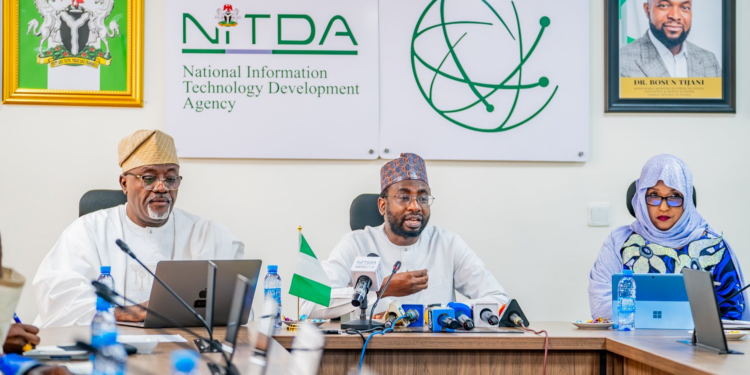
NITDA warns Nigerian website owners about security flaw in popular WordPress plugin
The National Information Technology Development Agency (NITDA) has issued an urgent warning to Nigerian website owners about a critical security vulnerability affecting the Jupiter X Core plugin for WordPress. This flaw, identified as CVE-2025-0366, could allow hackers to take full control of websites using the plugin, potentially leading to severe consequences for businesses and users. In a statement shared via its official social media account, NITDA highlighted that the vulnerability is classified as an “unauthenticated privilege escalation” issue. This means attackers can exploit the flaw without needing login credentials, enabling them to gain administrative access or execute harmful code on affected websites. How the Vulnerability Impacts WebsitesThe implications of this security flaw are far-reaching. If exploited, attackers could: Modify or delete website content. Inject malware that spreads to users visiting the site. Steal sensitive information, including customer data and login credentials. Redirect visitors to phishing websites designed to steal personal information. For Nigerian businesses that rely heavily on WordPress for e-commerce, customer engagement, and other online services, the risks are particularly alarming. A successful attack could result in financial losses, reputational damage, legal consequences from data breaches, and operational downtime. Steps to Protect Your WebsiteTo address this threat, NITDA’s advisory—issued in collaboration with the Computer Emergency Readiness and Response Team Nigeria (CERNT.NG)—recommends immediate action. Website administrators and business owners should: Update the Plugin: The vulnerability has been fixed in the latest version of Jupiter X Core (4.8.8). Website owners should update their plugin through their WordPress dashboard immediately. Remove Unused Plugins: Outdated or unused plugins are common entry points for hackers. Conduct a thorough audit and uninstall any unnecessary plugins. Monitor for Unauthorized Access: Regularly check for unknown admin accounts or unexpected changes to website settings. If suspicious activity is detected, revoke access and reset all passwords. Enable Strong Authentication: Implement two-factor authentication (2FA) for all admin accounts and ensure passwords are strong and unique. Why This Matters for Nigerian BusinessesWordPress powers a significant portion of websites in Nigeria, including those used for online transactions and customer interactions. A breach caused by this vulnerability could lead to stolen customer data, fraudulent transactions, loss of trust from clients and partners, and even legal repercussions. “This poses a significant risk to website owners, especially those handling sensitive user data,” NITDA stated. By taking swift action to secure their websites, businesses can protect themselves from potential attacks while safeguarding their customers’ trust and data.

Global telecom revenue projected to hit $1.3 trillion by 2028 despite sluggish growth
The global telecommunications industry is set to generate $1.3 trillion in revenue by 2028, according to PwC’s Global Telecom Outlook 2024-2028 report. While the sector continues to expand, its growth rate is slowing due to pricing challenges and increasing commoditization of services. In 2023, total service revenue from fixed and mobile networks grew by 4.3% to reach $1.14 trillion. However, PwC forecasts a compound annual growth rate (CAGR) of just 2.9% through 2028, below the projected rate of inflation, leading to a modest increase in total revenue to $1.3 trillion. Nigeria’s telecommunications industry has emerged as one of the fastest-growing markets globally, driven by a surge in mobile subscriptions. In 2024 alone, mobile service revenue in the country reached $7.6 billion, with the sector expected to grow at a CAGR of 8% between 2023 and 2028. Subscriber numbers are projected to rise at an impressive CAGR of 9.8%, although average revenue per user (ARPU) remains under pressure. Fixed-line services in Nigeria are expected to decline during this period, with ARPU decreasing at a CAGR of -1.4%. However, the rapid expansion of mobile services highlights the country’s potential as a key player in global telecom growth. The report shows a fundamental challenge faced by telecom companies worldwide: the commoditization of core products and services. This trend has made it difficult for operators to raise prices despite substantial investments in infrastructure, including advancements in 5G and broadband technologies. PwC predicts an additional $200 billion in incremental revenue growth across the sector by 2028, presenting opportunities for companies that can innovate and create new value streams from existing services. Emerging markets such as India, Nigeria, Egypt, and Kenya are leading global telecom growth with above-average CAGRs, while mature markets like Japan and Switzerland are experiencing stagnation or decline. For instance: Fixed broadband and mobile subscriptions are expected to grow steadily at CAGRs of 3.8% and 4.3%, respectively. Fixed voice subscriptions are projected to decline at a CAGR of -1.8%. Mobile revenue growth also varies significantly across regions, with Colombia leading at a CAGR of 10.5%, followed by India and Argentina. In contrast, mature markets like Japan and Switzerland are seeing declines. Telecom operators globally are under increasing pressure to find innovative ways to generate value. Emerging technologies such as artificial intelligence (AI), advanced data analytics, and enhanced connectivity solutions could play a pivotal role in driving future growth. Despite its challenges, the telecommunications sector remains critical to global economic development, with emerging markets providing significant opportunities for expansion in the years ahead.