
Google has announced the opening of applications for the 2025 edition of its Hustle Academy program, designed to support small and medium-sized businesses (SMBs) in Kenya, Nigeria, and South Africa. This initiative aims to bridge the gap in business skills and funding that often hinders the growth of African SMBs. The 2025 program will focus on AI-powered business training, equipping entrepreneurs with the skills to integrate AI into operations, enhance marketing strategies, and leverage AI insights for strategic growth. Participants will also receive training in core business fundamentals such as strategy, financial management, digital marketing, and leadership development. Eligible businesses must have been operational for at least one year and be seeking to expand. The program offers expert mentorship, practical case studies, and networking opportunities. Additionally, a new season of the “Hustle Academy Brings You” speaker series will feature inspiring stories from successful African entrepreneurs like Adenike Ogunlesi and Brian Jura. Applications for the free, virtual bootcamp are now open at g.co/hustleacademy. This initiative builds on the success of previous years, having supported over 15,000 SMBs since its launch in 2022.

Air Force personnel storm Ikeja Electric offices, assault staff over power disconnection
The Nigerian Air Force (NAF) allegedly invaded the headquarters of Ikeja Electric Distribution Company (IKEDC) and its Oshodi business unit on Thursday, March 6, 2025, following a dispute over power disconnection to the NAF base in Lagos. The incident, which occurred in the early hours of Thursday, saw uniformed Air Force officers forcefully entering IKEDC premises, demanding immediate reconnection to the power grid. Eyewitnesses reported that when their demands were not met, the officers resorted to violence, causing significant damage to property and disrupting operations. Approximately 12 NAF personnel from the Logistics Command in Ikeja were involved in the invasion. The attackers reportedly assaulted IKEDC staff, with about 15 employees, including the Oshodi Business Unit’s Commercial Manager, allegedly battered and arrested. Personal belongings of staff, such as phones and laptops, as well as company vehicles and office equipment, were allegedly destroyed during the rampage. The situation took a dire turn when the officers allegedly searched for and located Mrs. Folake Soetan, the Chief Executive Officer of Ikeja Electric. Reports indicate that she was physically assaulted and forcibly removed from the premises in a vehicle. While the extent of her injuries remains unclear, sources suggest she was later released following intervention from security operatives. The conflict stems from IKEDC’s disconnection of power to the NAF base in Lagos, reportedly due to unpaid electricity bills amounting to approximately ₦4 billion13. An agreement had previously been reached for NAF to pay IKEDC ₦60 million monthly for 10-12 hours of daily electricity supply. IKEDC’s Head of Corporate Communications, Kingsley Okotie, stated that the disconnection was not solely due to financial reasons but also because of other operational concerns, including safety issues for IKEDC personnel. The Air Officer Commanding Logistics Command, AVM Adeniran Ademuwagun, described the invasion as “unfortunate”. However, official statements from both NAF and IKEDC are still pending, as efforts to reach their spokespersons have been unsuccessful. The incident has raised serious questions about the relationship between military institutions and public utility providers, as well as the appropriate channels for resolving such disputes.
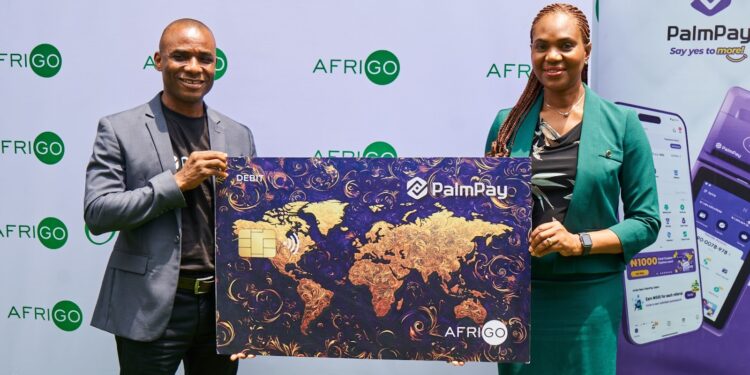
AfriGO partners with PalmPay to issue 5 million payment cards in Nigeria
AfriGO has announced a strategic partnership with PalmPay to distribute over 5 million payment cards across the country. This collaboration aims to boost financial inclusion, empower underserved communities, and strengthen the nation’s growing digital economy. AfriGO, Nigeria’s national domestic card scheme launched by the Central Bank of Nigeria (CBN) in partnership with the Nigeria Inter-Bank Settlement System (NIBSS), is designed to provide affordable and accessible payment solutions. Unlike foreign card schemes, AfriGO cards settle transactions entirely in naira, eliminating foreign exchange risks and reducing costs for banks and users. All transaction processing is handled locally within Nigeria. Speaking on the partnership, Chika Nwosu, Managing Director of PalmPay Nigeria, emphasized the importance of providing secure and cost-effective payment solutions tailored to local needs. “At PalmPay, we are committed to creating innovative and inclusive financial solutions. Partnering with AfriGO allows us to deliver localized payment options that empower Nigerians and strengthen the digital economy,” Nwosu said. The cards will enable users to carry out a range of financial transactions, including online and in-store purchases, ATM withdrawals, money transfers, and cashless payments at Agent POS terminals. Additionally, merchants will benefit from AfriGO’s Instant Settlement service, which ensures immediate payment after transactions—enhancing efficiency and improving cash flow. Ebehijie Momoh, Managing Director/CEO of Afrigopay Financial Services Limited (AFSL), highlighted the impact of this initiative on underserved areas. “We are excited to partner with PalmPay to revolutionize financial services in Nigeria. This collaboration will expand access to digital payments, particularly in underserved regions, driving financial inclusion and supporting our rapidly growing digital economy,” Momoh stated. Built on EMVCo standards, AfriGO cards offer advanced security features such as tokenization and contactless payment capabilities. PalmPay plans to integrate these features into its digital ecosystem for a seamless user experience. This aligns with global trends where tap-to-pay transactions are becoming the standard for fast and secure payments. This partnership follows a similar initiative between AfriGO and Moniepoint to roll out five million contactless payment cards across Nigeria. Both collaborations reflect ongoing efforts by fintech companies and the federal government to modernize the country’s payment systems while reducing reliance on cash-based transactions.
NADDC launches electric vehicle bus competition for Nigerian universities
The National Automotive Design and Development Council (NADDC) has unveiled an ambitious Electric Vehicle Bus Competition aimed at fostering innovation within Nigeria’s academic institutions. The initiative, launched on Thursday at the University of Lagos (UNILAG) Design Studio, brings together 12 universities from across the country to design and produce eight-seater electric campus shuttle buses. Speaking at the event, NADDC Director-General, Mr. Joseph Osanipin, emphasized the competition’s goal of driving research, creativity, and the use of locally sourced materials in vehicle production. “We are challenging universities to realize that we can achieve what others are doing in China and America,” he said. He also highlighted the involvement of key stakeholders in Nigeria’s automotive industry, including assemblers and manufacturers, who will serve as jury members for the competition. Participating Universities and StructureThe first phase of the competition features 12 universities representing Nigeria’s six geopolitical zones. These include: Ahmadu Bello University (ABU), Zaria Usmanu Danfodiyo University, Sokoto Modibbo Adama University of Technology (MAUTECH), Yola Abubakar Tafawa Balewa University (ATBU), Bauchi University of Nigeria, Nsukka Federal University of Technology, Owerri (FUTO) Obafemi Awolowo University, Ile-Ife University of Port Harcourt (UNIPORT) University of Benin (UNIBEN) University of Ilorin (UNILORIN) University of Abuja University of Lagos (UNILAG) After the initial design phase, participating teams will collaborate with private sector partners and vehicle manufacturers to bring their concepts to life. Mr. Abdullahi Ayinde, NADDC’s Director of Vehicle Electrification, noted that the competition would not only expose students to global standards but also teach them essential project management skills. He encouraged participants to explore creative solutions for sustainable transportation in Nigeria while leveraging affordable local components. The Dean of UNILAG’s Faculty of Engineering, Prof. Oluropo Adeosun, expressed optimism about the project’s potential to drive national progress. Reflecting on a previous success story where UNILAG built buses despite funding challenges, he said this initiative highlights the untapped potential within Nigerian academia. NADDC plans to expand the program in future phases to include polytechnics and technical colleges. Mr. Osanipin stressed that beyond engineers and technologists, other professionals such as craftsmen and fabricators would play vital roles in the vehicle manufacturing process. UNILAG Vice-Chancellor Prof. Folasade Ogunsola, represented by Deputy Vice-Chancellor Prof. Bola Oboh, commended NADDC for involving both first-generation and newer universities. She also explained the environmental benefits of electric vehicles and affirmed UNILAG’s commitment to maintaining its green campus status. This groundbreaking initiative is expected to not only showcase Nigeria’s engineering talent but also contribute significantly to sustainable transportation solutions for the country.

Chowdeck streamlines operations with staff cuts amid rapid expansion plans
Chowdeck, one of Nigeria’s fastest-growing food delivery startups, has laid off 68% of its contract workforce, 86 employees, following operational improvements aimed at scaling efficiency and reducing reliance on manual processes. The move coincides with its ambitious expansion strategy, including a planned launch in Ghana next week, as the company seeks to cement its position as a pan-African “super app”. CEO Femi Aluko attributed the staff reductions to advancements in automation and process optimization over the past two months. Tasks previously requiring 24 employees now need just two, while average delivery times improved from 41 to 33 minutes. The layoffs affected only contract staff, with impacted workers receiving three months’ salary, health insurance coverage, and job transition support. Aluko emphasized the cuts reflect sustainable growth planning rather than financial distress, noting the operations team had ballooned from 20 to 120 between January 2024 and January 2025. The restructuring follows a period of explosive growth. Chowdeck surpassed 10 million total deliveries in March 2025, with 60% (6 million) completed in the prior nine months. Its app dominated Nigeria’s food delivery sector, ranking first in downloads as of February 2025. A $2.5 million seed round in April 2024, backed by Y Combinator and Rappi co-founders, enabled geographic and service diversification. Beyond restaurants, the platform now delivers pharmaceuticals, groceries, and mall goods across 12 Nigerian cities, supported by 10,000 riders. Chowdeck’s Accra debut marks its first foray beyond Nigeria, leveraging streamlined processes that cut new city launch timelines from three months to one week. Ghana’s food delivery market, projected to hit $540 million by 2029, offers growth potential but presents challenges. Competitors like Glovo and Bolt Food already operate in major cities, while infrastructure hurdles contributed to past exits by other delivery firms. The company plans a lean Ghana team, initially focusing solely on Accra to replicate its city-centric Nigerian model. Nigeria’s online food delivery sector, forecast to generate $3.16 billion in 2025 revenue, remains Chowdeck’s core market. However, rivals like FoodCourt and Jumia Food vie for dominance, while cross-border players like Uber Eats maintain regional footprints. Analysts suggest Chowdeck’s hyperlocal focus, curating Nigerian cuisine and partnering with informal vendors, could differentiate it in new markets. Yet scaling this model internationally requires navigating varied consumer preferences and logistical ecosystems. As Chowdeck balances workforce optimization against fivefold growth targets for 2025, its ability to sustain delivery speed and service quality during rapid expansion will likely determine its super app aspirations. The Ghana launch, now imminent, serves as the first test of whether its Lagos-honed playbook translates across African borders.

Kenya launches crackdown on TikTok over child exploitation concerns
Kenyan authorities have ordered an immediate investigation into TikTok and demanded the removal of exploitative content involving minors after a BBC report exposed rampant child exploitation on the platform’s live streams. The move underscores the growing scrutiny of social media giants’ content moderation practices in Africa. The Communications Authority of Kenya (CA) announced stringent measures on Friday, March 7, 2025, following a March 3 BBC investigation that revealed underage Kenyan users were coerced into performing sexualized acts during TikTok livestreams. The report alleged that the platform profited from virtual gifts sent by viewers during these streams, sparking national outrage and demands for accountability. Regulatory Action and TikTok’s ObligationsThe CA has directed TikTok to immediately take down all content linked to child exploitation and submit a detailed report explaining how such material evaded its moderation systems. Authorities have also demanded a comprehensive plan to strengthen child safety protocols, aligning with Kenya’s Computer Misuse and Cybercrimes Act, Films and Stage Plays Act, and Children Act. “This isn’t just about penalizing wrongdoing, it’s about ensuring platforms prioritize child safety as a non-negotiable standard,” a CA spokesperson stated. Failure to comply could result in fines or restrictions under Kenyan law, though officials did not specify a timeline for the probe. The revelations have intensified debates about parental oversight in Kenya’s rapidly digitizing society. The government has urged caregivers to leverage parental control tools and educate children about online risks. “Awareness is critical. We must equip families to navigate these spaces safely,” said Maryanne Karanja, a child protection advocate. Critics argue the crisis highlights systemic gaps in global tech firms’ approach to emerging markets. “Content moderation often lacks cultural and linguistic nuance in regions like Africa,” noted tech analyst Juma Mwangi. “This isn’t unique to TikTok, but it’s a wake-up call for all platforms.” Broader Implications for Tech RegulationKenya’s crackdown mirrors rising global pressure on TikTok, which faces similar scrutiny in the U.S., EU, and Asia over data privacy and harmful content. The platform’s response could set precedents for how African nations regulate social media amid soaring internet adoption. For now, Kenyan officials emphasize collaboration over outright bans. “We’re pushing for accountability, not punishment,” the CA spokesperson added. “But if platforms won’t act responsibly, we will.” As investigations proceed, the case shows the delicate balance between digital innovation and safeguarding vulnerable users, a challenge reshaping tech governance worldwide.