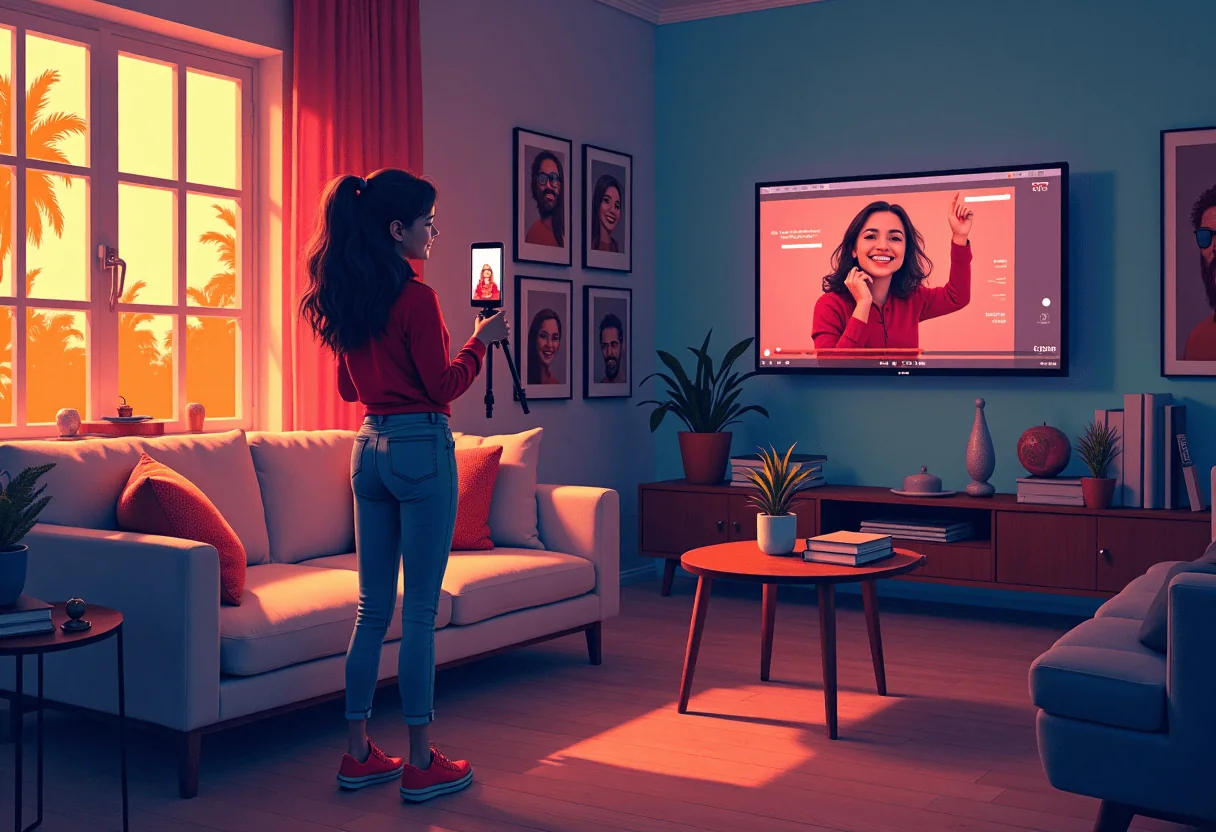
Not every viral post is sweet—sometimes, it comes with stones you didn’t expect.Social media has turned many of us into content creators, sharing snapshots of our lives for likes, comments, and shares. From #OOTD selfies in front of the living room mirror to full-blown home tours on TikTok, doing a #Getreadywithme videos with hubby or wifey, it’s common for people to open up their private spaces for public consumption. But as we chase the next viral moment, are we unknowingly putting ourselves and our homes in danger? Serving Jollof with Stones Last month, I saw a video of a young influencer, Blessing , proudly showing off her newly furnished apartment in Lekki. She gave a full tour—showing every corner, from the balcony view to the designer furniture in her living room. “God did it,” she captioned the video, with praise emoji and hashtags like #Blessed and #BigGirlMoves. At first, the post seemed harmless—just another display of success. But a week later, Blessing shared another post, this time in tears. She’d been robbed. Strangers broke into her home while she was out, stealing valuables worth millions. Police investigations revealed that the thieves had pieced together information from her video, including the layout of her apartment and her building’s location. Blessing’s story is a reminder that not everything sweet is safe. Like finding stones in your Jollof rice, exposing your home for content can bring dangers you never anticipated. As stones crack your teeth when bitten, so can exposing too much online cracks you safety. The Dangers of Sharing Too Much Security Risks When you share videos or photos of your home, you’re giving strangers an insider’s view of your private space. Details like your address, neighbourhood landmarks, or even the times you’re usually out can be pieced together by malicious individuals. And just one day, your house might just welcome and unwanted guests. Target for Robberies or Fraud Publicly displaying wealth—whether it’s a new car in your driveway or expensive gadgets in your room—can make you a target for thieves or scammers, even kidnappers. Beware! Loss of Privacy Once something is online, it’s no longer fully yours. Your home, once a safe haven, becomes a public stage for strangers to judge, comment on, or even mock. Imagine taking the whole world into your bedroom, standing in your undies and explaining to them the most intimate details of your life? Unwanted Attention Not all followers have good intentions. Sharing personal spaces might attract obsessive fans, stalkers, or people who want to exploit your openness. Creepy predators and rapists can find that #Aday in my life video a perfect tool to targeting their next victims. Why Do We Do It? In the quest for online clout, many people forget the boundaries between public and private. Social media rewards oversharing with likes, followers, and sometimes even brand deals. But at what cost? A friend of mine once explained it this way: “If you’re not showing your achievements, are you really achieving?” It’s a mind-set driven by FOMO and the pressure to prove your worth online. Unfortunately, this often leads to oversharing and unnecessary risks. If not, why does the world need to know how you bathe with you spouse, how your bedroom looks like, what your bathroom looks like, what you purchase, how much you spend in a day or what personal/ freaky hobbies you and babe do that literally only you and God should know? Tips for Serving Safe Jollof Here’s how to share content while protecting your privacy and safety: Blur or Avoid Identifiable Details If you’re sharing photos or videos, avoid showing house numbers, street signs, or easily recognizable landmarks near your home. Delay Your Posts Don’t share your location or current activities in real time. Post your content after you’ve left the area to avoid being tracked. Keep Valuables Off Camera Avoid showing expensive items like jewellery, electronics, or luxury furniture in your posts. There’s no need to advertise your assets. You achieve, enjoy and don’t flex, haters will watch and target. Limit Your Audience Use privacy settings to control who sees your content. Not everything needs to be public. Be Selective About What You Share Before posting, ask yourself: “Do I really need to share this? Could it expose me or my family to unnecessary risks?” If celebrities flee from paparazzi like plagues, why must you attract attention, most times who are criminals? A Word of Caution Social media has blurred the lines between public and private life, but it’s important to remember that not everyone watching your content has good intentions. While it’s fun to share your wins and milestones, protecting your safety and privacy should always come first. So, the next time you’re tempted to post a home tour or show off a new purchase, think twice. Some Jollof may look sweet, but it’s better to be safe than sorry. After all, no amount of likes or views is worth your peace of mind. Stay safe, stay smart, and serve your Jollof without the stones. [Edited by Muhammad Sal]

FG introduces electronic visa application system, cancels visa-on-arrival amid security reforms
The Nigerian government has announced plans to discontinue its visa-on-arrival program. Introduced in 2020 to facilitate easier entry for business travelers and tourists, the policy allowed eligible visitors to obtain visas at entry points. However, citing security concerns and inefficiencies, Minister of Interior Dr. Olubunmi Tunji-Ojo stated that the system will be replaced with stricter measures. Starting between March 1 and April 1, 2025, Nigeria will introduce an electronic visa (e-Visa) system designed to streamline applications and enhance security through real-time background checks with Interpol and other global agencies. Additionally, visitors will be required to pre-fill landing and exit cards linked to global databases for better migration management6. The e-Visa platform aims to reduce bureaucratic hurdles by allowing applicants to submit documents online securely. This move aligns with international best practices in immigration management while bolstering national security by ensuring that all entries are thoroughly vetted before arrival

NITDA collaborates with Flutterwave and Alami on digital economy initiatives
The National Information Technology Development Agency (NITDA) has signed a Memorandum of Understanding (MoU) with Flutterwave, Africa’s leading payments technology company, and Alami, a prominent player in empowering young entrepreneurs and SMEs. This strategic partnership aims to bridge the digital divide by promoting fintech innovation, enhancing digital literacy, and creating an environment where businesses can leverage secure financial solutions. The collaboration aligns with NITDA’s commitment to implementing the National Digital Economy Policy and Strategy (NDEPS), ensuring that small and medium-sized enterprises are equipped with the necessary tools to thrive in the digital era. By strengthening public-private partnerships through digital payment infrastructure and technology financing, this initiative seeks to empower Nigerian businesses with seamless financial solutions. Kashifu Inuwa Abdullahi, Director-General of NITDA, emphasized the importance of public-private collaboration in achieving Nigeria’s digital economy goals. “Flutterwave’s innovative fintech solutions align perfectly with our vision for a thriving digital economy,” he noted. Olugbenga Agboola, CEO of Flutterwave, expressed confidence that their collaboration will help SMEs scale confidently using secure payment technologies. This partnership is part of broader efforts by NITDA to reform Nigeria’s economy through inclusive growth by leveraging digital literacy and cultivating tech talent. It underscores NITDA’s commitment to fostering an inclusive and sustainable digital future for all Nigerians.
Abuja residents to experience temporary power outages this weekend
Residents of Abuja are bracing for a weekend of power outages as the Transmission Company of Nigeria (TCN) embarks on essential maintenance work at one of its key substations. The planned annual preventive maintenance exercise is set to take place at the Apo 132/33 kilovolt transmission substation, affecting several areas across the Federal Capital Territory. The maintenance, scheduled for Saturday and Sunday from 9:00 a.m. to 4:00 p.m., will involve two critical transformers, TR3 and TR4, at the substation. These transformers play a vital role in supplying bulk power to the Abuja Electricity Distribution Company (AEDC), which in turn distributes electricity to homes and businesses. On Saturday, residents in areas such as The National Hospital G2 injection station, Garki, Area 1, and Asokoro can expect disruptions in their electricity supply. Meanwhile, on Sunday, communities including APO Legislative Quarters, APO Resettlement, Gudu, APO Mechanic Village along with surrounding neighborhoods will experience similar outages. TCN’s General Manager for Public Affairs, Mrs. Ndidi Mbah explained that these interruptions are unavoidable due to the nature of the work involved. She assured residents that once the maintenance is completed each day; power supply would be restored immediately. While this may cause inconvenience for some residents who have grown accustomed to more reliable services recently improved by TCN’s efforts elsewhere in Nigeria, such as commissioning new transformers, the company emphasizes that these exercises are crucial for ensuring long-term reliability and efficiency of power distribution systems. In recent months Abuja has seen significant improvements with major projects like relocating transmission towers along road dualization projects by FCDA contributing positively towards stabilizing energy supplies across various parts of FCT despite occasional disruptions caused by necessary technical interventions like this one happening now over weekends when demand typically drops slightly compared with weekdays peak hours usage patterns observed historically within urban settings globally including here locally too where infrastructure remains under constant upgrade cycles aimed ultimately enhancing overall consumer satisfaction levels overtime gradually moving forward progressively into future times ahead hopefully soon enough

Federal government empowers 270 educators with digital literacy skills
The Federal Government has embarked on several initiatives aimed at equipping educators and students with the skills necessary for global competitiveness. Recently, a significant milestone was achieved with the training of 270 technical teachers in digital literacy and trade-specific skills. The intensive 21-day program, held in Ibadan, focused on bridging the gap between theoretical knowledge and practical applications. This effort is part of a broader strategy to strengthen technical and vocational education (TVE), which plays a pivotal role in preparing students for real-world challenges. According to Dr. Olatunji Alausa, Minister of Education, who was represented by Dr. Muyibat Olodo, Director of Technology and Science Education, well-trained educators are crucial in shaping the future of students by fostering innovation and adaptability. “As technological advancements reshape industries and create new opportunities,” Dr. Alausa emphasized, “the need for skilled professionals who can adapt and innovate becomes paramount.” The Oyo State Commissioner for Education, Prof. Salihu Adelabu, commended these efforts while urging participants to apply their newfound knowledge effectively. He highlighted that Oyo State has revamped its technical colleges to support this initiative fully. Furthermore, Mrs Blessing Ogwu from the Innovation Development and Effectiveness in Acquisition of Skills (IDEAS) project noted that such training programs are cost-effective ways to improve educational outcomes without compromising equity. In addition to teacher training programs like this one being implemented across Nigeria’s educational landscape is an upcoming curriculum reform set for 2025: introducing subjects such as plumbing alongside digital literacy into primary school curricula will help prepare younger generations with essential life skills early on.
Bybit suffers historic $1.4 billion crypto hack
Cryptocurrency exchange Bybit has been hit by one of the largest hacks in history, losing over $1.4 billion worth of Ethereum and related tokens. The attack targeted a cold wallet, exploiting advanced phishing techniques to manipulate smart contract logic and drain funds. Bybit CEO Ben Zhou explained that hackers used a sophisticated “masked” transaction method to deceive signers into approving malicious operations without realizing it. This allowed them to gain control of the cold wallet and transfer all its contents to an unknown address. The hack sent shockwaves through the crypto market, causing Ether’s price to drop by about 4% initially before rebounding slightly due to speculation about potential buybacks. However, after clarifications from Bybit that no large-scale ETH purchases were planned, market sentiment turned bearish amid concerns over selling pressure from the hacker. Despite this setback, Bybit remains solvent with all client assets fully backed. The stolen funds are being tracked across multiple wallets by blockchain security teams.