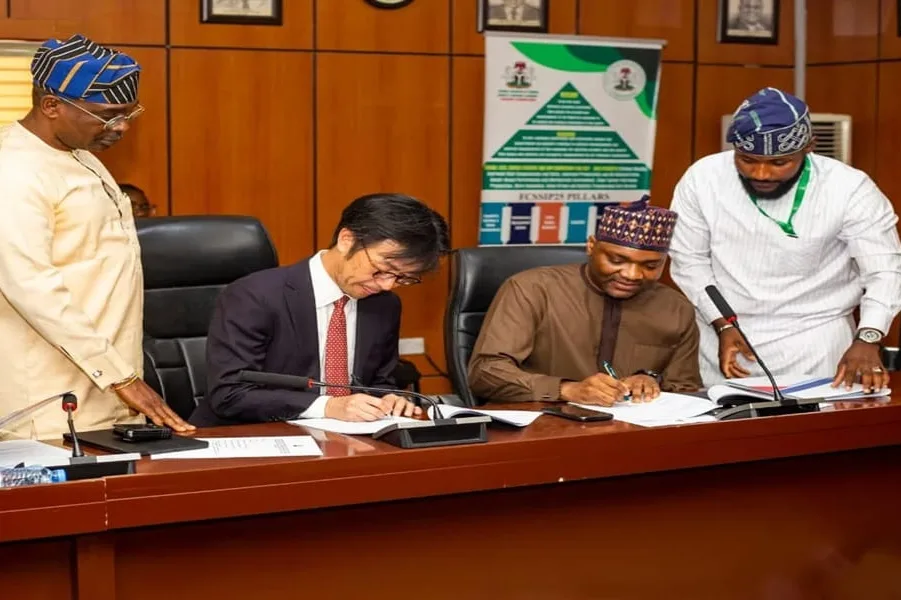
Nigeria and Japan have signed an agreement to establish a $50 million innovation fund aimed at supporting Nigerian startups in tackling critical social challenges. The agreement was signed in Abuja by the Nigeria Sovereign Investment Authority (NSIA) and the Japan International Cooperation Agency (JICA), to structure public investment vehicles focused on sectors such as healthcare, education, food security, and financial inclusion. Under the established arrangement, JICA will provide $14 million in grants, while NSIA is committing up to $20 million. Selected startups will receive technical support, product development guidance, scaling expertise, and assistance in accessing new markets. According to the Japanese Ambassador to Nigeria, Suzuki Hideo, the scheme marks Japan’s first-ever deployment of a development financing model that incorporates official development assistance with private capital. Nigeria is the first country where this “co-creation” approach is being tested. The model is targeted at promoting collaboration between startups in Nigeria and Japanese partners, by combining development aid with market-driven investment to generate sustainable social impact. NSIA Managing Director and CEO, Aminu Umar-Sadiq, described the fund as filling the current existing gap in the startup ecosystem of Nigeria by providing early-stage capital alongside strategic growth support. The fund is currently in its preparatory phase, with NSIA identifying eligible startups aligned with its investment priorities. Investments are to begin once the selection process is completed.
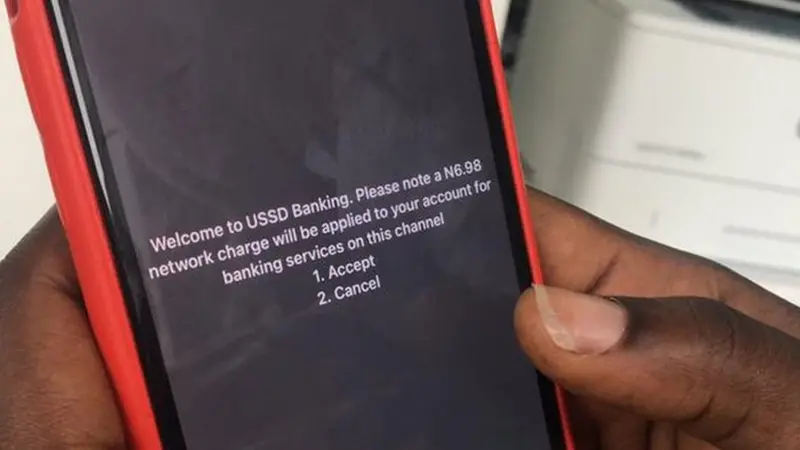
USSD banking: Nigerians preference over mobile banking apps
For more than 20 years, banking in Nigeria has slowly moved from long queues and physical bank branches to a world of transaction that lives mostly on phones. In recent times, online banking platforms, mobile apps and contactless payments have shaped the way people manage their money. Nigerians now expect speed, convenience and instant access to their money. However, despite the strong push towards banking apps, Unstructured Supplementary Service Data (USSD) is widely used by many Nigerians. Some believe USSD is “old school” but its popularity is largely tied to issues of trust, accessibility and reliability. Nigerians trust what works consistently. USSD does not depend on internet access, it works on basic button phones like “Tonasobe” as well as smartphones like “Android and iPhone”. In Nigeria, when it comes to money, reliability matters more than appearance. Why USSD is still a banking lifeline for Nigerians USSD is often underestimated by most people because it does not look modern. There are no colourful dashboards or advanced integrations. Yes, it looks very basic but that very simplicity is what gives it staying power. The resilience of USSD among Nigerians depend on its features which are: According to the Central Bank of Nigeria (CBN), between January and June 2024, Nigerians carried out 252 million USSD transactions with a total value of approximately ₦2.19 trillion which is roughly $2.8 billion US dollars (based on an average exchange rate of ₦780 to $1 during that period). At the full year of 2023, 630.6 million USSD transactions was recorded with a combined value of ₦4.84 trillion and about $6.2 billion US dollars. These figures showed that while mobile apps was growing, USSD is still a core part of how millions of people access their money, particularly for users without smartphones or reliable internet access. At the bank level in 2022, major Nigerian banks reported significant USSD activity, for example, Access Holdings processed transactions worth ₦2.4 trillion and $3.1 billion US Dollars. Through USSD, United Bank of Africa (UBA) handled ₦1.56 trillion and $2 billion US Dollars Guaranteed Trust Holding Company (GTCO) processed ₦3.21 trillion and $4.1 billion US Dollars which was slightly down from 2021. Together, these three banks managed roughly ₦7.19 trillion, $9.2 billion US Dollars in USSD transactions for 2022 alone. These figures made it clear that according to CBN, USSD remains more than a “backup” option. It is still a central part of Nigeria’s digital banking ecosystem. This is why many banks across Nigeria, Africa, Asia, and parts of Latin America still see a large share of their mobile transactions happening through USSD. In some cases, it is more than half. Sometimes, the most valuable technology is not the most impressive one, it is the one that quietly keeps working day after day for the people who need it most. USSD vs mobile banking apps: Key differences in Nigeria It might be very easy to think of USSD and mobile banking apps as rivals, but the truth is they each serve their own group of users. Elements USSD Mobile Banking Apps Internet Needed No internet required. Internet needed to use. Device Compatibility Works on all phones, even basic ones, (button phones). Only works on smartphones. Ease of Use Very simple, just dial codes. More options, can be a bit complicated. Speed Quick for simple tasks. Fast but depends on internet connection. Security Safe, no information stored on phone. Safe, users password, pins or fingerprints. Cost Very cheap, no data needed. Can use data which may cost more. Available Transactions Basic actions like, balance check, money transfer, airtime purchase. wide range, e.g. pay bills, view history, make investments. Popularity in Nigeria Still widely used, especially where internet is poor. urban cities, and among smartphone users. Mobile apps are complementing USSD in Nigeria. It is not about clinging to the past, it’s about practicality. USSD gateway providers in Nigeria have helped banks keep a secure, accessible, and affordable way of connecting with millions of customers. Confidence and Regulation of USSD Banking in Nigeria (2018-2025) In Nigeria, USSD has been an important way for people to access banking, especially for those without smartphones or reliable internet, but for many users, trust in USSD depends on clear rules and protection from unexpected charges. In 2018, the Central Bank of Nigeria (CBN) ensured banks resolved USSD transaction complaints quickly, within three days. It was meant to reassure users that if something went wrong, it could be fixed promptly. This was one of the important steps carried out by CBN in building confidence in digital banking. Between 2019 and 2024, a disagreement between banks and mobile network operators came up over who should pay for USSD services which caused some confusion. Customers were often unsure how they would be charged or whether the system was fair. In December 2024, regulators asked banks and telecommunication companies to pay outstanding debts estimated at ₦2.50 billion and they gave clear rules for future charges. This was to restore transparency and reassure users that USSD remained a reliable service. Then in June 2025, the Nigerian Communications Commission, (NCC) introduced a major change. USSD charges would now be deducted directly from users’ airtime rather than their bank accounts, and only with the user’s consent. It was designed to make the cost of using USSD clearer and prevent surprise deductions. The regulators hoped that it will strengthen trust among Nigerians who rely heavily on USSD transactions. These regulatory efforts from 2018 to 2025 clearly shows that regulators are aware that Nigerians need to trust the USSD transaction system by enforcing faster, dispute resolution, clarifying billing, and giving users more control over charges. The aim is to keep USSD safe, reliable, and accessible particularly for millions of Nigerians who depend on it. The Future of USSD Banking in Nigeria In Nigeria, there is a growing interest in hybrid solutions that blend USSD with modern technologies. For example, banks are exploring ways to link USSD with app features or chatbots to give users more options. Right
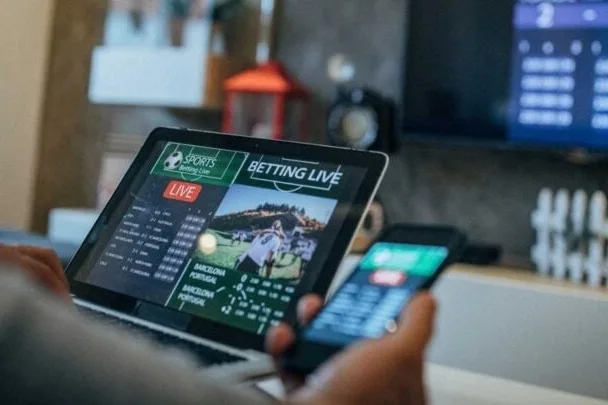
Lagos State implements 5% tax on sports betting winnings across all online platforms
The Lagos State Government has introduced a mandatory 5% withholding tax on all sports betting winnings generated within the state. The Lagos State Lotteries and Gaming Authority (LSLGA) confirmed the policy in a statement, directing all licensed operators to automate deductions at the point of payout. According to the state’s government, all licensed betting platforms henceforth must deduct 5% from the winnings of bettors before the funds are released to the account of users. Winners are required to provide their National Identification Number (NIN) to fulfill “Know Your Customer” (KYC) requirements before withdrawing funds, in order to prevent fraud and ensure that high earners contribute to the developmental funding of the state. The deducted tax is remitted automatically to the Lagos State Internal Revenue Service (LIRS) as a withholding tax credit.Previously, individual winnings across betting platforms in Lagos were untaxed due to challenges in voluntary reporting and a lack of integrated digital tracking.The government aims to formalize the sector and create a consistent revenue stream from the gaming industry, by partnering with the Lagos State Internal Revenue Service (LIRS).The Lagos State Lotteries and Gaming Authority, led by CEO Bashir Are, stated that the rule was meant to enhance tax compliance, transparency, and accountability across the gaming sector of the state. All licensed betting operators are urged to implement the deduction immediately.
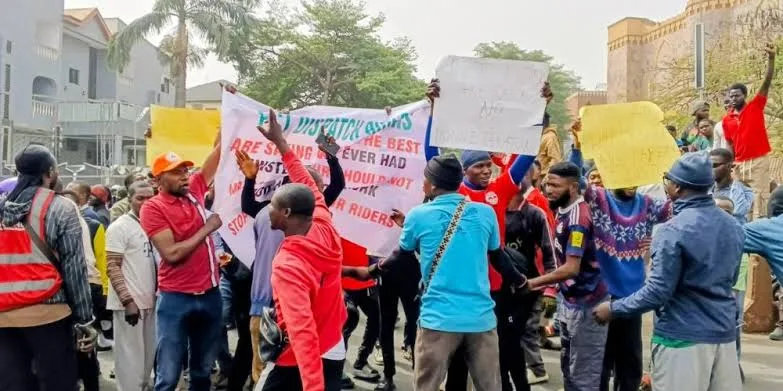
Abuja dispatch riders reject ₦15,000 permit fee, protest against multiple taxes
Thousands of dispatch riders in the Federal Capital Territory (FCT) staged a protest on February 19, 2026, against the introduction of a new ₦15,000 permit fee and what they describe as burdensome double taxation. The demonstrators in their numbers gathered at the FCTA Secretariat, halting logistics operations, demanding the harmonization of revenue collection across the capital. Before the protest, riders are legally required to pay annual levies to Area Councils, which include the Abuja Municipal Area Council (AMAC), Bwari, and Gwagwalada. However, the emergence of a new ₦15,000 paper permit, combined with the revenue demands from the FCT Administration (FCTA), has created an environment of double taxation.The protest was organized to resolve the recurring disputes between the central FCT authorities and the six Area Councils over who hold the constitutional right to collect operational fees from small businesses and logistics providers.Daily Tech Nigeria gathered that riders were reportedly asked to pay ₦25,000 by a new FCTA revenue collector, nearly double the ₦13,000 they usually pay to their individual Area Councils. Protesters alleged that many motorcycles have been impounded by security agents, with owners forced to pay the ₦15,000 or ₦25,000 fees to secure their release.Protesters also decries the payment of market entry fees, where riders are charged ₦300 for every single delivery made within major Abuja markets.The Dispatch Riders stressed that the current tax regime is crippling their livelihoods. They stated that they are not opposed to legitimate taxation but are being exploited by duplicate and unclear charges that do not reflect their actual daily earnings. “We riders know it is our statutory obligation to pay tax, and we have been complying… but all of a sudden, another group of tax collectors emerged from nowhere with another demand in the name of the FCT Administration, asking for a higher tax compared with what we pay to AMAC” – Olawale Ilesanmi The governing body in response to the grievances of the protesting protesters, have promised to investigate the allegations of illegal extortion and work toward a more transparent revenue framework. The protest was later suspended after an agreement between the representatives of the riders and the FCT Transportation Secretariat was reached. Meanwhile, logistics operators warned that they would resume protests if the FCT Minister, Nyesom Wike, does not intervene to permanently unify the tax collection process.
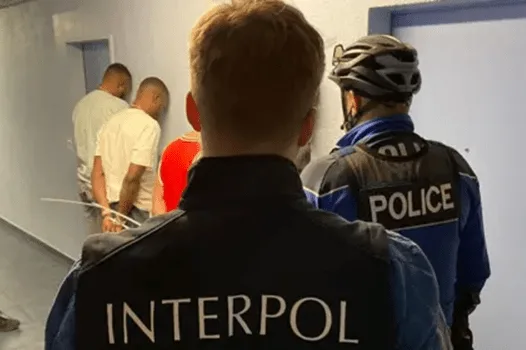
Interpol nabs 651 fraudsters, recovers $4.3M across 16 African nations
An operation led by Interpol has resulted in the arrests of 651 fraudsters and the recovery of $4.3 million across 16 African nations.The eight-week mission, titled “Operation Red Card 2.0,” which took place between December 8, 2025, and January 30, 2026, was led by Interpol to dismantle organized cybercrime networks involved in investment scams and mobile money fraud.It operated under the African Joint Operation against Cybercrime (AFJOC) framework, funded by the United Kingdom’s Foreign, Commonwealth & Development Office.According to the report by itwire, 1,247 victims worldwide suffered a combined financial loss exceeding $45 million, over fraudulent schemes during the period under review.The report also stated that Law enforcement agencies seized 2,341 digital devices and disabled 1,442 malicious IP addresses, domains, and servers used to host scams.On the Interpol list, Nigeria, Kenya, and Côte d’Ivoire emerged as primary hubs for these activities, with Nigeria alone dismantling a ring that utilized over 1,000 fraudulent social media accounts.In Nigeria, the police dismantled a syndicate that recruited young individuals for identity theft and social engineering. One notable success involved the arrest of six individuals accused of hacking a telecommunications operator’s internal platform to divert $4.8 million (N7.7 billion) in airtime and data.In Kenya, the Kenyan authorities targeted “pig butchering” investment scams, where victims were lured into making small initial payments on messaging apps before their accounts were blocked.Meanwhile, in Côte d’Ivoire, police arrested 58 individuals linked to predatory mobile loan applications that used abusive debt-collection practices to harvest sensitive financial data.Neal Jetton, Director of the Cybercrime Directorate of the Interpol, while speaking via the media, emphasized that collaboration should never be downplayed when combating transnational cybercrime; ”These cybercriminal syndicates cause significant financial and psychological harm to individuals and businesses. Operation Red Card highlights the importance of collaboration when combating transnational cybercrime” Interpol stated that these scams are spreading because many people lack digital literacy and face economic challenges. Interpol also encouraged all victims of online fraud to report incidents to local law enforcement to assist in ongoing investigations.
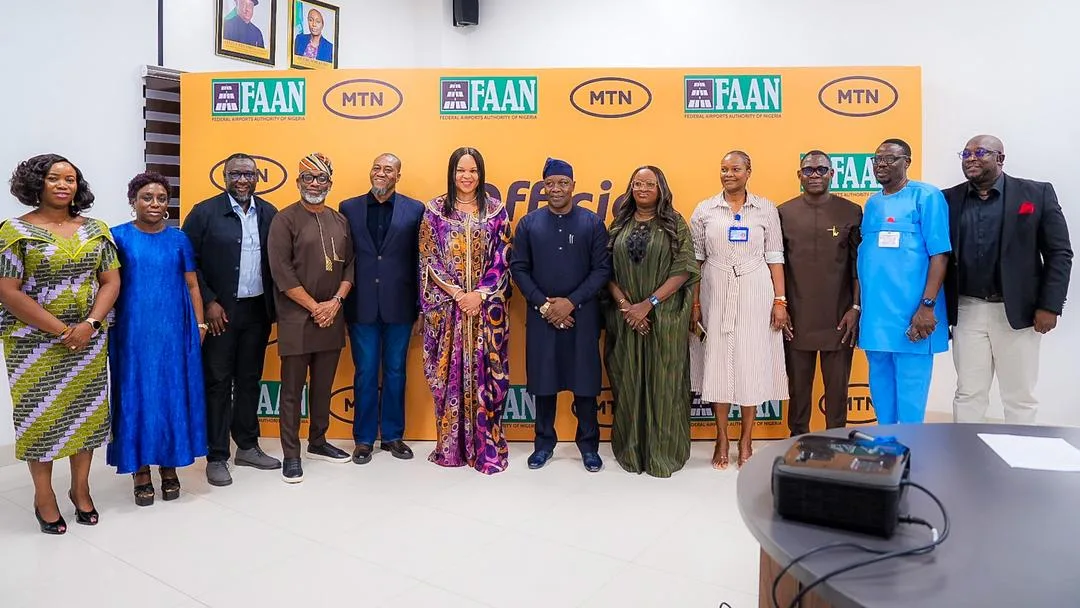
FAAN, MTN Nigeria launch free wiFi at Lagos, Abuja Airports
The Federal Airports Authority of Nigeria (FAAN) and MTN Nigeria have launched free WiFi services at the Lagos and Abuja airports. The service is currently live at the Murtala Muhammed International Airport (MMIA) Terminal 2 in Lagos and the Nnamdi Azikiwe International Airport (NAIA) in Abuja.This ends a decade-long internet blackout at Nigerian airports after the collapse of a previous partnership with Globacom in 2015. Since then, travelers have relied on personal mobile data or private lounges for connectivity. The new project operates under a Public-Private Partnership (PPP) model, where MTN Nigeria manages the infrastructure and operational costs, while FAAN provides branding and advertising spaces within the terminals. FAAN plans to extend coverage to the MMIA temporary terminal within weeks, followed by Port Harcourt, Kano, and Enugu international airports over the next three months.The partnership requires no direct capital expenditure from the government, as MTN offsets installation and maintenance costs through on-ground branding rights.Travelers can connect without a password, though the service may eventually feature time-limited sessions or bandwidth tiers. ”In 21st-century Nigeria, no Nigerian airport should be an offline island. This WiFi is our promise that FAAN is listening… we are not simply installing routers; we are building bridges between government objectives and citizen experience” – Olubunmi Kuku, FAAN Managing Director MTN stated that the infrastructure is designed to manage contention of many users drawing from the same bandwidth source during travel hours.