
The Federal Ministry of Communications, Innovation & Digital Economy is taking steps to bridge the existing digital divide by linking electricity access with internet connectivity. The decision was made during a meeting in Abuja which focused on integrating digital infrastructure development. The event, organised by the Federal Ministry of Communications, Innovation & Digital Economy in collaboration with the Partnership for Digital Access in Africa (PDAA), brought together government officials, private sector players, development finance institutions, and philanthropic organisations. The meeting was aimed at exploring how investments in electricity, broadband connectivity, affordable devices, and digital skills can expand access to digital services, particularly in underserved and rural communities. Speaking at the event, the Minister of Communications, Innovation and Digital Economy, Dr. Bosun Tijani, stressed that digital inclusion goes beyond simply expanding broadband coverage, but giving support needed to meaningfully participate in the digital economy; “Digital inclusion is not just about connectivity; it is about ensuring that Nigerians have the power, devices, skills, and support needed to meaningfully participate in the digital economy” – Dr. Bosun Tijani He emphasized that programs such as Flagship Nigeria and the 3 Million Technical Talent programme are designed to integrate electricity supply, affordable internet access, and skills development into a single coordinated strategy. According to the ministry, many rural and peri-urban communities continue to face unreliable electricity and unaffordable devices, limiting the practical use of digital tools for education, commerce, agriculture, healthcare, and public services. Meanwhile, PDAA Chief Executive Officer Ibrahima Guimba-Saidou emphasised that electricity should be treated as a foundational digital infrastructure. He stated that the partnership aims to move beyond policy discussions, and toward implementable systems that can operate at scale. The goal is to blend public and private funding as well as prioritising last-mile communities that are often left behind in digital expansion plans. Participants at the meeting discussed the need to align infrastructure rollout, funding strategies, device affordability programmes, and skills training. Without such coordination, organisers warned, communities may receive connectivity without power or digital training without functional tools. The integrated electrification-and-connectivity model seeks to reduce fragmentation in infrastructure planning by strengthening collaboration between power providers, telecom operators, device manufacturers, and training institutions.

Unity bank confirms Providus merger now in integration phase
Unity Bank has confirmed that its proposed merger with Providus Bank is a done deal, dismissing reports that the transaction had collapsed. In a statement shared on Wednesday, the bank clarified that the merger has secured regulatory approvals and is currently at the integration stage. Unity Bank stated that the transaction continues to enjoy the support of the Central Bank of Nigeria (CBN), including a pivotal financial accommodation to facilitate the merger. The deal has also received a “no objection” approval from the Securities and Exchange Commission (SEC). Both banks’ shareholders had earlier endorsed the merger at a general meeting in September 2025, to formally adopt the scheme of merger. The combined institution is envisioned to have a capital base exceeding ₦200 billion, which is the minimum requirement for maintaining a national banking licence under the recapitalisation framework of the CBN. The Managing Director and CEO of Unity Bank, Ebenezer Kolawole, described the merger as a pivotal development for both institutions. He also stated that the merger will boost capital strength, operational capacity, and strategic positioning, to better support economic growth and deliver innovative financial solutions across Nigeria.

Terrahaptix gains $22 million from Silicon Valley’s Lux Capital to scale autonomous security
Terrahaptix Inc., a Nigerian defense technology firm, has raised $22 million capital to expand its autonomous surveillance operations across Africa. The investment, led by Silicon Valley-based Lux Capital and Resilience17 Capital, brings the total funding of the company to $34 million and elevates its valuation above $100 million.Terrahaptix, formerly Terra Industries, which was founded in 2024 by 22-year-old Nathan Nwachukwu and 24-year-old Maxwell Maduka, has emerged to be a defense prime on the African continent. The company specializes in building homegrown hardware and software to protect critical infrastructure, such as power plants, oil pipelines, and mining sites, from terrorism and vandalism.The Abuja-based startup operates a 15,000-square-foot manufacturing facility and has recently secured contracts to protect assets valued at approximately $11 billion across Nigeria and Ghana. The $22 million bridge round was completed in under two weeks, following an $11.8 million seed round led by 8VC, founded by Palantir co-founder Joe Lonsdale, just one month prior.The round saw participation from Flutterwave CEO Olugbenga Agboola, global venture firms, and celebrity angel investors including American actor Jared Leto.Fresh capital will fund the construction of a second megafactory in Africa, intended to boost production to 40,000 autonomous units annually.The Terrahaptix ecosystem consists of three main hardware components connected by a proprietary AI “brain” called ArtemisOS: Terrahaptix plans to break ground on its new mega-factory and has recently signed a joint venture with AIC Steel to establish a manufacturing hub in Saudi Arabia.
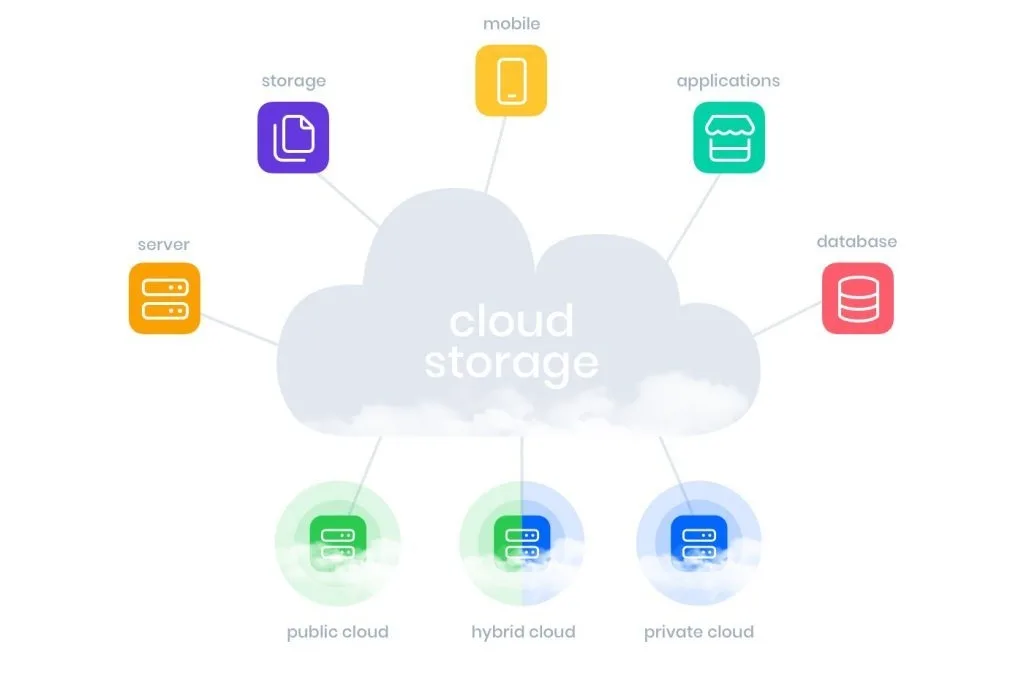
What does ‘Cloud Storage’ mean? Your files are not in the Cloud
Where is your Data kept? When you back up your phone, you probably don’t think too hard about where those files go. Most of us don’t even think about cloud storage until something goes wrong. Your phone suddenly refuses to turn on. It gets stolen. It falls down into water or it just starts acting up one random morning. You panic for a few seconds, then you thank God saying “I backed everything up sha”. You sign in on a new device, and just like that, your photos, contacts, emails, and WhatsApp chats reappear. It feels effortless, just like magic but sincerely, it is not. That “cloud” you trust so much is one of the most misunderstood parts of modern technology and understanding how it really works says a lot about who controls your data, where it lives, and what you’re actually trading for convenience. First of all, the “cloud” is not the internet When people say their files are “in the cloud”, it sounds like the data is floating somewhere in the sky or living inside the internet itself. That’s not what’s happening! Cloud storage simply means your files are saved on computers you don’t own, in places you will probably never see, operated by companies you already rely on, like Google, Apple, Microsoft, and Amazon. Every time you upload files or a photo to Google Photos, back up your WhatsApp chats, save a document to iCloud, or keep files on OneDrive, you are storing data on their machines, not yours. You’re not owning your file storage. You’re simply renting their space for your files to stay. So where does your data actually go? When you upload a file to the cloud, it travels through the internet to a server which is a powerful type of computer that provides data, resources, or services to other software or devices known as clients over a computer network. A server is simply built specifically to store, manage, and deliver data across devices. These servers don’t sit under someone’s desk. They live inside massive, highly secured buildings called data centres. Data centres are scattered across the world. They are located in Africa, Europe, Asia, and the Americas. Inside them are thousands of servers running nonstop, day and night, handling everything from emails and photos to bank transactions and video streaming. Your data does not sit in just one place, either. In most cases, it’s copied and stored in multiple locations. So that, if one server fails or one data centre has an issue, your files are still available somewhere else. This is why you can lose your phone in Sokoto, sign in on a new one, and still find your photos waiting for you. Why do your files follow you everywhere One reason cloud storage feels so effortless is location. Big tech companies like Google, iCloud and the rest try to store your data in data centres close to where you live, so it loads faster but they also spread duplicate copies across regions for reliability. That’s why you can: Your data does not move because you moved, instead you’re just being connected to the nearest copy available. What cloud storage protects you from and what it doesn’tCloud storage is actually very good at protecting your data from: What people don’t know or rarely talk about is, cloud storage does not protect you from: Your files may be safely stored, but access is conditional. If you can’t sign in, your data might as well not exist or be deleted. Who really controls your data? This is the uncomfortable question you don’t usually bother to read about in the terms and conditions. While you create the files, the companies running cloud platforms control your data. For example, such as: They don’t usually read your files, but they do control the systems that hold them. That’s the trade-off most of us ‘accept’ without thinking, we give into convenience in exchange for someone else’s control. For many people, it’s a fair deal. Cloud storage makes modern digital life possible. It keeps memories alive. It saves school work, business records, and years of communication. It’s still very important to understand what you’re relying on. So, what does “cloud storage” really mean? It means your files are not floating in the sky. They are stored on powerful computers, inside real buildings, operated by real companies, spread across the world. Every time you tap “backup,” you’re trusting those systems to remember what your device might forget. And most of the time, they do. But the cloud is not a whiteman’s magic. It’s an infrastructure located somewhere and I hope knowing that gives you a little more power over how you use it.
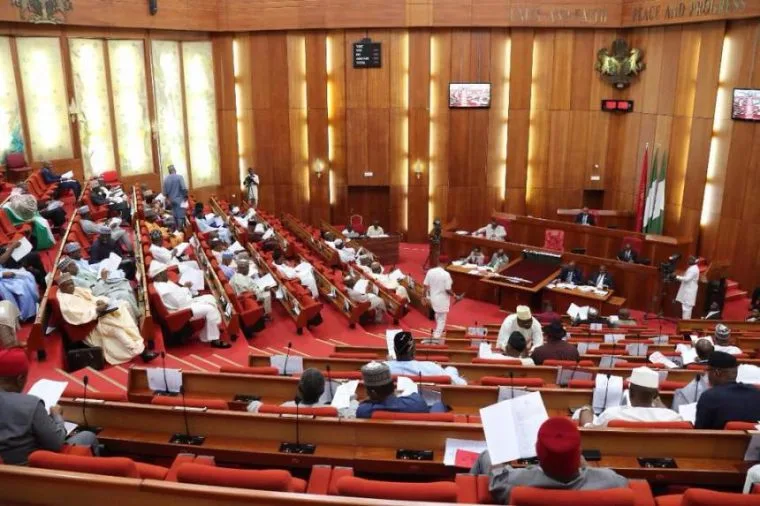
Senate okays e-transmission, but manual loophole ignites 2027 election fears
As Nigeria approaches the 2027 general elections, the debate over electoral reform is once again taking centre stage. At the heart of it is the Electoral Act 2022 (Amendment) Bill, a proposal many believe could shape the credibility of the next polls. The urgency for reform is rooted in the controversy of the 2023 presidential election, where polling unit results were not uploaded in real time to INEC’s Result Viewing (IReV) portal, raising suspicion about the integrity of the results. Although the Supreme Court later ruled that electronic transmission was not legally mandatory under the 2022 Act, many Nigerians felt the law needed to be clearer to prevent similar disputes in the future. In response, lawmakers moved to amend the Act to make real-time electronic transmission compulsory. On February 10, 2026, the Senate finalised its position on the bill after days of public protests and debate involving top political brass including Peter Obi and Rotimi Amaechi. The Senate agreed that the polling unit results should be transmitted electronically. However, it added an important clause, stating that if technology fails or transmission becomes impossible, the manual result sheet (Form EC8A) will take precedence. Stakeholders describe this as a proactive step necessary to ensure the continuity of the electoral process against any potential network failure or cyber threats during the upcoming polls. However, many Nigerians see it as a loophole that could undermine transparency. Dengiyefa Angalapu of the Centre for Democracy and Development argues that the concern is not just about technology, but about trust. A high proportion of Nigerians fear that any legal ambiguity could be exploited, especially given past experiences with electoral disputes. Dengiyefa Angalapu, a research analyst at the Centre for Democracy and Development (CDD), argues that the amendment falls short of public expectations. According to Angalapu, the issue goes beyond technology. He stated that the fundamental challenge is the integrity of political stakeholders. “The fundamental challenge is that Nigerians know their politicians and do not trust them. Over the years, political actors have consistently exploited loopholes in the system….This is definitely not what civil society advocated for. We wanted a firm and unambiguous process in which electronic transmission is compulsory, without exceptions” – Angalapu He warns that any legal ambiguity allowing a return to manual collation may be misused, just as the 2023 transmission failure became the central point of dispute up to the Supreme Court. What Nigerians are demanding The bill has been passed to a joint conference committee made up of members from both the Senate and the House of Representatives to be harmonised. One question lingers, as the legislative process continues. Will the amended law protect voters, or preserve loopholes for political actors?

Federal Fire Service issues national safety alert over surge in solar-related fires
The Federal Fire Service (FFS) has issued an advisory to homeowners and businesses over the increase in fire outbreaks linked to faulty solar energy installations. The Kano State Command of the FFS is urging the public to seek technical supervision before and during the installation of solar power systems to mitigate the risk of avoidable disasters.They attribute the surge to the DC Danger Zone, involving high-voltage Direct Current (DC) arcs that are more difficult to extinguish than standard Alternating Current (AC) fires.In standard AC systems, the voltage alternates, passing through zero volts 100 times per second ( frequency), which helps self-extinguish small sparks. In contrast, DC voltage remains constant. If a cable is damaged or a connection is loose, the electricity can jump across the gap, creating a plasma arc that can reach temperatures exceeding .The Deputy Superintendent of Fire (DSF) Alhassan Kantin, Public Relations Officer for the Kano State Command, confirmed that the service is deploying its engineering unit to provide technical guidance to the public. This is in response to the report that many recent electrical fires are the result of substandard equipment, poor wiring, and the use of unqualified technicians.The Federal Fire Service has inaugurated a specialized committee led by Assistant Controller General (ACG) Bolarinde Tajudeen Muhammed, to enforce these safety standards. This task force, which comprises legal directors and senior engineers, is saddled with the responsibility to conduct nationwide risk assessments of public and private buildings to ensure compliance with the National Fire Safety Code.Property owners planning new installations are encouraged to visit their local FFS command for a safety brief.