Integrated payments and digital commerce company, Interswitch, has taken steps to address infrastructure challenges slowing down startup growth in Delta State and other emerging tech regions. The company made its impact felt at the maiden edition of Delta Tech Week 2025, a five-day innovation and entrepreneurship festival held in Asaba from December 1 to 5. The event was organised by the Delta State Government through its Delta State Ministry of Science and Technology. Delta Tech Week brought together startups, developers, investors, academics, corporate organisations, and ecosystem enablers to tackle a pressing question about how emerging regions can build sustainable technology ecosystems outside the major tech hubs in Nigeria? One major obstacle for many early-stage businesses in the South-South region remains access to reliable payment infrastructure. Fragmented systems, integration difficulties, and reconciliation issues often limit their ability to scale beyond local markets. To address these challenges, Interswitch showcased live demonstrations of its API Marketplace and Payment Gateway. The sessions went beyond theory, by offering practical hands-on guidance to help startups integrate payments seamlessly, automate collections, manage merchant services, and simplify reconciliation processes within a secure and scalable system. The company, during the innovation and entrepreneurship festival, demonstrated how startups can unlock more commerce opportunities across Nigeria, by reducing friction at checkout and improving transaction success rates. Speaking at the event, Head of Operations Strategy at Interswitch, Olayinka Oluwadamilare, states the importance of dependable digital infrastructure in driving innovation. He stated that Delta Tech Week exemplified the strength of collaboration among developers, startups, and public institutions. According to him, reliable infrastructure remains the backbone of a thriving digital economy, and Interswitch is committed to supporting Delta State’s growing tech ecosystem with secure and seamless payment solutions. The company actively participated in panel discussions focused on financial inclusion, digital commerce enablement, developer empowerment, and the critical role infrastructure plays in socio-economic development. These conversations explored practical ways to lower entry barriers for entrepreneurs and strengthen innovation capacity in underserved regions. Interswitch also engaged participants during DevFest, the Women in Tech Summit, and other breakout sessions examining the future of software development, payments innovation, and enterprise growth. Representing the company at the event were Adeyinka Adekoya, Vice President, Energy Ecosystem; Blessing Ogbonna James, Head of Digital Payments; Chidi Opara Ndudu, Partner Manager; and Esohe Obaseki, Executive, Growth Marketing. Each shared insights on how improved digital infrastructure can unlock new growth opportunities for businesses in emerging regions.
What is USSD banking and how does it work in Nigeria?
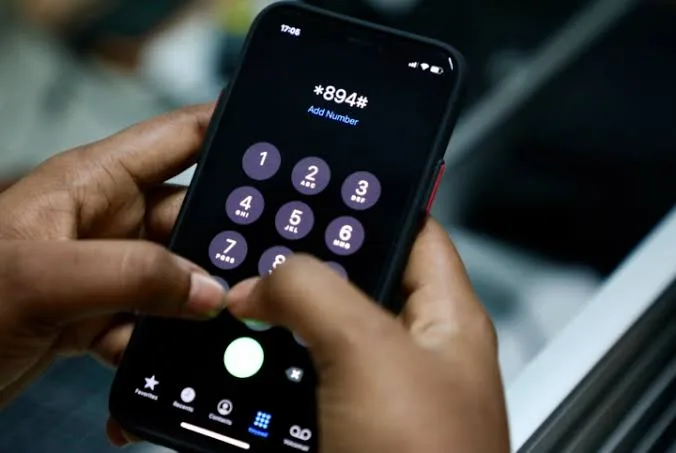
USSD banking is simply an easy way to carry out financial transactions without needing a smartphone or internet connection. Imagine you need to send cash to your friend, pay bills, top up your airtime, or check your balance, and you don’t have an ATM card, data, or even a smartphone. This is where the magic of USSD banking comes in, as they don’t require internet access to work. All you need is a mobile device, which you will use to dial a simple code, and you are good to go. Unlike mobile apps or internet banking that requires smartphones, strong data signals, and sometimes even registration, USSD works on any basic mobile phone (yes, even those old Nokia phones your grandma still uses). It’s secure, instant, and incredibly reliable even in low-network areas, which is why millions of people rely on it every single day. No data wasted, no app updates to worry about, just pure, straightforward banking at your fingertips. USSD Banking Codes: What are They? USSD is short for Unstructured Supplementary Service Data. This technology uses shortcodes that usually begin with (*) followed by a few digits and end with (#) to carry out multiple banking services. They include: How Does USSD Banking Work in Nigeria? In Nigeria, USSD banking is a session-based technology that works by connecting your bank account to your mobile number, using a service provider as the traffic controller. In Nigeria, the service providers are MTN, AIRTEL, GLO, and T2 (formerly 9Mobile or Etisalat). Before you can use your bank’s USSD services, you must have linked your SIM card to your bank account (either using your BVN, bank app, or visiting your bank). Also, you will need to set a USSD PIN to facilitate transactions. How Do I Carry Out Transactions Using USSD Codes? To carry out a transaction using USSD codes, follow these easy steps: N.B.: You might be charged a small fee by your service provider (usually less than #10) when using USSD banking. This fee is usually deducted from your airtime balance, so make sure you have enough airtime before you proceed. Why USSD Banking Works in Nigeria USSD banking works perfectly in Nigeria because it’s tailored to solve the daily challenges of the average Nigerian. Here’s how: USSD Banking Codes for Popular Banks in Nigeria Different banks have different USSD codes for accessing their services. Here’s the codes for some popular Nigerian banks; BANK USSD CODE Opay *955# Palmpay *861# First Bank *894* Union Bank *826# Access Bank *901# Zenith Bank *966# GTB *737 UBA *919# Keystone Bank *7111# Moniepoint *5573# FCMB *329# Fidelity *770# Final Thoughts USSD banking isn’t only one of the most convenient ways to bank; it closes the gap between you and your money no matter where you are in Nigeria and what phone you are using. If your bank’s code isn’t on our list, or you need help setting up USSD banking on your phone, reach out to your bank.
New CBN rate cut: Here is how it affects your OPay and PiggyVest money
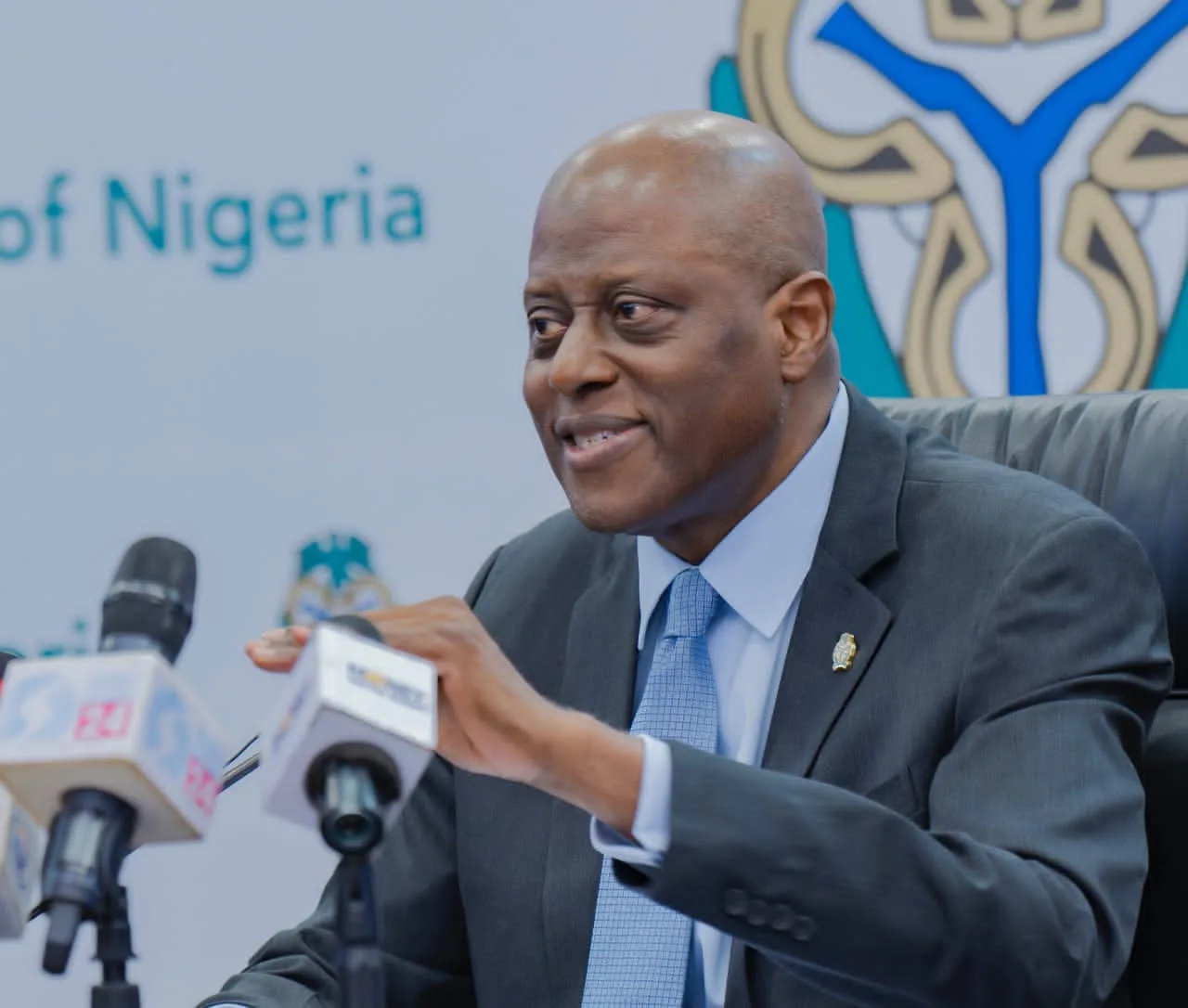
The Central Bank of Nigeria (CBN) has reduced its interest rate from 27% to 26.5%, a 0.5 percentage point cut. While the number appears small, the decision could gradually affect borrowing and savings across the financial system of Nigeria. However, the impact may not be immediate especially for fintech users. What is MPR and why does it matter? The Monetary Policy Rate (MPR) is the rate at which the CBN lends money to commercial banks. When the MPR drops, banks are meant to borrow at lower costs and extend cheaper loans to customers. This is the second consecutive rate cut by the CBN, after a reduction in September 2025 from 27.5% to 27%. In theory, borrowing costs should gradually decrease. In practice, the effect depends on the type of lender. What it means for OPay users OPay does not directly issue loans. Instead, it connects users to lenders such as OKash and EaseMoni, operating under Blue Ridge Microfinance Bank. OKash current charges These are short-term, high-risk microloans. Their pricing is largely determined by borrower risk profiles, loan tenure, and default rates not directly by the MPR. As a result, the 0.5% rate cut is unlikely to reduce OPay-linked loan costs anytime soon. Meanwhile, PiggyVest focuses on savings and investments rather than loans.Its offerings include: Currently, fintech savings platforms offer between 14% and 22% per annum, higher than the average 8% offered by traditional banks. However, as interest rates decline, returns on savings products tied to money market instruments may gradually reduce. If the CBN continues cutting rates, SafeLock and similar returns could edge downwards. While, Cowrywise primarily offers mutual funds and structured savings plans.Current rates include: These returns are linked to money market funds, which are sensitive to CBN rate movements. Yields may gradually decline, as the MPR rate falls.Still, at 26.5%, the benchmark rate remains high, meaning that any reductions in savings returns will likely be gradual rather than sudden. But for now, high-interest microloans are unlikely to become cheaper, savings returns may decline before loan rates do, traditional bank lending rates remain above 30%, with limited immediate change. However, for long-term savers and business loan applicants, the downward trend in interest rates may become more meaningful if the CBN continues cutting.

Spotify reports 163% growth in Nigeria since 2021 launch
Spotify says music streaming in Nigeria has grown at an average rate of 163.5 per cent since the platform launched in the country in February 2021. The company revealed in a statement that it recorded triple-digit year-on-year growth in its early years and has sustained strong momentum through 2025. According to Spotify, the surge has been driven by Afrobeats, which continues to dominate listening patterns. Local streams of Afrobeats have increased by 5,022 per cent between 2021 and 2025. Other genres like Amapiano have also recorded significant growth. Amapiano streams rose by 10,330 per cent within the same period, while Gospel and Praise music grew by 5,499 per cent. Hip-hop and Rap saw a 3,020 per cent increase, and R&B recorded a 2,602 per cent rise. The platform also revealed the growing interest in indigenous-language music. Indigenous-language songs streams increased by 554 per cent in 2024 and by 87 per cent in 2025. Globally, streams of indigenous-language songs rose by 141 per cent in 2024 and 41 per cent in 2025.
FG closes Lagos airspace after MMIA fire
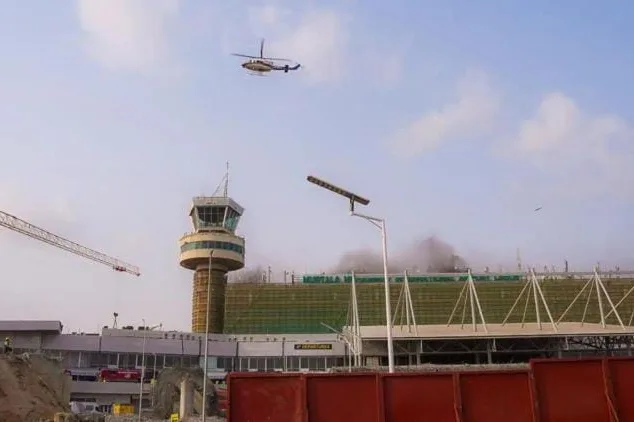
The Federal Government, through the Federal Airports Authority of Nigeria (FAAN), has temporarily closed the Lagos airspace following a fire outbreak at Terminal One of the Murtala Muhammed International Airport (MMIA), Lagos. FAAN in a statement released on Monday stated that the decision was taken in line with established safety protocols. FAAN also confirmed that the 14 persons initially trapped during the incident were safely rescued. A crane was deployed to support operations at the Control Tower, which led to the successful evacuation of all affected individuals. One of the victims was transferred to the FAAN Headquarters Hospital for further medical evaluation and is also stable. Six casualties, three males and three females were recorded. According to reports from the Fire Service, the fire originated from the server room on the first floor of Terminal 1. The blaze in the departure hall was brought under control by emergency responders, who stayed back to monitor the area to prevent it from spreading to other sections of the terminal. Investigations later traced the source to a burning lithium inverter battery installed in the basement. This incident comes nearly three years after a similar fire outbreak at the airport’s international wing in September 2023. At the time, FAAN said the smoke was caused by a suspected electrical spark in the ceiling of the baggage hall.

Fire outbreak hits Lagos International Airport terminal
There was panic on Monday after a massive fire outbreak engulfed the old terminal of the Murtala Muhammed International Airport in Lagos. According to reports, the fire started at about 3:30 p.m., although the cause of the inferno had not been determined as of the time this report was filed. The affected terminal is currently undergoing reconstruction by the Federal Government. The Director of Public Affairs and Consumer Protection at the Federal Airports Authority of Nigeria (FAAN), Henry Agbebire, stated that firefighters from FAAN were immediately deployed to the scene and were working to contain the blaze. This incident comes nearly two years after a similar fire outbreak was reported at the international wing of the same airport. On September 6, 2023, FAAN revealed that a suspected electrical spark in the baggage hall ceiling caused a smoke incident at Terminal 1. Authorities are yet to determine the exact cause of Monday’s fire. Details later…………