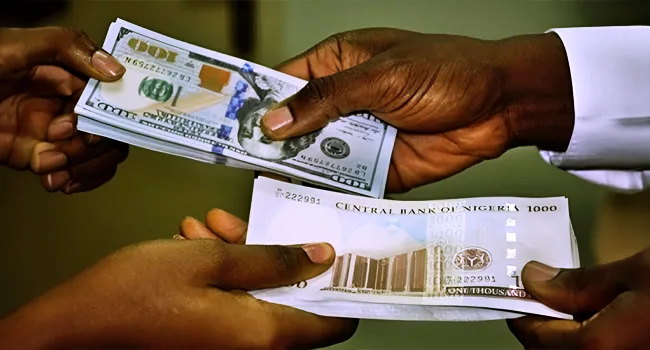
The United States President, Donald Trump, has approved military action against Iran, over national security concerns and allegations of nuclear ambitions. Iran has reportedly responded by targeting U.S. interests across parts of the Middle East, including the United Arab Emirates, Bahrain, Qatar, Kuwait, Israel, and Saudi Arabia. Although the attacks occurred over the weekend when financial markets were closed, analysts are already projecting the potential economic implications worldwide. Iran produces an estimated 1.5 million barrels of crude oil per day, while Gulf nations under threat collectively account for about 18 million barrels daily. Any prolonged disruption could tighten global supply. There are also concerns that Iran could attempt to close the Strait of Hormuz, a shipping route responsible for nearly 20% of global oil supply, which might disrupt global energy markets. What this means for Nigeria Nigeria currently produces about 1.47 million barrels per day, according to recent OPEC data. If Gulf production is disrupted, Nigeria could benefit from increased demand provided it can boost output. Brent crude has already climbed to around $73 per barrel following the attack, with analysts warning prices could exceed $100 if the tension persist. Historically, higher oil prices have translated into increased revenue for Nigeria. Higher global crude prices typically push up petrol prices locally. Although domestic refining capacity has improved and helped stabilize prices recently, Nigeria still remains sensitive to global benchmarks. A sustained rise in crude prices could trigger another increase in fuel costs. Nigeria relies heavily on oil earnings to build foreign reserves. With reserves currently above $50 billion, the naira may remain relatively stable in the short term. If Nigeria benefits from higher oil prices and increased output, the naira could strengthen. However, rising global uncertainty may cause foreign investors to pull back from emerging markets, potentially weakening capital inflows and pressuring the exchange rate. Geopolitical instability might dampens investor confidence. Global investors may delay or suspend investment decisions due to heightened risk. This could slow foreign direct investment (FDI) and portfolio inflows into Nigeria. Past geopolitical shocks such as the Russia-Ukraine war led to rising global commodity prices. If oil prices surge, energy costs could rise globally, pushing up prices of fertilizers, food, transportation, and manufactured goods. As Nigeria imports a substantial share of its goods and services, this could worsen domestic inflation. While Nigeria could benefit from higher crude oil prices and improved government revenue, the broader global instability presents risks. These include inflationary pressures, reduced capital inflows, and supply chain disruptions.
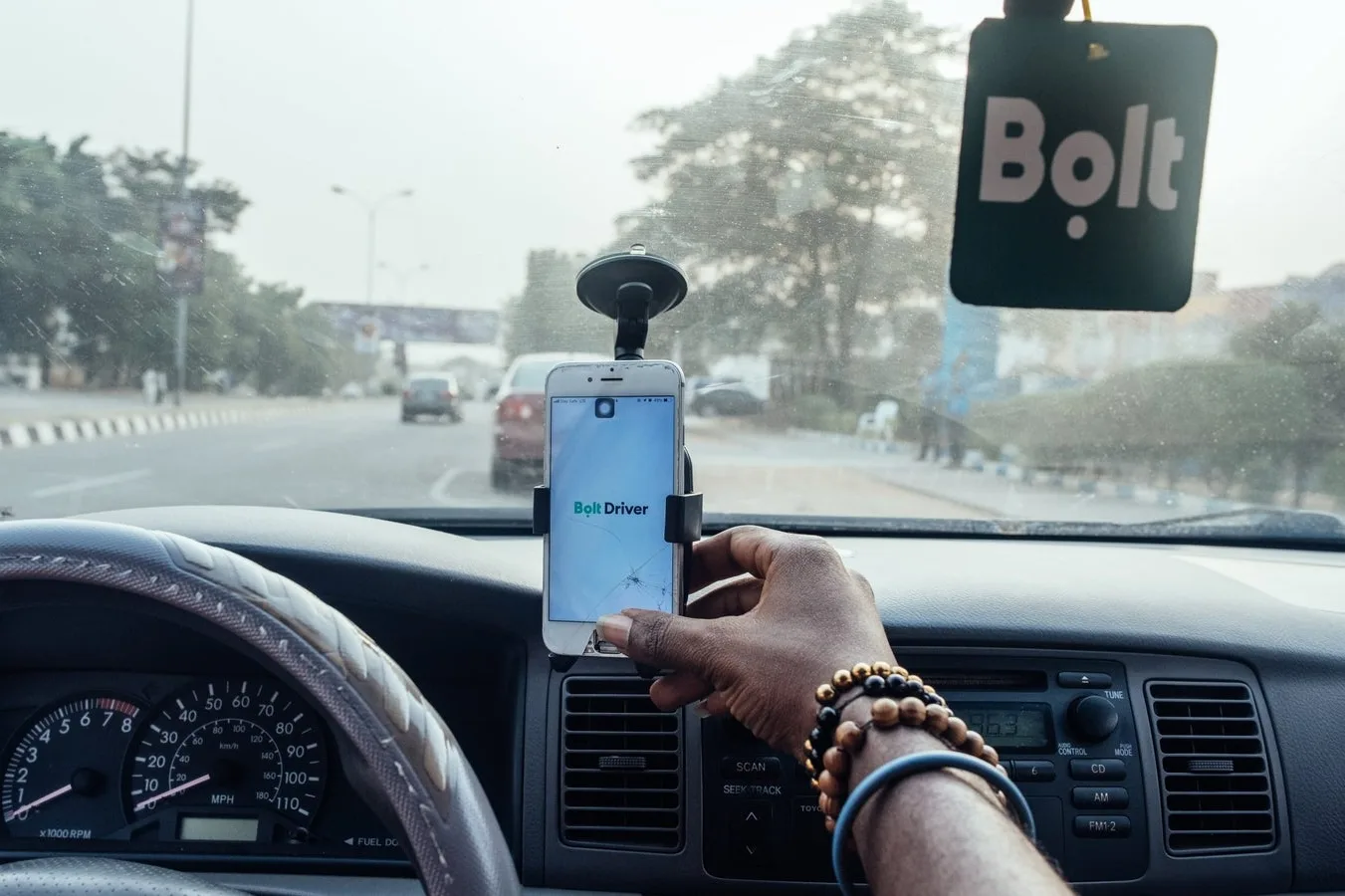
AUATON slam Bolt over 75% fare retention claims
The Amalgamated Union of App-based Transporters of Nigeria (AUATON) has refuted claims raised by Bolt regarding driver earnings. While Bolt claimed that drivers retain over 75% of their fares, the union argues that after accounting for operational costs, actual take-home pay falls below 4% of gross daily revenue. AUATON calculates that on a ₦60,000 daily gross, a driver nets only ₦2,300, that is roughly 3.8%, after expenses.Daily Tech Nigeria gathered that both Bolt and Uber charge a 20-25% commission on every trip. However, drivers in Lagos face a unique set of financial pressures, including daily state levies, high vehicle maintenance costs due to road conditions, and the remittance system, where an estimated 90% of drivers do not own their vehicles and must pay weekly fees to fleet owners.Fuel is the largest operational expense, costing an average of ₦25,000 per day, nearly 42% of the total daily gross earnings of drivers.To fit into the current economic conditions, drivers do work between 12 and 15 hours daily, leading to increased fatigue and road safety risks.AUATON argues that the platform fails to account for the current economic reality of Nigeria. They stated that the combination of commissions of the platform, government taxes, fuel prices, and vehicle hire-purchase payments makes the current model unsustainable. The union describes the 75% claim asmisleading oversimplification that ignores the net income required for a driver’s survival. “These claims do not reflect the lived economic realities of drivers who navigate Lagos roads daily. Commission percentages alone do not equate to real income, nor do they account for the severe financial pressures drivers face in Nigeria’s current economic climate” – Comrade Jaiyesimi Azeez, Chairman of the AUATON Lagos State Council The union has called for a meeting with Bolt, Uber, and inDrive to review fare structures and commission models.
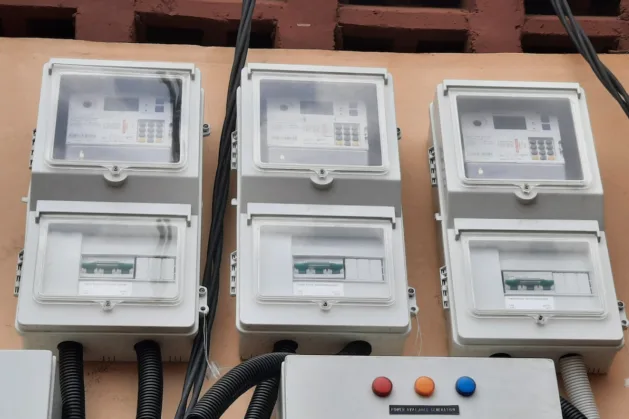
Nigeria surpasses 50% electricity metering milestone
Nigeria has reached a milestone in the utility sector, with more than half of its registered electricity consumers now using prepaid meters. According to the latest data from the Nigerian Electricity Regulatory Commission (NERC), the national metering rate rose to 57.27% by the end of December 2025, unlike previous months.Before now, the power sector has been struggling with estimated billing, where customers without meters are charged based on perceived consumption rather than actual usage. This system for decades resulted in overbilling and systemic liquidity issues for Distribution Companies (DisCos). To address this bottleneck, the NERC introduced the Meter Asset Provider (MAP) scheme and the National Mass Metering Programme (NMMP) to accelerate the transition to a pay-as-you-go model.Many Nigerians, as well as electricity stakeholders welcomed the transition to the prepaid metering system as a critical step in making the Nigerian power sector commercially viable. The prepaid metering system allows consumers to monitor their energy consumption, as well as ensuring that DisCos receive accurate payments for the electricity they supply.Out of 12,163,412 active electricity customers in Nigeria, 6,966,584 are now metered.The Ikeja DisCo leads the nation with a 86.40% metering rate, while Kaduna DisCo lags behind at just 34.42%. Distribution companies installed 109,556 new meters in December 2025 alone, representing a 24% increase in the pace of installation compared to the previous month.Stakeholders argue that the increased pace of installation will reduce commercial losses and provide the necessary capital to upgrade the national grid.However, Daily Tech Nigeria gathered from an existing report that nearly 5.1 million customers, roughly 43% of the market, still lack meters. According to reports those without meters remain vulnerable to arbitrary estimated bills, which often exceed the actual value of the power delivered. The recent 40% hike in the price of prepaid meters has made access more difficult for low-income households.NERC expects the metering rate to surpass 65% by the end of 2026. The Federal Government of Nigeria is reviewing financing models to make meters more affordable following the recent price adjustments.
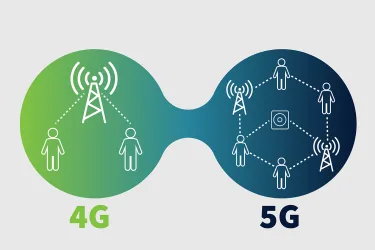
4G vs 5G explained: Should Nigerians upgrade to 5G?
Every new generation takes what worked before, fix what didn’t, and then push things even further. That’s usually how progress is meant to work and if you think about it, you have seen this pattern before, where new ideas are birthed because something needs to be better. The same thing has happened with mobile networks. Every time you moved from 3G to 4G and now from 4G to 5G, it wasn’t just about a new name, it was about solving problems you probably didn’t even realise you were experiencing. Problems like slow downloads, videos that keep stopping to load, calls that suddenly cut off and video chats that delay. So when people talk about generations of mobile technology, they are talking about a story of improvement. One generation responds to the limits of the one before it, another fixes the cracks the other exposed. Now, you are standing at the peak of another improvement – 4G to 5G. Most people worry whether the new improvement is truly better or it’s another upgrade they need to pay for. Let’s check if that’s true or not! What Is 4G? You have probably seen the ‘4G’ icon that pops up when you are browsing or on a video call. 4G represents the fourth generation of mobile networks, and it’s a leap from 3G. If you have ever used 3G, you can attest to the fact that it used to feel a bit slow like your videos taking a lot of time to load. 4G fixed most of these issues. It’s faster with up to 100 Mbps (Megabits per second), more reliable and can handle all your apps, video calls and remote work. With 4G, you can browse the Internet quickly. You can join smooth video calls with friends and colleagues. 4G made our smartphones truly smart. How 4G works You know how your phone magically sends videos and messages on WhatsApp in seconds? That’s 4G working. Your phone sends and receives information using radio signals that track nearby masts (the tall towers you see around) which connect to the Internet. The signals move through different lanes called spectrum. It carries all your videos, calls, messages and more. That’s why you can chat, stream and watch videos without delays. In Nigeria, most cities and towns are covered by these 4G masts so your internet usually works smoothly, as long as you are in a covered area. What is 5G? 5G is the fifth generation of mobile networks and it’s the latest upgrade from 4G. It’s up to 100 times faster than 4G, realistically up to 1Gbps (Gigabits per second). 5G supports the use of phones, smart gadgets and AI applications. At the same time, it can handle multiple operations without slowing down. 5G is designed to improve on 4G, to solve the limits we are used to, and to create opportunities for new technology that wasn’t possible before. How 5G works First, 5G uses a higher frequency spectrum. It uses faster airwaves to transmit information. It’s like switching from a normal road to an express motorway. Here’s the catch, those higher frequencies don’t travel as far as 4G signals. Instead of relying on big masts that are far apart, 5G uses many small towers, which are often called small cells. You might see them on streetlights, poles or building walls. They are closer to you, so as to keep the connection strong and fast. Because of these faster airwaves and more small cells working together, your data moves much quicker between your phone and the internet. That’s why 5G can download large files in seconds. 5G is basically a 4G system but it’s upgraded to handle more speed, more devices and more demand from people who are online all the time. 4G vs 5G Below are some of the features that distinctly differentiate 4G from 5G Features 4G 5G Full Meaning Fourth Generation mobile network Fifth Generation mobile network Speed It’s fast enough for streaming, browsing and video calls It’s much more faster, up to 1 Gigabits per second Download Large files can take minutes Large files can download in seconds Latency Little delay here and there when gaming or during video calls Almost instant response Number of Devices Supported It handles many devices but can slow down in crowded areas It handles far more devices without slowing down Network Infrastructure It uses large masts spaced across cities and towns It uses large masts and many smaller cells placed closer together Best for For social media, streaming, browsing, and online classes Advanced technologies, smart devices and artificial intelligence tools Coverage in Nigeria It’s widely available across cities and towns It’s still limited and expanding in selected areas Stability in Nigeria It’s more stable and dependable It depends heavily on location and coverage Should Nigerians upgrade to 5G? In Nigeria, 4G is what most of us rely on. It’s available in cities, towns and even some rural areas. To decide on whether to move from 4G to 5G in Nigeria isn’t about having the latest phone, it’s about if the network is actually ready to give you the benefits where you live, work and travel. Findings from TechAfrica, TheCable and Daily Trust have shown if Nigerians are ready for 5G. Many Nigerians have 5G phones but can’t use 5G yet. According to the Nigerian Communications Commission (NCC), about half of Nigerians who own 5G devices still cannot access 5G network services. Edoyemi Ogoh, director of technical standards and network integrity at the commission, spoke on 5G network while presenting the fourth quarter (Q4) 2025 industry performance reports. According to him; “About 50 percent of Nigerians with 5G devices don’t have access to 5G service.This means there is no 5G service in the areas where they want to basically utilise it. So, there is still a gap in the 5G coverage” – Ogoh This connotes that even if your phone shows a 5G symbol, the actual internet connection may fall back to 4G because there
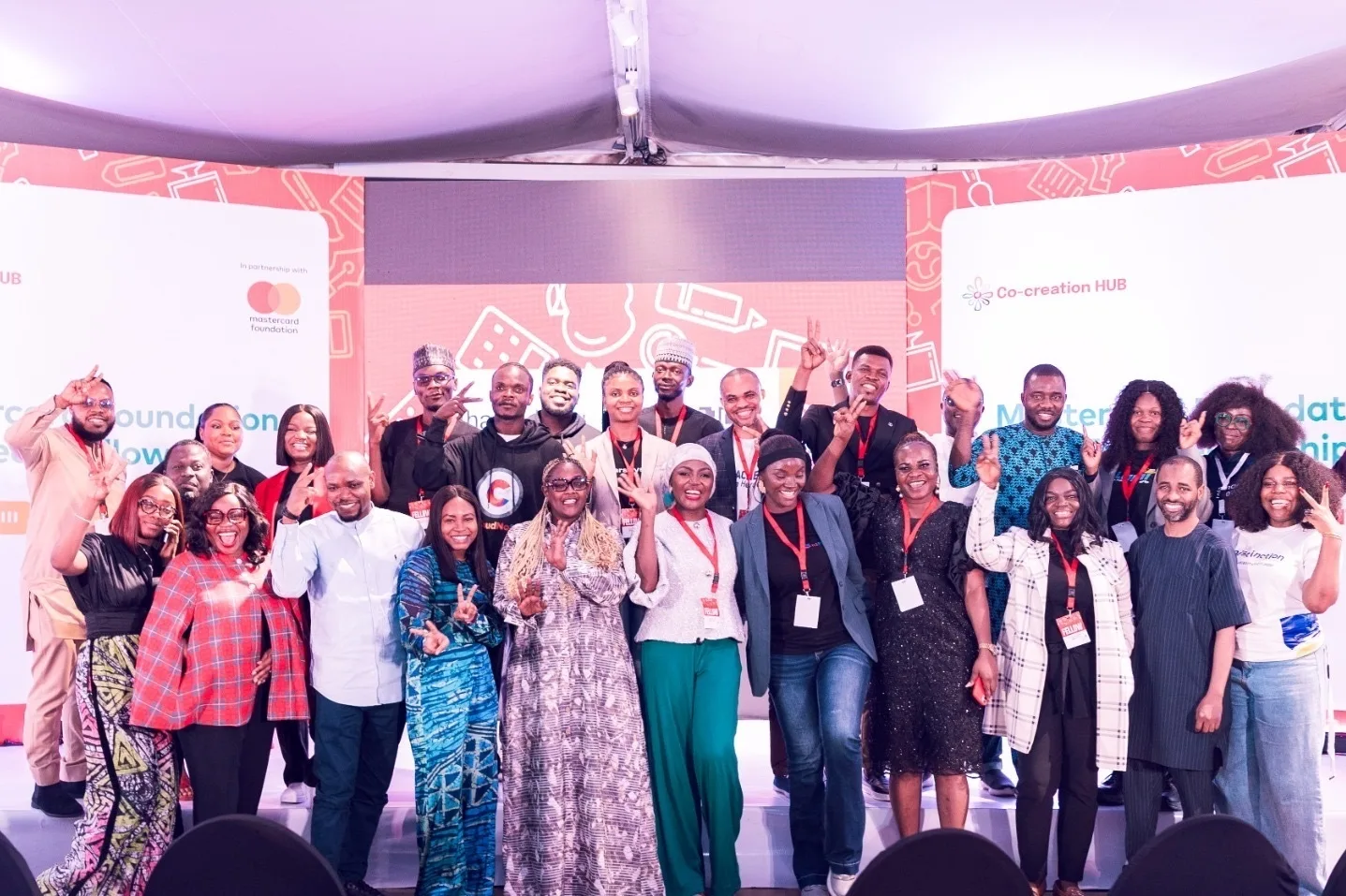
CcHUB, Mastercard Foundation open applications for $1.2 million EdTech fellowship
Co-Creation Hub (CcHUB) has launched the fourth cohort of its Mastercard Foundation EdTech Fellowship, offering a combined $1.2 million in equity-free funding to Nigerian startups. The program will select 12 early-stage companies to receive $100,000 each to accelerate the development of inclusive educational technology.The Mastercard Foundation established the EdTech Fellowship in 2019 to bridge the educational divide in underserved African communities. CcHUB is the primary implementation partner in Nigeria, managing the selection and incubation of local startups.This fourth cohort is targeted at building technology designed for environments with poor connectivity, disrupted school calendars, and marginalized student populations, including refugees and learners with disabilities. “The EdTech Fellowship was established to expand access to technology-enabled education for underserved and marginalised communities” – Mastercard Foundation The program is for startups building tools for learners which is often excluded from mainstream tech, such as rural communities, displaced persons, and young women.Since its inception, the fellowship has supported 72 startups across the continent, reaching over 700,000 students.Each of the 12 selected startups will receive $100,000 without relinquishing any company ownership to the foundations.Beneficiaries will undergo twelve-months of extensive incubation program, aimed at providing technical assistance, mentorship, and access to a network of regional education partners.The application window for Nigerian EdTech founders is currently open and will close on April 10, 2026.
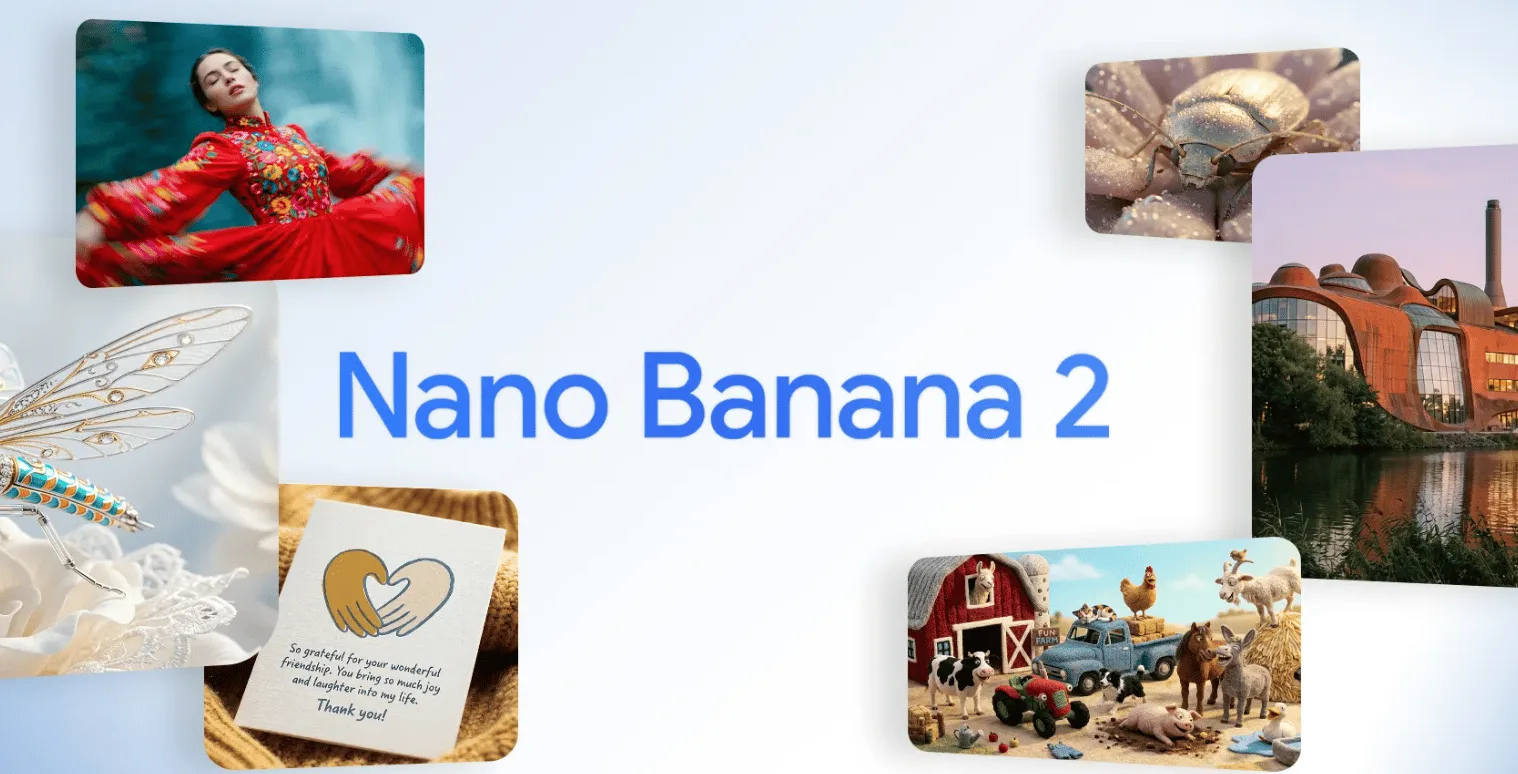
Google launches ‘Nano Banana 2’ AI Image Suite in Nigeria
Google, on Thursday, has officially launched its latest artificial intelligence image generation model, Nano Banana 2, in Nigeria. The new suite will be integrated directly into the Google app, Search (AI Mode), and Google Lens, to provide professional creative tools to millions of mobile and desktop users across Nigeria.Google developed Nano Banana 2, which is technically known as Gemini 3.1 Flash Image, after examining its success of the original Nano Banana model in mid-2025, in order to bridge the gap between high-speed performance and high-fidelity output.This rollout is aimed at supporting the creator economy by making sophisticated design tools accessible without the need for specialized hardware or technical expertise.Nano Banana 2 uses real-time web search and the Google Images library to ensure that generated landmarks, brands, and objects maintain factual integrity.The model allows creators to maintain the same facial features and clothing for a protagonist across multiple different prompts, thereby facilitating long-form storytelling and storyboarding.To mitigate the risk of deepfakes and misinformation, every image contains SynthID, which is an invisible digital watermark and C2PA metadata for clear identification of AI-generated content.Google executives argue that integrating these tools into the everyday Google app, small business owners and students can produce high-quality marketing assets and educational materials at zero cost, thereby fostering economic growth in the digital sector.Taiwo Kola-Ogunlade, Google’s Communications and PR Manager for West Africa, added; “We want to make sure the best technology is accessible to everyone. Nigerians are some of the most creative people in the world, and today we’re expanding these tools to give them a new way to express that” The service is currently live for all Nigerian users via the Google App and mobile browsers. Google also stated that the next phase of development will focus on expanding in-image localization, allowing the AI to seamlessly translate and render text within graphics across several more African languages.