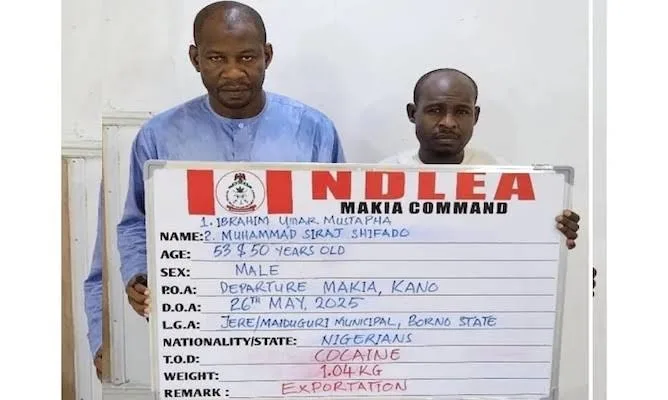
The National Drug Law Enforcement Agency (NDLEA) has successfully broken up a cocaine trafficking cartel that used Muslim pilgrims traveling for Hajj as drug couriers to Saudi Arabia. On May 26, two pilgrims, Ibrahim Umar Mustapha and Muhammad Siraj Shifado, were intercepted at Mallam Aminu Kano International Airport while preparing to board an Ethiopian Airlines flight to Jeddah. Acting on credible intelligence, NDLEA officers subjected the men to body scans that revealed they had ingested illicit substances. Under observation, each excreted 45 wraps of cocaine, totaling 90 pellets weighing 1.04 kilograms. Following this breakthrough, a swift investigation led to the arrest of three syndicate leaders, Abubakar Muhammad, Abdulhakeem Muhammed Tijjani, and Muhammad Aji Shugaba, in Kano on May 27 and 28. The cartel had been disguising its drug trafficking operations under the guise of sponsoring pilgrims for the holy journey. In a related operation at the same airport, NDLEA agents apprehended a 60-year-old businessman, Chinedu Leonard Okigbo, who was found with 65 wraps of cocaine weighing 1.41 kilograms while attempting to travel to Iran. NDLEA spokesperson Femi Babafemi praised the operatives for their vigilance and swift action, emphasizing the agency’s commitment to dismantling drug trafficking networks exploiting international pilgrimage routes. The agency also continues to seize large quantities of illicit drugs and counterfeit cash in coordinated operations across Nigeria. This operation marks a significant victory in the fight against drug trafficking, particularly in curbing the abuse of religious travel for criminal activities.
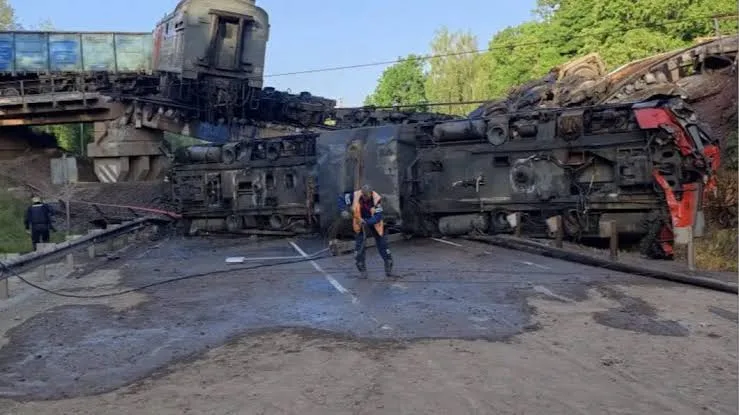
At least seven dead, dozens injured after bridge collapses onto passenger train in Western Russia
A devastating bridge collapse in Russia’s Bryansk region, near the Ukrainian border, has left at least seven people dead and nearly 70 injured after a highway bridge was blown up and fell onto a moving passenger train late Saturday night. The incident occurred as a Klimovo–Moscow passenger train carrying 388 people was passing beneath the bridge in the Vygonichsky district. The collapse sent heavy trucks and debris crashing onto the train, derailing several carriages and trapping passengers in the wreckage. Emergency services rushed to the scene, working through the night to rescue survivors and provide medical assistance. Bryansk Governor Alexander Bogomaz confirmed the fatalities and said that among the injured were three children, with at least one in critical condition. “All necessary measures are being taken to assist the victims,” Bogomaz stated on Telegram, adding that 44 people were hospitalized and 22 were receiving outpatient care. Authorities believe the bridge was deliberately destroyed. According to preliminary reports, an explosion occurred on the bridge as the train was passing, with some sources indicating that multiple explosive devices may have been used. Moscow Railway described the cause as “illegal interference in transport operations,” and a formal investigation is underway by the interregional transport prosecutor’s office. Rescue operations began immediately, with emergency crews and additional personnel dispatched to the site. Passengers were evacuated from the derailed train and taken to a temporary shelter at a nearby station. Many were later transferred to hospitals, while others received treatment on site. Photos from the scene show mangled train carriages, fallen concrete, and emergency responders working amid the debris. The rescue effort was complicated by the presence of several heavy trucks that had also fallen from the bridge. In a related incident, a second bridge collapsed in the neighboring Kursk region just hours later. While details remain limited, officials confirmed that the twin collapses have heightened concerns about security and possible sabotage in Russian regions bordering Ukraine. No group has claimed responsibility for the attack, and Ukrainian officials have not commented. The events come amid ongoing tensions and cross-border hostilities linked to the Russia-Ukraine war, with Bryansk and neighboring regions frequently targeted by drone and artillery strikes. Authorities continue to investigate the cause of the explosions and are assessing the full extent of the damage. The death toll may rise as rescue teams search the wreckage for additional victims.

FG to deploy 7 million smart meters nationwide to end estimated electricity billing
The Federal Government has announced plans to deploy seven million smart electricity meters across the country, to reform Nigeria’s power sector. Mrs. Olu Verheijen, Special Adviser to President Bola Tinubu on Energy, revealed the plan during an interview with the News Agency of Nigeria (NAN) over the weekend. According to her, the rollout of smart meters is a cornerstone of the administration’s strategy to improve the commercial viability of the electricity value chain, particularly the gas-to-power segment. “By ensuring most customers on the grid are metered, we can end estimated billing and reduce collection losses, making sure that those who receive electricity are paying customers,” Verheijen said. The government is also addressing legacy debts owed to power generation companies and gas suppliers, which have hampered the sector’s growth. These debts accumulated due to past challenges in funding electricity subsidies and poor revenue collection by distribution companies (Discos). “To clear these debts, we plan to use a combination of cash payments and promissory notes, ensuring that generation companies and gas suppliers receive due compensation,” Verheijen explained. The administration is simultaneously working on policies to enable a cost-reflective electricity pricing system, which will promote efficiency and transparency in billing. Recognizing the critical role of Discos in revenue collection and service delivery, the government intends to strengthen governance within these companies. Regulatory frameworks will be enhanced to ensure Discos have the technical and financial capacity to provide reliable power to homes and businesses across Nigeria. Earlier this year, the Nigerian Electricity Regulatory Commission (NERC) fined eight distribution companies a total of N628 million for violating regulations on estimated billing. This enforcement underscores the government’s commitment to ending billing abuses and accelerating the deployment of prepaid meters under the National Mass Metering Programme (NMMP). The deployment of seven million smart meters is expected to significantly improve billing accuracy, reduce revenue losses, and boost investor confidence in Nigeria’s power sector. This development aligns with the broader goals of President Tinubu’s administration to modernize the electricity infrastructure and support the country’s energy transition.
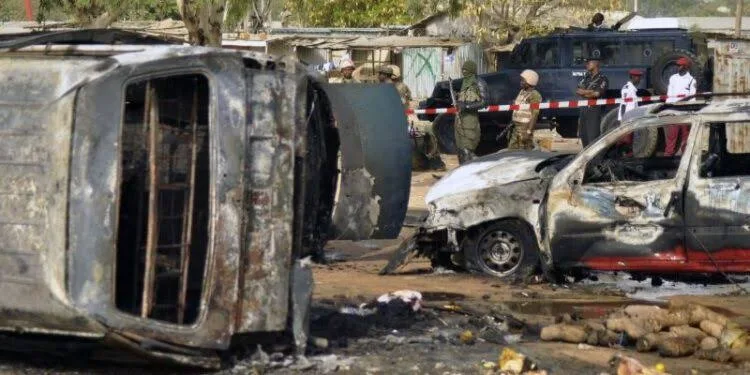
Nine killed, several injured in bomb explosion at Borno bus stop
A deadly explosion at a local bus stop has claimed the lives of nine people and left several others injured. The blast, caused by an improvised explosive device (IED), occurred around 11 a.m. on Saturday as passengers waited to board commercial vehicles. The Speaker of the Borno State House of Assembly, Rt. Hon. Abdulkarim Lawan, confirmed the tragedy, describing it as a heartbreaking loss for his resilient constituents. “It is unfortunate that nine of my resilient constituents were killed by planted IEDs while waiting to board vehicles at a local bus stop in Mairari village,” he said. He extended prayers for the victims’ souls and wished a swift recovery for those hospitalized in Monguno and Maiduguri. Mairari village, unique in Guzamala for having been resettled twice under full civil authority, has once again been deserted due to renewed Boko Haram and ISWAP insurgent activities. Many displaced residents, who now take refuge in Monguno, Guzamala, and Maiduguri, often return to Mairari to farm. Terrorists, monitoring these movements, planted the IED at the bus stop, targeting civilians. The Speaker appealed to the military and security agencies to intensify efforts to restore peace in Guzamala, particularly in areas long under insurgent control such as Gudumbali and Mairari village. This attack adds to a series of violent incidents in the region, including a recent ambush in Marte where nine Civilian Joint Task Force members were killed during clashes with insurgents. Governor Babagana Zulum condemned the attack, calling it a “cowardly act of terror” against innocent citizens and reaffirmed his commitment to enhancing security across the state. Security agencies have launched investigations and a manhunt for those responsible as the community mourns and the injured receive medical care.
Drivers union disowns inDrive driver who locked child in car boot, calls for stricter safety measures
The Amalgamated Union of App-based Transporters of Nigeria (AUATON) has publicly disowned a driver caught on video locking a child in the boot of his car during a trip on the inDrive platform. The alarming incident which was reported on May 30, 2025 by Dailytech, where passengers discovered a child locked in the boot of an inDrive vehicle in Lagos, has now prompted a strong response from the Amalgamated Union of App-based Transporters of Nigeria (AUATON). In a statement, AUATON’s Chairman, Comrade Jaiyesimi Azeez, condemned the act as “inhumane, unsafe, and criminal,” emphasizing that the driver involved is not a member of the union and does not represent their values. The union stressed that it does not condone any criminal or unethical behavior and has completely dissociated itself from the incident. AUATON also criticized inDrive for its failure to properly vet and verify drivers before onboarding them. The union revealed that despite repeated requests, inDrive has refused to collaborate with AUATON’s driver verification system, which is designed to ensure safety and professionalism. According to AUATON, if inDrive had cooperated, incidents like this could have been prevented. In response, inDrive confirmed it has suspended the driver pending investigation. The driver claimed the child was his son and promised to provide proof, but the company continues to investigate the matter. AUATON has called on the Lagos State Government, the Nigeria Police Force, and other relevant authorities to thoroughly investigate the case and ensure justice is served. The union also urged inDrive to immediately stop onboarding unverified drivers and take responsibility for passenger safety on its platform. This incident has reignited long-standing concerns about regulatory oversight and safety compliance in Nigeria’s ride-hailing industry. AUATON reaffirmed its commitment to upholding high standards of safety, professionalism, and accountability for drivers operating across Lagos State.

Lagos State to enforce electronic call-up system on Lekki-Epe corridor starting June 16
After months of delays and stakeholder consultations, the Lagos State Government has announced that it will begin enforcing the electronic call-up (e-call-up) system on the congested Lekki-Epe corridor from June 16, 2025. This move aims to tackle the persistent traffic gridlock caused by heavy-duty trucks accessing the Lekki Free Zone and Lekki Deep Sea Port. The announcement came in a statement by Lagos State Commissioner for Transportation, Oluwaseun Osiyemi, following a high-level meeting chaired by Deputy Governor Dr. Obafemi Hamzat. The meeting included representatives from key transport and energy unions such as NUPENG, IPMAN, PTD, and regulatory bodies including the Nigerian Ports Authority and the Nigerian Midstream and Downstream Petroleum Regulatory Authority. “The e-call-up system is not about revenue collection,” said Deputy Governor Hamzat. “It is a critical intervention designed to ensure orderliness, streamline the movement of articulated trucks, and prevent the kind of chaos we witnessed in Apapa.” Apapa, Lagos’ main seaport, has long suffered from severe traffic congestion due to unregulated truck movements, a scenario the government is determined to avoid in Lekki as it develops into a major commercial hub. The e-call-up system functions as a digital scheduling platform that controls when and how trucks access loading points, reducing wait times and preventing indiscriminate parking along the corridor. The system was first introduced in July 2024 but faced multiple postponements and suspensions to allow for broader stakeholder engagement and to address implementation challenges. The government has called for the immediate removal of all vehicles currently obstructing the Lekki-Epe Expressway and has warned that full enforcement will be strictly applied to ensure compliance. Previous enforcement attempts saw some resistance, including attacks on enforcement officers, but the state has emphasized its commitment to a smooth transition and a traffic system that protects vital infrastructure and road users’ safety. The e-call-up system is a key part of Lagos State’s strategy to manage traffic effectively and support sustainable growth in the region.The government urges all stakeholders to cooperate fully to restore order and improve traffic flow along this critical transport corridor.