
The Federal Government of Nigeria, through the National Insurance Commission (NAICOM) and the Ministry of Aviation and Aerospace Development, has unveiled a revised insurance regulation aimed at easing aircraft leasing for Nigerian airlines. This landmark policy is expected to improve airline operations, increase fleet access, and ultimately reduce airfares for passengers. At the official flag-off ceremony in Abuja, Minister of Aviation and Aerospace Development, Festus Keyamo, emphasized the government’s commitment to creating an investor-friendly environment that empowers local operators while aligning with international aviation standards. He noted that the revision addresses long-standing challenges in aircraft insurance, particularly the requirement by foreign lessors for international insurance coverage, which previously limited leasing options for Nigerian airlines. The new regulation allows local operators to cede up to 90 percent of insurance risk to international markets under specified conditions, in line with the Cape Town Convention. It also encourages greater participation from Nigerian insurers, fostering local content development and market stability. NAICOM Commissioner Olusegun Omosehin described the regulation as a transformative milestone that brings certainty and predictability to the aviation insurance market. He highlighted that the policy was developed through extensive consultations with key stakeholders including airline operators, insurers, financiers, and government agencies. “The leasing of aircraft will give operators the advantage needed to procure new planes, enhancing Nigeria’s aviation sector and benefiting passengers through improved service and lower costs,” Omosehin said. The Nigerian Civil Aviation Authority (NCAA) has also updated deregistration and export procedures for leased aircraft to protect lessors’ interests and encourage international leasing partnerships. Princess Zahrah Mustapha Audu, Director-General of the Presidential Enabling Business Environment Council (PEBEC), praised the collaborative effort behind the policy and urged airlines to improve customer service by minimizing flight delays and cancellations. Industry leaders, including the Chairman of the Airline Operators of Nigeria, welcomed the regulation as a positive step toward strengthening the sector, retaining more funds within the industry, and enhancing service delivery to Nigerians. This regulatory reform is a critical step toward revitalizing Nigeria’s aviation industry by making it easier and more affordable for airlines to expand their fleets through leasing, thereby fostering growth, innovation, and competitiveness in the sector.

Nigeria builds digital bridges to expand MSMEs across African markets
Nigeria is taking bold steps to propel its Micro, Small, and Medium Enterprises (MSMEs) beyond national borders into the wider African market through digital innovation. Vice President Kashim Shettima announced this initiative during the inauguration of the oversight committee for the 4th African Union MSME Forum, set to take place in Abuja from June 23 to 27. Shettima highlighted that the Tinubu administration has prioritized constructing digital highways and bridges to facilitate seamless cross-border trade for MSMEs. This effort aligns with Nigeria’s leadership in the African Continental Free Trade Area (AfCFTA), where the country has harmonized investment, digital trade, and competition policies to support entrepreneurs. To support this vision, Nigeria has established a Technology Export and Digital Trade Desk aimed at helping local businesses export services and digital goods across Africa. Key programs driving this transformation include the $617.7 million i-DICE Programme, which invests in digital and creative enterprises, and the 3 Million Tech Talent Programme, designed to train Nigerian youths in coding, data science, and digital skills. “The continent is rich in ideas and digital innovation, with over 83 percent of employment in Africa rooted in the informal economy,” Shettima said. “Our government is committed to shaping Africa’s digital trade future by making cross-border commerce secure, scalable, and seamless.” The upcoming AU MSME Forum will bring together nearly 6,000 SMEs from across Africa and 145 global partners to foster collaboration, knowledge exchange, and new business opportunities. The event will culminate with the National SME Awards, celebrating outstanding contributions to the sector. Senator Ibrahim Hadejia, chairman of the organizing committee, described the forum as a vital platform for advancing MSME development continent-wide. Meanwhile, Temitola Adekunle-Johnson, Special Adviser on Job Creation and MSMEs, assured that the event will showcase Nigeria’s commitment to economic renewal through MSME empowerment.
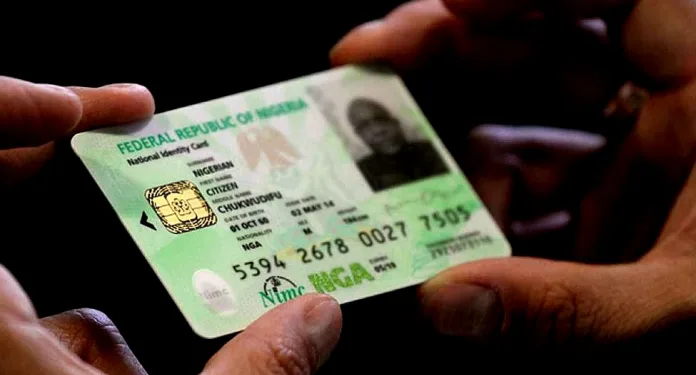
NIMC faces backlash over N28,574 date of birth correction fee
The National Identity Management Commission (NIMC) has come under criticism following its recent announcement to increase the fee for correcting the date of birth (DOB) on the National Identification Number (NIN) database to N28,574, a sharp 75% rise from the previous charge of N16,340. Barrister Oladipupo Ige, Director of Policy and Managing Partner at the Data Privacy Lawyers Association (DPLAN), challenged the move in an interview on Monday, saying the commission’s blanket fee hike violates data privacy laws. According to Article 36 of the 2025 General Application and Implementation Directive (GAID), individuals should not be charged for corrections that result from errors made by the data controller-in this case, NIMC. “The law is clear: if the DOB error is the fault of the citizen, then payment is justified. But if the mistake is from NIMC, the correction must be free,” Ige said. He accused NIMC of failing to clarify which errors warrant fees and warned that charging all citizens without fault assessment breaches legal protections. NIMC defended the fee increase, citing inflation at 32.7%, the need to align with charges by sister agencies such as passport and driver’s license services, and the goal of sustaining its infrastructure and expanding service offerings. The commission’s new pricing structure also raised fees for other data modifications, including name and address corrections, now set at N2,000 from N1,522. Ige urged NIMC to provide clear guidelines on fee exemptions and ensure Nigerians are not unfairly burdened by charges for mistakes beyond their control.

Nigeria builds digital bridges to empower MSMEs across Africa, says VP Kashim Shettima
Nigeria is making significant strides to boost Micro, Small and Medium Enterprises (MSMEs) by creating digital infrastructure that will enable these businesses to operate seamlessly across African borders. Vice President Kashim Shettima announced this during the inauguration of the oversight committee for the upcoming 4th African Union (AU) MSME Forum, set to take place in Abuja from June 23 to 27. Shettima highlighted that the administration of President Bola Ahmed Tinubu is committed to building “digital highways and bridges” to integrate Nigerian MSMEs into the broader African market. “Africa is not short of ideas and digital innovation,” he said, emphasizing that over 83% of employment on the continent is in the informal sector, where MSMEs play a critical role. The Vice President pointed to Nigeria’s alignment with the African Continental Free Trade Area (AfCFTA) agreement as a key policy framework supporting this vision. Nigeria has also established a Technology Export and Digital Trade Desk to help entrepreneurs export services and digital goods across Africa. Major initiatives include the i-DICE Programme, a $617.7 million investment targeting digital and creative enterprises, and the 3 Million Tech Talent Programme, which aims to train Nigerian youths in coding, data science, and digital skills to drive economic transformation. “The Tinubu administration is ready to lead in shaping Africa’s digital trade future,” Shettima said, adding that legal reforms are underway to make cross-border commerce more secure, scalable, and seamless. The AU MSME Forum will bring together nearly 6,000 SMEs from across Africa, along with 145 partners worldwide, providing a platform to exchange ideas, foster collaboration, and unlock new business opportunities. The event will conclude with the National SME Awards, celebrating outstanding contributions to the sector. Senator Ibrahim Hadejia, Deputy Chief of Staff to the President and chairman of the organizing committee, described the forum as “a veritable platform for exchanging knowledge and ideas on MSME development.” Temitola Adekunle-Johnson, Special Adviser to the President on Job Creation and MSMEs, assured that the committee is working to deliver a world-class event reflecting the government’s commitment to MSME growth.

UK to tighten visa rules and expand travel permissions in 2025
The UK government is set to implement significant changes to its immigration and visa policies in 2025, aiming to tighten legal migration controls while modernizing the border system. From early 2025, most visitors to the UK, except British and Irish citizens, will need permission to enter through an expanded Electronic Travel Authorization (ETA) scheme. This digital pre-approval system, initially introduced for select Gulf countries, will extend to nearly all visa-free travelers, including European nationals starting April 2, 2025. The ETA costs £10 and is designed to enhance border security and streamline entry processes. In parallel, the government plans to tighten work visa requirements, particularly for lower-skilled roles. New rules will impose stricter graduate-level criteria for skilled workers and limit lower-skilled time-limited visas to sectors with proven labor shortages, where employers commit to boosting domestic recruitment. The minimum salary threshold for skilled worker visas has also increased to reflect living costs, now set at £38,700 annually. These reforms come amid record-high net migration, which reached 906,000 in the year to June 2023, and rising public concerns over pressure on public services. The government also intends to form a task force to identify sectors heavily dependent on foreign labor and address related vulnerabilities, including exploitation risks in industries like care services. Additionally, visa fees across most categories have risen by 5–10% from April 2025, generating more revenue for the Home Office while aiming to reduce taxpayer burden. Student visa provisions have been updated to extend post-study work opportunities for PhD graduates and simplify dependent visa rules. While the government emphasizes these measures will restore public confidence and control over migration, critics warn that tightening visa access could jeopardize critical sectors reliant on migrant workers and increase exploitation risks. Opposition voices call for even stricter caps and legislative reforms.

Nigeria Police force enhances vehicle database with fleet registration
The Nigeria Police Force (NPF) has updated its Central Motor Registry Information System (e-CMR) to include a fleet registration option, according to a statement released May 11, 2025. This new feature on the e-CMR portal allows organizations and individuals to register numerous vehicles in one session, streamlining documentation for logistics firms, transport operators, and fleet managers. The Force Public Relations Department announced the update on X, its official account. According to the announcement, users who have already registered do not need to create a new profile for fleet submissions. They can log in and add vehicles to their existing profiles. The e-CMR system was initially launched in April 2023 to modernize vehicle documentation and tackle the increasing complexity of auto-related offenses that the manual system, in place for six decades, could not handle efficiently. The e-CMR enables vehicle owners to register their vehicles, upload ownership data, and receive digitally verifiable certificates remotely via any internet-enabled device. How to Register a FleetVisit the e-CMR portal: https: //cmris.npf.gov.ng Click “Get Started” to begin the vehicle registration process. Log in to an existing profile or create a new one. Choose “Fleet” under CMR Request on the Request page. Enter vehicle details such as category and plate number type, and click “Add” to register additional vehicles. Click “Proceed” to view the invoice and make payment after completing all vehicle entries. After 24 to 72 hours, log back into the profile to download the CMR certificates. The CMR registration is essential for digital policing, which makes it easier to track vehicles involved in theft, fraud, or verification. The NPF states that the system prevents stolen vehicles from being re-registered, enhancing security and deterring criminal activity. The e-CMR system also facilitates a quicker emergency response; vehicle owners can instantly flag their vehicle as stolen via their online profile, alerting officers nationwide within seconds.