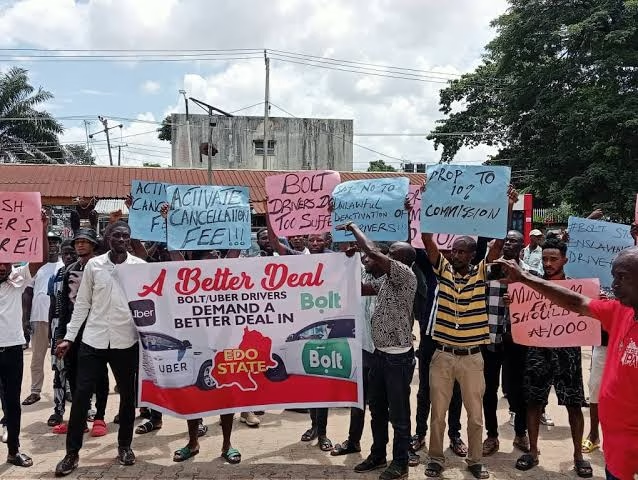
The city’s ride-hailing sector is facing a major shakeup as app-based drivers threaten to abandon global platforms like Uber, Bolt, and inDrive in favor of local alternatives, unless their longstanding demands for better working conditions and fairer compensation are met. The warning comes from the Amalgamated Union of App-Based Transporters of Nigeria (AUATON), which represents thousands of drivers across Lagos. According to Steven Iwindoye, the union’s Public Relations Officer, drivers are demanding a reduction in commission rates to 5%, improved safety measures for both drivers and passengers, fair compensation, and full recognition of their rights and welfare. “If these companies fail to comply, we will move en masse to indigenous app firms willing to meet our demands. Three such apps are already operational. Additionally, our community is developing its own platform to end exploitation and modern-day slavery,” Iwindoye stated. The union’s frustration has been fueled by what drivers describe as exploitative practices, including high commission rates-often as much as 25-30%-sudden and unjust deactivations, unsafe working conditions, and a lack of proper rider identification and security measures. On May 1, 2025, drivers staged a 24-hour boycott of the major ride-hailing apps, coinciding with International Workers’ Day. The protest, which saw hundreds of drivers refusing to accept rides, was designed to send a strong message to the companies and the government about the urgent need for reforms. “The May Day shutdown marks the beginning of a new phase of organized resistance within our industry,” Iwindoye said, adding that the union has already submitted petitions to the National Assembly and plans to petition the Lagos State House of Assembly and other relevant authorities. The drivers’ union has also criticized the platforms for prioritizing profits over the well-being and dignity of drivers, and for implementing policies such as mandatory facial recognition and abrupt deactivation without due process.All eyes are on the ride-hailing companies to see whether they will negotiate with the union or risk losing a large portion of their workforce to local competitors.
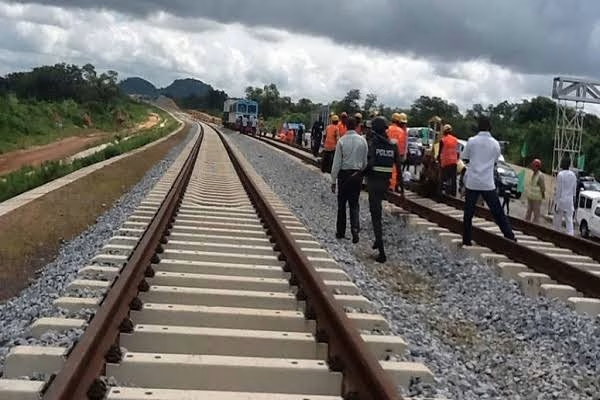
Lagos postpones PWD rail crossing closure to May 14
The Lagos State Government has shifted the planned closure of the PWD Rail Crossing in Ikeja to Wednesday, May 14, 2025. The closure, originally scheduled for May 1, is part of ongoing efforts to modernize the city’s railway infrastructure and improve commuter safety. In a statement released Sunday, Mrs. Bolanle Ogunlola, Deputy Director of Public Affairs at the Ministry of Transportation, said the postponement will give motorists and residents more time to adjust their travel plans. “We understand the impact such closures can have and want to minimize inconvenience to road users as much as possible,” she stated. The closure is necessary to facilitate critical maintenance work following the launch of the Red Line Train Service. Recent surveys by the Ministry of Transportation highlighted the need for proactive measures to prevent accidents at the busy rail crossing. Commissioner for Transportation, Mr. Oluwaseun Osiyemi, explained that the move aims to enhance safety along the corridor, which has seen frequent train-vehicle collisions in the past. “It has become necessary to implement proactive measures to ensure the safety and security of commuters along the PWD route,” Osiyemi said. During the closure, all previously announced alternative routes will remain available. Motorists are advised to use Ikeja or Airport roads and to comply with directions from traffic management officials. The Lagos State Traffic Management Authority (LASTMA) will be on ground to manage traffic and minimize disruptions. The government has appealed for patience and cooperation from residents, emphasizing that the temporary closure is vital for the safety of both rail and road users.
Transcorp warns of imminent power crisis as FG debt hits N650 billion
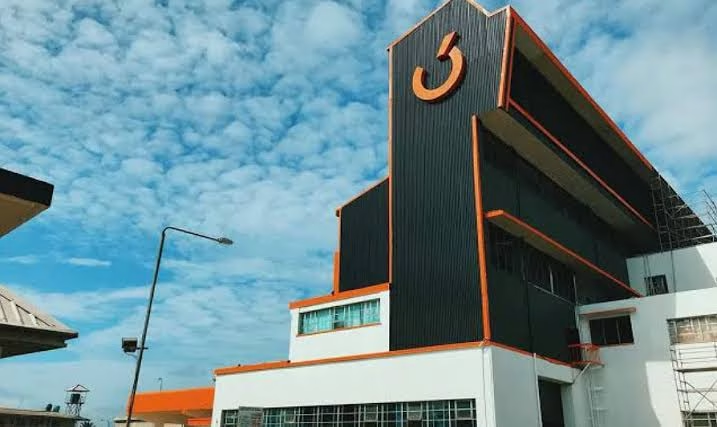
Nigeria’s power sector is facing a deepening liquidity crisis, with Transnational Corporation Plc (Transcorp) revealing that the Federal Government owes its power subsidiaries about N650 billion for electricity generated but not paid for. This development comes amid growing concerns that the sector’s mounting debts-now totaling over N1.9 trillion to generation companies in 2024 alone-could force power plants nationwide to shut down, despite substantial private investment. Transcorp, one of the country’s largest conglomerates, posted impressive financial results in 2024, with revenue surging by 107% to N408 billion and profit after tax jumping 188% to N94.1 billion. However, CEO Owen Omogiafo warned that persistent non-payment by government agencies has slashed the company’s power capacity utilization to just 1,000 megawatts, threatening future investments and expansion. The sector’s financial woes are largely blamed on delayed payments by government intermediaries like the Nigerian Bulk Electricity Trading Plc (NBET), which has left power producers struggling to cover essential costs such as gas procurement, maintenance, and salaries. Industry data shows that GenCos are currently paid less than 30% of their monthly invoices, with the 2024 and 2025 collection rates both falling below 30%. Power generation companies warn that without urgent government intervention and a clear payment plan, the liquidity crunch could trigger a nationwide blackout. The 2025 federal budget has allocated only N900 billion for these debts-far short of what is owed-raising doubts about the government’s ability to meet its obligations. Operators are calling for immediate settlement of outstanding invoices, prioritization of GenCos in payment structures, and a sustainable financing mechanism to stabilize the sector.
Trump slaps 100% tariff on foreign films in bid to revive Hollywood
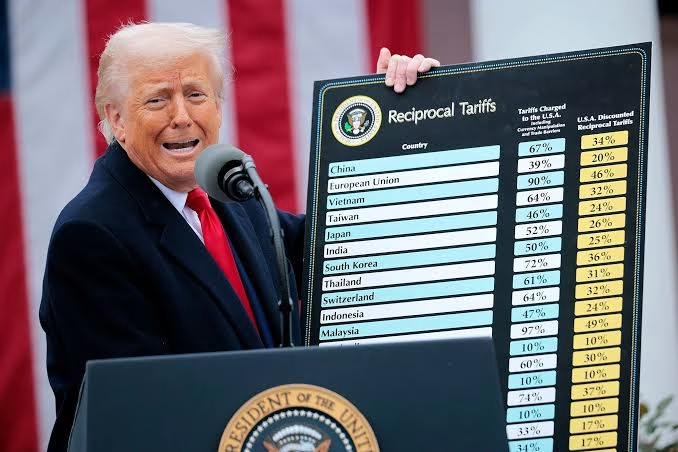
President Donald Trump has announced a sweeping 100% tariff on all films produced outside the United States, a dramatic move aimed at reviving the struggling American movie industry and countering what he describes as a growing national security threat from foreign-produced content. The announcement, made Sunday via Trump’s Truth Social account, marks the first time U.S. trade policy has directly targeted the entertainment sector on this scale. Trump cited a “concerted effort by other nations” to lure filmmakers and studios abroad with lucrative incentives, warning that these trends are “devastating” Hollywood and undermining U.S. interests. “The Movie Industry in America is DYING a very fast death. Other countries are offering all sorts of incentives to draw our filmmakers and studios away from the United States. Hollywood, and many other areas within the U.S.A., are being devastated. This is a concerted effort by other Nations and, therefore, a National Security threat. It is, in addition to everything else, messaging and propaganda!” Trump wrote. The president has directed the Department of Commerce and the U.S. Trade Representative to begin immediate enforcement of the new tariffs. However, details remain unclear regarding how the tariffs will be calculated or applied-whether on box office receipts, streaming revenues, or production costs. Commerce Secretary Howard Lutnick responded on X, formerly Twitter, simply stating, “We’re on it”. The announcement has sent shockwaves through Hollywood, with executives and industry groups scrambling to assess the impact. The Motion Picture Association, which represents major studios, has yet to issue an official response. Many U.S. studios, including Disney and Netflix, routinely film abroad to benefit from international tax breaks and lower production costs. Now, those productions could face steep new tariffs if released in the U.S.. Industry insiders are also questioning whether the tariffs will apply to streaming content as well as theatrical releases, and whether films are already completed but not yet released will be affected. The lack of clarity has left both domestic and international filmmakers in limbo. Trump’s move comes amid escalating trade tensions with China and other countries, following a series of tariffs imposed on foreign goods since his return to office in January. Just last month, China announced it would reduce imports of U.S. films, further complicating the global landscape for American entertainment exports. The president has framed the new film tariffs as part of a broader effort to restore American jobs and production, recently appointing Hollywood veterans Jon Voight, Sylvester Stallone, and Mel Gibson as special ambassadors to promote U.S. filmmaking. Hollywood and international film industries are bracing for significant changes. The new policy could reshape global film production, distribution, and the economics of movie-making for years to come.
SERAP urges Tinubu to end use of cybercrimes act against journalists and critics
The Socio-Economic Rights and Accountability Project (SERAP) has called on President Bola Tinubu to stop the use of Nigeria’s Cybercrimes Act to target journalists, critics, and citizens expressing their views online. In a statement released on Sunday, SERAP said the controversial law is being used to harass and detain people for peacefully exercising their right to free expression. The group described provisions of the Act-especially those criminalizing “insult” and “cyberstalking”-as tools for suppressing dissent and press freedom. SERAP expressed concern over the continued use of what it called “vaguely worded” sections of the law to intimidate those who criticize the government or expose corruption. “The arrest and detention of journalists, bloggers, and social media users under the guise of ‘cyberstalking’ or ‘defamation’ violates the fundamental rights to freedom of expression and access to information,” SERAP said, citing Section 39 of Nigeria’s Constitution and Article 19 of the International Covenant on Civil and Political Rights. The organization urged the Tinubu administration to release all individuals detained under the Cybercrimes Act for peaceful expression and called for a moratorium on the law’s enforcement. SERAP also encouraged the government to work with the National Assembly to review and amend sections of the Act that contradict human rights standards. Civil society and media groups have increasingly criticized the Cybercrimes Act, arguing that it is being used to stifle the press and silence whistleblowers. Recent cases of journalists and media professionals arrested under the law have drawn condemnation from both local and international rights organizations.
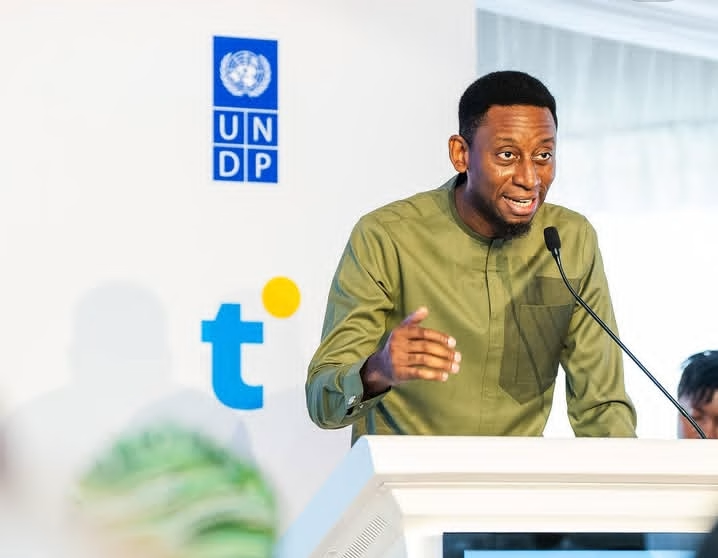
Lagos expands metro fibre network to power digital city vision
The Lagos State Government has launched the second phase of its ambitious metro fibre project, extending internet infrastructure across the city to drive its digital transformation agenda. Olatunbosun Alake, Commissioner for Science, Innovation and Technology, announced the development at a press briefing on Friday. The new phase adds 600km of fibre optic cable, building on the 2,700km already deployed, with a target of reaching 6,000km by 2027. According to Alake, the expanded network is designed to improve internet connectivity, especially in underserved areas. “Between 2023 and 2025, the metro fibre initiative led to over one million new internet subscribers. It also enabled telecom operators to roll out infrastructure in parts of Lagos that had long been neglected,” he said. The project is a cornerstone of Lagos’ vision to become a safe, smart, and connected city. As part of this push, the state has also rolled out the Safe City Project, deploying intelligent transport systems and surveillance cameras in key locations to enhance security and traffic management. Automatic number plate recognition and video surveillance systems are already operational in areas like Alapere and Allen Avenue. In addition to physical infrastructure, Lagos is digitising its internal systems. The government is implementing an Enterprise Architecture project, digitising service delivery across 40 agencies and introducing an Oracle ERP system to streamline finances and treasury operations. Residents can now access various government services through a new digital platform covering sectors such as agriculture, education, and urban planning. Lagos plans to introduce its first set of artificial intelligence (AI) guidelines, focusing on data protection, fairness, and diversity. The state also intends to deploy AI-powered chatbots to improve public engagement and establish a dedicated research and development council to foster long-term technological growth. Officials say the metro fibre project operates as a public-private partnership, with most funding coming from the private sector and the government providing an enabling environment.