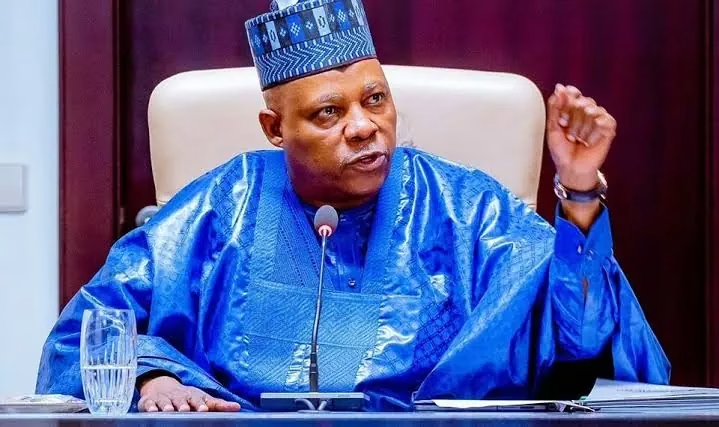
Nigeria is on track to deepen its industrial and clean energy ambitions, as Vice President Kashim Shettima has welcomed a major partnership proposal from South Korea’s Asia Economic Development Committee (AEDC). This aims to boost local manufacturing of solar equipment and electric vehicles (EVs), marking a significant step in the country’s push for sustainable development and technology transfer. The AEDC delegation, led by Chairman Yoon Suk-hun, met with Shettima at the Presidential Villa in Abuja on Tuesday. During the meeting, Shettima reaffirmed the Tinubu administration’s commitment to creating a business-friendly environment and facilitating investments that will transfer advanced technology and improve the lives of Nigerians. “This government wants to be the facilitator for businesses to thrive in Nigeria. We will create a safe passage and a conducive environment for private businesses like yours to thrive,” Shettima said, emphasizing Nigeria’s openness to collaborations that drive industrial growth. The proposed partnership goes beyond clean energy and electric vehicles. It also includes plans to support Nigeria’s security infrastructure with advanced information technology, reflecting a broader vision for a secure and innovation-driven economy. AEDC has pledged to prioritize technology transfer and capacity building, focusing on long-term benefits for both nations rather than short-term profits. If realized, the partnership could help reduce import dependence, create jobs, and position Nigeria as a regional leader in renewable energy and sustainable transportation. Shettima praised South Korea’s longstanding contributions to Africa’s development, especially in technology and human capital, and expressed optimism that this new collaboration would further strengthen ties between the two countries.

Nigeria steps up data privacy protections with new directive
Nigeria has taken a major leap forward in protecting the personal data of its citizens with the rollout of a new directive under the Nigeria Data Protection Act (NDPA) 2023. The Nigeria Data Protection Commission (NDPC) unveiled the General Application and Implementation Directive (GAID) 2025, which sets out clear rules for how businesses, government agencies, and other organizations must handle Nigerians’ personal information. What Does This Mean for Nigerians? Stronger Data Rights: Nigerians now have the right to know what data is being collected about them, request corrections or deletions, and object to how their data is used-especially for marketing. Clearer Rules for Companies: Any organization handling sensitive information-like banks, hospitals, and telecoms-must register with the NDPC and conduct annual audits to prove they’re protecting user data. International Data Transfers: Your data can’t be sent abroad unless the destination country has privacy protections as strong as Nigeria’s. This move aims to prevent misuse of Nigerians’ data overseas. Quick Complaint Resolution: A new system called SNAG ensures companies must respond to user complaints about data misuse before the NDPC steps in, giving consumers more direct power to hold organizations accountable. Adapting to New Tech: The directive addresses modern technologies like AI and facial recognition, requiring privacy to be “built in” from the start, not treated as an afterthought. The NDPA and its new directive aim to bring Nigeria’s data protection standards closer to global benchmarks like Europe’s GDPR, ensuring citizens’ rights are respected in the digital age. Full implementation of the new rules begins in September 2025, with some provisions, such as those related to fees, starting in January 2026.
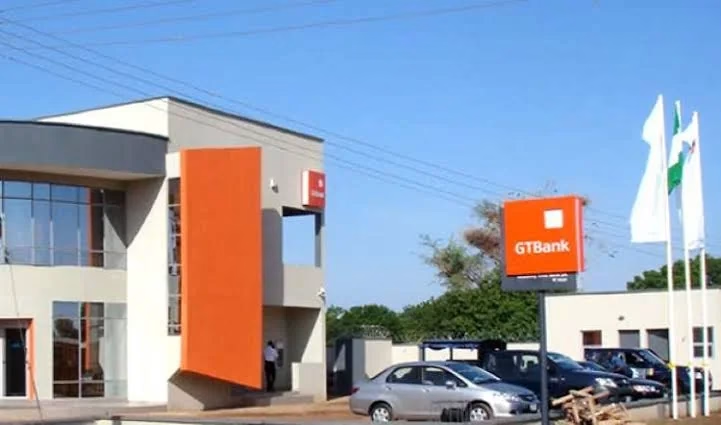
GTBank raises SMS alert fee to N6, citing telecom tariff hike
Guaranty Trust Bank (GTBank) has announced a 50% increase in its SMS transaction alert fee, raising the cost from N4 to N6 per message. The new rate takes effect on Thursday, May 1, 2025, and applies to all customers who receive transaction notifications via SMS. The bank attributes the fee hike to recent increases in telecommunication service rates. In a notice to customers, GTBank explained, “This adjustment is due to a recent increase in telecom rates as communicated by the telecommunication service providers”. Telecom operators in Nigeria-including MTN, Airtel, Globacom, and 9mobile-have faced mounting financial pressures in recent years. Rising energy costs, the depreciation of the naira, and frequent disruptions to fibre-optic infrastructure have driven operational expenses higher. Despite these challenges, telecom tariffs remained largely unchanged for over a decade. Earlier this year, telecom operators petitioned the Nigerian Communications Commission (NCC) for a 100% tariff hike. The NCC ultimately approved a 50% increase, which has now led to higher SMS and data charges across the industry. For example, MTN’s 1.8GB monthly data plan jumped from N1,000 to N1,500, while the 20GB plan rose from N5,500 to N7,500. Banks, including GTBank and Ecobank, are now passing these increased costs on to customers by raising SMS alert fees. GTBank emphasized the importance of SMS transaction alerts as a key tool for monitoring account activity and enhancing security. Real-time notifications help customers detect unauthorized or suspicious transactions quickly. However, the bank also acknowledged customer concerns about rising costs and offered an opt-out option for those who wish to avoid the new fee. Customers can stop receiving SMS alerts by completing a transaction alert form and sending it to gtbankmailsupport@gtbank.com. The fee hike comes at a time when many Nigerians are already grappling with rising living costs. While banks and telecom operators argue that the increases are necessary for operational sustainability, customers have expressed frustration, especially as network quality and service reliability remain ongoing concerns. Regulators, including the NCC and the Federal Competition and Consumer Protection Commission (FCCPC), have called on telecom operators to improve service quality in exchange for the higher tariffs. Consumer advocacy groups continue to push for greater accountability and transparency in the sector.
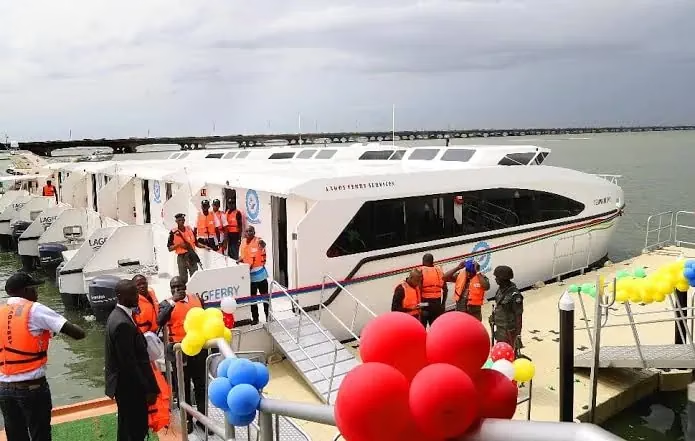
Lagos set to launch water taxis by end of 2025, dredging underway on key waterways
Lagos State is gearing up for a major boost in public transportation as the government announces plans to launch water taxis before the end of 2025. The initiative, led by Lagos State Ferry Services (LAGFerry), is already in motion, with dredging and route preparation underway on several key inland waterways. At a recent press conference, LAGFerry Managing Director Ladi Balogun explained that the water taxi project is part of the state’s THEMES+ agenda, which focuses on sustainable transport, infrastructure upgrades, and reducing carbon emissions. The new service aims to ease the city’s notorious road congestion and offer commuters a faster, healthier alternative to gridlocked streets. The water taxis will operate from designated ‘water stops’-boarding points similar to bus stops on land-making the service accessible and organized. Balogun emphasized that safety is a top priority, with strict protocols such as mandatory life jackets and specialized training for operators. To build public confidence, the state has held demonstration sails, allowing commuters to experience the safety and comfort of water travel firsthand. Since LAGFerry began commercial operations in 2020, over three million passengers have used the service, and the fleet has expanded significantly thanks to government investment. Several new jetties and terminals are under construction and set to open soon, further strengthening the water transport network. If all goes according to plan, Lagosians could see water taxis on the waterways as early as the second quarter of 2025, but officials are confident the service will be running before year’s end. The project is expected to transform commuting in Lagos, making daily travel safer, faster, and more efficient for millions of residents.

Zenith bank surpasses CBN’s capital mandate, confirms no need for further fundraising
Zenith Bank Plc has announced that it is not under any pressure to raise additional capital after exceeding the Central Bank of Nigeria’s (CBN) new minimum capital requirement for international banks. The bank’s capital base now stands at an impressive N614.65 billion, well above the N500 billion threshold set by the CBN, following a highly successful hybrid capital raise earlier this year. The recapitalization, completed in January 2025, saw Zenith Bank raise N350.46 billion through a combination of a rights issue and a public offer. Both components of the offer were oversubscribed, reflecting strong investor confidence in the bank’s strategy and future prospects. The rights issue was 100.18% subscribed, while the public offer saw a 160.47% subscription rate. Speaking at the bank’s Annual General Meeting in Lagos, Group Managing Director and CEO, Adaora Umeoji, assured shareholders that Zenith Bank’s robust capital structure means there is no need to seek further funds for recapitalization. “We have finalized our recapitalization exercise and have reached 160% capitalization. We are not under any pressure to go back for the second time to raise money. Our robust capital structure allows us to continue delivering value to our shareholders,” Umeoji said. Zenith Bank’s strong financial performance in 2024 underpins this confidence, with profit before tax rising 67% to N1.3 trillion and continued growth in both interest and non-interest income. The bank’s market capitalization has also climbed, reaching N1.87 trillion and cementing its position as one of Nigeria’s leading financial institutions.
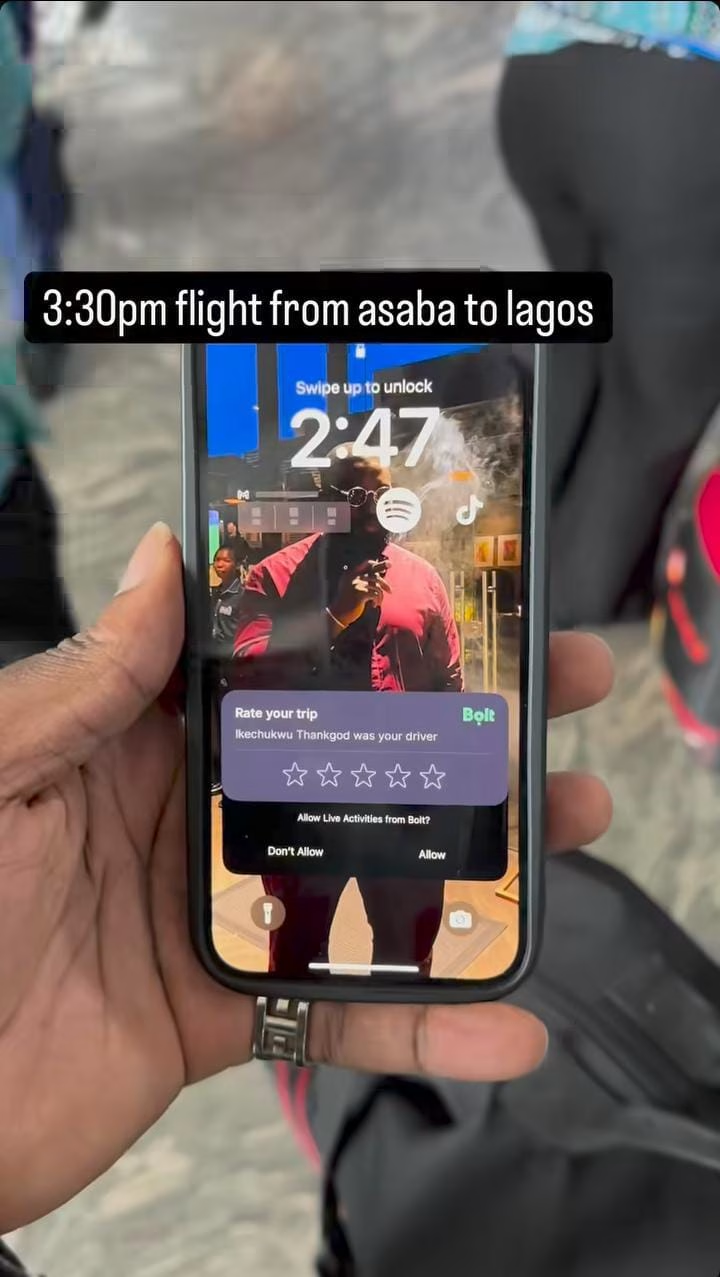
Lagos flight diverted to Port Harcourt due to poor weather, passengers express frustration
A 3:30pm passenger flight bound for Lagos from Asaba, Delta State, was diverted to Port Harcourt International Airport on April 28 due to severe weather conditions. Passengers onboard expressed frustration over the abrupt change, with one viral Instagram video by influencer @opeyemifamakin capturing their ordeal. The influencer eventually reached Lagos by 9:29 p.m. that evening. The diversion highlights recurring air travel disruptions in Nigeria, where weather-related diversions and communication gaps have drawn criticism. “There is a problem” – passengers in the video lamented the lack of timely updates, while details of the airline involved remain unclear. Authorities are yet to release an official statement on the latest diversion, but similar past events have highlighted calls for improved emergency preparedness and passenger communication