
The Presidential Compressed Natural Gas Initiative (P-CNGi) and LNG Arete Ltd. have entered into a landmark $27.3 million agreement to develop compressed natural gas (CNG) infrastructure in Northern Nigeria. The deal, finalized on Friday, April 4, 2025, aims to address longstanding energy challenges in the region by constructing a mini-Liquefied Natural Gas (LNG) plant in Ajaokuta, Kogi State. The project will establish a facility with a processing capacity of seven million standard cubic feet per day (MMSCFD), significantly improving the availability of CNG for industries and households across Northern Nigeria. This initiative is expected to create over 100 jobs and enhance energy access in an area historically underserved by stable gas infrastructure. Investment Breakdown and TimelineThe funding for the project is being sourced from multiple stakeholders: P-CNGi will contribute $6 million. LNG Arete Ltd. will invest $12 million. The remaining funds will be provided by the Midstream Downstream Gas Infrastructure Fund, managed by the Nigerian Midstream and Downstream Petroleum Regulatory Authority (NMDPRA). Construction is set to begin immediately, with the plant expected to become operational within 12 to 16 months. Mr. Michael Oluwagbemi, Programme Director and CEO of P-CNGi, emphasized that the partnership would serve as a key supply hub for CNG in Northern Nigeria. He noted that this project would reduce transportation costs, support industries such as textiles, agriculture, and manufacturing, and lower logistics expenses for goods moving from the north. “This initiative will not only meet the energy demands of industries but also accelerate industrial growth and create jobs in the region,” Oluwagbemi stated. The plant is designed to complement existing infrastructure like the Ajaokuta-Kaduna-Kano (AKK) gas pipeline, further enhancing gas distribution across Nigeria. Once operational, it will convert LNG into CNG, providing a cleaner and more cost-effective fuel option for transportation and industrial use. The collaboration aligns with P-CNGi’s broader goals of leveraging Nigeria’s abundant natural gas resources to provide cleaner, more affordable, and sustainable energy solutions. By fostering increased local participation in the energy sector, the project aims to bridge the energy gap in underserved regions while boosting Nigeria’s competitiveness on both regional and global scales. Hajara Pitan, Project Director at LNG Arete Ltd., described the initiative as a significant milestone for expanding gas utilization across Nigeria. “This project demonstrates how innovative mini-LNG technology can drive local engagement in the sector while addressing critical energy needs,” she said.

Nathaniel Bassey and Mercy Chinwo shine as top gospel artists on YouTube in Q1 2025
Nigerian gospel artists Nathaniel Bassey and Mercy Chinwo have achieved remarkable milestones, ranking among YouTube Music’s most-streamed Nigerian artists globally for the first quarter of 2025. Their spiritually uplifting music continues to captivate audiences worldwide. According to data from Debut Hub, Nathaniel Bassey garnered an impressive 52.8 million streams, while Mercy Chinwo followed closely with 46.4 million streams. Mercy Chinwo’s hit song “Excess Love” remains a fan favorite, amassing a staggering 133 million plays to date. Nathaniel Bassey’s top-performing tracks include “Yahweh Sabaoth” with 25 million plays, “TOBECHUKWU” (featuring Mercy Chinwo Blessed) with 39 million plays, and “Jesus Iye,” which has reached 32 million plays. Meanwhile, Afrobeat star Rema dominated the charts as the most-streamed Nigerian artist on YouTube Music in Q1 2025, with an extraordinary 223 million streams. His global hit “Calm Down,” featuring Selena Gomez, has now surpassed 2.5 billion plays. The rankings also feature other prominent Nigerian artists such as Burna Boy (171M streams), Ayra Starr (169M), Davido (113M), and Wizkid (102M). Gospel artists Moses Bliss (41.5M) and Nathaniel Bassey which highlights the rising influence of inspirational music in the global market

Shuttlers introduces CNG fleet, slashes costs and emissions by 29%, amid rising fuel prices in Nigeria
Shuttlers, a Nigerian mobility startup revolutionizing shared commuting, has taken a bold step towards sustainability and affordability by introducing 20 compressed natural gas (CNG)-powered vehicles to its fleet. The new addition, rolled out in the first quarter of 2025, has already delivered impressive results: a 29% reduction in rider costs and a significant cut of 23.5 metric tons in carbon dioxide emissions, according to the company’s CEO, Damilola Olokesusi. This move comes at a critical time for Nigeria, where rising fuel prices have strained transportation budgets for both consumers and businesses. CNG, which is both cheaper and cleaner than petrol, is gaining traction as an alternative fuel source. Shuttlers’ decision reflects a growing trend among mobility startups seeking to balance profitability with the economic realities faced by their users. In a LinkedIn post, Olokesusi shared that the CNG-powered buses have already completed 1,484 trips, serving 19,292 passengers, 4% of the company’s total trips for Q2. The rollout has been met with positive feedback from riders, despite initial safety concerns often associated with CNG cylinders. Addressing these concerns, Olokesusi emphasized that Shuttlers’ vehicles are equipped with fireproof canisters and automatic extinguishers and undergo regular inspections. As a result, the company achieved “100% safe trips” in Q1 2025. Shuttlers’ latest innovation builds on its mission to make commuting more efficient and environmentally friendly. The startup plans to expand its non-petrol fleet further in Q2, signaling its commitment to sustainable growth. This development follows its $4 million funding round in 2023, which has helped fuel its expansion efforts. As fuel prices continue to rise in Africa’s largest oil-producing nation, Shuttlers’ adoption of CNG technology could set a precedent for other mobility companies looking to navigate the challenges of high operating costs while addressing environmental concerns. For now, the startup is proving that greener transportation can also be more affordable for everyday commuters.

Tinubu signs landmark law recognizing cryptocurrency as securities in Nigeria
Nigeria Recognizes Cryptocurrency as Securities in Landmark LegislationNigeria has taken a historic step in its digital finance journey by officially recognizing cryptocurrency and virtual assets as securities under the newly enacted Investment and Securities Act (ISA) 2025. Signed into law by President Bola Tinubu, the legislation marks a transformative moment for the country’s burgeoning crypto sector, offering long-awaited regulatory clarity. The new law defines crypto assets as “digital representations of value that can be transferred, digitally traded, and used for payment or investment purposes.” It places Virtual Asset Service Providers (VASPs), Digital Asset Operators (DAOPs), and Digital Asset Exchanges under the regulatory oversight of the Securities and Exchange Commission (SEC). This framework aims to enhance investor protection, curb fraudulent activities, and align Nigeria’s financial markets with global standards. The SEC has also introduced measures to accelerate cryptocurrency licensing through its Accelerated Regulatory Incubation Programme (ARIP). Provisional licenses have already been granted to platforms like Quidax and Busha, signaling a structured approach to regulating digital assets. SEC Director-General Emomotimi Agama emphasized that this move positions Nigeria as a competitive destination for local and foreign investments while fostering innovation. This legislation represents a significant departure from Nigeria’s previously restrictive stance on cryptocurrencies. After years of regulatory uncertainty, including bans on banks supporting crypto transactions, the government reversed its position in late 2023. The ISA 2025 builds on this momentum by formally integrating crypto into the financial system, reflecting both global trends and the country’s high adoption rate, second only to India globally. Stakeholders have welcomed the development. Jude Ozinegbe, founder of Cyberchain, described it as a turning point for Nigeria’s digital economy. He noted that the law provides legitimacy to digital assets while fostering institutional involvement and innovation. However, experts have highlighted the need for clear implementation strategies to ensure seamless compliance. The ISA 2025 sets the stage for Nigeria to become a leader in blockchain and fintech innovation. While challenges remain in refining compliance guidelines and licensing processes, this bold step is expected to attract investments, boost economic diversification, and solidify Nigeria’s position in the global crypto ecosystem.
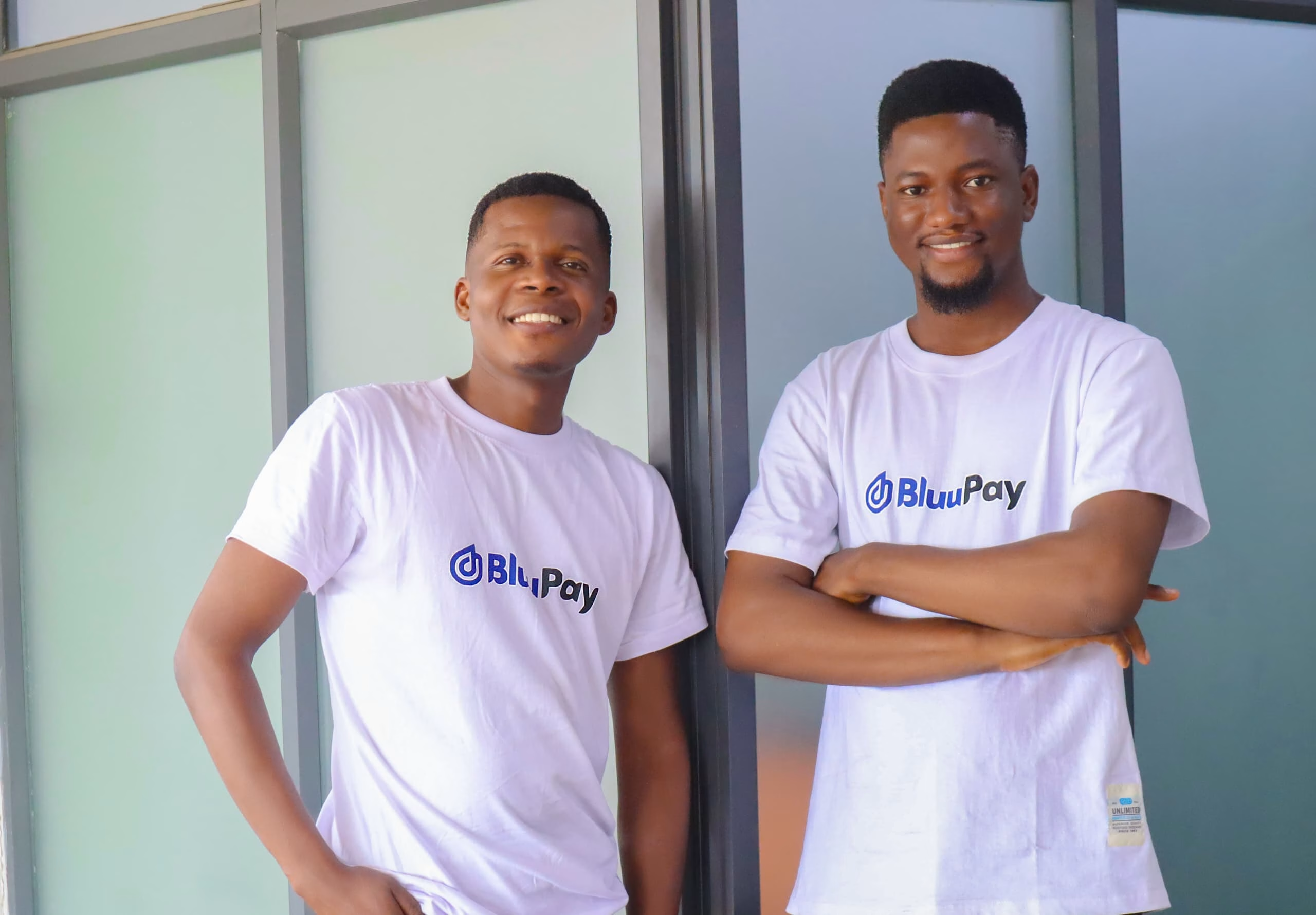
Celebrating three years of innovation, Bluu Digital Technologies Limited redefines B2B transactions with Bluupay
Bluu Digital, a technology company headquartered in Abuja, has launched a new platform designed to enhance financial operations for businesses operating across traditional and digital currency ecosystems. The platform combines API-driven architecture with advanced payment automation tools, aiming to address the growing demand for seamless cross-border transaction capabilities in global commerce. Marking its 3rd anniversary, Bluu Digital Technologies Limited has unveiled Bluupay Bridge, a pioneering payment solution designed to tackle the complexities of managing traditional and digital currencies. This platform seems to address the challenges businesses face in managing traditional and digital currencies by offering real-time currency conversion, automatic payment routing, and enhanced fraud detection. Stephen Bitrus, Bluupay’s Director of Business Development, noted in an interview: “Our goal is to empower businesses, whether they operate in fintech, e-commerce, or global payroll, by simplifying financial operations, reducing costs, and improving transaction speed.” He added, “With Bluupay Bridge, companies can scale globally without complex payment infrastructures, staying competitive in the digital economy.” This solution helps businesses handle payments in multiple currencies, including both traditional money and cryptocurrencies. The Bluupay Bridge, is designed to easily connect with existing financial systems, making it simpler and faster for companies to update their payment processes. It uses real-time currency conversion and automatic payment routing to reduce costs and speed up transactions, especially when sending money across borders. This makes it easier for businesses to operate globally without the hassle of complex payment systems. Bluupay Bridge is designed to handle high transaction volumes efficiently, says Martins Michael, Bluupay’s Director of Product Development. “Our system is built to process large numbers of transactions quickly and smoothly. It automatically scales to manage traffic spikes, distributes transactions across multiple servers to prevent delays, and ensures continuous operation with backup systems. Most transactions are completed in under 5 seconds, though factors like verification and internet speed can affect timing” – Martins noted. Fraud detection and risk management systems, integrated by Bluupay Bridge, enable real-time monitoring of transactions to identify and mitigate fraudulent activities effectively. The system supports cross-border payroll management, facilitating seamless payments to employees worldwide. For example, companies with global workforces can use Bluupay Bridge to distribute salaries in local currencies, while e-commerce platforms may leverage its multi-currency support to simplify checkout experiences for international customers. Analytics and reporting tools within the platform provide businesses with detailed insights into payment flows, currency exposure, and transaction success rates. These features aim to help organizations make data-driven decisions while maintaining audit trails for regulatory compliance. Bluupay represents a significant leap forward in B2B financial transactions by offering a streamlined, API-driven platform that seamlessly integrates traditional and digital currencies. By providing real-time currency conversion, automatic payment routing, and robust fraud detection, this solution empowers businesses to scale globally without the complexities of traditional payment systems. With its ability to handle high transaction volumes efficiently and support cross-border payroll management, Bluupay Bridge is poised to revolutionize the way companies manage financial operations in the digital economy.

Tinubu approves N20 billion fund to kickstart space regulation in Nigeria
President Bola Ahmed Tinubu has approved a N20 billion take-off fund for the National Space Research and Development Agency (NASRDA) to implement its long-awaited regulatory and licensing mandate within Nigeria’s space sector. This decision marks a significant step forward for the agency, which has been unable to fulfill its mandate since its establishment in 1999. Dr. Matthew Adepoju, NASRDA’s Director-General, disclosed this development during an interview in Abuja. He explained that the approval aligns with Sections 6 and 9 of the NASRDA Act (2010), which empower the agency to oversee space activities in Nigeria. Adepoju emphasized the urgency of space regulation, citing security threats and economic risks posed by unmonitored activities in the sector. “This fund will enable us to commence space regulation and spectrum management in Nigeria,” Adepoju stated. He highlighted the importance of regulating Nigeria’s upstream, midstream, and downstream space segments to prevent exploitation and ensure Nigerians benefit from space technology. The licensing framework will require individuals and organizations involved in space-related products and services, such as satellite imagery, telecommunications, and broadcasting, to obtain permits from NASRDA. Adepoju stressed that oversight is critical to safeguarding national security, promoting economic diversification, and generating revenue from industries reliant on space-based services like oil and gas. While the fund has been approved, bureaucratic procedures have delayed access to it. However, NASRDA has begun setting up platforms to initiate its regulatory functions. This move is expected to enhance Nigeria’s position as a key player in Africa’s growing space economy.