
The Central Bank of Nigeria (CBN) has issued a warning regarding Zuldal Microfinance Bank Limited, declaring it an illegal entity operating without a license.The regulator has advised all Nigerians to steer clear of the firm, which has reportedly been conducting business in major cities including Lagos, Abuja, Kaduna, and Kano.The apex bank, in a release on Wednesday made it clear that Zuldal has no regulatory approval to conduct banking business in the country. Despite marketing itself to the public, with reports even surfacing of a grand opening held at the National Women Centre in Abuja just last September, the firm is not recognized by the law.A quick check online reveals that the bank’s digital footprint is already going dark. Its website is currently inactive and password-protected, raising questions about its legitimacy.The CBN emphasized that operating without a license is a direct violation of the law. specifically citing Section 2(1) of the Banks and Other Financial Institutions Act (BOFIA) 2020, which mandates that no person or company can carry out banking business in Nigeria without a valid license issued by the CBN.The regulator warned the public that anyone doing business with the entity does so at their own peril; The said Zuldal Microfinance Bank Limited is not a licensed Microfinance Bank and has no authorisation from the Central Bank of Nigeria to operate or carry out any form of banking or microfinance business in Nigeria. The CBN remains committed to safeguarding the financial system and protecting members of the public from unlicensed and fraudulent institutions For now, Zuldal Microfinance Bank remains blacklisted, and citizens are urged to disregard any claims it makes about being a licensed operator.
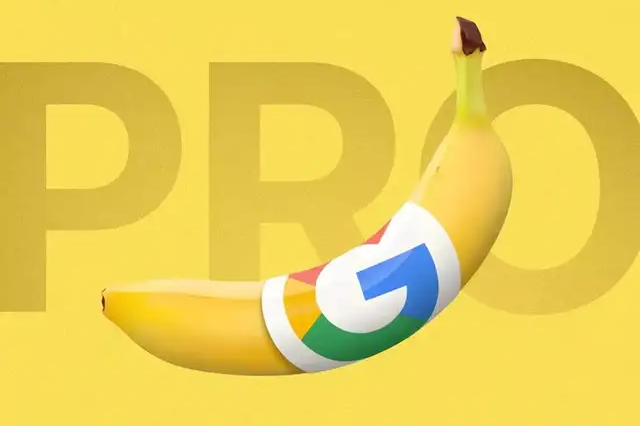
Google launches Nano Banana Pro in Nigeria
Google is rolling out its most advanced image generation and editing tool yet, ‘Nano Banana Pro,’ a system built on the powerful reasoning capabilities of the Gemini 3 Pro model.Nano Banana Pro is designed to address key pain points that have long challenged AI image creation, offering users much greater control and accuracy than previous models.One of the most significant upgrades of the model is its ability to generate clear, readable text directly inside images, a major hurdle older AI system often stumbled over. This feature is a game-changer for Nigerian designers working on banners, social media ad mockups, and presentations where typography must be sharp and accurate.Nano Banana Pro can now generate visuals that are grounded in real-world facts. Because it is connected to Google’s search knowledge base, users can create highly accurate infographics, educational diagrams, recipes, or sports visuals that reflect up-to-date information, making it a powerful tool for students and journalists alike.Users can upload up to 14 reference photos in a single prompt to ensure characters, product shots, or brand aesthetics remain identical across multiple visuals.User can now adjust camera angles, change lighting conditions (shifting a scene from day to night), and modify focus using simple text prompts. Then, export final work in a high-resolution 2K or 4K, providing flexibility for everything from mobile production to professional print use.Google has integrated new verification tools, in order to maintain transparency. Every AI-generated image includes an invisible SynthID watermark. Users can upload any image to the Gemini app and ask a simple question to verify if it was created by Google’s AI.While free-tier users will still see a visible watermark, Ultra-tier subscribers will have the visible mark removed, allowing for a cleaner canvas for commercial and professional work, though the invisible digital watermark remains active for accountability.Nano Banana Pro is now rolling out globally. Nigerian users can access the advanced features through the Gemini app by selecting the “Thinking” model. Developers and businesses can integrate it through Google Ads, Slides, Vids, the Gemini API, and Vertex AI for scaled production.
Google unveils Gemini 3, calling it their “most intelligent model yet”
Google has officially launched Gemini 3, the latest version of its flagship AI model, describing it as the company’s most intelligent, state-of-the-art iteration. Unveiled on Tuesday, the new model combines all of Gemini’s previous capabilities with advanced reasoning, creativity, and problem-solving abilities. Gemini platform currently boasts 2 billion users every month across its services and the Gemini app surpasses 650 million users per month. Alphabet-owned Google stated that Gemini 3 is its attempt to make AI truly helpful by meeting user requests for powerful tools that simplify daily activities.The launch includes Gemini 3 Pro, a specialized version that offers multimodal capabilities and reportedly outperforms Gemini 2.5 in every major AI benchmark. Google claims this model demonstrates PhD-level reasoning, setting a new frontier standard in mathematics. Gemini 3 Pro tells you what you need to hear, not just what you want to hear. It acts as a true thought partner that gives you new ways to understand information and express yourself – Demis Hassabis, CEO of Google DeepMind Google is also rolling out other complementary products, including the Google Antigravity platform, a tool that transforms AI from a simple coding assistant into an active partner for complex software tasks.

Cloudflare network problem knocks X and multiple sites offline
The social media platform X (formerly Twitter) is experiencing a global outage, with thousands of users reporting issues with loading posts on both the app and web browser versions. The problem, which began around 11 a.m. UTC on Tuesday, is reportedly linked to a major network issue at Cloudflare, an American company providing essential web security and Content Delivery Network (CDN) services. Cloudflare has confirmed it is aware of the issue and is currently investigating.Cloudflare operates as a vital intermediary for a substantial portion of the internet. It helps websites defend against cyberattacks and ensures fast content delivery. When Cloudflare experiences a problem, it can simultaneously impact numerous, unrelated websites and services that rely on its network. According to Downdetector, nearly 12,000 users reported issues with X, where they were met with a consistent message like “posts aren’t loading right now”. While X has not released an official statement, the concurrent global outage at Cloudflare is the suspected source of disruption. Cloudflare is aware of and investigating an issue which potentially impacts multiple customers. Further details will be provided as more information becomes available The issue also affected their internal systems, including the Cloudflare dashboard feature and the application programming interface (API).This incident follows a major AWS global outage in October, which also temporarily affected multiple platforms, including Grammarly, Snapchat, and Reddit.Full service restoration across all impacted platforms, including X, is expected once Cloudflare successfully implements a solution to the network degradation.

NIN-SIM policy leads to loss of 59.7 million phone lines in Nigeria
Nigeria’s active voice subscriptions plummeted by 59.7 million in 2024, according to the Nigerian Communications Commission’s (NCC) 2024 Subscriber/Network Performance Report. This correction, which saw the active subscriber base drop from 224.7 million in 2023 to 164.9 million by December 2024 (a 26.6% year-on-year decline), was primarily caused by the strict enforcement of the National Identification Number (NIN)–Subscriber Identity Module (SIM) linkage policy.The mass deactivation of unlinked SIM cards marks a phase in the multi-year drive of the Federal Government to strengthen national security and establish a credible digital identity database.The NIN-SIM linkage policy was launched in February 2020 and jointly enforced by the NCC and the National Identity Management Commission (NIMC). Following several extensions, the final cut-off date was September 14, 2024, leading to the automatic deactivation of any SIM without a verified NIN the following day.The government made the linkage mandatory primarily to curb the criminal use of anonymous SIM cards, strengthen national security, and create a more reliable national identity database. The policy also aims to expand financial inclusion and improve digital service delivery.The NCC report shows the massive decline was due to the removal of SIMs not linked to a verifiable NIN, coupled with the rectification of a long-standing subscriber-count discrepancy by a major mobile network operator, which had inflated the total subscriber count.The subscriber loss also affected other industry metrics. Teledensity fell from 103.66% to 76.08%, and internet subscriptions dropped by 24.6 million users (a 14.98% contraction).The NCC views the drop as a necessary and successful clean-up that has created a more authentic subscriber base. They argue that the verified database enhances national security and establishes a foundation for digital governance reforms, with President Bola Tinubu confirming that over 126 million Nigerians had been enrolled in the National Identity Database by September 2024.

Dangote and Otedola phones hacked, ransom demanded
The mobile phones of two of Nigeria’s wealthiest businessmen, Aliko Dangote and Femi Otedola, were reportedly compromised by hackers over the past week, with ransom demands made to both individuals, according to a report by TheCable. Sources confirm that cyber intruders gained access to the phones of Dangote, Africa’s richest man, and Otedola, seeking financial payment. Dangote experienced two separate breaches within a 48-hour period, while Otedola’s phone was breached once. As at the time this report was published, it remains unclear whether the businessmen have regained full control of their devices or the total extent of the data compromised. The nature and amount of the ransom requested by the hackers, as well as the precise information stolen, which may include highly sensitive financial, business, and personal data, have not been disclosed. Cybersecurity experts warn that such breaches could expose victims to severe financial and reputational risks.This incident follows similar high-profile cyberattacks in Nigeria. In 2024, phones belonging to state governors Bassey Otu of Cross River State and Ademola Adeleke of Osun State were also breached by scammers who impersonated the officials to solicit financial support. Cybersecurity experts urge individuals and organizations to strengthen their cybersecurity protocols and remain cautious against phishing attempts and other digital threats.