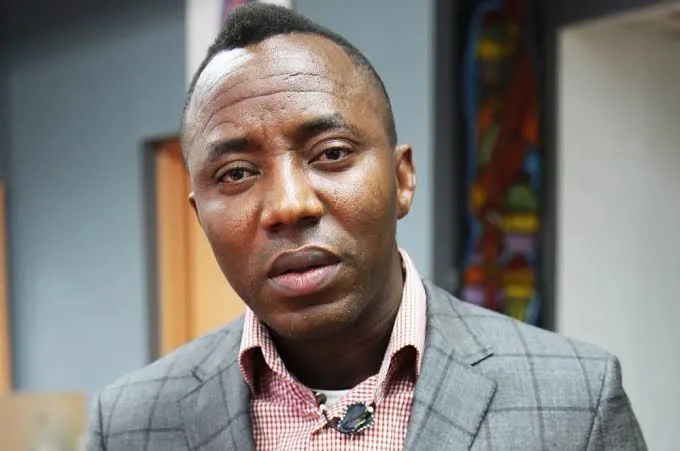
The Department of State Services (DSS) arraigned political activist and publisher Omoyele Sowore before a Federal High Court in Abuja on Tuesday, charging him with five counts of cybercrime and defamation for calling President Bola Tinubu a “criminal” in a social media post. After two earlier attempts to arraign him, Sowore pleaded not guilty to the charges. Justice Mohammed Umar, the presiding judge, granted him bail on self-recognition, considering his previous status as a presidential candidate. The five-count charge (FHC/ABJ/CR/484/2025) accuses Sowore of violating the Cybercrimes (Prohibition, Prevention, etc) Amendment Act, 2024, and the Criminal Code Act. The charges relate to posts Sowore made on X and Facebook in August 2025, where he allegedly labeled President Tinubu a “criminal.” The DSS also named X Incorp (formerly Twitter) and Meta (Facebook) Incorp as co-defendants, likely due to their refusal to remove the contested posts. Sowore, who ran for president under the African Action Congress (AAC) in 2019 and 2023, denied all five charges. Justice Umar granted bail without requiring a bond or sureties, a privilege given to prominent individuals like Sowore. He noted that Sowore’s international passport was already in court custody from a previous case. The judge also prohibited Sowore from making further statements that could threaten national peace and security, warning that violating this condition would result in bail revocation.

Police bust cult using WhatsApp channel ‘Red Chamber’ to recruit teens in Sokoto
Police in Sokoto, have arrested the leaders of a suspected cult group accused of using a WhatsApp group called the “Red Chamber” to recruit and initiate teenagers into their cult group.The crackdown, announced on Saturday, led to the arrest of three suspects, including the alleged mastermind, Usman Shu’aibu. The operation by the Anti-Kidnapping Unit exposes the new trend of digitalization adopted by criminal networks, to expand their reach and influence over the youth.The group, known locally as “Sai Malam,” operated discreetly across parts of Sokoto State. Investigators discovered that the WhatsApp group was central to their operations, promising secret powers and loyalty to new recruits.The suspects confessed to using the WhatsApp platform to initiate members remotely. Police described the strategy as an attempt to exploit impressionable young people who might be seeking belonging or protection.The breakthrough came Friday night when the Anti-Kidnapping Unit raided the group’s location. The Commissioner of Police, Ahmed Musa, framed the arrests as a response to public outcry regarding youth involvement in harmful secret societies.Police spokesperson Ahmed Rufai emphasized the need for parents to scrutinize their children’s digital footprint, stressing that social media is becoming a frontline for criminal manipulation. The police have launched a manhunt for fleeing members of the “Sai Malam” group, in order to restore law and order across the state.
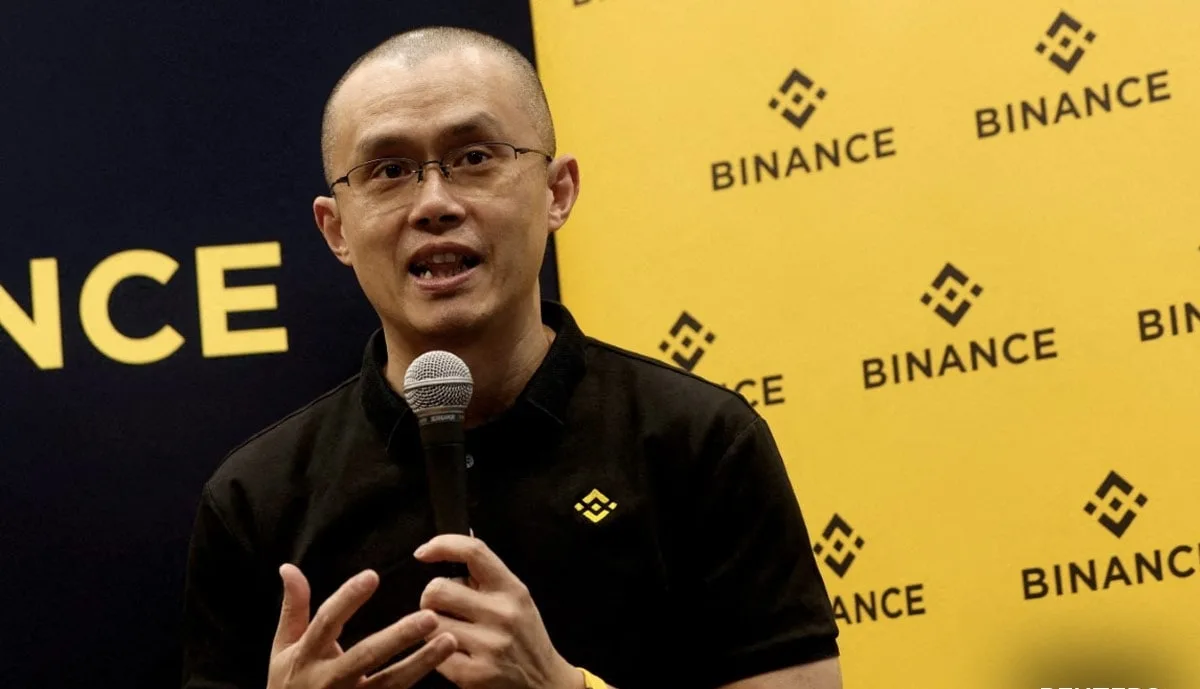
Binance and Founder Changpeng Zhao sued over alleged Hamas financing
Changpeng Zhao (CZ), the former CEO and founder of Binance, is facing a lawsuit in the United States alongside Binance itself, accusing the cryptocurrency exchange of “knowingly facilitated” transactions for Hamas and other U.S.-designated Foreign Terrorist Organizations (FTOs) for years.The lawsuit, filed in a North Dakota federal court by over 300 victims and family members of the October 7, 2023, attack on Israel, alleges that the platform’s failures in compliance directly and materially contributed to the terrorist activities. Binance has stated it cannot comment on ongoing litigation but affirms its compliance with international sanctions laws.The complaint alleges that Binance and CZ systematically assisted Hamas, Hezbollah, Iran’s IRGC, and other FTOs to transfer and conceal hundreds of millions of U.S. dollars through the platform, enabling their terrorist activities.The lawsuit claims Binance intentionally structured its operations using offshore entities and weak customer verification to make it difficult to trace funds and identify FTO accounts. In November 2023, Binance pleaded guilty to anti-money laundering (AML) and sanctions violations, agreeing to pay a $4.3 billion fine. CZ also pleaded guilty and resigned as CEO, serving a four-month prison sentence. This new lawsuit claims illicit transactions continued even after that settlement.CZ was recently granted a presidential pardon in October 2025, an act that itself sparked controversy due to his prior conviction for compliance failures.

Malaysia to ban users under 16 from social media accounts
Malaysia is set to implement a nationwide restriction next year that will prevent individuals under the age of 16 from creating social media accounts. This is a growing global movement by governments to enhance online protections for children and address concerns over mental health and exposure to harmful content.Communications Minister Fahmi Fadzil announced the planned restriction, stating that the government is currently developing compliance systems that major platforms, including Facebook, Instagram, and X, will be required to adhere to.The initiative mirrors similar actions in other nations. Australia, for example, mandates social networks to deactivate accounts belonging to users under 16 starting in December. The US has seen 24 states enact age-verification laws.For Malaysia, the primary concerns driving this policy are the impact of social media use on young people’s mental health, safety, and exposure to harmful content and online manipulation.

Nigerian launch campaign to ban Netflix over movie ‘The Herd’
A controversy has erupted in following the release of the Netflix movie “The Herd,” directed by Nollywood actor Daniel Etim-Effiong, leading to a viral campaign by some Nigerian calling for the immediate cancellation of Netflix services.The film, which depicts a kidnapping carried out by bandits often identified as Fulani herdsmen, has raised outrage among critics who accuse the movie of ethnic and religious profiling.The online campaign, launched primarily on X (formerly Twitter), urges users to delete the Netflix app and boycott the streaming giant. Critics argue that the movie dangerously stereotypes an entire ethnic group the Fulani).The controversy centers on a specific scene that allegedly shows Fulani herders crossing the road with cattle, only to suddenly pull out guns and abduct travelers.A prominent voice in the criticism is Bashir Ahmaad, a former aide to President Muhammadu Buhari. He acknowledged the surge of banditry but condemned the film for its broad strokes. The reason why some Arewa people are angry about The Herd movie is not because we are denying the reality of banditry, far from it. It is about the dangerous consequences of profiling an entire ethnic group and region that has already suffered immensely from years of insecurity – Ahmaad. Ahmaad argued that while some criminals are Fulani, the vast majority of herders are innocent victims of the crisis themselves. He warned that a film with an international platform like Netflix, which portrays a one-dimensional story, reinforces harmful stereotypes that fuel suspicion and resentment. He suggested that the Nigerian Film Corporation should have provided guidance to prevent such “damaging portrayals.”Despite the heavy criticism, many social media users and members of the Nigerian creative industry have rallied behind the film, arguing that its purpose is to reflect the uncomfortable truth of Nigeria’s current security challenges. I genuinely don’t understand why a certain group is angry that this movie reflects the current realities of Nigeria. You can’t accuse a movie of ‘misrepresentation’ when it mirrors events the whole country has witnessed – A social media user wrote However, social media commentator Daniel Regha criticized the film for going beyond accurate reflection, claiming it pushed negative stereotypes by portraying Hausas as bandits, Yorubas as accomplices, and Igbos as egoistic and naive. Regha rated the movie 2/10, due to his claimed numerous plot holes and technical errors.The film, released on Friday, November 17, 2025, has already generated over 30 million views, making it one of the most talked-about Nollywood releases of the year.
Kenya orders Uber and Bolt to hike fares by 50% after protests
It looks like the days of ultra-cheap rides might be coming to an end for passengers in Kenya, but for the drivers behind the wheel, relief is finally on the horizon. Following months of intense protests and negotiations, Kenyan transport authorities have ordered ride-hailing giants Uber and Bolt to immediately increase their fares by roughly 50 percent to match rising economic costs.The directive comes straight from the Ministry for Roads and Transport, compelling the tech companies to adopt pricing guidelines that were actually suggested by the Automobile Association of Kenya (AAK) way back in 2023. For a long time, these guidelines sat on the shelf due to a lack of clear regulations, but the government is now putting its foot down.Under the new pricing structure, the cost per kilometer is seeing a steep jump. For vehicles with small engines (1050cc), the kind most commonly used for these trips, the rate will rise from Sh22 to Sh33.1. That’s a 50.4 percent increase. Medium-engine cars aren’t left out either, with rates climbing from Sh26 to Sh36.8 per kilometer.This decision didn’t happen just like that. For years, Kenyan drivers have argued that high fuel prices and the hefty commissions taken by the apps left them with peanuts at the end of the day.Tensions boiled over in July 2024 when drivers took to the streets, demanding lower commissions and a minimum trip fare of 300 Kenyan Shillings. While Bolt offered a small 10 percent hike later that year, drivers dismissed it as barely scratching the surface of their expenses.Paul King’ori, the Director of Road and Railways Transport, issued a strict ultimatum to the companies; Uber and Bolt must adjust to the new AAK rates. The firms are given a seven-day window to respond with detailed procedures adopted to address the new increases Yahya Ahmed, Head of Licensing at the National Transport and Safety Authority (NTSA), clarified that this development was not made all of a sudden and that the guidelines had been sent to the companies a year ago but were never enforced.On the drivers’ side, the frustration has been palpable. Nicholas Ogolla, General Secretary of the Transport Workers Union of Kenya (TAWU), criticized the apps for treating drivers like employees without giving them the benefits. Drivers are called ‘independent contractors’, yet Uber and Bolt control every element of work: pricing, penalties, and deactivation. That is not independence; that is exploitation The clock is now ticking on the seven-day deadline. For the drivers, this order feels like a hard-fought victory after years of feeling ignored. However, they stressed that they aren’t celebrating just yet; they have threatened to return to the streets if the apps fail to implement the new prices within the week.