
Popular music artist Don Jazzy has pledged N20 million to support The Tech Access Project, a campaign aimed at equipping 10,000 Nigerian youths with laptops to boost their digital skills and entrepreneurship.The Tech Access Project, driven by Ayilola Ayotomiwa and three other conveners, seeks to empower Nigerian youths passionate about tech, music production, design, and digital entrepreneurship. The goal of this initiative is to provide laptops that will enable young talents to turn their ideas into reality. Bro, I hail o. Your initiative is commendable. But sir, 10,000 laptops is not beans. At this time, I can only afford to support with 20 million Naira and a repost. Hopefully, some other well-meaning Nigerians can help achieve the goal – Don Jazzy The conveners confirmed receiving the donation and reported that over N21 million has now been raised. They have reached out to other prominent figures like DJ Cuppy, Davido, Adekunle Gold, Olamide, and Victor Osimhen, as well as companies such as VAAS Global, which has committed to scholarships supporting the beneficiaries.The initiative, trending with the hashtag #10klaptopsproject, has drawn massive public support for a cause that recognizes young talents needing a helping hand to develop their ambitions in technology and digital fields.

Mothers warn of online chatbot dangers after cases of tragic teen suicide surface
Several grieving mothers have come forward, warning that AI chatbots have pushed their vulnerable teenage sons towards suicidal thoughts, with one case ending in tragedy last year.Megan Garcia’s 14-year-old son, Sewell Setzer, disappeared into hours of conversations with a chatbot based on a fictional character from Game of Thrones during spring 2023. This virtual relationship, filled with explicit and romantic messages, culminated in Sewell taking his own life within ten months.Unaware of these exchanges, Megan describes the experience as “like having a predator in your home”, noting the added danger since children often hide such interactions from parents.Similar stories have emerged worldwide. In the UK, a mother who wished to remain anonymous revealed her 13-year-old autistic son was groomed via chatbot from October 2023 to June 2024 after encountering bullying at school. The bot shifted from comforting messages to explicit grooming and suicidal suggestions, even encouraging the boy to run away. His family only uncovered the extensive logs after his increasing hostility led to a search on his device. The mother lamented the “soul-deep trauma” the AI inflicted on her child and family.These accounts show the growing concern amid the soaring use of AI chatbots by children and teenagers. Research by Internet Matters shows that two-thirds of UK children aged 9-17 have engaged with chatbots like ChatGPT, Google’s Gemini, and Snapchat’s My AI.While many enjoy these platforms innocently, the capacity for harm grows as chatbots mimic human interaction and, in some cases, exploit vulnerabilities. The UK’s Online Safety Act, enacted in 2023, aims to protect users, especially children, from harmful online content. However, experts like Professor Lorna Woods of the University of Essex warn the legislation struggles to keep pace with rapidly advancing chatbot technology and does not cover all use cases. Ofcom, the UK’s regulator, insists that chatbots are within the Act’s scope and has urged tech firms to implement robust protections, though enforcement remains uncertain without legal precedent.Andy Burrows of the Molly Rose Foundation criticized the slow political response, calling it “disheartening” that lessons from a decade of social media harm have not been fully applied to AI.Calls for tighter controls on children’s phone use and chatbot interactions are growing, but government action remains tentative. Character.ai, the platform involved in some of these incidents, has responded by banning direct chatbot access for under-18s and planning additional age assurance features. Yet, grieving parents like Megan Garcia said that these changes come too late. If my son had never downloaded that app, he’d still be here…It’s like having a predator or a stranger in your home. I just ran out of time. Other parents shouldn’t have to

PalmPay and Wema Bank complete Nigeria’s first live transaction on NPS
PalmPay and Wema Bank on November 7, 2025, executed the first live transaction on the newly launched National Payment Stack (NPS) by the Nigeria Inter-Bank Settlement System (NIBSS), heralding a new era in the digital payments landscape in Nigeria.The transaction, completed at precisely 11:56 AM in milliseconds with instant settlement, showcased the speed, security, and efficiency promised by the NPS platform. Developed and powered by NIBSS, the NPS is designed to unify Nigeria’s payment ecosystem, bringing together banks, fintechs, and other payment institutions on a seamless, interoperable infrastructure.Built on the globally recognized ISO 20022 financial messaging standard, the NPS not only ensures compatibility with international payment systems but also introduces advanced security features such as digital signatures and multi-factor authentication to safeguard customer data. Additionally, it includes cross-border payment capabilities, positioning Nigeria to play a bigger role in regional and global financial markets. NIBSS is set to gradually phase out its long-standing NIBSS Instant Payment (NIP) platform that has operated for 14 years, replacing it with the more scalable and reliable NPS to improve user experiences across the country.Premier Oiwoh, Managing Director of NIBSS, reiterated that the NPS aim to build a $1 trillion economy within eight years by providing a modern payment infrastructure that fuels innovation, financial inclusion, and effective government payments like social interventions and tax collections.NIBSS has encouraged all banks and payment service providers in Nigeria to complete their integration with the NPS to realize faster, safer, and more inclusive digital transactions for Nigerians.
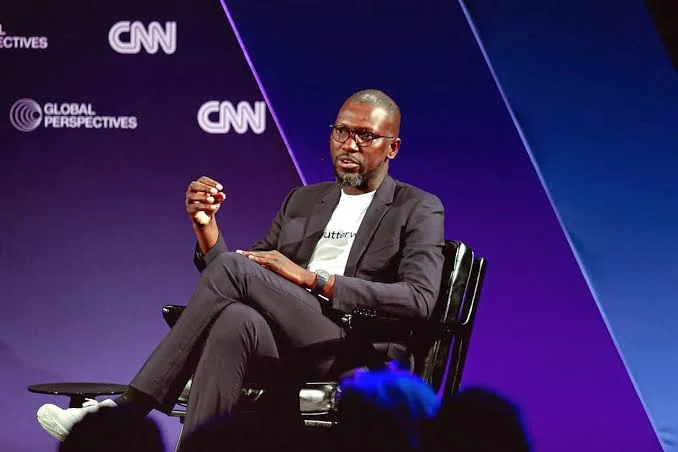
Flutterwave CEO outlines vision for Africa’s “payment superhighway” at CNN summit
Flutterwave Founder and CEO Olugbenga “GB” Agboola unveiled his vision to transform Africa’s digital economy by building a seamless “payment superhighway” hat to connect African economies and facilitates cross-border money movement. Speaking at CNN’s inaugural Global Perspectives Summit on November 8, in a session focused on “Fueling the Next-Generation Startup Ecosystem”, Agboola emphasized the critical role of regulatory collaboration and interoperable infrastructure in driving the fintech growth in Africa. Agboola outlined recent progress in regulatory cooperation, referencing the Ghana-Rwanda fintech memorandum of understanding as a notable example of efforts to harmonize cross-border financial technology operations. He praised African regulators for their understanding of market dynamics and commitment to enabling growth through supportive infrastructures.Joining Agboola on the panel were Lucy Liu, Co-founder and President of Airwallex; Alex Okosi, Managing Director of Google Africa; and Serigne Dioum, CEO of MTN Group Fintech, with veteran CNN anchor Richard Quest moderating. The panelists echoed optimism about Africa’s evolving regulatory landscape and its potential to foster financial inclusion and economic growth. Okosi stressed the growing recognition of regulators and the need for open markets, while Liu emphasized ecosystem integrity and consumer protection as key priorities. Dioum emphasized the shared vision between regulators and operators to enhance financial access continent-wide. Agboola pointed to Africa’s pioneering role in alternative payment systems, citing innovations like Kenya’s M-Pesa and Nigeria’s Inter-Bank Settlement System (NIBSS), paired with mobile money adoption. To realize this vision, Flutterwave has partnered with Polygon to develop Africa’s largest infrastructure for stablecoin payments, aiming to expand digital currency acceptance and cross-border transactions.The CNN summit, themed “Africa’s Role in a Changing World”, gathered public leaders, entrepreneurs, and innovators to explore how Africa’s youthful, vibrant economies can drive sustained inclusive global growth.

Nigeria’s first creative AI open competition ‘Prompt to Screen’ launches to empower youth innovation
Gen AI Network (GAIN), a leading platform promoting artificial intelligence adoption among Nigerian youths, has announced the launch of Nigeria’s first-ever creative AI open competition titled ‘Prompt to Screen’. The competition, running from November 8 to December 13, 2025, aims to democratize AI creativity and foster collaboration among students, creators, and startups across the country.Open to everyone, Prompt to Screen features two main categories; Creative AI for storytelling and Creative AI for builders. Participants in the storytelling category will receive weekly themes to create AI-generated art, music, or videos, with winners declared each week until the grand finale. Meanwhile, builders, will develop AI-powered software solutions for creative media, with final winners announced at the conclusion of th competition. Michael Osumo, Program Manager at Instig Labs, emphasized the vision behind the program; We want AI creativity to become a shared resource, not a private advantage. The Prompt to Screen Competition brings together diverse talents to produce films with AI and learn through collaboration rather than isolation – Osumo The competition’s finale will feature a keynote speech by Paige Bailey, AI Developer Relations Engineering Lead at Google DeepMind, titled “AI and the Future of Storytelling”. Esteemed judges include multidisciplinary musician Hilda Edet (Hillz), Ejike Kanife, software engineer Olawale Ibitoye, AI strategist Amir Mušić, content specialist Odufa Oshiomah, and EbonyLife Group’s Group IT Head Oladayo Olufade.Chukwuerika Achum, Founder of Instig Labs, described these labs as cutting-edge R&D environments fueling Africa’s creative economy by providing free access to powerful AI tools previously out of reach for many. These labs make creative production accessible to students with just an idea and a laptop, removing traditional barriers like equipment costs and technical expertise – Achum He outlined the potential of Creative AI Labs, likening their impact to how Nollywood and Afrobeats turned cultural intellectual property into global exports. The Prompt to Screen competition and Creative AI Labs is set to unlock Nigerian youth’s potential to innovate and contribute to Africa’s emerging creative and digital economies.

Wema Bank strengthens its capital base with N50 billion share listing on Nigerian Exchange
Wema Bank Plc has strengthened its capital base by successfully listing 4.55 billion ordinary shares valued at N50 billion on the Nigerian Exchange Limited (NGX). The listing, which was completed on November 4, 2025, raises the issued share capital of the bank to 40.12 billion shares, up from 35.57 billion, at a price of N11.00 per share. The capital injection boosts the bank’s capital adequacy ratio and underpins its growth ambitions, by enhancing liquidity and supporting strategic investments, particularly in digital banking and retail expansion. Wema Bank now ranks among the top 25 most capitalized companies on the NGX, with a market capitalization of N756 billion, representing about 0.8% of the total equity market capitalization. The stock closed at N18.85 on November 7, 2025, a 107% increase from its January opening price of N9.10. Although the shares have experienced a slight correction of about 6% over the past month due to profit-taking, the bank remains one of the NGX’s most actively traded stocks, with 659 million shares exchanged in the past three months.The bank’s fundamentals were confirmed in its third-quarter 2025 financial results, showing a 42% year-on-year rise in gross earnings. This growth was driven by increased interest income from loans, higher non-interest revenue, and the success of its digital platform ALAT. Pre-tax profit surged to N35.7 billion, compared to N25.1 billion in the same period of 2024. Total assets grew 26% year-on-year to exceed N2.1 trillion, supported by steady customer deposit growth. Market analysts view the private placement as well-timed, providing necessary capital buffer for expansion and risk-weighted asset coverage, especially ahead of an anticipated recapitalization push in Nigeria’s banking sector.