
Two internet fraudsters arrested during a sting operation at the Olusegun Obasanjo Presidential Library (OOPL) hotel in Abeokuta have been convicted and sentenced by a Lagos federal court. Justice D.I. Dipeolu of the Federal High Court in Ikoyi, Lagos, on Thursday, August 21, 2025, sentenced Asimiyu Oluwaponmile Olatunji and Hassan Makinde for internet fraud offences. The two were among 93 suspects nabbed during a sting operation at a hotel within the OOPL complex on Sunday, August 10, 2025. They each pleaded guilty to charges including impersonation, identity theft, and internet fraud. For example, Olatunji admitted to fraudulently setting up a Facebook account under the name “Janet Milner” and deceiving someone into paying $350. Makinde confessed to benefiting about 10,000 Australian dollars (around 1.5 million Naira) through his fraudulent activities. The court received evidence such as the suspects’ mobile phones (Olatunji’s iPhone 12 and Makinde’s iPhone 16), cash restitution, and forensic documents from their devices. Considering the evidence and their guilty pleas, the judge convicted them and handed down sentences. Olatunji was sentenced to three months in prison but allowed to pay a fine of 500,000 Naira instead. His iPhone 12 and the restitution cheque were forfeited to the Nigerian government. Similarly, Makinde got the same prison term with an option of a 500,000 Naira fine, and his phone was confiscated. Earlier in the week and month, several others arrested in the same sting were also convicted for cybercrime offences.The EFCC is actively following up on the large number of arrests, with more court cases on the horizon. The efforts of the EFCC and the decisions coming out of court send a strong message: cybercriminals won’t get away without consequences. It’s also a reminder for everyone to stay alert and protect their personal information when online. Young Nigerians and professionals alike should see these developments as a serious warning—not only about the dangers of getting involved in internet scams but also about the risks of becoming targets. The EFCC is actively following up on the large number of arrests, with more court cases on the horizon.The efforts of the EFCC and the decisions coming out of court send a strong message that cybercriminals won’t get away without consequences. It’s also a reminder for everyone to stay alert and protect their personal information when online. Young Nigerians and professionals alike should see these developments as a serious warning, not only about the dangers of getting involved in internet scams but also about the risks of becoming targets.
Crypto giants launch Beacon Network to stop $47 billion fraud in real time
Big names in crypto like Binance, Coinbase, PayPal, and Kraken have joined forces with global law enforcement to fight a growing wave of crypto fraud. Together, they’ve introduced the Beacon Network, a new system designed to catch and block stolen crypto before scammers can cash out. Since 2023, fraud-related crypto transactions have totaled a staggering $47 billion, with over $2.3 billion stolen already in 2025 alone. The Beacon Network aims to change how the industry responds to these crimes by acting instantly when flagged funds move on the blockchain. Unlike traditional methods, where criminals often slip through by exchanging stolen tokens quickly, Beacon Network alerts participating exchanges as soon as suspicious transactions happen. This quick action helps platforms freeze those funds, stopping illegal withdrawals on the spot. The network includes major exchanges and payment firms: Binance, Coinbase, Kraken, Ripple, Robinhood, Blockchain.com, Crypto.com, Stripe, OKX, and PayPal. It also works closely with federal law enforcement and blockchain researchers for constant monitoring. Valerie-Leila Jaber, Coinbase’s Global Head of Anti-Money Laundering, said, There’s no program like Beacon Network. It’s a true early warning system that helps us identify and freeze illicit assets so law enforcement can recover them. Binance’s Chief Compliance Officer Noah Perlman added We are looking forward to strengthening collaboration through Beacon Network. It helps build trust and security, which are key for broader crypto adoption. The push for real-time crypto crime fighting gained urgency after the $1.5 billion Bybit hack, reported by Daily Tech Nigeria on the 22nd of February this year. Stolen funds from that attack were moved through over 10,000 transactions within just one month, showing the narrow window exchanges have to act. TRM Labs, the blockchain intelligence firm behind Beacon Network, stressed how quick detection and response can unlock crypto’s full potential for transparency and safety. Reports from Chainalysis confirm crypto thefts surged by 21% in 2024, with $2.2 billion stolen. The Bybit hack this year was the biggest crypto heist ever, surpassing other large incidents like the Ronin and Poly Network breaches. As crypto adoption grows, systems like Beacon Network could play a critical role in protecting investors and keeping the digital economy safer for everyone.

Children using VPNs to bypass porn age checks, UK report warns
The Children’s Commissioner for England has called on the government to close a loophole allowing children to use virtual private networks (VPNs) to access online porn without age verification. Dame Rachel de Souza, speaking on BBC Newsnight, stressed how VPNs let users hide their location online, making it possible for young people to get around the new Online Safety Act rules requiring age checks on adult content sites. VPNs connect through remote servers and mask IP addresses, so children can trick websites into thinking they are in a different country where controls may be weaker. The commissioner’s latest report shows a rise in the number of children exposed to pornography in the last two years. Alarmingly, some young people surveyed said they first saw porn as early as six years old, often by accident. The report also raised concerns about harmful content, with many respondents exposed to violent or abusive scenes, such as strangulation or non-consensual acts. Dame Rachel urged ministers to require VPN providers to enforce age verification to protect underage users. “It’s absolutely a loophole that needs closing,” she said, adding that the online landscape’s design and recommendation algorithms often push harmful material in front of children. The government said VPNs remain legal for adults, and while there are no plans to ban them, companies promoting ways to bypass protections to minors will face strict penalties. Kerry Smith, CEO of the Internet Watch Foundation, warned that children’s exposure to violent sexual content risks normalising harmful behaviour and increasing sexual violence against women. The Online Safety Act, implemented recently, aims to make the internet safer by demanding robust age checks for adult websites. This new focus comes as VPN apps surged to the top of the UK’s download charts after some sites began enforcing verification. The report’s findings serve as a serious wake-up call. They show that tech laws need constant updates to keep pace with tricks like VPN use that undermine child protection online.
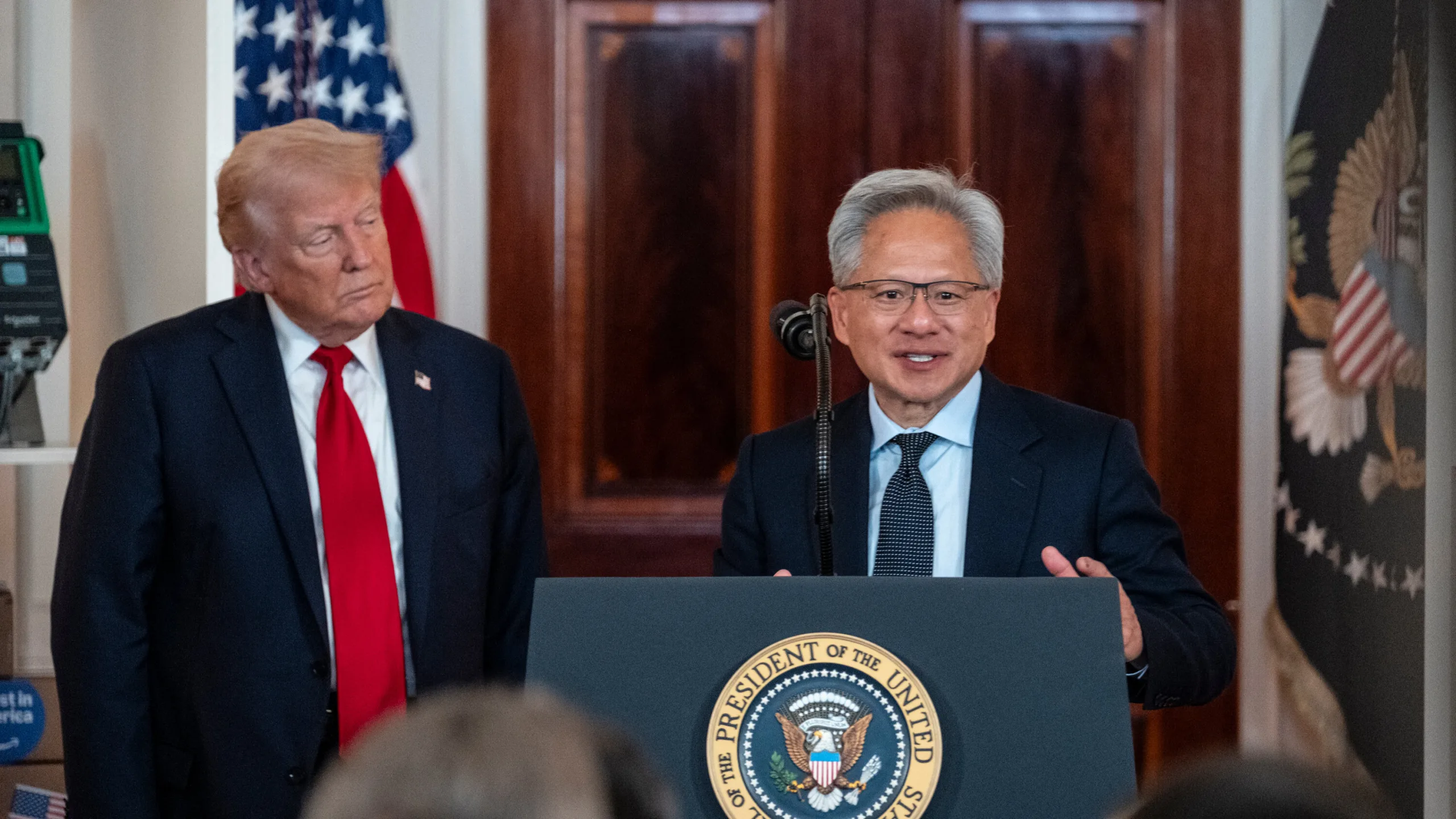
Trump lifts ban on Nvidia AI chips for China, but Beijing Is not saying thank you
After years of US restrictions, President Trump recently allowed Nvidia to sell a key AI chip to China, yet Beijing greeted the move with suspicion rather than thanks. Last month, Donald Trump reversed parts of the longstanding US export controls, permitting Nvidia to resume sales of its H20 AI chip in China. The H20, released last year, was designed to keep Nvidia’s technology accessible to the Chinese market despite earlier bans placed under the Biden administration. However, instead of welcoming this change, China expressed concerns over the chip’s security. Authorities in Beijing labeled the H20 a potential risk, claiming it could have tracking or remote shutdown features, accusations Nvidia denies. Chinese regulators even summoned Nvidia for explanations and advised local companies to avoid using the chip. Analysts say China’s cautious reaction reflects its push for a self-reliant semiconductor sector. While China has made big strides in chip technology, including advanced AI chips from Huawei, it still depends on US suppliers for some components. Experts note that Huawei’s chips excel in computing power but lag behind Nvidia’s H20 in memory bandwidth, a key factor for handling AI data efficiently. Nvidia’s CEO Jensen Huang and US Commerce officials have defended the sales, framing it as a way to keep Chinese developers tied to American technology. Trump himself called the H20 “obsolete,” saying it lags behind Nvidia’s latest AI chips like the Blackwell and H100. China, meanwhile, pushed back against what it sees as unfair US tactics. Technology adviser Xiang Ligang said Beijing wants access to top-tier chips but sees US export controls as dumping less advanced products to dominate China’s market. “Do you really think we’re that naive?” Xiang added. Despite Beijing’s warnings, demand for Nvidia’s chips remains high among Chinese tech giants like ByteDance, Alibaba, and Tencent. Research suggests shipments could reach 1.5 million units this year if not for restrictions. China’s semiconductor industry is rapidly growing, with projections showing domestic AI chip production jumping from 17% in 2023 to 55% by 2027. Still, local firms face challenges in scaling production and matching the software ecosystem Nvidia offers, which keeps many AI developers loyal to its platform. NVIDIA does not have ‘backdoors’ in our chips that would give anyone remote access or control. Banning H20 sales to China would harm US economic and technology leadership without any national security benefit – An Nvidia spokesperson said We have this capability, it’s not as they imagine. For Chinese companies, the only way to ensure chip supply security may be to rely on domestically produced chips – Xiang Ligang, a Beijing-based tech adviser While the H20 chip sale is now allowed, the bigger battles over cutting-edge AI technology and supply chains are far from over. Both nations continue racing to lead the global AI market, with national security and economic power hanging in the balance.

Over 69,000 Nigerians pre-register online for voter cards in just 7 hours
The Independent National Electoral Commission (INEC) revealed that 69,376 Nigerians completed their online voter pre-registration in the first seven hours after the continuous voter registration (CVR) portal went live on August 18, 2025. The online portal, accessible 24/7 at https://cvr.inecnigeria.org, opened at 8:30 a.m., and by 3:30 p.m. the same day, tens of thousands had already signed up. Among the registrants, 51.3% were female, 48.7% male, and 69.2% were young Nigerians aged between 18 and 34 years. This strong start shows the enthusiasm especially among the youth to participate in upcoming elections. INEC confirmed that physical registration will begin on Monday, August 25, 2025. The in-person option will be available in 811 state and local government offices nationwide from 9 a.m. to 3 p.m. on weekdays. This arrangement allows Nigerians who prefer face-to-face registration or those who started online but need to complete the process physically to do so. Both online and physical registrations will run concurrently throughout the CVR exercise. To register online, citizens must create an account on the portal using a valid email and phone number, fill in their personal details, upload a recent passport photo, and book an appointment for biometric capture at a nearby INEC centre. After biometric data is captured, registrants receive a Temporary Voter Card (TVC), which is later exchanged for the Permanent Voter Card (PVC) used in elections. INEC stressed that the registration is only open to Nigerian citizens aged 18 and above who are not yet registered voters. Multiple registrations are illegal. Transfers between states or the Federal Capital Territory and replacement of lost or damaged voter cards are allowed during the CVR exercise. The commission has committed to providing weekly updates with breakdowns by state, gender, age, occupation, and disability to keep the public informed on the registration progress. This streamlined voter registration approach aims to make it easier for Nigerians, especially young people, to engage in Nigeria’s democratic process ahead of future elections. For more information or help with registration, Nigerians can visit the INEC portal or call the commission’s help lines.

Amberley Museum brings historic telex machine back to life with AI
Amberley Museum in West Sussex is turning back the clock, and looking ahead to the future, by connecting a classic telex machine from 1974 to modern artificial intelligence. Visitors can now type questions using the museum’s old telex machine and get instant answers printed straight from ChatGPT, the world-famous AI chatbot. It’s a creative project that mixes old-school communication with today’s technology. The museum, known for celebrating the history of technology, says this innovation was made possible by volunteer David Waters, who rebuilt the machine and found a clever way to link it to AI. Instead of sending messages to another person, the machine now passes them to ChatGPT, which replies with a printed response. A spokesperson explained, The experience starts when you use the rotary dial to make the connection. It’s a meeting between two worlds, fifty years apart Museum staff say visitors are loving the chance to talk to an AI through such a vintage device. Some guests have called it “a conversation across decades”. This reminds people of how far communication has come, from old telex systems to today’s smart machines. The project is also bringing ideas about the future of museums and how they can use technology to bring history to life for young people. Amberley Museum hopes to keep blending past and present, showing that vintage tech can still inspire and connect with today’s digital age.