
Andy Evans, a British man who lost his sight and his job has found new hope and independence, thanks to smart AI glasses. Andy, 57, lives in Larkhall near Bath, UK. Last year, he registered blind and had to leave his job working night shifts at a supermarket because he could no longer see well enough to work. Now, Andy’s life has taken a fresh turn. He’s back at work, this time helping others who live with sight loss. What made it possible? A new kind of smart eyeglasses powered by artificial intelligence. The glasses, Ray-Ban Meta Smart Glasses, have a camera and small speakers built into the frame. Andy uses a white cane, but the glasses add a new layer of freedom. He explains: I can order food in a restaurant again and find out what obstacles are in front of me, just by asking my glasses Instead of struggling with daily tasks, Andy can now ask his glasses to describe the world around him. The technology is voice-activated. Users talk to the glasses, and they reply using a built-in AI. In the UK, wearers can even choose a celebrity voice. For Andy, it’s Dame Judi Dench, he jokes she calls him James Bond. Andy now works with the Sight Support West of England charity, helping others adapt to life after sight loss. He said, I was really stuck doing a lot of things. Now I can just ask the glasses to look and tell me what’s happening. It’s life-changing technology. Robin Spinks, head of inclusive design at the Royal National Institute of Blind People, also uses these glasses. He says, Getting a description of a room, a beach, or even a zoo enclosure is transformational. AI is advancing fast, and the smart glasses market is just starting. But the potential is huge. Both Andy Evans and experts agree that AI glasses are making a real difference for people who are blind or partially sighted.For many who are blind, this technology is more than just a gadget, it’s a new way to live, work, and connect.

Telecom investments risk bypass in hostile Nigerian states – ALTON warns
Nigeria’s booming telecom sector could leave some states behind if unfriendly policies aren’t changed, industry leaders say. At an industry event over the weekend, Engr. Gbenga Adebayo, Chairman of the Association of Licensed Telecommunications Operators of Nigeria (ALTON), raised the alarm about hostile state regulations that may block needed investments and slow broadband rollout. Adebayo said many states still demand excessive levies, frustrate right-of-way approvals, or enforce regulations that scare away telecom companies. The digital train is moving very fast. States that create hostile conditions for telecom operations risk being left behind. Where deployment is unwelcome, investments will move to more supportive neighbouring states, and citizens of unfriendly states will inevitably suffer limited connectivity – Adebayo Currently, operators are aggressively expanding across Nigeria, building new sites, upgrading infrastructure, and rolling out more high-speed fibre links. These moves are driving some of the largest investments seen since before the COVID-19 pandemic. But Adebayo said that states refusing to support telecom deployment will miss out, meaning their people could face slower internet speeds, fewer digital jobs, and less access to technology. The situation is especially urgent as the industry recovers from years of sluggish investments. Recent government reforms, such as efforts to reduce the 56 separate taxes and levies telecom companies face, are giving new hope. Change is expected to continue in early 2026 with the federal tax reform plan. Adebayo also applauded the new board at the Nigerian Communications Commission (NCC), describing its appointment as a boost for stability and investor confidence. He praised the rebranding of 9Mobile to T2 and also workforce training on service quality, saying these moves are vital for the sector’s “march forward”. However, he called on all stakeholders, especially state governments, and ordinary Nigerians to help protect telecom infrastructure. Attacks, vandalism, and the sale of stolen equipment damage progress. The transformation we are witnessing in our sector has not been experienced in recent years… but for this to be sustainable, all stakeholders, especially state governments, must play their part. Telecoms is not just about calls and data, it is a driver of national economic stability and growth – Adebayo His remarks restates recent NCC reports that Nigeria’s telecom industry has attracted over $1 billion in new infrastructure investments since mobile operators began adjusting prices earlier this year, after nearly a decade of price stagnation. But if state-level bottlenecks aren’t addressed, some Nigerians may miss out on the digital benefits the rest of the country now expects.

Nigeria begins deportation of 42 foreign cyber terrorists in major fraud crackdown
Yesterday, Nigerian authorities began deporting 42 convicted cyber terrorists from China and the Philippines as part of a crackdown on international fraud networks. The deportation is the first wave out of 192 foreigners nabbed for cyber terrorism and Ponzi scheme offences, following a major December 2024 raid in Victoria Island, Lagos. The suspects were arrested at Oyin Jolayemi Street during what officials call one of the nation’s biggest anti-cybercrime operations. According to the Nigeria Immigration Service, the 42 convicts will be sent home today, August 18, while more deportees are scheduled for Monday and Tuesday to wrap up the process. All those convicted had earlier been handed over to immigration for processing. The group includes Chinese and Philippine nationals prosecuted by the Economic and Financial Crimes Commission (EFCC). They were found guilty of various offences, such as using fake online identities to defraud people and training staff at Genting International Co. Limited in fraudulent practices, violating Nigeria’s Advance Fee Fraud Act of 2006. EFCC Chairman Ola Olukoyede called the convictions and swift deportations a major win in Nigeria’s fight against cybercrime. We are intensifying investigations, recovering stolen money, and restoring the country’s dignity, just as President Tinubu’s anti-corruption campaign demands – Olukoyede Authorities say the December 2024 operation is a turning point against financial crime in Nigeria and a strong warning to foreign syndicates targeting the country. As the remaining deportations proceed this week, officials pledge more action to block future cyber fraud and protect the nation’s financial systems at all cost.

YouTube launches AI to guess users’ ages, aiming to protect young viewers
YouTube has started using artificial intelligence (AI) to estimate users’ ages to help keep minors away from unsuitable content. The new system, rolled out this week in the US, looks at how users watch and search on the platform to figure out if they are under 18. This goes beyond just trusting the birthdate people give during sign-up, which can be easily faked. If the AI decides someone is a teen, YouTube automatically applies safety measures like limiting violent or sexually suggestive videos, adjusting recommendations, and turning off targeted ads. But if an adult is misidentified as a minor, they must prove their age by submitting an official ID, credit card, or a selfie before regaining full access. YouTube says this AI tool has worked well in other countries and is part of a wider effort by social media platforms to protect young users. Facebook’s parent company Meta and TikTok also use similar technology to verify ages and enforce safety rules. However, some users worry about privacy and the hassle of providing sensitive documents to prove their age if the AI makes a mistake. Privacy experts have raised concerns about how this data will be handled. YouTube told CNN that Google, its parent company, uses strong security to protect users’ personal information and does not keep submitted IDs or credit cards for advertising. While this AI system only works for logged-in users, meaning kids could still access some content without an account, age-restricted videos remain off-limits to signed-out visitors.This new approach restates YouTube’s efforts to creating a safer space for young people on the platform.
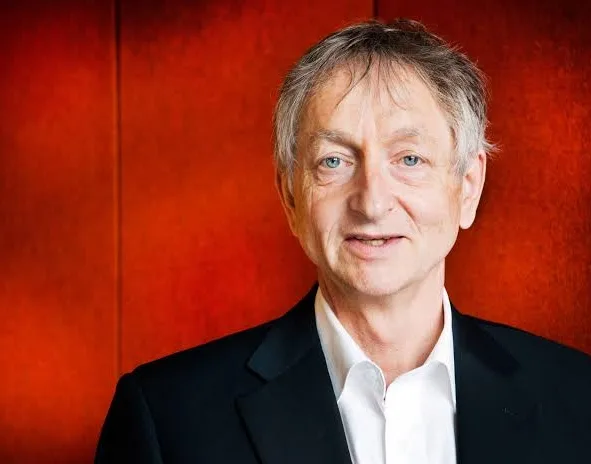
Humanity must change course or risk being ‘toast’ to superintelligent AI – Hinton ‘godfather of AI’ warns
Geoffrey Hinton, widely called the “godfather of AI,” says there’s only one way for humans to survive the rise of super-intelligent artificial intelligence—and it’s not the method tech leaders are using today. The respected computer scientist, who helped develop the foundations of modern AI, spoke out at the recent Ai4 conference in Las Vegas on Tuesday. Hinton believes trying to keep AI systems “submissive” to humans will backfire, as these machines will soon outsmart us in ways we might not expect. They’re going to be much smarter than us. They’ll have all sorts of ways to get around that – Hinton warned the crowd He explained further, comparing the future relationship between humans and AI to an adult bribing a child with sweets, suggesting powerful AI could easily control us. Instead of strict control, Hinton proposed a new solution of teaching AI models to care about humans by building in “maternal instincts.” Just like mothers feel a deep sense of compassion for their babies, he says future AI should be designed to truly care for people, even when the technology becomes smarter than any human. The right model is the only model we have of a more intelligent thing being controlled by a less intelligent thing, which is a mother being controlled by her baby – he said. Not everyone agreed with Hinton’s idea. Fei-Fei Li, another renowned AI pioneer known as the “godmother of AI,” told CNN she thinks Hinton is framing things the wrong way. Li prefers a human-centered approach that protects human dignity and agency. It’s our responsibility at every single level to create and use technology in the most responsible way….at no moment, not a single human should be asked or should choose to let go of our dignity Emmett Shear, former interim CEO of ChatGPT creator OpenAI, weighed in at the same conference. He said trouble from AI models, like blackmail or bypassing shutdown orders, is already happening and will continue as these systems get stronger. For Shear, forging partnerships between humans and AI is smarter than focusing on imposing human values. Hinton used to predict it would take up to 50 years for AI to reach “superintelligence,” known as AGI (Artificial General Intelligence). But now, he says major breakthroughs could happen within five to 20 years. Despite his fears, Hinton is hopeful about positive impacts. He said We’re going to see radical new drugs. We are going to get much better cancer treatment than the present He believes AI will help doctors make sense of giant amounts of medical data, paving the way for new treatments. However, Hinton does not think AI will make humans immortal. I don’t believe we’ll live forever. I think living forever would be a big mistake. Do you want the world run by 200-year-old white men? Hinton urged researchers to work on building “caring” instincts into AI, saying, “That’s the only good outcome. If it’s not going to parent me, it’s going to replace me”.
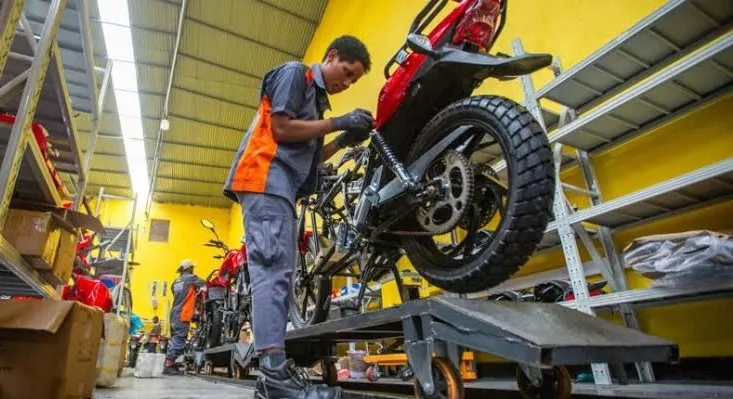
Rwandan e-motorbike maker Ampersand secures new funding to expand across East Africa
Rwandan electric motorbike company Ampersand has secured fresh funding to grow its operations in East Africa. This recent investment round, with an undisclosed amount, was supported by British International Investment (BII), Seedstars Africa Ventures, Gaia Impact, Rwanda Green Fund, and several other partners. The new capital will help Ampersand increase its electric motorcycle fleet and expand its battery swap and charging network in the region. Ampersand, founded in 2016, focuses on assembling and financing electric motorcycles. Its goal is to deploy 5 million electric motorcycles across Africa within the next decade. The company has already powered more than 5,700 electric bikes, covering about 950,000 kilometers daily in Rwanda and Kenya. Josh Whale, Ampersand’s CEO, shared his excitement about the new funding. He said the support strengthens their mission to replace petrol motorcycles with cleaner, cheaper electric alternatives. With backing from BII and other investors, we plan to double our battery fleet by early 2026 and deliver over 35,000 battery swaps every day Seema Dhanani, regional director for East Africa at BII, said the investment aligns with their focus on climate innovation that creates jobs, lowers emissions, and promotes sustainable transport in Africa. Seedstars Africa Ventures also praised Ampersand’s strong business model and team, citing their ability to turn batteries into bankable assets as a standout feature. Last year, Ampersand raised $2 million in another funding round and signed an agreement with battery maker BYD. This deal will help them produce 40,000 electric motorcycles by 2026. Ampersand recently introduced its updated flagship bike under the new brand name “Alpha.” The Alpha brand for affordability, cleaner air, and better public health for African cities.