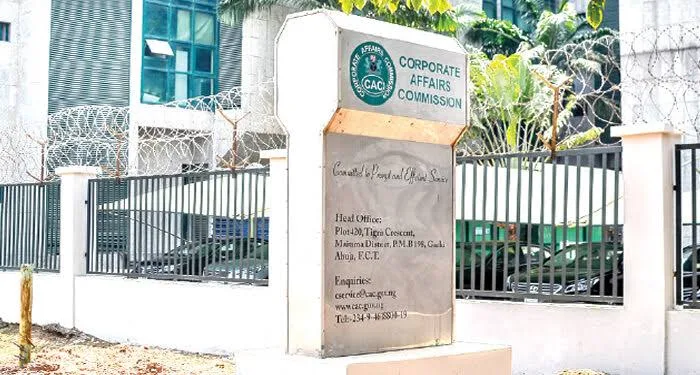
The Corporate Affairs Commission (CAC) says its new AI-driven business registration portal is processing more than 11,000 transactions every day since launching on June 30, 2025. The AI system now issues registration certificates within 30 minutes after verifying a director’s National Identification Number (NIN),which was reported by Daily Tech Nigeria on the 1st of July 2025. The portal also lets users try out several business names without paying upfront, making it easier for entrepreneurs to get started. On one recent day, the portal handled 8,000 name reservation requests that would have taken two weeks manually. However, CAC is facing some issues caused by delays on external platforms. The National Identity Management Commission (NIMC) portal has been offline for weeks, blocking automatic NIN verification. The REMITA payment gateway sometimes goes down, affecting fee payments, and stamp duty processes stall if the ProTax system is offline. To fix payment problems, CAC has asked for approval to use an alternative payment channel. The Commission has improved security with one-time passwords for transactions and set up a help desk that receives about 3,000 complaint emails daily to improve the portal. Software fixes are ongoing, with full service expected soon. A small fee increase will start on August 1 to support these upgrades. CAC insists it is working hard to fix all glitches quickly so the AI system can deliver fast, secure, and affordable business registration for Nigerians.

Meta blames translation error after Indian politician wrongly declared dead
Meta, the company behind Facebook and Instagram, has apologised after its auto-translate feature wrongly claimed a top Indian politician had died. Earlier this week, Karnataka Chief Minister Siddaramaiah posted a condolence message in Kannada on his official Facebook and Instagram pages. He was mourning the death of veteran actress B Saroja Devi. However, when the post was auto-translated to English, Meta’s algorithm mistakenly stated that Siddaramaiah himself had died. Meta has now fixed the translation issue. In a statement reported by Indian media, a spokesperson said, “We apologize that this happened.” The company confirmed that they had quickly resolved the problem and are working to improve the quality of translations from Kannada. The mistake ignited anger from Siddaramaiah’s team. The chief minister publicly criticised Meta, saying the translation fault did not just distort the facts but also misled users. He also said mistakes like these can be especially risky when they happen on official communication channels. On Thursday, Siddaramaiah’s media advisor sent a letter to Meta. He asked them to correct the error and consider suspending the auto-translation of Kannada until they could guarantee it works better. He encouraged Meta to consult with Kannada language experts to avoid similar mishaps. When checked a day later, the English translation on Facebook still read, “The multilingual star, senior actress B Sarojadevi who passed away yesterday, paid his last respects,” which was still confusing and inaccurate. Translation mistakes on social media can cause confusion and, in serious cases, harm reputations or even fuel false news. As platforms like Facebook grow across Africa and India, getting local-language tech right isn’t just helpful, it’s necessary for trust and safety online.

Gamsole founder Abiola Olaniran dies at 36, leaves lasting mark on African gaming
Abiola Olaniran, the creator of Gamsole and one of Nigeria’s biggest names in mobile gaming, has passed away at 36. Abiola, an engineer well-known for his impact on tech across Africa, died and was buried on June 16 in Lagos. While the cause of his death has not been shared publicly, his passing has shocked the technology community, both in Nigeria and abroad. Abiola started coding when he was just 15. As a student at Obafemi Awolowo University, he became a Microsoft Student Partner. By the time Windows Phone launched in Nigeria, he was already uploading his own games to the platform. One of his first releases, “Road Blazer,” quickly hit 40,000 downloads. In 2012, after winning seed funding from the 88mph accelerator, Abiola founded Gamsole in Lagos. The startup became one of Africa’s first big gaming exports, recording more than 10 million downloads in just three years. Gamsole’s games, such as Gidi Run, Monster Ninja, and Sweet Candy, reached audiences in over 191 countries. Abiola’s talent and drive earned him global recognition. He was named to Forbes Africa’s 30 Under 30 list in 2015 and became known as Nigeria’s highest-earning Windows mobile developer. A year later, Forbes listed him among the “30 Most Promising Young African Entrepreneurs.” He also won the 2016 Future Awards Africa Prize for Technology. Beyond awards, Abiola helped attract investors to the African gaming ecosystem, proving that success was possible even with limited resources. His work convinced more people to look at games from Africa as both innovative and commercially viable. Abiola didn’t only build games. He served as CTO at EdTech firm eLimu Kenya, guiding a full rebuild of its mobile platforms to support literacy for East African students. After this, he shifted his focus from Gamsole to mentoring other tech startups and new angel investors across Africa. People who knew Abiola often called him generous and humble. According to Adewale Yusuf, co-founder of Techpoint Africa, Abiola was the company’s first angel investor, helping out with office space and seed funding at a critical time. Abiola leaves behind a powerful legacy. His journey inspired many Nigerian students and young professionals to pursue tech and build their own startups.

Nigerians spend $850 million on foreign cloud
Nigerian businesses are sending about $850 million abroad each year to pay for cloud services, raising debate on whether local providers are ready to take over from foreign giants like Amazon, Microsoft, and Google. Millions of companies, startups, and government agencies in Nigeria rely on cloud technology to store data and run apps. It saves them money and helps them move faster in a digital world. As the country’s tech sector grows, so does its use of cloud services, Nigeria’s cloud computing market is set to hit $1.03 billion in 2025 and reach $3.28 billion by 2030, expanding nearly 26% every year. Foreign cloud companies still rule the space. These firms offer almost everything a business could want, from massive storage on Amazon S3 to advanced analytics on Google Cloud. Their services are stable and meet strict rules on security and privacy. The problem? Many of these companies don’t have full-scale data centres in Nigeria. That can cause delays, and with the naira dropping 70% since 2020, paying in dollars has become even more expensive for Nigerian customers. Recently, homegrown options like Galaxy Backbone, Layer3, Suburban Cloud, Nobus, and MTN Cloud have been stepping up. MTN Cloud, launched in June 2025, is a standout new player. It’s based at a 4.5 MW datacentre in Lagos and offers cloud services priced in naira, not dollars. Lynda Saint-Nwafor, Chief Enterprise Business Officer at MTN Nigeria, described it as “a first for Nigeria,” allowing businesses to manage resources locally and securely. Other names, such as Galaxy Backbone and Layer3, have opened datacentres in Abuja, Kano, and Lagos, helping private companies and government bodies protect sensitive data in line with Nigeria’s Data Protection Regulations (NDPR). These local players also shield businesses from unpredictable currency swings, a big deal for cost-conscious startups and SMEs. While local firms aren’t as big as global players, they’re closing the gap. MTN Cloud includes features like automated APIs and advanced security that make it competitive. Galaxy Backbone tailors its services specifically for Nigerian government agencies. These providers know the local market and offer support that understands Nigerian business culture. Yet, foreign companies still have larger networks and broader service offerings. AWS, for example, offers over 200 cloud services, much more than any local competitor. But with local firms focused on core business needs and local compliance, they’re gaining ground, especially among smaller companies looking to cut costs or needing to keep data in Nigeria. Nigeria’s government wants more local data storage. Policies from the National Information Technology Development Agency (NITDA) now require banks and other sensitive industries to keep data inside the country. The goal is to build up Nigeria’s own digital infrastructure, create jobs, and keep more tech money at home. Still, challenges remain. Internet outages, unstable electricity supply, and huge investment needs, up to $100 billion by 2030, are slowing progress. But with MTN’s new cloud centre and growing interest in naira-based solutions, experts believe local providers are ready to compete if given the right support

Nigeria’s young workforce spurs digital skills and AI learning boom
A new global report shows that Nigeria’s youthful population is driving a record-breaking surge in digital skills development, with rising interest in tech careers, cybersecurity, and generative AI. Nigeria is fast becoming a key player in the digital world, and much of that is thanks to its young, tech-savvy population. According to Coursera’s 2025 Global Skills Report, around 70% of Nigerians are under 35. This gives the country a big advantage in meeting the demand for modern technology skills like software development and cybersecurity. Experts say Nigeria has the potential to lead in the world’s growing technology economy. The study points out that network and cybersecurity expertise is set to grow by 87% in Nigeria by 2030. Young people are upskilling fast, getting ready for new types of jobs and industries. Enrollments in generative AI (GenAI) courses in Nigeria soared 98% in the last year. Courses that help people earn professional certificates also went up by 22%. These numbers show Nigerians are serious about getting practical, job-ready skills for the future. This sharp increase matches trends in other countries. GenAI is now the fastest-growing tech skill on Coursera worldwide, with millions of learners signing up every month. The report shows how access on mobile phones is fuelling this growth even more. In fact, 73% of people studying online in Nigeria are doing so from their mobile devices, the highest rate globally. With 230 million smartphone connections in the country, mobile learning is making digital education possible for young people everywhere, from big cities to rural towns. Greg Hart, Coursera’s CEO, said, “Generative AI has rapidly gained both investment and adoption across sectors. In the past year, GenAI enrollment has more than doubled across Asia Pacific, the Middle East, and Africa. What’s most inspiring is how online learning is creating a level playing field for millions of learners across emerging markets.” Government programs are also stepping up. The federal government’s 3 Million Technical Talent (3MTT) initiative aims to help train three million Nigerians in high-demand skills like software engineering, data analysis, and cloud computing. This is building an even deeper pool of tech talent and making sure young people are ready for digital careers. Looking beyond Nigeria, Sub-Saharan Africa is seeing an explosion in digital learning. The region now boasts more than 8 million learners on Coursera, a 20% jump from last year, the fastest growth in the world. In South Africa, 93% of companies are already running active AI programs, and the whole region has seen GenAI enrollments rise by 134% in just one year. Many experts believe these trends could transform Africa’s economy. With more young people learning and using tech skills, and with governments boosting access and training, Nigeria is on a path to become a true technology powerhouse.

How to make money online in Nigeria as a student (without capital)
When we discuss how to make money online in Nigeria as a student, some people think it’s not possible. But it is very possible even without capital. It is not easy being a student in Nigeria today. Fees are getting more expensive to attend school, food items are becoming more expensive and the urge to succeed is real. The majority of students depend on parents or guardians on financial support but they fail sometimes too. This is the reason why a large number of Nigerian students are currently seeking to earn money online, especially the one that does not require capital to start. With just your smartphone, internet connection, and a little time each day, you can make money from the comfort of your hostel or home. There are real opportunities online that pay people for skills, services and simple tasks — and most don’t require any start-up money. In this article you will learn how to make money online in Nigeria as a student (without capital) using trusted and safe methods that work. Everything is explained in simple English so anyone can understand and take action immediately. Why make money online as a student? Let’s start with the “why”. Many Nigerian students face real financial struggles. Even if your parents are supporting you, having your own money gives you freedom and reduces pressure on your family. Also, the online world is full of opportunities. Every day, Nigerians like you are making money just by using their phones and internet connection. Recommended Guide: How to get back a hacked Facebook or WhatsApp account in Nigeria (Step-by-Step) Is it possible to make money online without capital? Yes, it is. Many online money-making methods don’t require you to invest anything except your time, skills, and consistency. This article focuses on those kinds of opportunities. You will not be asked to pay any money upfront, buy any course, or join any shady Ponzi scheme. How to make money online in Nigeria as a student (without capital) 1. Freelancing (zero start-up needed) Freelancing simply means offering a service online and getting paid. For example, if you can write articles, edit videos, design flyers, or even just speak English well, there’s someone online who will pay you. How to Start: Skills you can offer even as a beginner: Tip: Watch free YouTube videos to learn and improve any skill. 2. Teaching people online and getting paid Are you good at one subject? You can help secondary school students or even your fellow university students with difficult topics. Where to Start: You don’t need money to start this — just your knowledge and willingness to teach. 3. Blogging without money using free tools Yes, blogging still works. You don’t need to pay for a website to start. You can use Google Blogger (blogspot.com) or Medium.com for free. Steps to Start: When your blog starts having traffic, you can consider Google AdSense and make money out of your blog. 4. Answering surveys and testing apps This one doesn’t make you rich, but can get you some airtime or small cash. Popular Sites: Pro Tip: Use VPN or US-based profiles to get better surveys, but always be careful and avoid giving sensitive personal data. 5. Affiliate marketing (no capital required) This is one of the best ways to make money online without having your product. How it Works: Where to Join: Tip: Write WhatsApp status reviews or short videos to promote the product. 6. Becoming a social media manager Many small businesses in Nigeria want to grow online but don’t have time or skills to manage their Facebook or Instagram pages. What You Do: How to Start: You don’t need money to start — just a phone and creativity. 7. Transcription and subtitling If you have sound hearing and a fast typing skill then you can work as a transcriber. This job requires listening to sound and typing what you hear. Websites: You get paid per audio minute. Some sites pay weekly via PayPal. 8. Take up a Virtual Assistant job Virtual assistant is someone who is online and assists someone such as email response, schedule posts, research. Who Needs VAs: Where to Find VA Jobs: You can start with basic tasks and grow with time. 9. Selling digital skills on WhatsApp or Facebook If you know a skill like: No website needed. Just post your samples and invite people to DM you. 10. WhatsApp TV Owner WhatsApp TVs are just status-based platforms where you post content (funny videos, updates, products) and build a large viewership. How to Make Money: Just save numbers, post good content, and remain active. Recommended Guide: 10 best cheap Android phones in Nigeria under ₦50,000 (2025 Guide) FAQs Q1: How much can I make online as a student in Nigeria? It varies on what you are doing and how serious you are. Some of the students earn 5,000/week, others 100,000/month. Begin small and then expand. Q2: Do I need a laptop to start? No. You can start with just your smartphone. Later, if you make enough money, you can buy a laptop to do more. Q3: I have no skill, where do I start? Start with transcription, typing jobs, or promoting affiliate products. Then watch free YouTube videos to learn more. Q4: Are all these methods legal? Yes. All methods listed here are 100% legal, ethical, and safe. Avoid anything that sounds like “double your money” or “investment without work.” Q5: What is my payment method? The majority of the platforms use PayPal, Payoneer, or bank transfer payments. As an affiliate marketer in Nigeria you are able to open a free Payoneer account and connect it to your Nigerian bank account. Conclusion It is not a scam to make money online in Nigeria as a student with no capital and neither is it a dream, but a reality. It requires concentration, commitment and eagerness to learn. Do not want to do too much at a time. Pick one, start small, and grow